










Azerbaijan shifts economic growth model Non-oil Sector at the heart of the transformation
For many years, the foundation of Azerbaijan’s economic development was closely tied to its significant energy potential. Extractive industries played a central role in foreign trade, attracting over two-thirds of all foreign investment. While this model remains relevant, recent years have seen a notable shift toward diversifying the economy. The focus is increasingly on developing the non-oil sector, advancing industrialisation under the Fourth Industrial Revolution (4IR), digitalising the economy and financial systems, enhancing transit logistics, and promoting “green” energy.
At the same time, small businesses and individual entrepreneurs continue to form the backbone of the domestic economic system. As of early 2026, individuals accounted for 86.8% of all taxpayers, with the total number of taxpayers rising by nearly 5% year-on-year.
The development of the domestic economy in the recent period has been under pressure from a decline in foreign trade, mainly due to falling global energy prices and the ongoing reduction of oil production at several of Azerbaijan’s offshore fields over the past few years. Other factors indirectly affecting the slowdown in foreign trade include global tariff wars, the devaluation of the dollar, imported inflation, and so on. All of this has also impacted the overall GDP growth: by comparison, while the domestic economy grew by 4.1% in 2024, the figure for the first 11 months of 2025 was 1.6%.

These figures highlight the need to accelerate the transition from an energy-export-driven model to a more diversified domestic economy. To minimise external vulnerabilities and the country’s dependence on commodity prices, the focus of ongoing reforms has been on correcting economic imbalances by promoting the development of non-oil manufacturing sectors. To achieve these goals, the government has invested in the development of industrial parks with varied specialisations, industrial districts, and agro-parks, and has also established the Alat Special Economic Zone, which offers fiscal and other incentives to attract both domestic and foreign investors.
Last year, the country’s industrial clusters expanded rapidly, increasing exports of high value-added products, while new industrial enterprises were launched in the Aghdam Industrial Park and the Sumgait Chemical-Industrial Park. This trend has gained further momentum, with Azerbaijani President Ilham Aliyev recently signing a decree on the creation of the Western Industrial Park, aimed at boosting economic activity and employment in the Ganja region and Shamkir District.
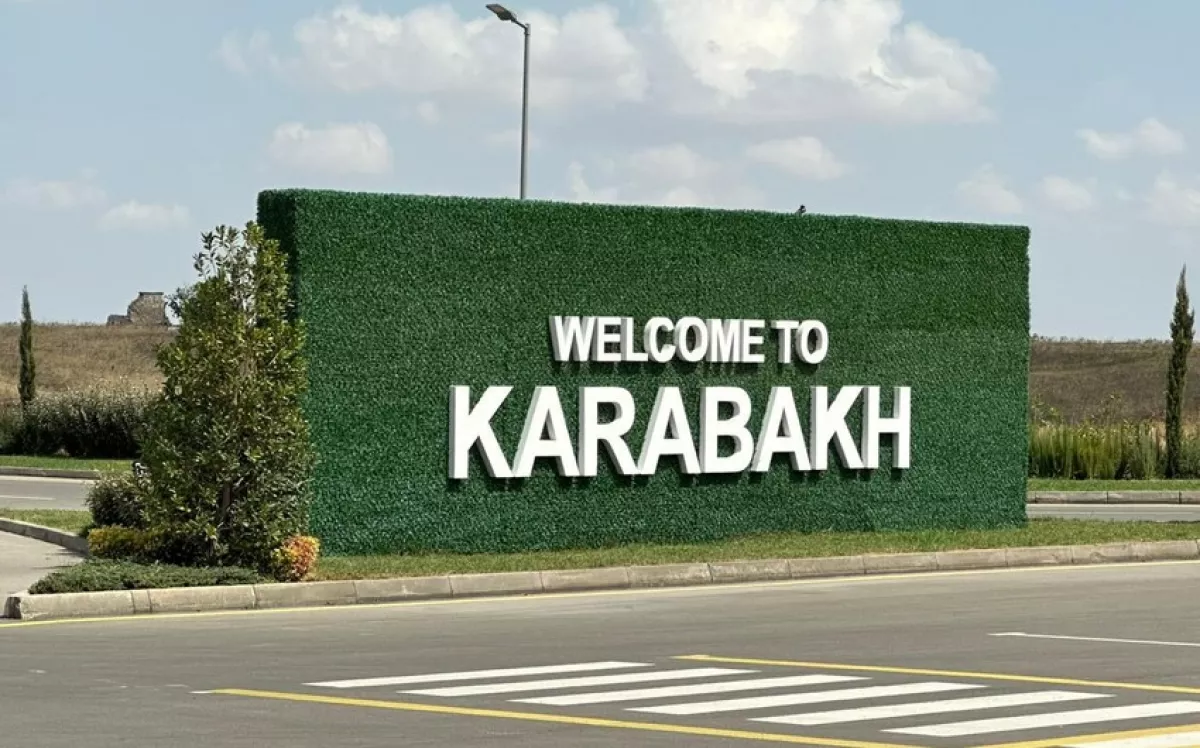
In recent years, the growth of the non-oil sector has been significantly supported by large-scale projects for the revitalisation of the Karabakh and East Zangezur economic regions. Over the past five years, more than 21 billion manats ($12.3 billion) in public investments have been allocated, supporting domestic construction, transport, and architectural companies, as well as manufacturers of building materials, energy equipment, metal structures, and more.
Overall, the focus on developing the non-oil sector has proven effective, with its share in the economy’s structure rising significantly over the past fifteen years. The success of these efforts is evident: while non-oil industries accounted for 49% of GDP in 2011, by early 2025 their share had reached 68%, and the government forecasts it could rise to 70% by 2029. Between 2019 and 2024, the volume of non-oil industrial production nearly doubled, increasing 1.9 times. Moreover, the non-oil sector has become a driving force in the country’s labour market: according to the Ministry of Economy, from January 2019 to November 2025, an average of around 200 new jobs were created daily in the private sector.

Another positive example can be seen in the labour market statistics. As of November 1, 2025, the number of employment contracts signed between workers and employers exceeded 1.884 million, with approximately 54.2% of these contracts in the private non-oil sector. This is an important development, as until relatively recently, the balance was still in favour of the public sector.
Another key positive factor is the steady growth in the number of taxpayers in Azerbaijan. According to data recently published by the State Tax Service, as of January 1, 2026, the country had 1,674,984 registered taxpayers, an increase of 4.9% compared to the beginning of 2025. At the same time, the number of active taxpayers reached 859,300, representing a 6.5% increase over the previous year.
Notably, 86.8% of all taxpayers in the country are individuals—primarily small businesses and individual entrepreneurs—who account for the majority of job openings in the labour market and a significant share of tax revenues. This segment of the economy has played an important role in driving growth in the small non-oil manufacturing cluster, and particularly in trade, services, hospitality, catering, and construction, contributing to non-oil GDP growth of 3.2% last year.
Moreover, according to forecasts, real GDP growth in Azerbaijan’s non-oil sector is expected to reach 5% in 2026, higher than last year. To support non-oil entrepreneurship, Azerbaijan is consistently implementing reforms to improve the investment climate, including simplifying business registration and operations and strengthening public-private partnerships. Amendments to the Tax Code over the past five to six years have helped reduce the fiscal burden, including in agro-industrial clusters and the “green” energy sector, while special tax regimes apply to businesses operating in territories liberated from occupation.
Support for businesses will continue in 2026, with new tax incentives and measures proposed to promote the growth of the non-oil private sector. Under the new initiatives in the Tax Code, the tax burden will be reduced, with measures aimed at stimulating investment, expanding entrepreneurship, and increasing transparency. Extensive tax benefits are also provided for entrepreneurs in the Nakhchivan Autonomous Republic, similar to those available to companies operating in territories liberated from occupation.
Fiscal incentives are designed to encourage the production of buses and trucks in the transport sector, while aquaculture is classified under agriculture, allowing it to be fully exempt from taxes. Additionally, tax rates for the catering sector are being reduced to support cashless payments, and the registration threshold for simplified taxpayers under VAT is being raised from 200,000 ($117,600) to 400,000 manats ($235,200).
As part of fiscal reforms in 2026, a horizontal monitoring mechanism—a system widely adopted in international tax practice—will be introduced, while the electronic audit measure will be phased out. This new approach will apply to medium and large enterprises that use automated accounting and internal control systems, establishing a transparent, trust-based framework for cooperation with tax authorities.
“Under the new system, taxpayers will be able to inform the authorities in advance of potential risks, so on-site inspections will only be conducted in exceptional cases,” wrote Azerbaijani MP Vugar Bayramov recently on his Facebook page. “Overall, in recent years, there has been a steady decline in on-site tax inspections: in 2024, only 384 inspections were conducted for more than 800,000 active taxpayers, a 29% decrease compared to 2023 and five times fewer than in 2018.” According to the MP, a key feature of horizontal monitoring is the ability to avoid financial penalties if tax risks are disclosed on time.







 editor@caliber.az
 +994 55 444-88-98
 Азербайджан, Баку, ул. Низами, 203, Af Business House, 5-й этаж