










Baku’s geopolitical formula How Azerbaijan is redefining sovereignty
On January 5, Azerbaijani President Ilham Aliyev gave his traditional interview to local television channels. As usual, in this conversation, the head of state outlined his strategic vision for the country’s current situation and future development. While our colleagues will examine the economic aspects of Aliyev’s interview, this article focuses on his statements regarding foreign policy.
Ilham Aliyev noted that 2025 was a historic year for Azerbaijan, as it marked the official end of the war with Armenia, and for the first time in a long while, the country began to live in peace. He emphasised that Azerbaijan not only achieved a military victory but also consolidated it politically, ushering in a new era of stability, security, and confidence in the future.
Reflecting on last year’s achievements, the president reminded that Azerbaijan joined the D-8, an organisation comprising the world’s largest Muslim-majority countries. Aliyev also highlighted Azerbaijan’s accession to the Consultative Council of Central Asian States. Among other significant events, he mentioned the Economic Cooperation Organisation summit in Khankendi and the Organisation of Turkic States (OTS) summit in Gabala, which, in his view, strengthened international cooperation and affirmed Azerbaijan’s growing importance on the global stage.
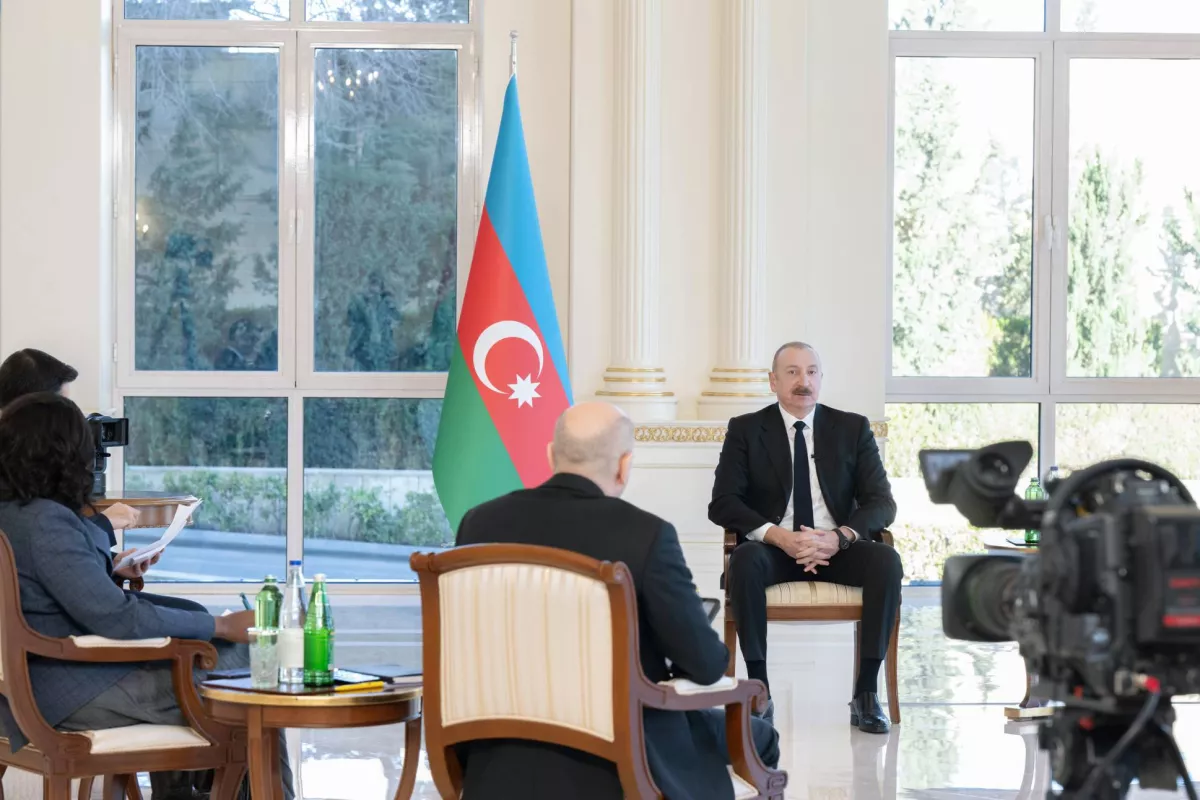
Ilham Aliyev provided detailed clarification on the initiative he announced at the Organisation of Turkic States (OTS) summit in Gabala regarding military cooperation among Turkic countries, including the proposal to hold joint exercises in Azerbaijan this year. He explained that this initiative is motivated by the changed global situation, marked by the erosion of international law, where every country must strengthen its defence capabilities. He emphasised that possessing strength guarantees security and earns respect from other actors, making the enhancement of military potential a necessary measure. Aliyev expressed hope for the support of all OTS members on this matter.
Aliyev noted that, in the five years following the Patriotic War, Azerbaijan has actively strengthened its army and built a new security architecture, using military experience to improve command, modernise equipment, and train new units. During this period, the armed forces have become several times stronger, providing the country with confidence and resilience in the face of any challenges.
The president stressed that Azerbaijan’s actions from 2020 to 2023—including taking strategic heights and preparing for the events of September 2023—were carefully planned, enabling the capitulation of separatist forces and Armenia’s recognition of Karabakh as part of Azerbaijan. He pointed out that the country’s consistency and strength convinced Armenia to abandon its previous “miatsum” policy.
Aliyev also drew attention to serious regional challenges “unrelated to Armenia” and emphasised that Azerbaijan successfully navigated them thanks to its strong army.
He paid particular attention to relations with the United States, calling the past year a turning point in this area. He noted that President Donald Trump acted as a witness to the joint declaration between Armenia and Azerbaijan, repealed Section 907 of the Freedom Support Act (now awaiting formal approval by Congress), and signed a document with Azerbaijan to establish a strategic working group. The president also highlighted that Washington confirmed the opening of the Zangezur Corridor, which connects mainland Azerbaijan with Nakhchivan.
According to Aliyev, these steps marked the beginning of a new stage of strategic partnership between the two countries. He stressed that diplomatic work with the U.S. continues actively, covering key areas ranging from investment and trade to defence-industrial cooperation.
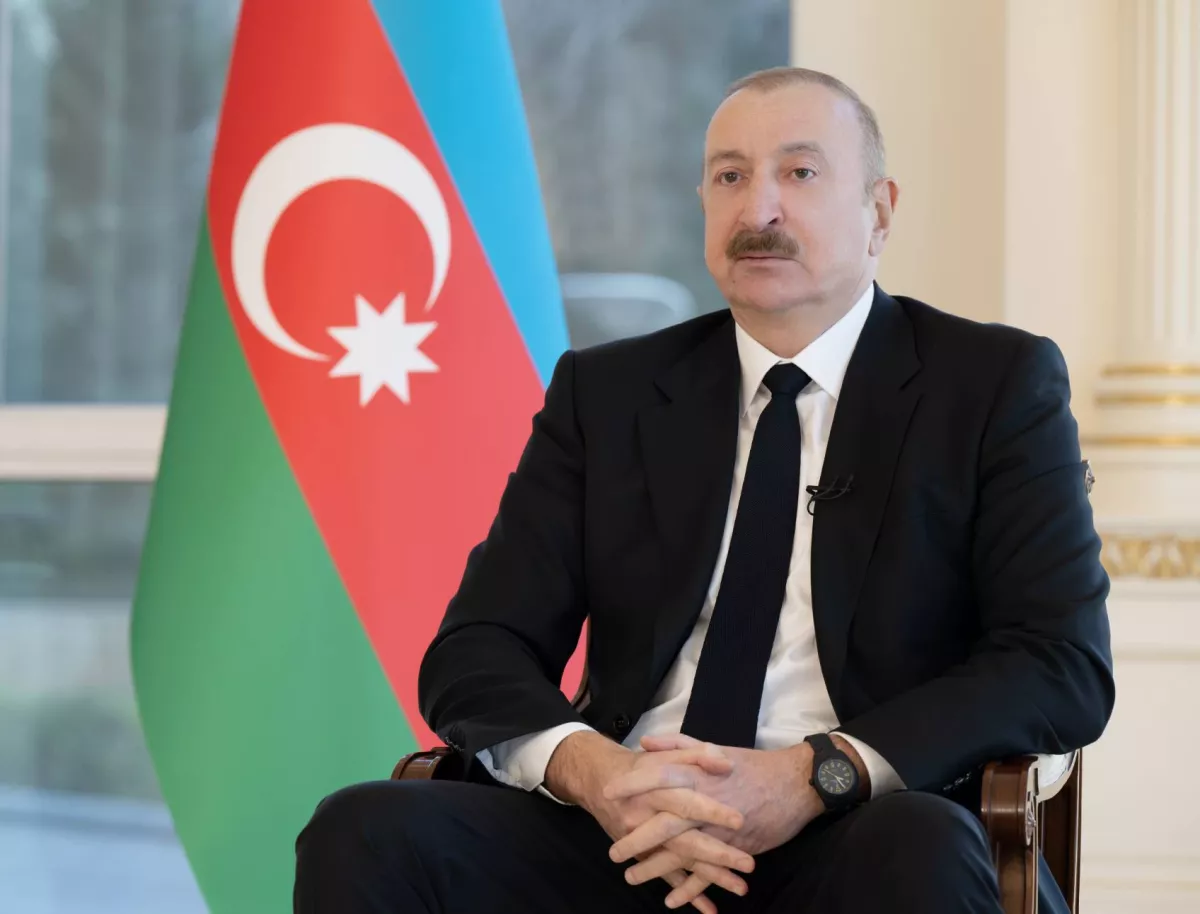
Ilham Aliyev recalled that the adoption of Section 907 in 1992 was both a manifestation of a major injustice on the part of the United States and the result of the incompetence of Azerbaijan’s leadership at the time, which was not even aware of the plans being prepared in Congress to pass the amendment. He stressed that one of the active supporters of this amendment was Joe Biden, which, in his view, also explains the cooling of relations between Azerbaijan and the previous U.S. administration.
Responding to a question about the possibility of Azerbaijani military participation, in one form or another, in a peacekeeping mission in the Gaza Strip, President Aliyev emphasised that Azerbaijan considers involvement in peacekeeping operations only when there is a clear understanding of the mandate and nature of the mission. He noted that Azerbaijan, as a country that has itself suffered, values the lives of its citizens and will not risk them for external conflicts. In this context, he recalled Azerbaijan’s experience in peacekeeping missions in Kosovo, Iraq, and Afghanistan, where its role was limited to guarding strategic facilities and did not involve combat operations, thereby excluding the possibility of Azerbaijani troops taking part in combat missions outside the country. Aliyev once again rejected statements by the U.S. ambassador to the UN regarding Azerbaijan’s alleged consent to participate in operations in the Middle East, describing such claims as unacceptable.
At the same time, he underscored Azerbaijan’s respect for Palestine and highlighted the key role of Arab countries in resolving the Palestinian issue, stressing that non-Arab states should not get ahead of themselves in this matter.
Ilham Aliyev described the strategic partnership with China as one of the key achievements of 2025. According to him, relations between Azerbaijan and China have reached a new level following the signing of two landmark documents—on a strategic partnership in 2024 and a comprehensive strategic partnership in 2025. These agreements provided a strong impetus for the development of economic ties, stimulated investment, and intensified engagement between government institutions and business communities in both countries. As a result, bilateral trade turnover reached a record level of over $4 billion, reflecting growth of more than 20%.
Aliyev placed particular emphasis on transport and logistics cooperation. He noted that Azerbaijan is becoming a key link in the Middle Corridor and an important partner for China in facilitating cargo flows from Asia to Europe, including through the use of the Zangezur Corridor. President Aliyev also announced the launch of a new area of cooperation—military-technical collaboration with China, encompassing joint projects and the production of military equipment. He stressed that this direction is of strategic importance and will strengthen Azerbaijan’s position in the region.
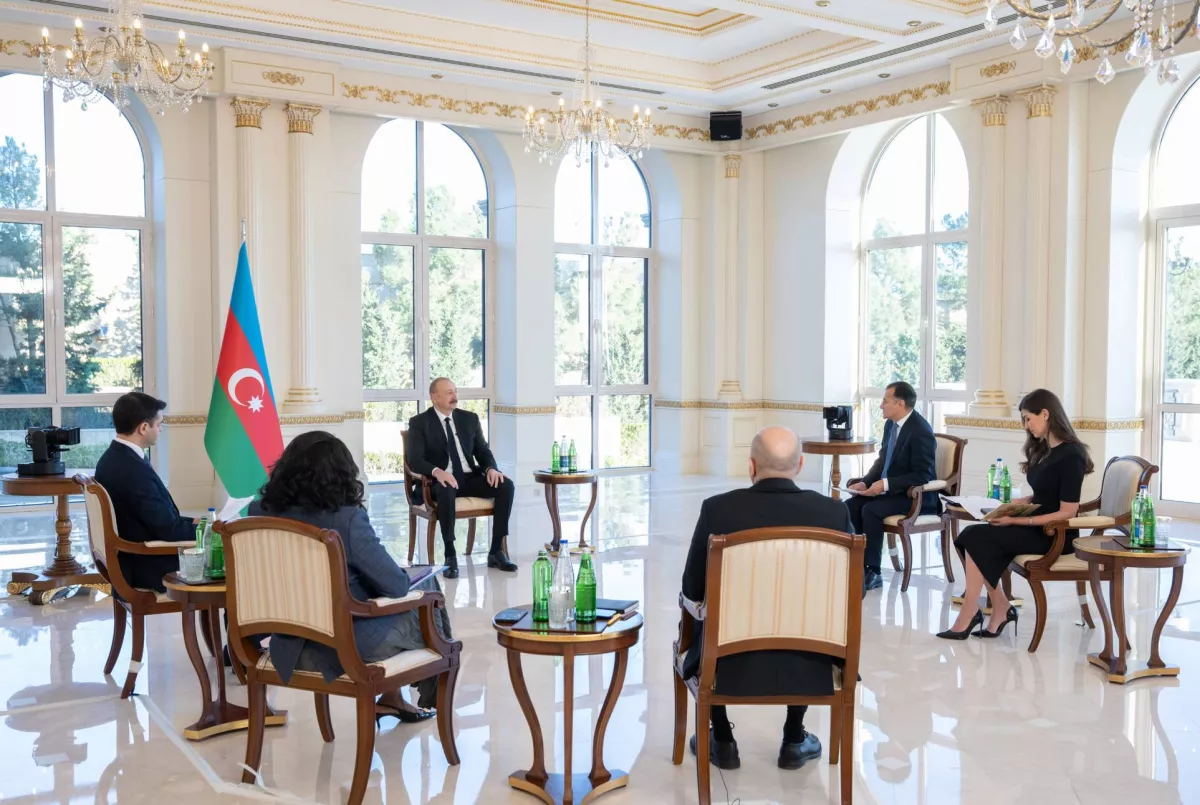
As can be seen even from the excerpts cited above, during the conversation Ilham Aliyev repeatedly returned to the issue of the crisis of international law, the obsolescence of traditional security mechanisms, the ascendancy of the law of force, and the resulting necessity for a sovereign state to strengthen its sovereignty and armed forces in order to be prepared for any challenges. This idea can rightfully be described as one of the central leitmotifs of the president’s address to journalists.
At the same time, President Aliyev stressed that Azerbaijan has always acted justly, on the side of the law and historical legitimacy. However, he emphasised that in order to preserve peace and independence, a state must be strong, and advised other countries to adhere to the same approach.
The head of state reinforced this argument by referring to the history of the liberation of Karabakh. He recalled that international law proved ineffective in Azerbaijan’s case: four UN Security Council resolutions calling for the withdrawal of Armenian forces remained unimplemented for 27 years, while the international community sought to mask Armenian aggression with references to “self-determination,” completely ignoring the fundamental principle of states’ territorial integrity. It was victory on the ground, however, that changed this situation. Following that victory, Azerbaijan created a new reality on the ground that was recognised by the international community, including Armenia itself.
Thus, Ilham Aliyev’s return to the subject of Karabakh and Azerbaijan’s full restoration of its territorial integrity conveys, in the clearest possible terms, the idea that for any state, strengthening sovereignty is essential—without which survival on today’s political map of the world is simply not possible.







 editor@caliber.az
 +994 55 444-88-98
 Азербайджан, Баку, ул. Низами, 203, Af Business House, 5-й этаж