










Belarus on high alert: Lukashenko warns of potential war Analysis by Limansky
A meeting was held in Minsk to review the results of large-scale inspections of Belarusian army units and formations. The President of Belarus highlighted the unprecedentedly high level of armed conflict threats in today’s world.
"We do not want war…"
On April 1, around 300 people gathered in the republic’s capital for a meeting on the combat readiness of the Armed Forces of Belarus, including army commanders and senior government officials.
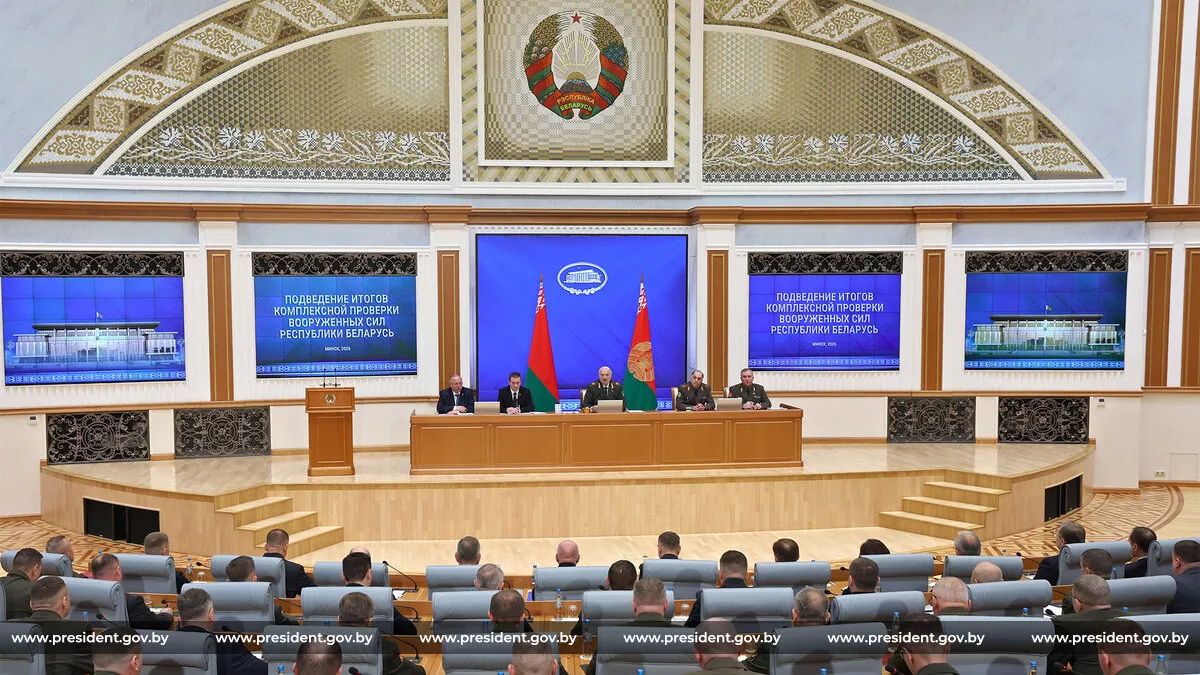
The surprise inspection, which began on January 16, was carried out under the direct supervision of Alexander Lukashenko. Its main goal was to assess the real, not “parade-ready,” condition of the Belarusian army. Such a large-scale inspection had never before been conducted in Belarus.
“There can be no peacetime (referring to a question from Chief of the General Staff Pavel Muraveiko: ‘Is the inspection conducted in peacetime or wartime?’ — Ed.). We are preparing for war,” stated the President of Belarus, attending the meeting in his capacity as Supreme Commander. “That is why we created the Armed Forces, that is why we maintain them, and that is why the people contribute funds to support us. People in this room (and beyond) must understand: we are absolutely against war… because we know what war is. We do not want war, but the army exists for this purpose. If someone decides to confront us and look at us through the sights of weapons, we will respond… and I want my subordinates to be ready to fight. If we are ready to fight, we will be feared (and this is important), and no one will dare to challenge us. That is my goal.”
The inspection was also covered on an unprecedented scale in Belarusian media. However, Alexander Lukashenko noted: “Let me say right away that it was not covered in the way most of you might have wanted. Because all the flaws that exist in our army—frankly, we wouldn’t want to show them, first and foremost, to our potential rivals, or maybe even our opponents or enemies.”
The inspection also involved the State Secretariat of the Security Council, the State Control Committee, the KGB, the Operational-Analytical Center, the Prosecutor’s Office, and the Investigative Committee.
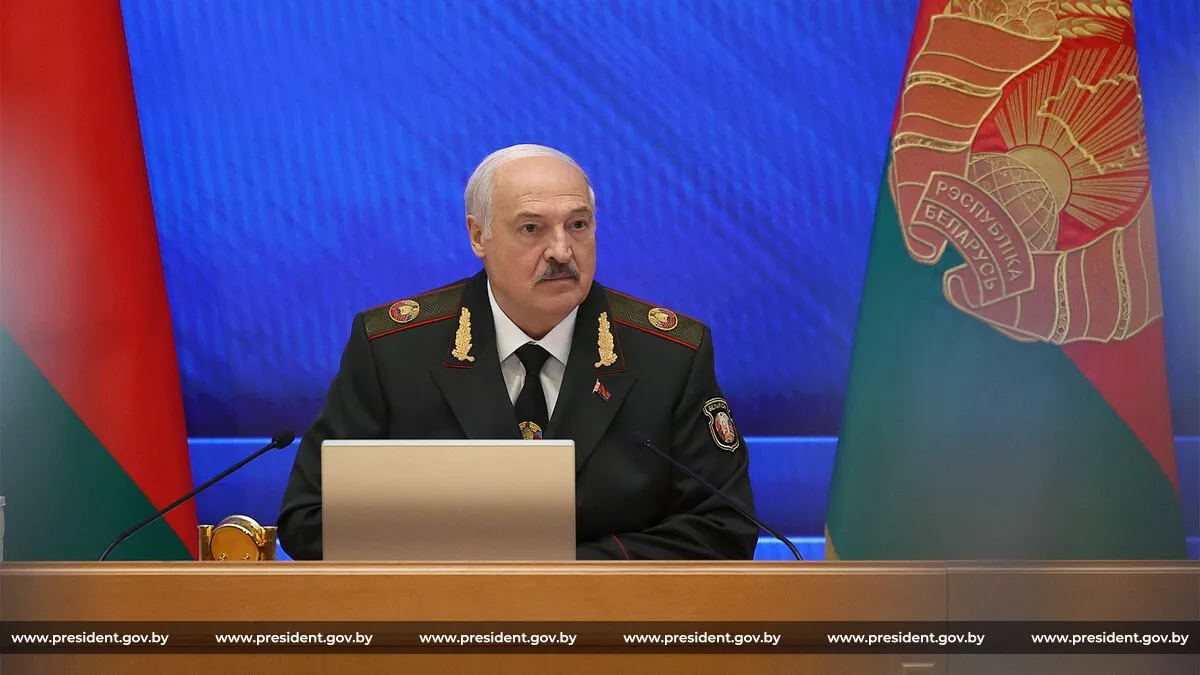
The Belarusian leader emphasised that, having served in the army from private to officer, he knows its internal processes well: “This helps me understand where you lie, where you don’t, and how our inspections actually proceed…”
The President stressed that under current conditions, the military bears enormous responsibility: “Because it’s not only about our lives. It’s about the lives of our children and grandchildren who will fight under our command.”
He also warned that times and approaches are changing: “As always, gentlemen, it won’t be the same. I want to warn you: it won’t be like that with me. I do not intend to adjust to you—you will adjust to the Supreme Commander if you want to survive a future war (God forbid it happens). And if we continue as some of us have, not only will we not survive, but neither will those under our command. I see this from modern combat clashes and wars.”
"We must defend the land…"
It is clear that surprise inspections will continue in the future. The President of Belarus stated that there will be more of them. Certain military units will be mobilised under his orders, supplemented as necessary, and undergo training focused on real combat readiness. In preparing the Armed Forces of Belarus, particular attention is being paid to the lessons of modern wars, including the ongoing conflict in Ukraine.
In modern conditions, intelligence, target designation, and fire adjustment carried out with the help of satellites and UAVs allow for highly precise and sudden strikes. The President of Belarus highlighted the importance of practising the rapid redeployment of units from their permanent bases—targets “where the first missiles will fly”—to reserve areas, as well as the need to increase the overall mobility of the troops. Timely receipt of intelligence about a planned or ongoing attack on Belarus is of particular importance.
“If we know nothing about this, the war will be over for us,” Alexander Lukashenko stated.
Furthermore, war is always a contest of the most modern and advanced types of weaponry. Taking into account remarks and individual complaints received during the inspection, the Belarusian leader recommended that the heads of government and the National Bank “seriously reorganise” their priorities. According to him, Belarus needs to modernise its military equipment, and the necessary resources must be found to achieve this.
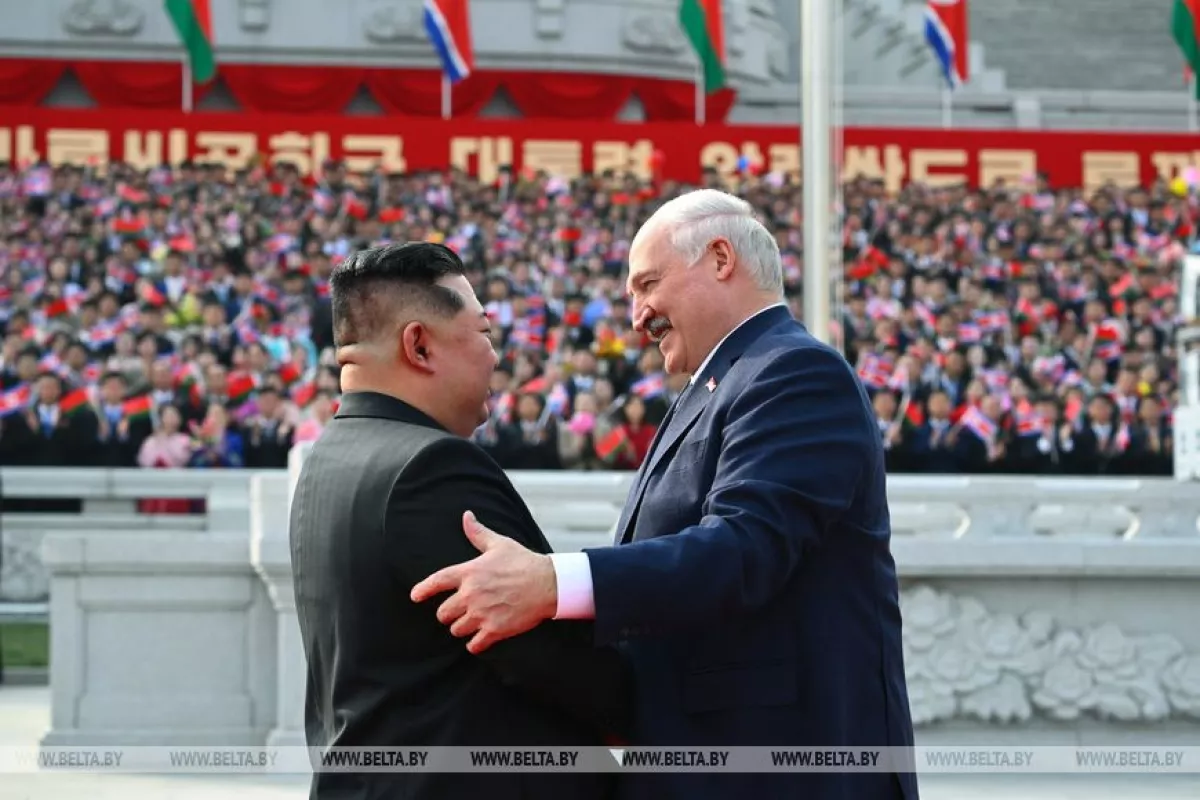
President Lukashenko cited North Korea, which he recently visited, as an example, noting that people there live modestly but work effectively: “Speaking with Kim Jong Un, I said, ‘Listen, you understand that this [weapons production] is expensive?’ Of course, he said, I understand. But, he said, I have no other choice—we must defend the land.”
The Armed Forces of Belarus, together with the internal troops of the Ministry of Internal Affairs, currently number around 100,000 personnel. The mobilisation reserve allows the army’s strength to be rapidly increased to half a million.
The President also addressed the command staff: “I ask you—teach people to fight. I want you yourselves to learn what you don’t know, and teach your subordinates, so that they can survive in the event of war.”
War at the borders
The Belarusian leadership’s measures to strengthen the country’s defence capabilities have seriously alarmed some observers. Misrepresenting the President’s words, the opposition Belarusian outlet BelSAT, as well as several Polish and Ukrainian media sources, claimed that “Belarus is preparing for war.”
The Belarusian people have always been known for their peacefulness and friendly attitude toward their neighbours. The current inspection of the Armed Forces of Belarus is driven solely by the complex international situation and the extremely tense conditions along the country’s borders. In the Belarusian direction, NATO’s strike formations are reportedly being reinforced.
It is worth noting that the size of the Polish army is nearly doubling. In Lithuania, a tank brigade of the Bundeswehr is being deployed in close proximity to the Belarusian border—for the first time since World War II. On the southern front, the Armed Forces of Ukraine maintain at least 20,000 troops. Meanwhile, leaders of these states regularly issue hostile statements toward Belarus, which have noticeably increased recently, including remarks from Volodymyr Zelenskyy.
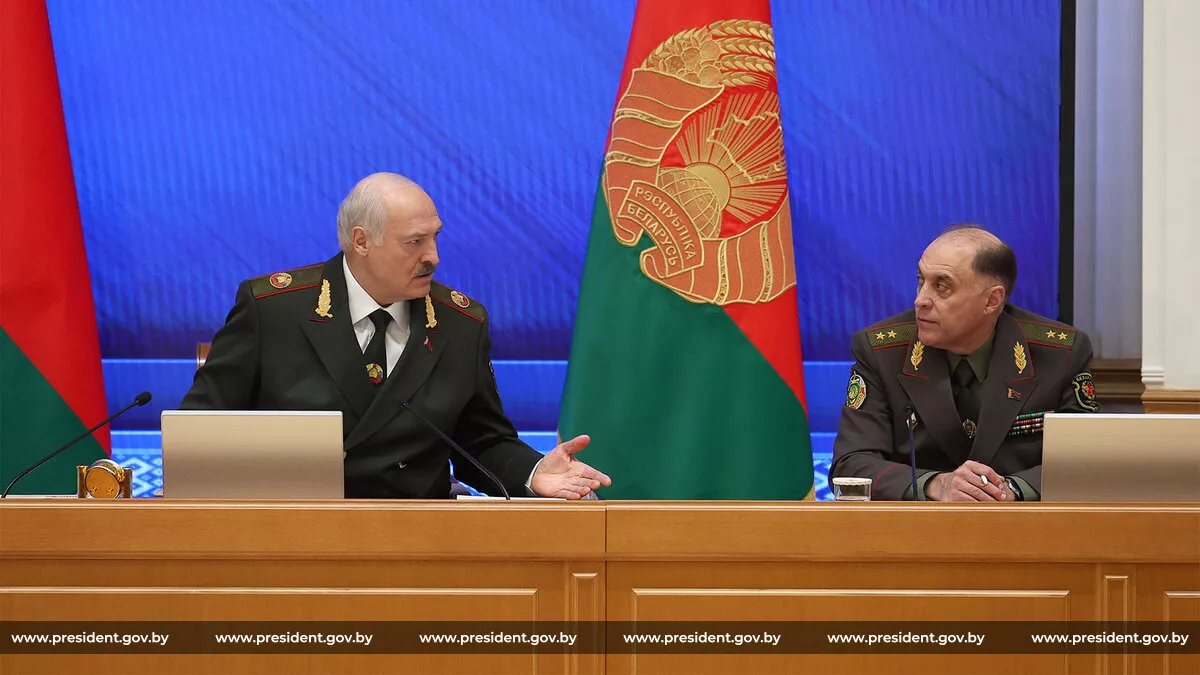
“War is happening right outside our fence,” Alexander Lukashenko remarked.
A breakthrough has also been seen in the recent negotiation process with the Trump administration, which has already led to the lifting of several sanctions.
“I am well-informed. You know that we are negotiating with the Americans. And my life and work experience, including my military service, helps me draw the appropriate conclusions from smiles, hugs, kisses, and so on—with the Americans, all the way to the Democratic People’s Republic of Korea,” Lukashenko said.
Belarus believes that the best guarantee against aggression is the readiness of the national army to decisively repel it.







 editor@caliber.az
 +994 55 444-88-98
 Азербайджан, Баку, ул. Низами, 203, Af Business House, 5-й этаж