










Belarus outlines five-year priorities Peace, economy, sovereignty
Belarus hosted a large-scale forum bringing together representatives from across the country. The All-Belarusian People’s Assembly set out the guiding principles for the country’s governance over the next five years.
Socially oriented structure
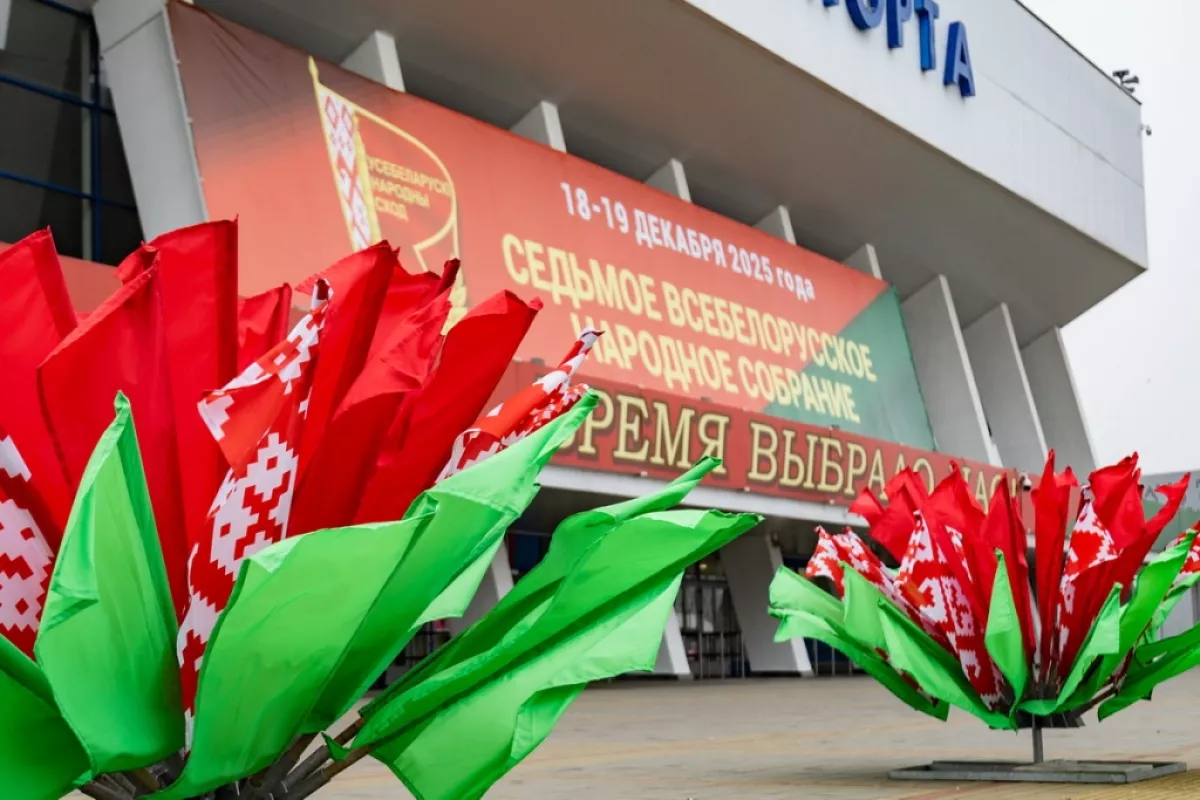
On December 18–19, the 7th All-Belarusian People’s Assembly took place in Minsk, attended by 1,200 delegates. President Alexander Lukashenko delivered a message to the Belarusian people and parliament: “We do not know what the world will be like tomorrow. What Belarus will be like depends only on us. Everyone must think about ensuring the development of our country. Let us do everything so that there is a place for our children to live.”
The president emphasised that the country is following its own, Belarusian path and independently determining the direction of its development: “Belarus is our home. Only we decide our economic system. It has long been socially oriented. Even the Americans—great market capitalists—have never, in all negotiations, demanded that I dismantle this model or move away from it. They are not blind. They see what kind of country we have—roads, clean cities, proper cars.”
Sovereignty was named an inviolable value. The head of state noted that through import substitution, Belarus is achieving import independence: “It has never been our goal to produce absolutely everything in Belarus. But wherever we have local raw materials, scientific groundwork, and schools, we will literally fight for our interests in the most difficult and not always fair competition. Absolutely unfair competition.”
Meanwhile, Belarus has preserved and expanded the real sector of its economy without mindlessly destroying its Soviet heritage. The Republic has much to be proud of in terms of economic achievements: its own nuclear power plant has strengthened the country’s energy independence. Based on this, economic clusters such as residential electric heating, electric transport, and energy storage systems are developing in Belarus.
Today, the country produces its own computers and monitors, powerful energy-intensive tractors, and BELAZ unmanned trucks. The production of passenger cars, which did not previously exist in the republic, has been mastered. A new bus factory, “MAZ,” has been built; oil refining and pharmaceutical production are being improved; and Belarusian dairy products are highly valued in many countries.
Despite sanctions imposed by the West, Belarus has met its planned export targets of $50 billion during the current five-year period. Its adversaries have also failed to achieve the international isolation of the country: despite the closure of about half of its border crossings, Belarus has entered the top 50 most-visited countries by tourists.
The president assessed the neoliberal economic model proposed by the nationalist opposition as a surrender of the state’s independence. According to him, the foundation of national sovereignty is a developed domestic industry.
A complete pivot to the West, privatisation and sale of state property, as well as financial dependence on Western creditors, would, in Lukashenko’s view, only lead to the collapse of production and the country falling under external control. Therefore, politicians promoting such ideas are, in essence, acting as agents of Western intelligence services.
“Protecting Belarus’s interests comes first. Foreign agents and extremists will no longer operate in our political field,” the Belarusian leader declared.
A kind of “surprise” for certain circles were the President’s words that among the fugitive emigrants there are hundreds of Belarusian agents.
At the same time, Alexander Lukashenko referred to himself as a “departing president.” The next presidential elections in the republic are scheduled for 2030.
Avoiding any escalation
It is no coincidence that in the current complex and tense international situation, teetering on the edge of a major war, the Belarusian president devoted a significant part of his message to issues of peace and foreign policy: “This is a frightening trend—the world community is being drawn into a global war. No matter what peaceful initiatives are proposed, the situation is seriously escalating.”
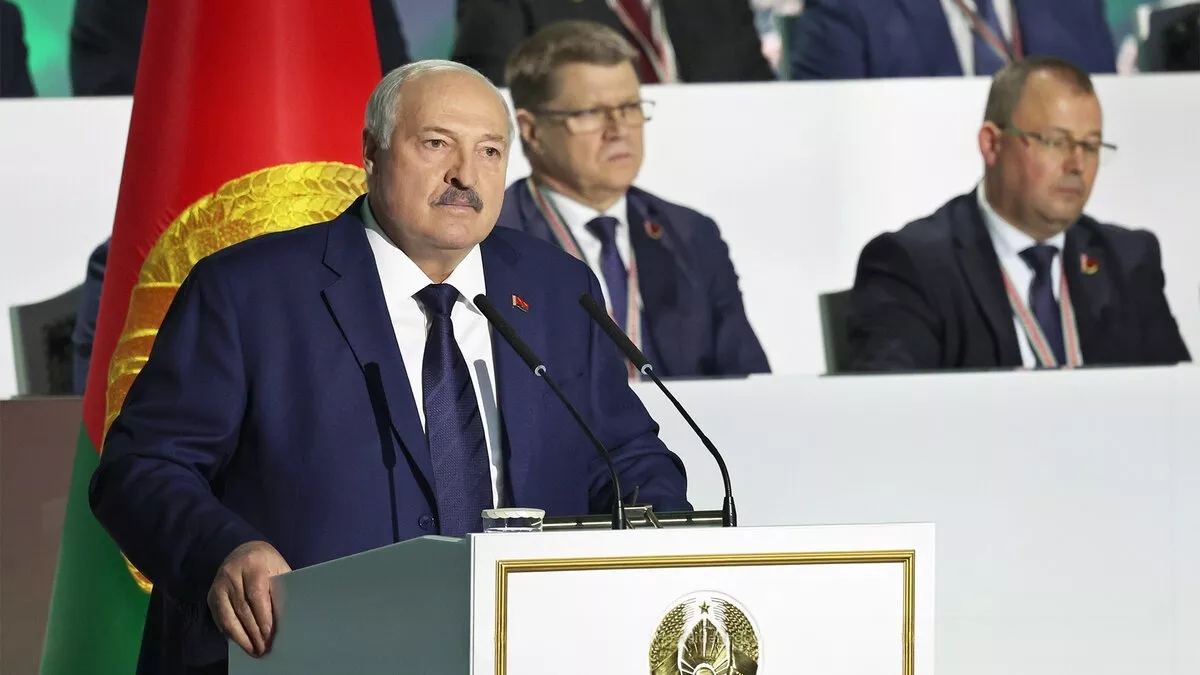
At the same time, the leader of Belarus pointed out the causes of military escalation: “There is now a fierce struggle, a brutal competition. Everyone understands that the economy comes first. And in this competition, the ruthless strangling of one’s competitors has begun.”
Where it is difficult to apply military force, economic sanctions come into play.
Belarus, in turn, responds to provocations from the EU and certain neighbouring states with restraint, consistently proposing a peaceful resolution of all disputed issues. Apparently, this approach is yielding positive results.
For example, a particularly tense situation recently arose on the border with Lithuania. Due to smugglers using balloons, Vilnius first closed the border with Belarus and then declared a state of emergency on its territory. However, as of today, Lithuania is already ready for negotiations.
Answering questions, the president stated, “My position is simple. It doesn’t take much time to deal with Lithuania. By any means. But God forbid to start some kind of little war…”
Alexander Lukashenko also emphasised that he constantly strives to avoid any escalation, prioritising dialogue and agreements. At the same time, he warned that any act of aggression would receive a harsh response using all available means.
Belarus’s Armed Forces already have the “Oreshnik” system in their arsenal—which went on combat duty during the days of the All-Belarusian People’s Assembly—as well as nuclear weapons.
In addition, the president proposed revising the management system of international reserve assets, noting that in light of recent events, previous guarantees of their security have effectively ceased to function.
“Everything is leading to a ‘big deal’”
Recently, relations between Minsk and Washington have begun to reset. As part of this process, several individuals convicted for the events of 2020—whom the West considers political prisoners—were released in Belarus. At the same time, the U.S. administration is lifting sanctions on Belavia and Belaruskali. The release of the prisoners was entirely the initiative and ‘merit’ of the American side. Meanwhile, Minsk’s precondition was a refusal to engage in any negotiations with the exiled opposition.
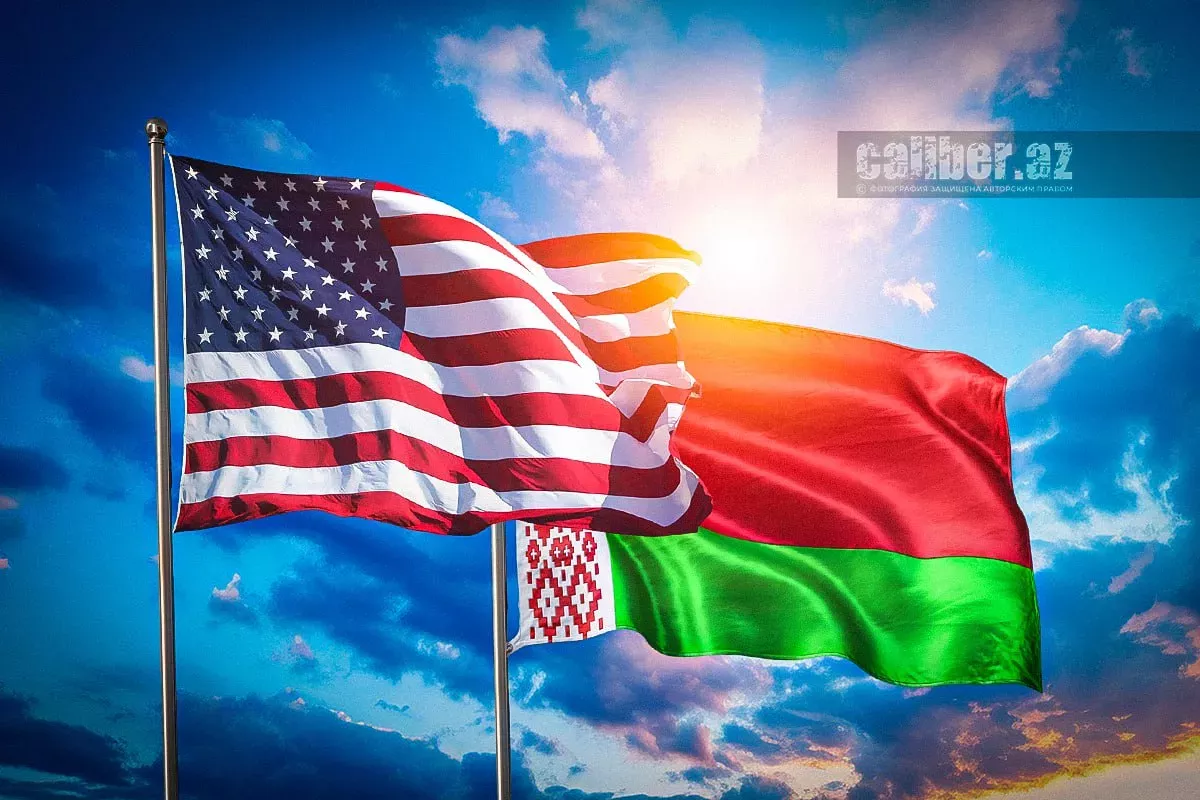
Alexander Lukashenko commented on this, saying: “There is nothing wrong with, while having excellent strategic relations with Russia and China, beginning to build a constructive dialogue with the U.S. leadership. Let me remind you, this is one of the most powerful and important centres of power. Yes, the dialogue is sometimes tough and persistent. Yes, every detail matters. But these are negotiations between a strong party and a strong party. The respect and authority of our country are not in question.”
Among other things, the resumption of the U.S. embassy’s work in Minsk is being considered. The only points of contention at the moment are the size of the diplomatic staff and security issues. The American side insists on the presence of Marines, while Lukashenko believes that the capabilities of Belarusian security forces are fully sufficient for reliable protection.
Even serious negotiations allow room for humour. For example, the American side expressed a desire to hire Belarusian citizens to work at the embassy.
“I said: here, Ivan will give you the number of our [agents]… (Ivan Tertel — Chairman of the KGB — ed.). That’s why the atmosphere was like that. Somewhere, it was a joke. Americans like to joke, so I offered them a joke. But in this joke, there is only a fraction of a joke.”
The President of Belarus emphasized in particular that the U.S. embassy must not once again become a center for supporting extremist activity, which, according to him, was among the factors that led to the events of 2020: “We do not want the American embassy (or that of any other country) to become some kind of breeding ground for this infection…” — the Belarusian leader clearly drew the line.
Lukashenko also noted that the U.S. delegation stopped raising the issue of Belarus’s relations with Russia after receiving a firm and unequivocal response from him at their very first meeting: “Our closest friends are them,” the Belarusian president said of the Russian people. “We do not speak much about this, but we do not support this kind of ‘accounting’ that some people in the Russian government occasionally try to impose on us—‘we did this for you, we did that for you.’ We do not talk about everything we do for Russians. If I started listing it all, I do not know which side the balance would favour. But President Putin and I have a clear understanding: we help each other. Whether they call us aggressors or co‑aggressors, it does not matter what they say about us. We must look after the interests of our own people. Cherish this friendship. God forbid we lean the wrong way or fall for these foreign promises—then the destruction of our state will begin.”
At the same time, in Russia, certain circles have criticised the negotiations between Minsk and Washington. Lukashenko responded calmly, noting that the Kremlin is also conducting its own dialogue with Donald Trump.
The President of Belarus also highlighted the significant support provided by China and its leader Xi Jinping. According to him, China’s assistance greatly helps Minsk overcome the effects of Western sanctions: “I told the Americans long ago: you are exactly 25 years too late, and today you cannot stop China. You are incapable. With China, you can only negotiate.”
Belarus has also offered the U.S. its mediation in talks with Venezuela.
In addition, Lukashenko announced his intention to invite to the republic, on the eve of a major Jewish holiday, the family of Donald Trump’s son-in-law, Jared Kushner, whose roots trace back to Novogrudok in Belarus.
Summing up the current stage of negotiations with the American delegation, the Belarusian leader noted that everything is moving toward a “big deal.” A meeting between Alexander Lukashenko and Donald Trump is planned in the future.
Belarus — Ukraine: “We will help—these are our people”
Alexander Lukashenko also shared his vision of the global geopolitical landscape. In addition to the three widely recognised centres of power—China, Russia, and the United States—the Belarusian leader also included the European Union and India. However, due to “internal discord and hysterical demands,” he believes the EU’s significance could decline significantly.
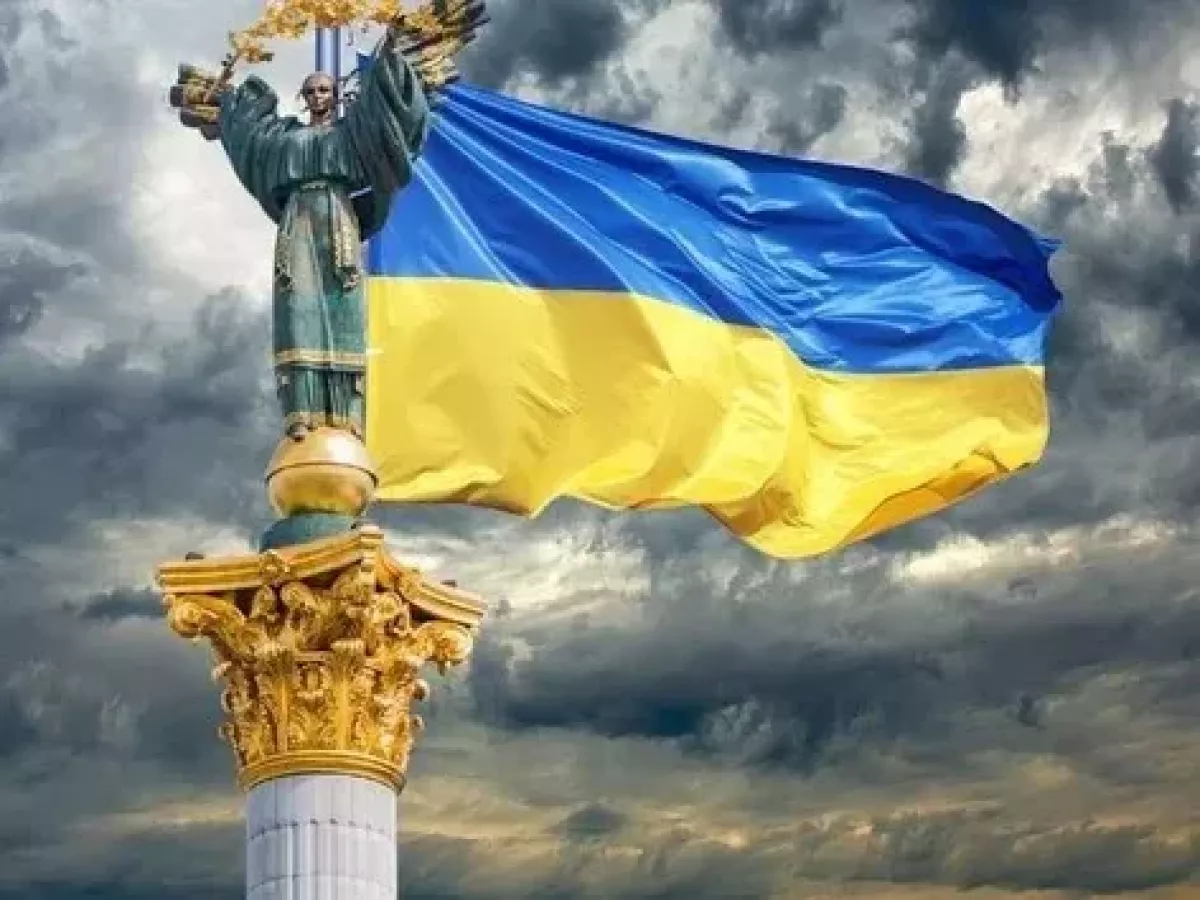
Belarus has always been particularly concerned about the war in fraternal Ukraine. At the same time, Minsk consistently advocates for a swift peace settlement. Western media, however, spread claims that the conflict is supposedly beneficial for Belarus. Lukashenko firmly rejected these statements: “If the escalation of the conflict continues, we will once again become a field of clashes—just like in the First and Second World Wars. We were the ones primarily destroyed here. I do not want these clashes to happen here, because I know how it will end… It is complete nonsense to consider this in terms of profit or loss.”
Lukashenko explained that Belarus managed to avoid a military clash with Ukraine at the very start of the conflict. Recently, the Ukrainian Armed Forces had announced intentions to shoot down unidentified drones in Belarusian airspace. However, thanks to Minsk’s peaceful yet firm stance, the situation was again resolved through diplomatic means.
“Only a peaceful resolution of the Ukrainian issue is beneficial for us. Ukraine cannot do without us either,” Lukashenko emphasised, expressing readiness to participate in the country’s post-war reconstruction, including on a gratuitous basis: “We will help—these are our people.”
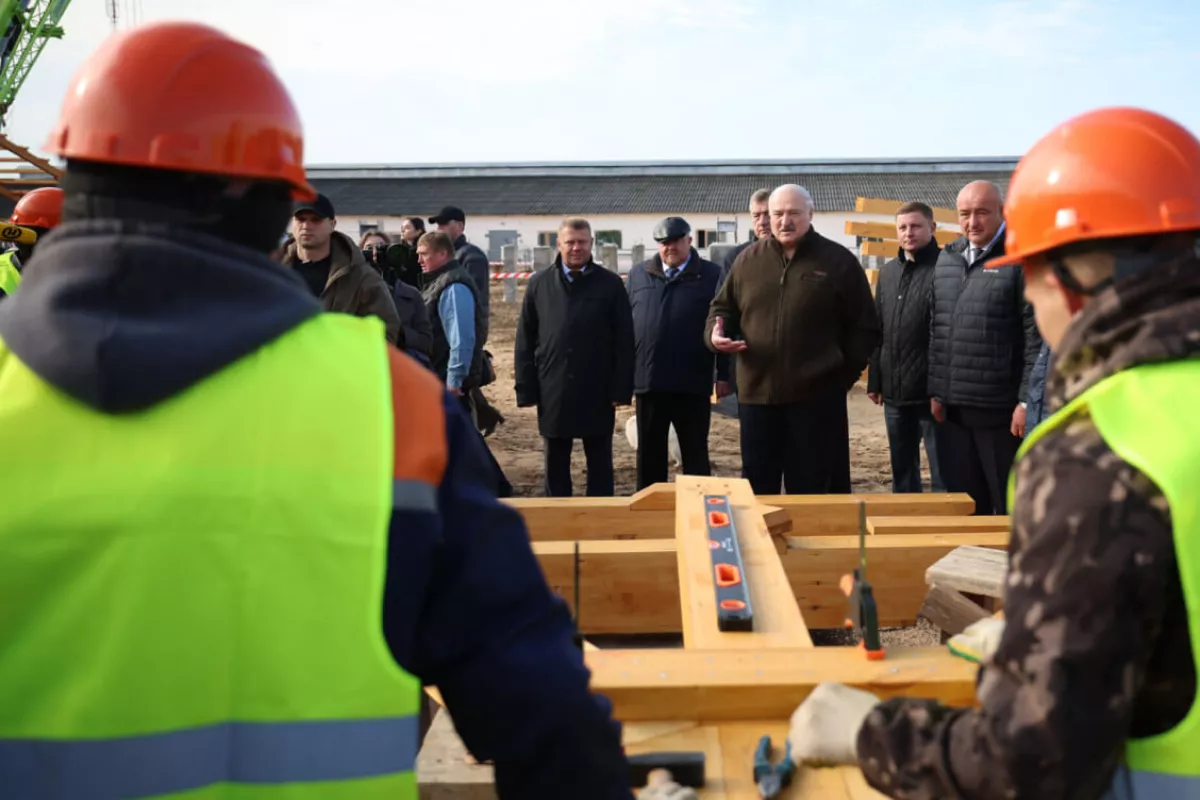
The president also addressed the topic of labour migrants from post-Soviet republics, referring to them as “our people.” In particular, Belarus already hosts a significant number of workers from Uzbekistan. At the same time, he emphasised that order must be strictly maintained, but that everyone coming to Belarus with good intentions to work, study, or relax is welcome.
Lukashenko also touched on interethnic relations: “We have enshrined in our Constitution the right to the free development of the cultures of all national communities living in the Republic of Belarus. Every two years, we hold the Republican Festival of National Cultures in Grodno.”
Today, Belarus continues to remain an island of stability and peace amid a sea of military confrontation and preparations for it.







 editor@caliber.az
 +994 55 444-88-98
 Азербайджан, Баку, ул. Низами, 203, Af Business House, 5-й этаж