










Belarusian pragmatism at the crossroads of ambitions Following Lukashenko’s interview with Newsmax
Belarusian news portals have published the full version of the interview given by President Alexander Lukashenko to the American TV channel Newsmax. Before analysing the content of the conversation, it is important to outline its context.
At the time, U.S. President Donald Trump’s special envoy John Coale was in Minsk, announcing the lifting of sanctions on Belarusian potash. In response, Minsk released more than a hundred prisoners, including well-known opposition figures. These steps marked a new stage in the normalisation of Belarus–U.S. relations, against the backdrop of a revision of the foreign policy principles of the Trump administration. It should be recalled that in the new Washington doctrine, Russia is seen more as a complex partner than as an adversary. This makes Belarus a convenient channel of communication between Moscow and Washington.
Coale arrived in Minsk accompanied by his wife, Greta Van Susteren, a Newsmax TV anchor. The channel itself is known for its conservative stance, and its owner, Christopher Ruddy, is a long-time friend of Trump. The conversation actually began with a discussion of Donald Trump’s persona. Lukashenko emphasised that he is not Trump’s “blind supporter,” but respects him as a strong and decisive politician. He noted that Trump focuses not only on foreign, but also on domestic U.S. policy, acting “correctly.” According to Lukashenko, the actions of the current White House leader, who has halted several wars, demonstrate his commitment to peace—unlike his predecessors.

The Belarusian leader also positively assessed the new U.S. National Security Strategy, calling it a “gift for the world.” He further expressed confidence that if the resolution of the Ukrainian conflict depended solely on Trump, the war would already be over.
The section of the interview devoted to the Russia–Ukraine war turned out to be the most substantive. Reflecting on the difficulties of the peace process, Lukashenko effectively revealed the Russian leadership’s fear of a large-scale mobilisation—a factor that “weighs heavily” over the Kremlin. It would be naive to think such a statement was made at Moscow’s request. Rather, it appears to have been a calculated political move by Lukashenko himself, who may thus be presenting to the world his role as a figure tasked with convincing Putin of the need for compromise.
In another point, Lukashenko’s position partially diverges from Kremlin rhetoric. The Belarusian leader speaks of the need to “stop the shooting and freeze the conflict” before negotiating, whereas Moscow insists that it wants a peace that addresses the “root causes of the conflict,” rather than a mere ceasefire. Although Lukashenko also noted that Ukraine’s rearmament must be prevented, his approach to conflict resolution differs from the official Russian statements.
In this way, Lukashenko may have shed light on the contours of potential Russian compromises while emphasising his own role in advancing this agenda.
A significant portion of Lukashenko’s reflections—and, more precisely, his criticism—was directed at Europe. He noted that the Minsk agreements failed due to the position of European mediators and stated that, without U.S. involvement, achieving peace at that time would have been impossible. In his view, Europe overestimates its capabilities and cannot support Ukraine for long without Washington. Lukashenko expressed confidence that if Trump shows determination, the world could avoid a major war. However, if the American leader loses interest, the war will continue and could escalate into a global conflict involving all types of weaponry.
Regarding his country’s international standing, Lukashenko said that Belarus is interested in restoring dialogue with the U.S. and has already presented Washington with a number of “pragmatic proposals.” He urged the American side to acknowledge the failure of its attempts at pressure in 2020 and to build relations based on mutual respect. The Belarusian president noted that both countries share a spirit of pragmatism and are capable of reaching agreements if they act on common interests rather than ideological differences.
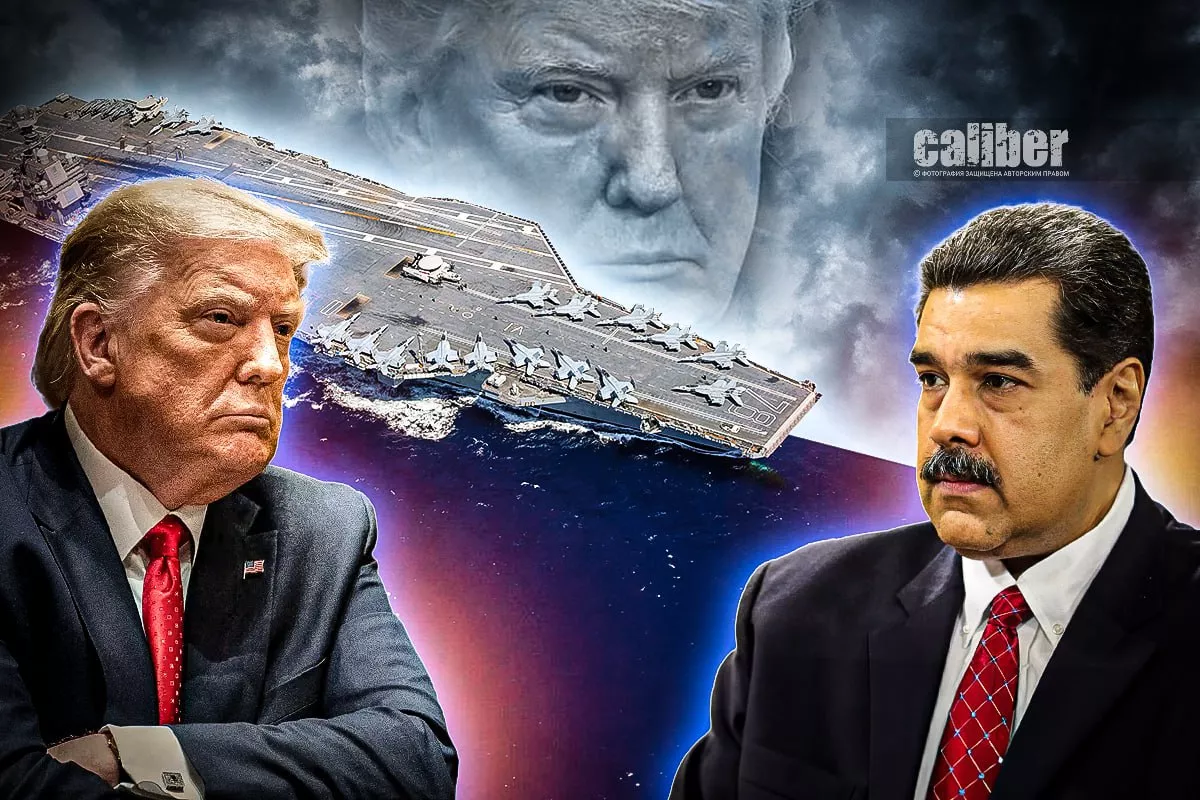
Speaking about Latin America, Lukashenko emphasised that the crisis surrounding Venezuela should be resolved exclusively through peaceful means. He described Nicolás Maduro as a “decent and strong man,” dismissed rumours about his possible relocation to Belarus, and warned that a war with the country would become a “second Vietnam” for the U.S. The president questioned the credibility of Washington’s accusations against Maduro regarding drug trafficking, noting that the fight against drugs should be a joint effort rather than one conducted “with missiles.” He also pointed out the contradictions in the U.S. position, reminding that American elections themselves were accompanied by scandals and allegations of fraud.
Lukashenko recalled that he believed in China’s future 30 years ago. Today, he said, it is impossible to contain the development of the PRC. He described Xi Jinping as a “smart, careful, and calm” leader who acts without haste.
The Belarusian president mentioned Trump’s idea of creating an alliance of five powers—the U.S., Russia, China, Japan, and India—and noted that such an alliance could radically reshape the global system. In his view, Trump has “turned to Asia,” recognising that the region holds the future of economic growth.
Lukashenko also shared his impressions of meeting North Korean leader Kim Jong Un, describing him as a “normal, honest, and calm person with whom one can negotiate.”
An interesting detail: during the interview, the Belarusian leader mentioned the word “God” several times. This is likely not only an expression of personal religiosity but also an attempt to appeal to the Newsmax audience, which is oriented toward conservative values.
A key theme runs throughout the interview—the necessity of reaching agreements. Lukashenko used the word “negotiate” more than any other, whether in the context of Venezuela, North Korea, Russia and Ukraine, or his native Belarus. In doing so, he seems to send a signal to Trump: “we are on the same wavelength,” since the concept of a “deal” is fundamental for the American leader.
However, despite demonstrating alignment on many points, Lukashenko does not come across as someone eager to please. His sharpness on the Venezuela issue shows that he is unafraid to assert his own principled stance.
Today, Minsk finds itself in a unique position: close to Moscow and Beijing, it is becoming increasingly interesting to Washington. For the U.S., Belarus is not only a potential intermediary in dialogue with Russia but also a country seeking to strengthen its own independence.
Strategic stability between Europe and Russia, which Trump is attempting to build under the aforementioned new National Security Strategy, logically involves both a Ukraine not mired in chaos and a sovereign Belarus. Lukashenko appears to have chosen the perfect moment to present himself and his country as an independent actor with significant diplomatic potential.







 editor@caliber.az
 +994 55 444-88-98
 Азербайджан, Баку, ул. Низами, 203, Af Business House, 5-й этаж