










Eighty shades of revanchism The hidden side of Armenian peace declarations
On August 8, 2025, a truly historic event took place in Washington. In the presence of President of Azerbaijan Ilham Aliyev, President of the United States Donald Trump, and Prime Minister of Armenia Nikol Pashinyan, the foreign ministers of the two countries—Jeyhun Bayramov and Ararat Mirzoyan—initialled the draft Agreement on the Establishment of Peace and Interstate Relations. In addition, the leaders of the three states signed a Joint Declaration.
The ceremony at the White House marked the culmination of years of efforts to resolve one of the most protracted conflicts in the post-Soviet space. Pashinyan declared that peace had been established between the two countries, while Aliyev spoke of the beginning of a new phase in relations. For the first time in thirty-five years, the leaders of the two states formally recorded their readiness to move towards normalisation.
Five months have passed since that event—a period long enough for declarations to begin taking shape in real life. During this time, the outlines of a future peace should have become visible not only in statements, but also in the practical steps taken by the parties. Yet it is precisely here that the contrast has emerged, which we intend to examine in detail today.
Baku has consistently been infusing the peace process with tangible economic substance. In October 2025, the lifting of all restrictions on cargo transit to Armenia via Azerbaijan was announced, and in early November, for the first time in thirty-five years, freight trains carrying Russian and Kazakh wheat travelled by rail through Azerbaijani territory to the neighbouring republic. In December, the State Oil Company of Azerbaijan (SOCAR) delivered its first shipment of AI-95 petrol to Armenia, followed in recent days by a second consignment of Azerbaijani petroleum products. For the Armenian side, which imports a significant share of its fuel from a single source, an alternative supply route has thus been opened.
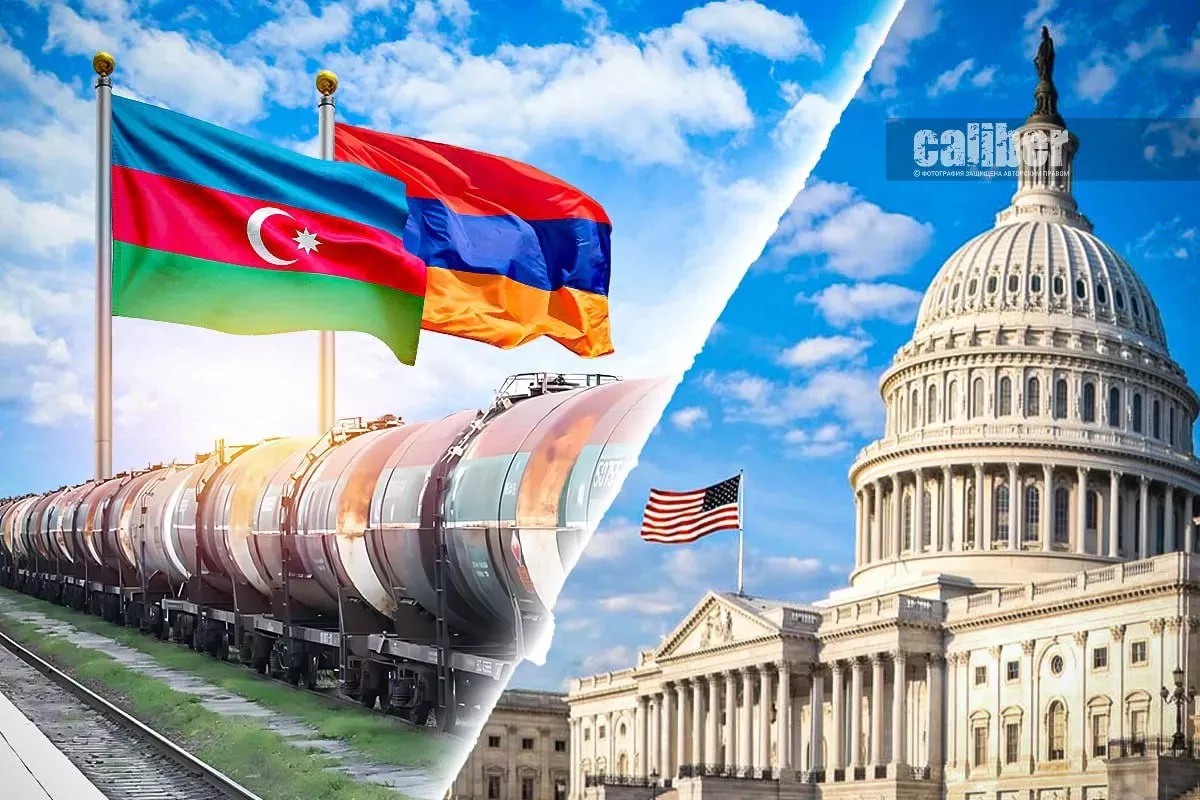
These are precisely the economic dividends of peace that make a return to confrontation unprofitable. Peace is already beginning to function at the level of infrastructure, logistics, and pragmatic calculation. Against this backdrop, a logical question arises: what steps is the Armenian side taking to translate the Washington agreements into reality?
At the official level, Yerevan regularly reaffirms its commitment to peace. However, in parallel, Armenian officials put forward claims against Azerbaijan regarding the activities of the Western Azerbaijan Community, interpreting them as manifestations of territorial claims. In December 2025, Prime Minister Pashinyan proposed that Baku should “close in parallel” the issues of Western Azerbaijan and the return of Armenians to Karabakh, stating that there “can be no Western Azerbaijan” on the territory of Armenia. For his part, Armenian Foreign Minister Ararat Mirzoyan spoke of disagreement with a number of Azerbaijani demands, while at the same time emphasising readiness for dialogue.
Meanwhile, the Western Azerbaijan Community is a non-governmental organisation bringing together people originating from what is now Armenia, from where hundreds of thousands of Azerbaijanis were forcibly expelled in the late 1980s. It is a civil society structure working on issues of human rights and historical memory, rather than a state instrument of territorial claims. The organisation has publicly stated its respect for the territorial integrity and sovereignty of the Republic of Armenia, stressing that the issue at hand is the right of return to native homes, not land claims. Moreover, in January 2025, the Community directly appealed to Pashinyan with a call for dialogue and for “sincere efforts to establish peace and cooperation in the region”.
If the activities of a single Azerbaijani NGO provoke such a painful reaction in Yerevan, it is only logical to look at what has been happening inside Armenia itself since Washington. The picture that emerges upon closer examination sits uneasily with the official statements about turning the page on the Karabakh conflict.
Five months after the Washington meeting, dozens of organisations continue to operate within Armenia whose activities are directly or indirectly aimed at preserving the so-called “Karabakh agenda.” This represents a systematic infrastructure—with events, public statements, international contacts, and a persistent presence in the media space. According to available data, the total number of structures using “Artsakh” terminology and symbolism exceeds eighty. Many of them have maintained active engagement since August 2025—regularly updating social media pages and issuing statements. In April 2025, more than ten NGOs signed a joint appeal opposing the Armenian Foreign Ministry’s position on removing the Karabakh issue from the interstate agenda. By September of the same year, several dozen more organisations addressed the Armenian public with their own appeals.
One of the most telling examples is the so-called “Artsakh Representation” in Yerevan, headed by Samvel Shahramanyan, the former leader of the now-defunct illegal entity. In September 2023, he formally signed a “decree” dissolving all “state institutions” of the puppet regime. In theory, any of his “representations” should have ceased to exist after that. In practice, however, the “structure” continues to operate—and its activity after August 2025 has not only persisted but taken on an openly provocative character.
For instance, on December 10, 2025, “parliamentary” hearings were held in the building of this “representation,” focusing on the “return of Armenians to Karabakh.” The event was timed to coincide with the anniversary of the “referendum” and the adoption of the “constitution” of the long-defunct regime. The situation is therefore paradoxical: a representation of a liquidated entity is holding events that create the illusion of ongoing institutional existence, while the Armenian authorities, who claim commitment to peace, turn a blind eye.
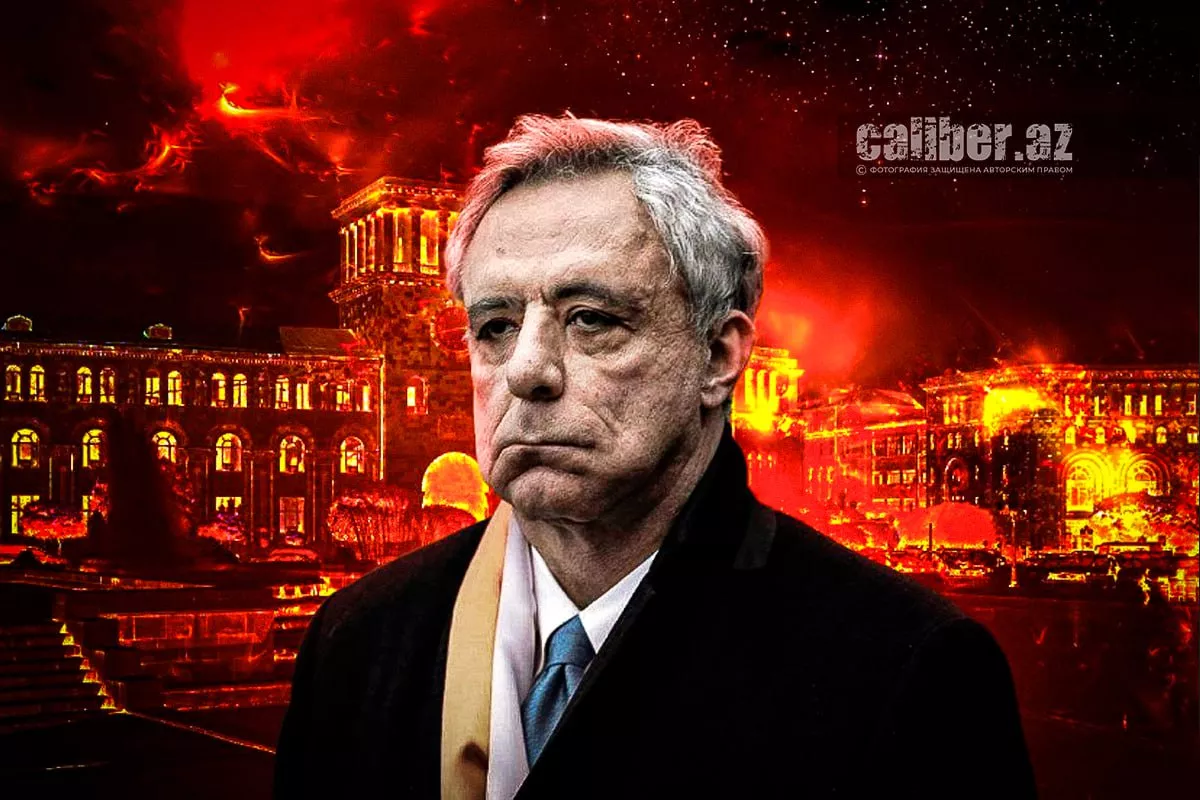
Equally telling is the so-called “Committee for the Defense of the Fundamental Rights of the People of Nagorno-Karabakh,” coordinated by former Armenian Foreign Minister Vartan Oskanian. It was established by a decision of the former “parliament” of the puppet regime in December 2023—after the regime had been formally dissolved. Since then, the structure has built an extensive network of international contacts.
In May 2025, with its participation, a cross-party platform was launched in Bern, bringing together nineteen Swiss parliamentarians. In September of the same year, the Committee published a two-year report claiming “significant progress” in advancing the right of return. Oskanian himself spoke in Switzerland, stating that the goal is the return of Armenians “in full compliance with international law.”
The international dimension of the Committee’s activities is systematic: these are not isolated contacts but a sustained effort to build external support for revising the existing reality. At the same time, the Armenian state has effectively taken no action in response to a structure whose statements and activities directly contradict Yerevan’s official line on the resolution of the Karabakh conflict.
Particular attention should be paid to the development agency “We Are Our Mountains,” founded by Ruben Vardanyan. Despite his detention in Azerbaijan, the organisation continues to operate actively. According to its reports, programs in 2024–2025 reached over eight and a half thousand people. In 2025, the agency launched the “Tree of Life” project—planting a thousand fruit trees near the Tatev monastery—framed as a symbol of support for Vardanyan and other Armenians currently on trial in Baku courts.
Even the agency’s name, referencing one of the symbols of Armenian irredentism in Karabakh, serves as a political marker. The organisation continues to operate as if the Washington summit had never taken place.
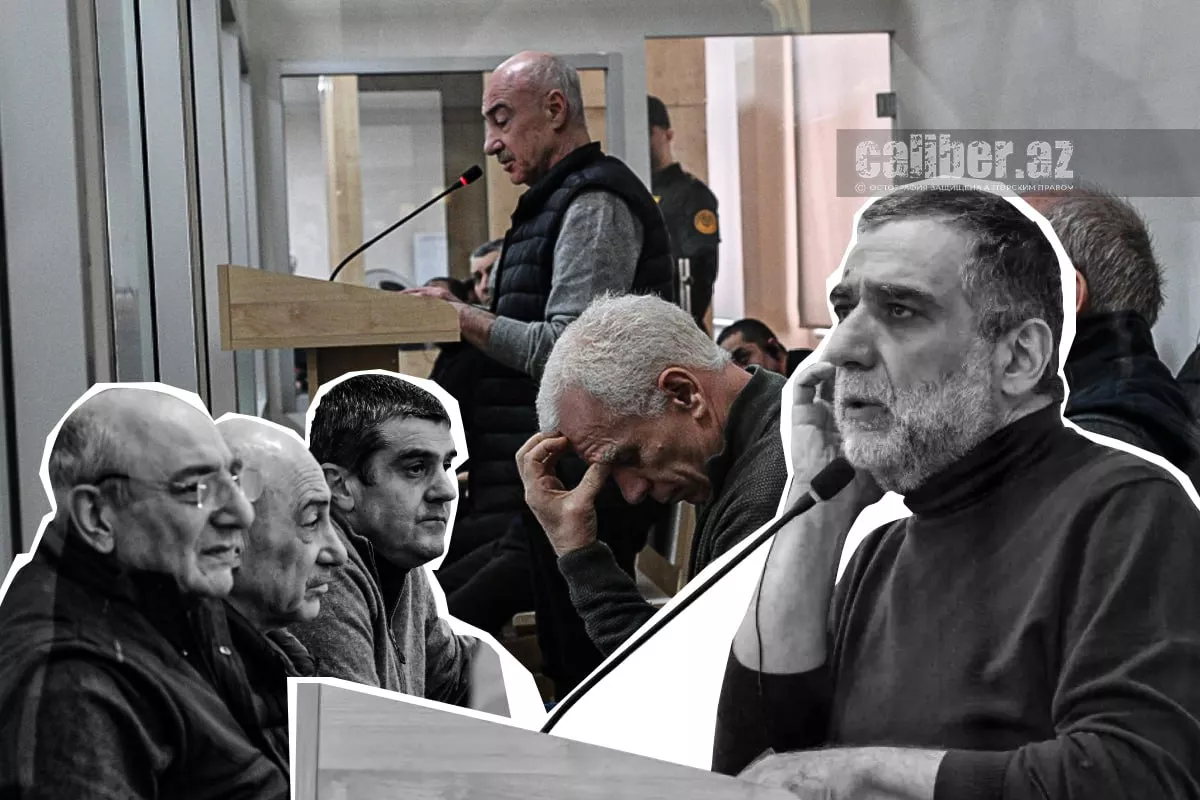
Beyond these structures, Armenia hosts a wide network of organisations—ranging from so-called “human rights” and cultural groups to sports and military-patriotic associations. The NGO “Artsakh Union,” led by former “Ombudsman” Artak Beglaryan, organises exhibitions and maintains an active presence on social media. “Hub Artsakh” presents itself as a platform for displaced persons, running training and employment programs. The NGO “Justice and Return,” co-founded by former “parliament” deputy Metakse Hakobyan, works on the issue of “forced” displacement.
The military-patriotic organisation “Artsakh Eagles Commandos” focuses on “military training for youth and fostering patriotism”—in practice, promoting revanchism. Another category consists of regional NGOs whose names explicitly assert claims over specific territories of sovereign Azerbaijan: “De-occupation of Hadrut,” “Return to Karvachar,” “Return to Dizak,” and “De-occupation of Shusha.”
There are also organisations presenting themselves as “humanitarian.” For example, the NGO “Hanganak”, which focuses on assisting elderly people from Karabakh. Formally, such activities are not political. However, the selective nature of the aid and its extensive media coverage inevitably turn this humanitarian façade into a tool for maintaining a specific narrative—portraying Armenians from Karabakh as a special category requiring constant attention.
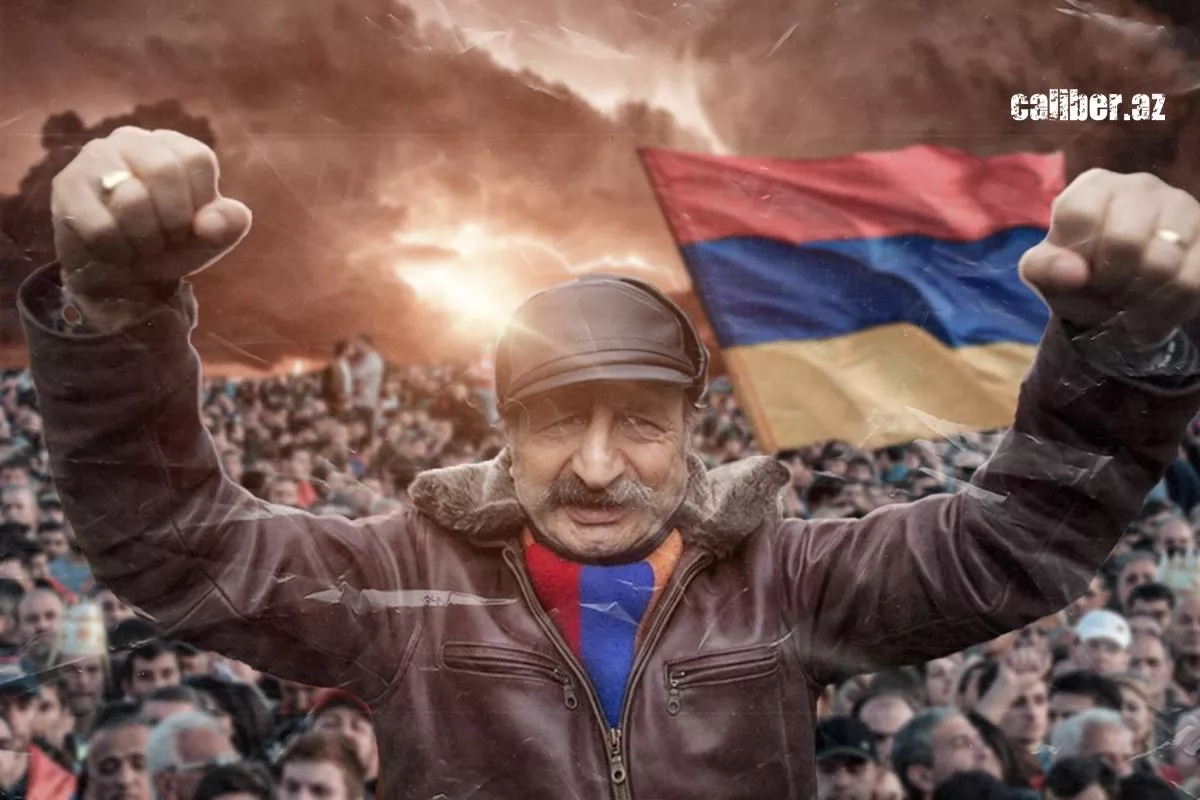
Pashinyan himself acknowledged the impracticality of the return of Karabakh Armenians and called for an end to the so-called “Karabakh movement.” Yet these statements were not accompanied by any dismantling of the structures that had grown around it.
For Azerbaijan, this creates a problem of trust. Peace is measured not by statements but by which institutions persist and which narratives continue to be reproduced. As long as an infrastructure built around the idea of “miatsum” (unification)—an unfinished project—remains active in Armenia, normalisation remains conditional.
The contrast is stark. The Western Azerbaijan Community is a single organisation that openly affirms respect for Armenia’s territorial integrity and calls for dialogue. Meanwhile, the so-called “Artsakh” structures in Armenia number more than eighty, many of which employ “de-occupation” terminology in reference to sovereign Azerbaijani territory. Against this backdrop, Pashinyan actively promotes the idea of a “real Armenia” within the borders of the Armenian SSR, contrasting it with the “historical” Armenia and asserting that the development and strengthening of Armenian statehood should also rely on aesthetic expressions of the republic’s essence within its internationally recognised borders. Yet in Yerevan itself, NGOs exist that directly challenge the prime minister’s agenda. Will he move to “cleanse” this field as well, bringing it in line with the concept of a “real Armenia”?
In any case, the Washington agreements have defined the framework for peace. Azerbaijan is filling that peace with practical reality—through economics, transit, and logistics. In Armenia, however, structures continue to operate whose very existence contradicts the meaning of the word “NORMALISATION.” Peace cannot be built this way.







 editor@caliber.az
 +994 55 444-88-98
 Азербайджан, Баку, ул. Низами, 203, Af Business House, 5-й этаж