










EU drives wedge between Baku and Yerevan Expert opinions on Caliber.Az
On December 2, Armenia and the EU signed the Strategic Partnership Agenda, a number of provisions and clauses of which caused serious concern in Baku. Azerbaijan rightly noted that they contradict the peace agenda and have a negative impact on the prospects of relations with the EU.
What game does Brussels play? A Caliber.Az correspondent asked foreign experts to answer this question.
Political analyst, Senior Research Fellow at the Hungarian Institute of International Affairs, Professor László Vasa believes that the new EU–Armenia cooperation document could create new tensions in the South Caucasus region.
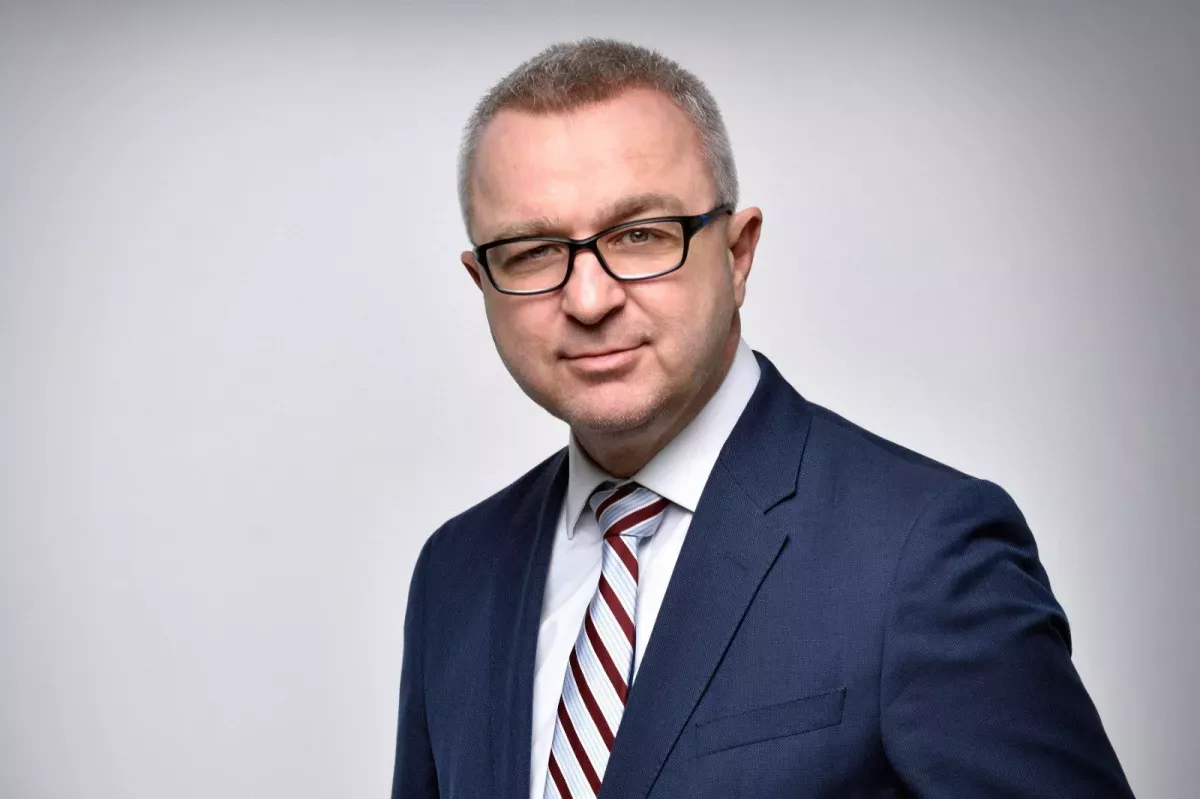
“When the European Union and Armenia signed the new Strategic Partnership Agenda, it was presented as a success of European foreign policy and a signal of support for Armenia on its path of reforms. In Brussels, this agreement is viewed primarily in the context of broader geopolitical rivalry, particularly Armenia’s gradual distancing from Russia.
However, documents drafted in distant capitals can have very real consequences in regions where the balance of power is extremely fragile. The wording used by the EU in this agenda touches upon highly sensitive issues related to post-conflict normalisation. Unfortunately, it is noticeable that these approaches are superficial and one-sided, which threatens to increase mistrust at a time when peace requires cautious diplomacy rather than political signalling,” the Hungarian political analyst emphasised.
According to him, the document emphasises the issue of Armenians who left Karabakh in 2023, while completely ignoring the hundreds of thousands of Azerbaijanis who were expelled from their homes in the 1990s, as well as the destruction discovered in the liberated territories in 2020. Ignoring this historical reality does not contribute to reconciliation but instead distorts it.
“Particularly concerning is the reference to ‘Karabakh Armenians displaced following Azerbaijan’s military operation’. Without clarification of the legal grounds or individual circumstances, the agenda creates the impression that all cases fall into the same humanitarian category. For Armenia’s political elite and representatives of the diaspora, the document may be interpreted as encouragement of diplomatic maximalism rather than a search for realistic compromise. For Azerbaijan, the message is clear: the EU shows sympathy for one side while ignoring the legitimate concerns and suffering of the other,” the political analyst is convinced.
In his assessment, this is not only unjust but also strategically unwise. If the EU wants to be taken seriously as a partner in regional peace, it cannot allow symbolic gestures to undermine trust in its policy. Peace and stability in the South Caucasus, the analyst believes, can be ensured through direct dialogue, infrastructure development, and regional connectivity, rather than through detached declarations that erode trust.
“Azerbaijan remains open to cooperation with the European Union in the fields of energy, transport, and security. However, partnership must be built on respect for sovereignty and an objective understanding of the region’s history. Lasting peace requires balance, not bias; listening to both sides, not repeating the position of only one.

One of the key points of the agenda is the EU’s support for the Armenian project Crossroads of Peace. Thus, the EU is backing an Armenia-centric vision of this issue, which competes with the already agreed, U.S.-mediated Trump Route — a corridor between mainland Azerbaijan and Nakhchivan. These two formats are not identical. One is a project based on a peace agreement between Armenia and Azerbaijan; the other is an Armenian initiative aimed at rebranding the regional transit program in line with Yerevan’s preferences.
By supporting the Crossroads of Peace without clearly linking it to the existing corridor agreement, the EU risks creating parallel narratives and ambiguous expectations. This does not promote stability; rather, it complicates diplomacy and creates room for delays. It is quite obvious that European policy should complement American efforts, not dilute them. Today, the South Caucasus needs clarity, not competing labels. Peace requires consistency, respect for sovereignty, and recognition of agreements already reached.
If the EU truly wants to contribute to regional stability, it must act with restraint. Symbolic gestures may make headlines in Brussels, but in the South Caucasus they can have real consequences,” Vasa said.

Russian-German political analyst and editor-in-chief of the portal Poistine, Ruslan Aisin, noted that the South Caucasus region is extremely important for many major international players who are trying to build their own configurations there and pursue their own agendas—often using openly provocative methods.
“And, obviously, there are forces that are interested in ensuring that this region does not remain in a state of peace and stability. Within the EU, there are lobbyists of radical Armenian interests who are trying to drive a wedge between Baku and Yerevan through such narratives. That is, at a time when the two countries are moving toward rapprochement, to make statements in such terms is tantamount to openly declaring: ‘We do not want there to be peace between you.’ In essence, these forces are thus admitting that they are only interested in creating conflict and managing it,” the political analyst is convinced.
In his view, this is primarily because these forces within the EU rely on political technologies based on the premise that it is easiest to manipulate a region when there is a smouldering, unresolved conflict.
“For some reason, no one in the EU raises the issue of the violation of the rights of one million Azerbaijanis, the destruction of the infrastructure of the Karabakh region, the ruined cultural sites, mosques, and tombstones, the significant damage inflicted on the region’s environment, and many other issues. And when Azerbaijan consistently restored its territorial integrity and acted within the framework of existing international norms and obligations, for some reason, this did not meet with approval in Europe.
And all this is because certain European politicians, apparently affiliated with Armenian diaspora circles, want a conflict to once again erupt between Yerevan and Baku. Their interest in such a scenario lies not only in the political sphere, but also, apparently, in financial motivations as well,” Aisin concluded.







 editor@caliber.az
 +994 55 444-88-98
 Азербайджан, Баку, ул. Низами, 203, Af Business House, 5-й этаж