










Five reasons, one diagnosis The April mobilisation of the Armenian diaspora
Each year, as the calendar approaches April 24, the Armenian diaspora around the world performs a ritual that has evolved into a well-oiled mechanism of political pressure. In 2026, marking the 111th anniversary of the events of 1915 in the Ottoman Empire, the Coordination Council of Armenian Organisations of France (CCAF) has put forward five reasons for “mobilisation.”
On closer examination, however, these amount to five reasons to diagnose the Armenian lobby with an inability to adapt to the new realities and to accept that the political map of the region has been definitively and irreversibly restored. Notably, four of these five “mobilisation” points are directed specifically against Azerbaijan.
Formally, these “mobilisation” activities are framed as commemorations of events that took place over a century ago in the Ottoman Empire. In reality, however, they amount to an anti-Azerbaijani political manifesto.
This warrants the most serious scrutiny, above all because it lays bare the Armenian diaspora’s true priorities: to pursue a targeted campaign against a sovereign state under the guise of “historical memory”—a narrative that is itself fabricated.
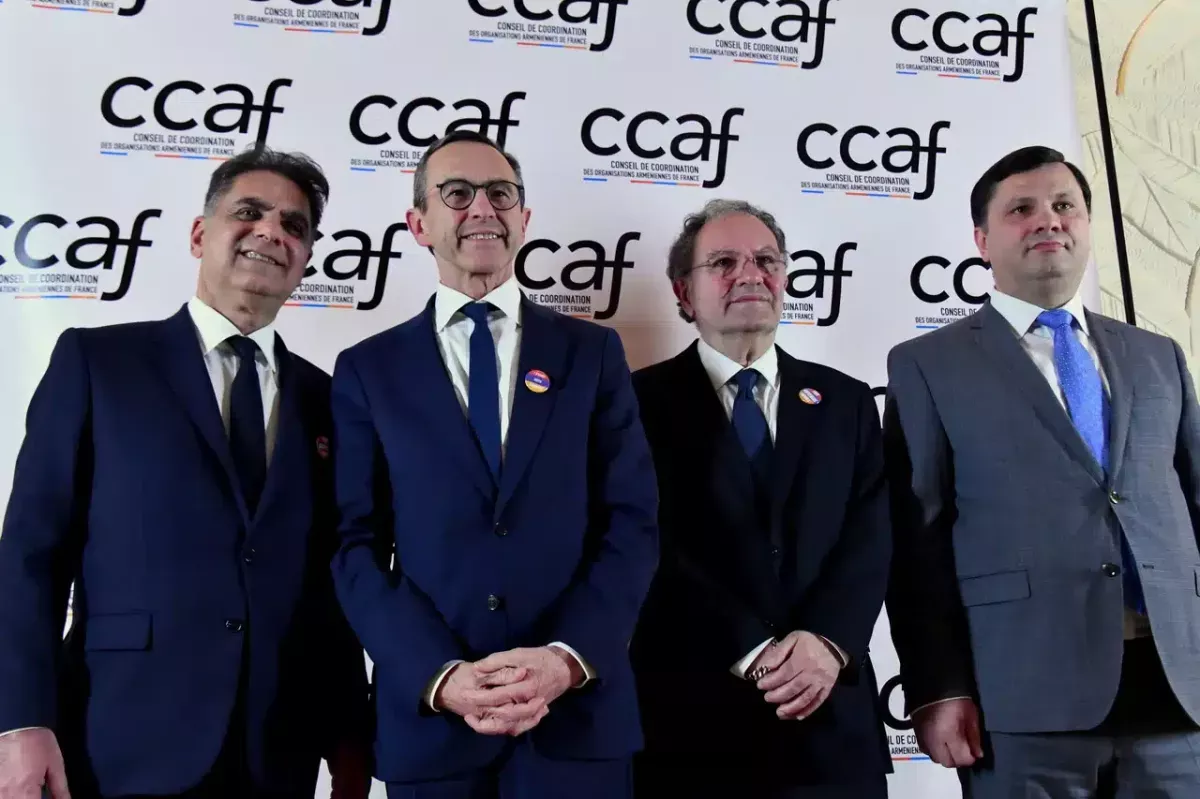
The first point put forward by the CCAF — the “duty of historical memory” — appears, at first glance, beyond reproach. Who would challenge any nation’s right to remember its past? The problem, however, lies in how this memory is instrumentalised.
The figure of “one and a half million victims,” repeated from one diaspora document to another, has long taken on a life of its own, detached from genuine historiographical debate. Serious historians — from Bernard Lewis to Guenter Lewy — have pointed to the need for a critical reassessment of these figures, noting that they conflate victims of interethnic violence with those who perished from famine, epidemics, and wartime hardship, which affected Muslim populations in Anatolia just as severely.
Yet the global Armenian community categorically rejects any scholarly, evidence-based approach: the figure has been sacralised, questioning it is equated with “denial,” and “denial,” in turn, is treated as a crime. In this way, memory is turned into dogma — and dogma into a political weapon.
The second point — the “struggle against denial of the Armenian genocide” — is even more revealing. The CCAF accuses Azerbaijan and Türkiye of engaging in “revisionist propaganda” and promoting “racist hate rhetoric.”
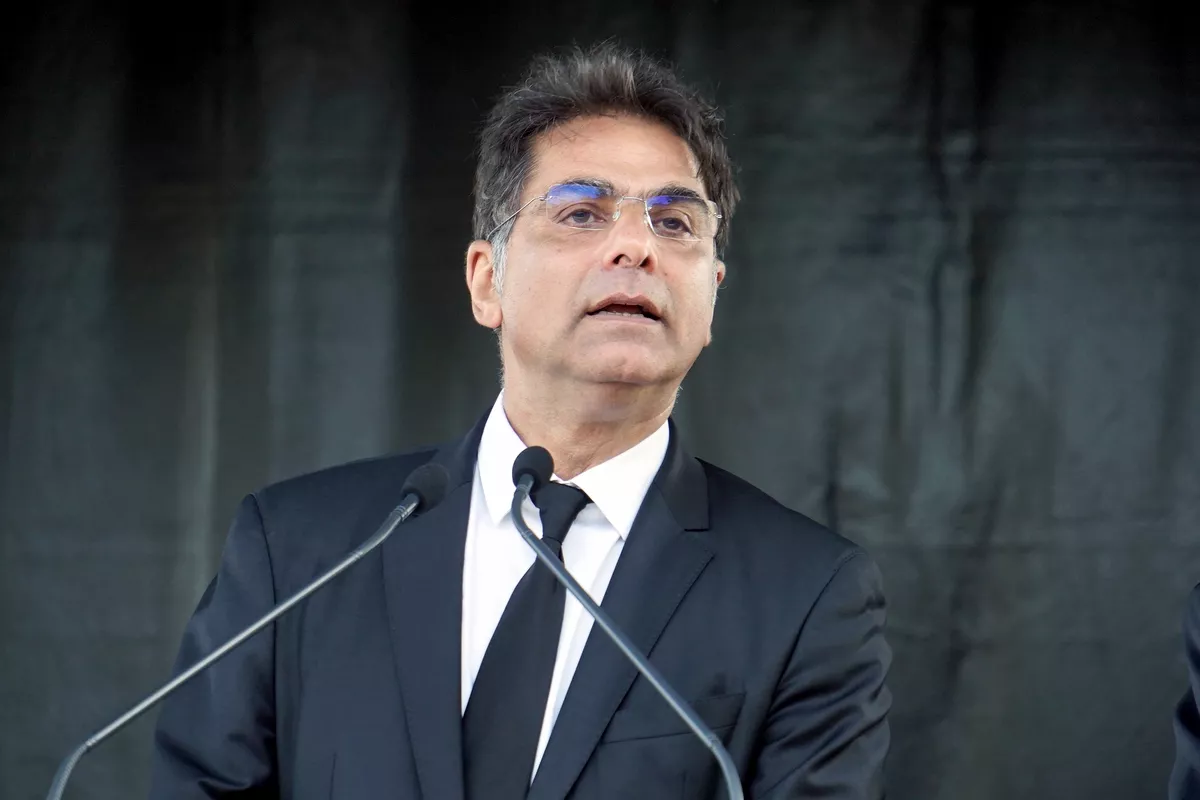
The wording is striking for its intellectual dishonesty. The attempt to link modern Azerbaijan to the events of 1915 is a deliberate manipulation aimed at an audience largely unfamiliar with the region’s history. As for Türkiye, Ankara has repeatedly proposed the creation of a joint commission of historians to study the archives of both sides. Moreover, Türkiye has even opened its archives — a key source of information on the events of 1915 is the Turkish General Staff archive (ATASE), with full access to all documents granted. Yet Armenia and the Armenian diaspora have consistently rejected this offer — and understandably so, as opening archives in Yerevan could undermine a carefully constructed narrative in which one side is portrayed solely as the victim, and the other solely as the perpetrator.
The label of “racist rhetoric,” so freely applied to Baku, deserves separate consideration. Azerbaijan is one of the most multicultural countries in the world. Its constitution guarantees equal rights to all citizens, regardless of their ethnic or religious background. By contrast, Armenia remains a monoethnic state, from which hundreds of thousands of Azerbaijanis were expelled in the late 1980s and early 1990s. Selective memory is a poor foundation on which to base accusations of racism.
The third point put forward by the CCAF — “justice for Artsakh” — is perhaps the most cynical element of the entire narrative. It claims that the “Turkish-Azerbaijani tandem” allegedly carried out “ethnic cleansing in 2023, forcing over 120,000 Armenians to leave Karabakh.”
First of all, there has never been any internationally recognised entity called “Artsakh.” Four United Nations Security Council resolutions — Nos. 822, 853, 874, and 884 — unambiguously reaffirmed Azerbaijan’s territorial integrity and demanded the withdrawal of Armenian armed forces from the occupied territories. These resolutions were ignored for thirty years. When Azerbaijan, as part of counterterrorism operations, fully restored its sovereignty over its internationally recognised territory, the diaspora labelled this action as “genocide.”
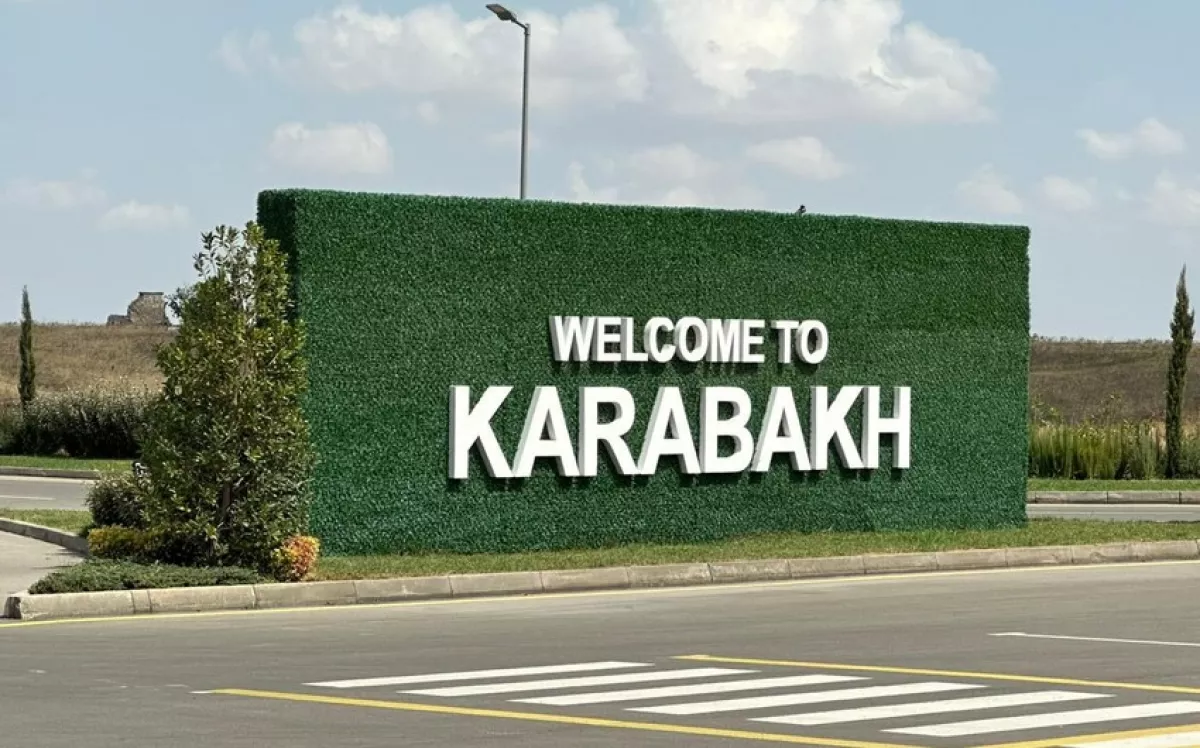
The departure of the Armenian population from Karabakh in September 2023 was rapid and large-scale, but it was not “forced” in the sense defined by international humanitarian law. Azerbaijan repeatedly — both before and after the September events — declared its readiness to guarantee the rights and safety of the Armenian population as part of the reintegration process. President Ilham Aliyev publicly guaranteed equal rights to all citizens of Azerbaijan, regardless of their ethnic background.
However, thirty years of separatist propaganda, which convinced the Karabakh Armenians that life under Azerbaijani jurisdiction was impossible, took their toll. People were not driven out by Baku — they were driven by the leaders of the illegal regime and by their own fear, carefully cultivated by Yerevan and the diaspora over three decades.
Meanwhile, no one remembers the more than one million Azerbaijani refugees and internally displaced persons who, for years, lived in tent camps and temporary shelters, expelled from their homes during the First Karabakh War. Their suffering simply does not exist in the discourse of the Armenian diaspora.
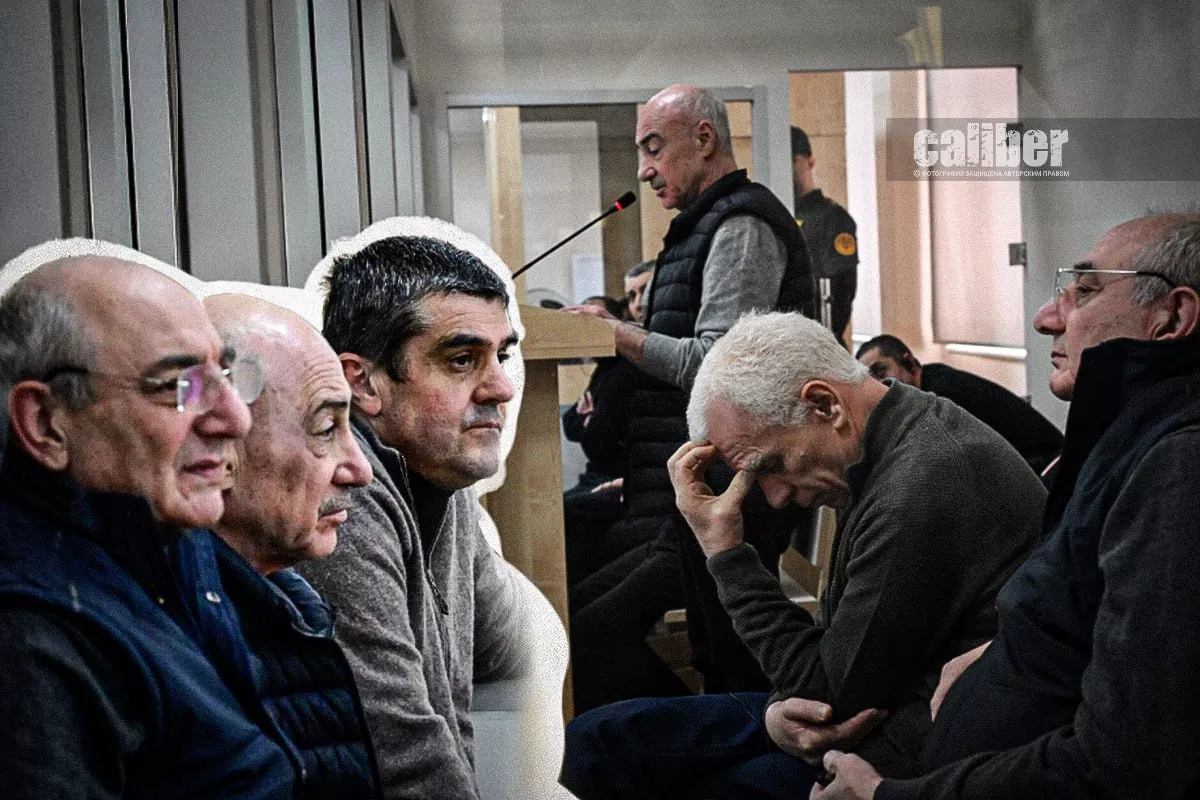
The fourth point — the demand for the “release of hostages” — deserves separate analysis, as it is here that the manipulation of terminology reaches its peak. The individuals convicted by Baku’s courts are former leaders of the separatist regime and military commanders accused of serious crimes against the Azerbaijani state and its citizens. These include the so-called “presidents” of the self-proclaimed entity, as well as those involved in organising armed resistance and commanding illegal armed formations.
To call them “hostages” is to deliberately remove the situation from its legal context. Every country has the right to hold accountable those accused of separatism and terrorism within its territory. One can debate the standards of judicial proceedings, but equating criminal prosecution with hostage-taking denies the Azerbaijani state its basic right to exercise jurisdiction over its own territory.
The fifth point — the “protection of Armenia” from the allegedly threatening Azerbaijan — completes the narrative, bringing it full circle: portraying Armenia as a perpetual victim in need of constant external protection. It is claimed that after the “annexation of Artsakh,” President Aliyev is “openly threatening Armenia.”
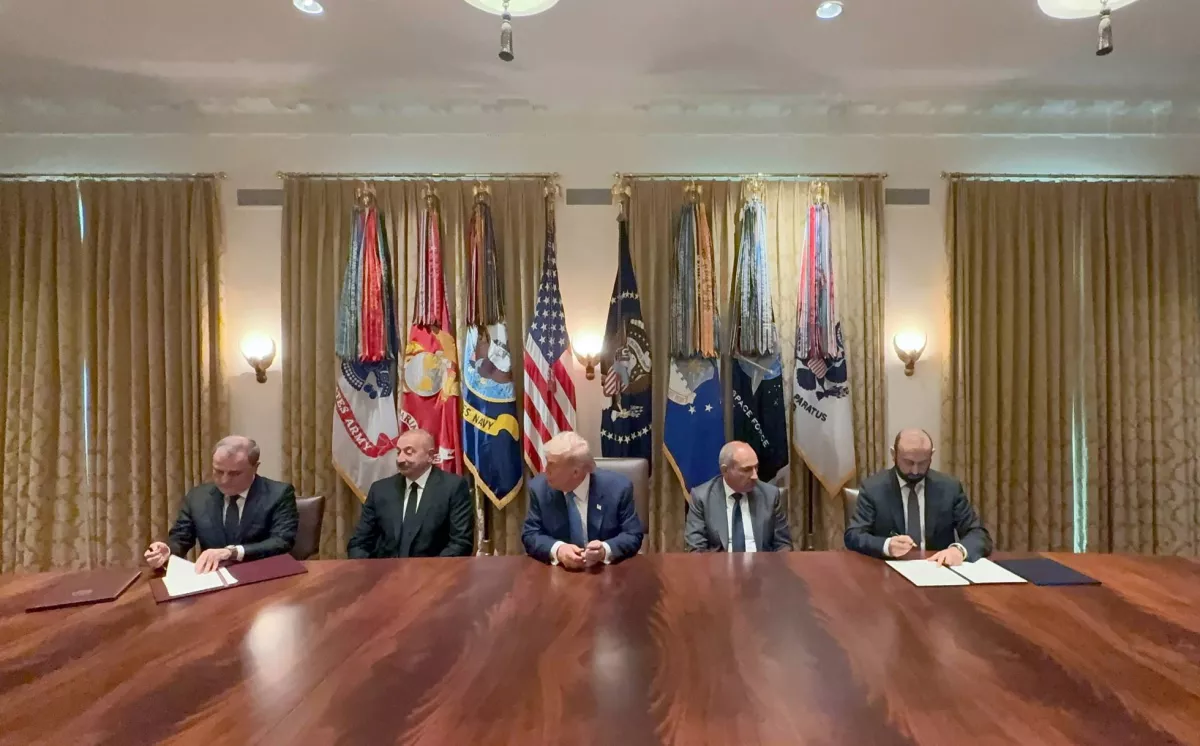
In reality, Baku is the main driver of a peaceful agenda in the region. The Washington Agreements of August 8, 2025, brokered with the mediation of Donald Trump, provide for full normalization of relations between the two countries, the opening of communications, border delimitation, and the construction of a transport corridor connecting mainland Azerbaijan with Nakhchivan. By the end of last year, Baku had already invested over $15 billion dollars in the restoration of the liberated territories and plans to return 100,000 internally displaced persons to these areas in 2026.
This is the policy of a state building a peaceful future, not of a country “threatening” its neighbors.
Meanwhile, the CCAF poster contains another notable element — a call for “returning to historical lands.” This slogan, aimed at the Armenian audience, speaks what usually remains between the lines: it concerns territorial claims on Azerbaijan. It is precisely this territorial revisionism that forms the core of the “Armenian question” as understood by the diaspora — and it is this that makes the activities of organisations like the CCAF a direct challenge to the peace process.
In light of this, a natural question arises: “What is the position of official Yerevan?” The Armenian authorities, as is well known, habitually distance themselves from diaspora initiatives, presenting them as autonomous activities beyond the government’s control. Yet this approach is becoming increasingly unconvincing. In Washington, Armenia initialled a draft peace agreement, and Prime Minister Nikol Pashinyan publicly recognised Azerbaijan’s territorial integrity.
If these steps are sincere, Yerevan must unequivocally and publicly condemn the activities of diaspora organisations that directly undermine both the spirit and the letter of the signed agreements. One cannot simultaneously sign peace accords and quietly enable organisations that label the restoration of internationally recognised borders as “ethnic cleansing” and legitimate criminal prosecutions as “hostage-taking.”
Yerevan’s silence is particularly telling given that the CCAF is not a marginal group but a highly influential organisation. In this context, the Armenian government’s references to the “autonomy” of the diaspora come across as either naive or deliberately disingenuous.
The core issue is that the “Armenian question,” in its diaspora form, is not about memory or justice. It is a tool of perpetual mobilisation, requiring the constant reproduction of an enemy image. Without Azerbaijan as the “aggressor” and Türkiye as the “executioner,” the entire narrative loses its meaning — and with it, the political influence of those who have built careers on it for decades. Organisations such as the CCAF, ANCA, “Hay Dat,” and dozens of others exist only as long as the conflict persists, whether real or imagined. For them, peace is an existential threat far greater than any so-called “threats from Azerbaijan.”
April 24, 2026, will once again be marked by candles, speeches, and political declarations. Calls for “recognition,” “justice,” and “return” will be heard once more. Azerbaijan will again be labelled the “aggressor,” and its lawful actions on its own territory will be called “crimes.”
But reality is relentless: Karabakh is Azerbaijan, documents in Washington have been signed, the peace process is moving forward, and territorial revisionism — no matter how mournfully draped — remains revisionism.
The Armenian diaspora and the Armenian state face a fundamental choice: either build a future within the framework of this new reality or continue clinging to myth. And as long as the CCAF chooses the latter, it is doing Armenians the worst possible disservice.







 editor@caliber.az
 +994 55 444-88-98
 Азербайджан, Баку, ул. Низами, 203, Af Business House, 5-й этаж