










French scepticism toward NATO Causes, risks, and strategic limits
Recently, questions about countries leaving NATO have been increasingly discussed in the international political discourse. However, France has brought a more concrete agenda to this issue, putting forward a resolution on leaving the Alliance.
The initiative comes from Clémence Guette, Vice President of the French National Assembly and a deputy from the left-wing party La France Insoumise (LFI), who proposed a resolution calling for the Fifth Republic to withdraw from the North Atlantic Alliance due to disagreements with the United States. In an interview with the German Berliner Zeitung, she stated that leaving NATO has long been a position held in France, but the issue has gained particular relevance due to the “conscious decision of the United States of America to openly return to imperial policy,” which is reflected in the new U.S. National Security Strategy.
As arguments, Guette cited examples such as “the abduction of Venezuelan President Nicolás Maduro, threats of annexing Greenland, and trade agreements” which, she said, “have been imposed on the European Union under pressure”: “In this way, the U.S. officially frees itself from international law and mechanisms of collective security and effectively assigns the EU the status of a vassal.”

The French politician also emphasised Washington’s demand that NATO countries increase their defence spending to 5% of GDP. This is particularly notable for Paris, which has the highest public debt among EU countries, making the prospect of higher defence spending a serious challenge.
In this regard, the Financial Times wrote in June 2025: “France’s high national debt threatens to curb its defence ambitions, raising the risk that one of Europe’s strongest militaries will not be able to keep up with an expected wave of spending [...] France has racked up a mountain of national debt to reach a debt-to-GDP ratio of 113 per cent last year [2024], behind only Greece and Italy. The budget deficit was also among the highest at 5.8 per cent of GDP at the end of 2024, far higher than the EU limit of 3 per cent. The situation leaves Macron in a bind.”
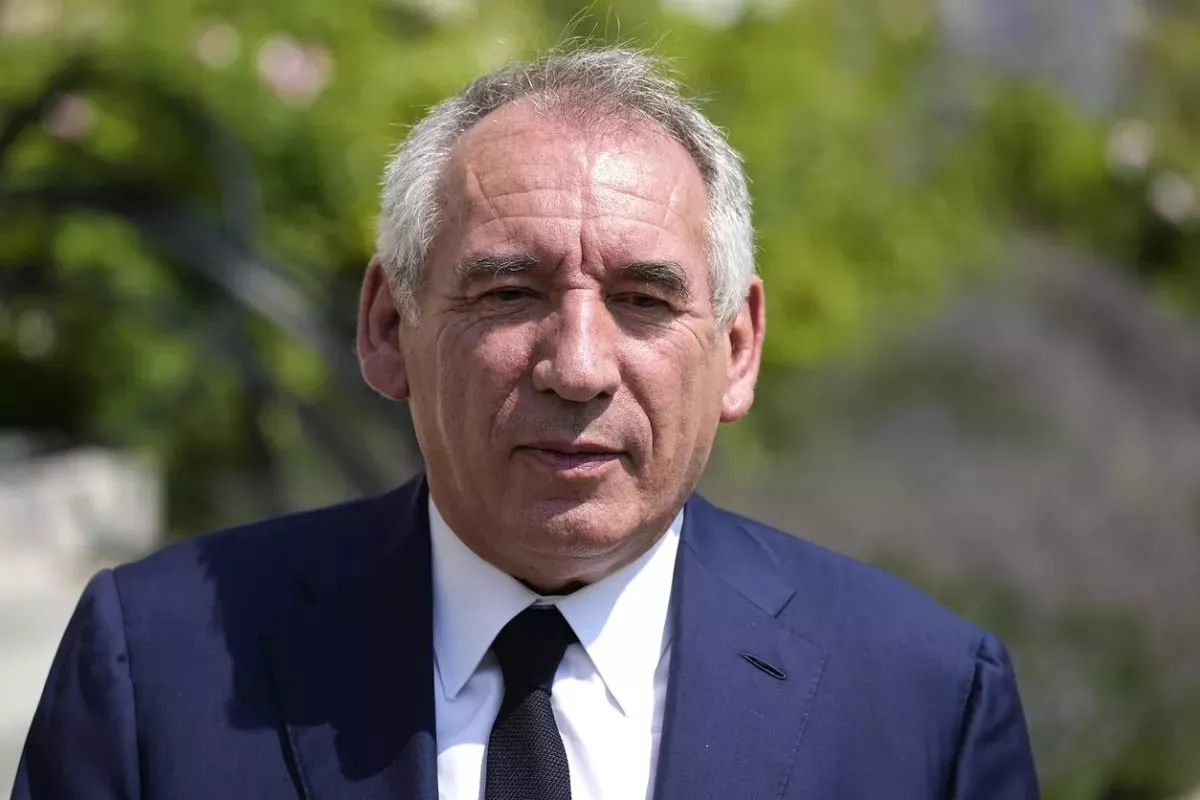
In turn, in August 2025, then-Prime Minister François Bayrou, in a video address to citizens published on his YouTube channel, stated that “every second, France’s debt increases by €5,000.”
He emphasised: “In 2026, spending on debt interest will rise by €8 billion, and in 2027, if nothing is done, it will be €10 billion more. And if we continue to take no action, by 2029 these expenditures will reach €100 billion per year.”
In fact, the idea of France leaving NATO did not emerge recently, but long before the United States announced its new National Security Strategy. In February 2025, a demonstration took place in Paris calling for the country’s exit from the EU and NATO. At the time, international experts interpreted these protests as a form of support for the political idea of Frexit (the French analogue of Britain’s Brexit), which had been proposed in the French Republic as early as January 2020.

However, the current initiative to leave the Alliance seems paradoxical, especially in light of the fact that Washington itself has at times considered withdrawing from the North Atlantic bloc. For example, in early December 2025, Republican Congressman Thomas Massie from Kentucky introduced a bill calling for the United States to leave NATO. Meanwhile, President Donald Trump has repeatedly expressed his intention to pull the country out of the Alliance, criticising its allies for insufficient defence spending.
Nevertheless, despite the grand statements from the French side, it is difficult to take seriously the prospect of France actually leaving the military bloc, for several reasons. The first is historical: France is one of the 12 founding members of NATO. In 1966, under the decision of General Charles de Gaulle, the country withdrew from NATO’s military command structure but remained a member of its political wing. In 2009, during Nicolas Sarkozy’s presidency, the Fifth Republic rejoined the Alliance’s military structures, actively participating in numerous joint exercises and NATO operations.
Furthermore, France’s departure from the Alliance would weaken its authority in Europe in particular, and on the international stage in general, resulting in reputational losses and an automatic reduction in Paris’s ability to influence NATO decisions.
Another consideration is that France’s exit could encourage other European countries with sceptical views toward both the EU and NATO—such as Hungary and Slovakia—to follow suit. This domino effect would not necessarily halt the functioning of the organisation, but it could deal a serious blow to its institutional foundations, inevitably weakening the security framework across Europe.

On the other hand, a logical question arises: “What would Paris gain?” It seems that the country might gain greater freedom of manoeuvre in foreign policy, including within the EU, but it would lose some leverage that comes from being part of the Alliance—a loss that could benefit states pursuing their own interests in regions where President Macron seeks to assert his ambitions.
In this light, it appears unlikely that the Fifth Republic will leave the bloc in the foreseeable future, and Guette’s initiative has little chance of being realised, at least in the near term.







 editor@caliber.az
 +994 55 444-88-98
 Азербайджан, Баку, ул. Низами, 203, Af Business House, 5-й этаж