










Gas, renewables, connectivity: pillars of Azerbaijan’s economic growth Caliber.Az review
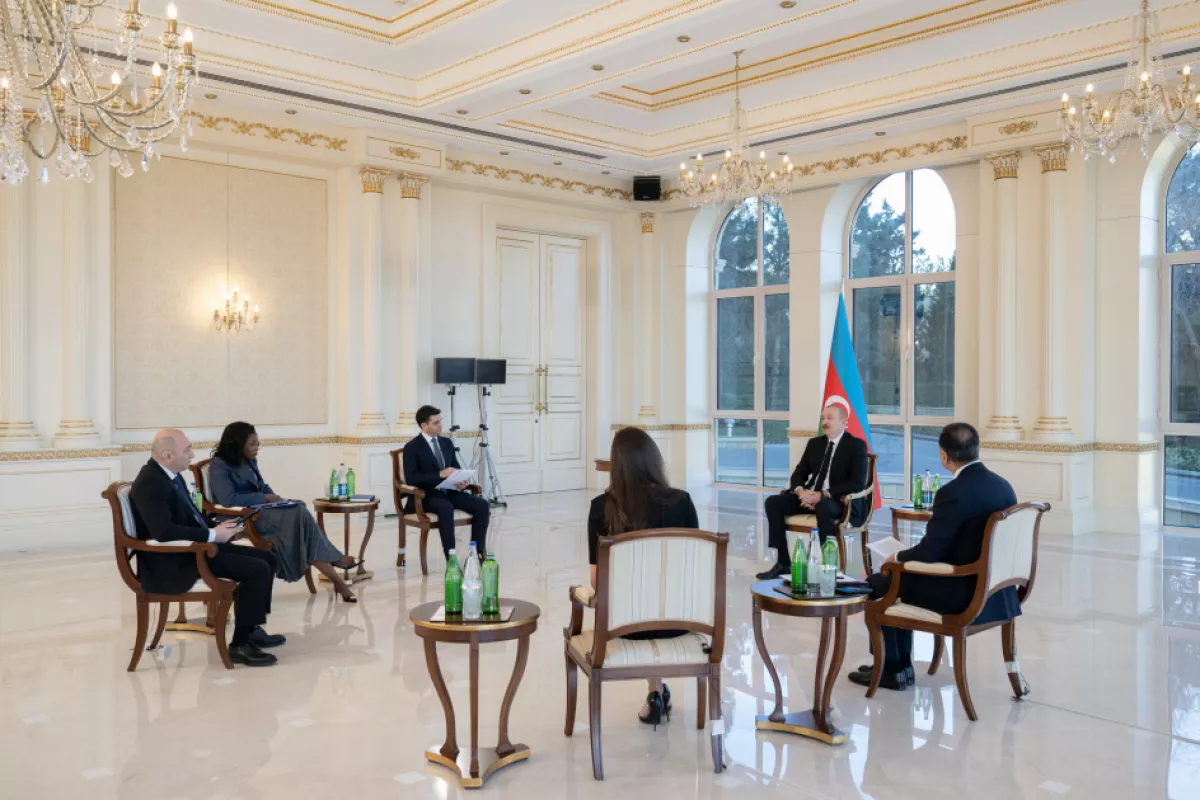
The growth of gas exports through the Southern Gas Corridor (SGC), the development of “green” energy, and the modernisation of the country’s transport infrastructure are among the long-term priorities for Azerbaijan’s economic development. For several years now, these areas have acted as drivers of international cooperation and have helped attract foreign direct investment. The prospects for the development of these sectors were recently discussed by Azerbaijani President Ilham Aliyev in an interview with local television channels.
The traditional energy partnership between Europe and Azerbaijan has grown significantly in recent years, driven by the expansion of the Southern Gas Corridor (SGC) transit capacity. This development is particularly evident in the rising exports of Azerbaijani natural gas to the Balkans and beyond. Last year, Azerbaijan’s network of gas-sector partners expanded markedly, with the number of companies registered to transport gas via the Trans Adriatic Pipeline (TAP) increasing from 3 to 46 in recent years.
On the European route, in addition to Italy, Greece, Bulgaria, Romania, Hungary, and Serbia, Azerbaijani gas supplies were extended to Slovenia, Croatia, and Slovakia last year. Pilot deliveries to Ukraine began in July 2025 through the Trans-Balkan gas pipeline, while SOCAR is participating in a hybrid gasification project in North Macedonia.
In 2026, exports to Germany and Austria are expected to commence, bringing the total number of countries receiving Azerbaijani “blue” fuel to 16, with plans for Albania to follow. To meet growing demand, TAP’s long-term capacity is set to increase by 1.2 billion cubic metres per year starting in 2026.
“Our gas exports are growing with respect to both volume and geography. So far, we have supplied gas to 14 countries, 11 of them on a regular basis [...] and two more European countries will be added this year,” President Ilham Aliyev said in an interview with local media. “So in total, it will be 16, and this is the largest number with respect to pipeline gas. No other country in the world supplies pipeline gas to as many countries as Azerbaijan.”
As a result, Azerbaijani gas today plays a key role in ensuring the energy security of numerous countries. This success stems from a diversified pipeline network and Azerbaijan’s strong reputation as a reliable supplier with solid political ties, particularly given that most of its clients are European Union member states.
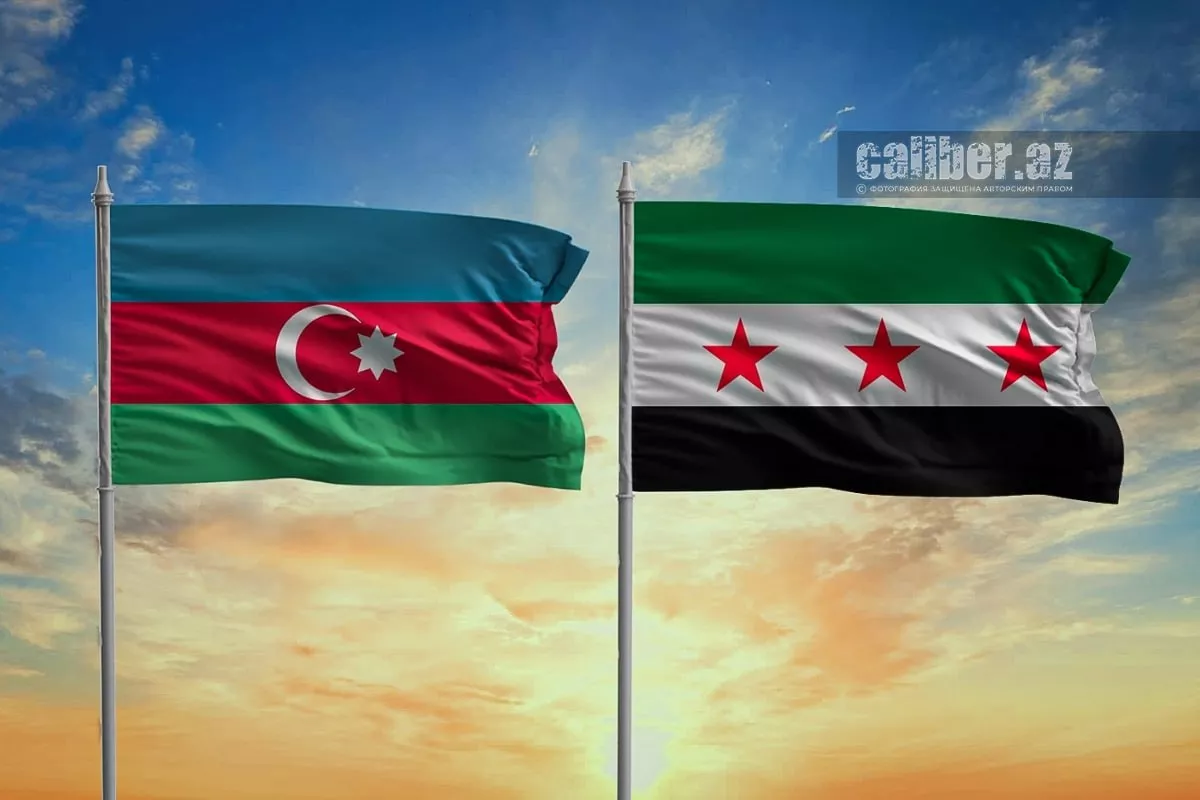
Last year, Syria became a new partner for Azerbaijani gas exports. On August 2, deliveries of Azerbaijani natural gas to the Syrian Arab Republic began, with the first phase of the project planning exports of 1.2 billion cubic metres per year. The gas will be supplied to power plants in Aleppo and Homs via Kilis in Türkiye and will be used for electricity generation.
“Syria was our new partner last year. And we are glad that we can help the Syrian government reduce the shortage of electricity, because our gas helps them—according to different estimates—reduce their electricity shortages by about four hours per day. And we are considering an option to increase the supply,” the President said, noting that last year the total gas exports amounted to 25 billion cubic metres.
This positive trend continued in 2025, when the country produced 50.8 billion cubic metres of natural gas, and exports exceeded 25.2 billion cubic metres.
On the other hand, as the President noted, Azerbaijan is also expanding production from existing and new fields. This year, gas production is expected from the deepwater section of the Azeri-Chirag-Gunashli (ACG) field. In the coming years, the Shah Deniz field will also provide additional gas volumes: the Shah Deniz Compression (SDC) project, covering the Shah Deniz Alpha and Shah Deniz Bravo platforms, is expected to be completed in 2029–2030, and the Sangachal terminal infrastructure will be expanded.
In the long term, gas production in Azerbaijan could rise significantly with the planned commissioning of the Shafag-Asiman block, as well as major gas-condensate fields such as Umid-Babek and Karabakh, whose combined capacity, together with the Absheron deposits, is estimated by SOCAR specialists to exceed 1 trillion cubic metres of gas.
“Another promising field is Babek, which is very large and holds significant potential, and there are a number of companies interested in investing there,” the President said. “Definitely, the field that can be considered comparable in size to Shah Deniz is Absheron. It is currently producing its first phase, which we buy for local consumption. The second phase of Absheron will give us perhaps three times more gas than it does today.”
According to forecasts, the Absheron project is expected to produce around 4.3 billion cubic metres of gas by 2029. Overall, Azerbaijan’s total estimated “blue” fuel reserves now stand at roughly 4 trillion cubic metres.
Oil and gas exports remain a key source of revenue for the country. At the same time, Azerbaijan has attracted hundreds of millions of dollars in foreign investment for large-scale renewable energy projects and participates in international initiatives to develop electricity export infrastructure. Experts estimate that the country’s economically exploitable renewable energy potential totals 27 GW, including 23 GW in solar, 3 GW in wind, and 520 MW from hydropower in mountain rivers.
Currently, Azerbaijan is actively building solar and wind power plants with financial and technical support from ACWA Power, Masdar, BP, Nobel Energy, and major Chinese companies. Over the past five years, small run-of-river hydropower plants with a combined capacity of 307 MW have been commissioned in the Karabakh region. The share of renewables in Azerbaijan’s electricity generation is projected to reach 25% by 2027 and 30% by 2030.
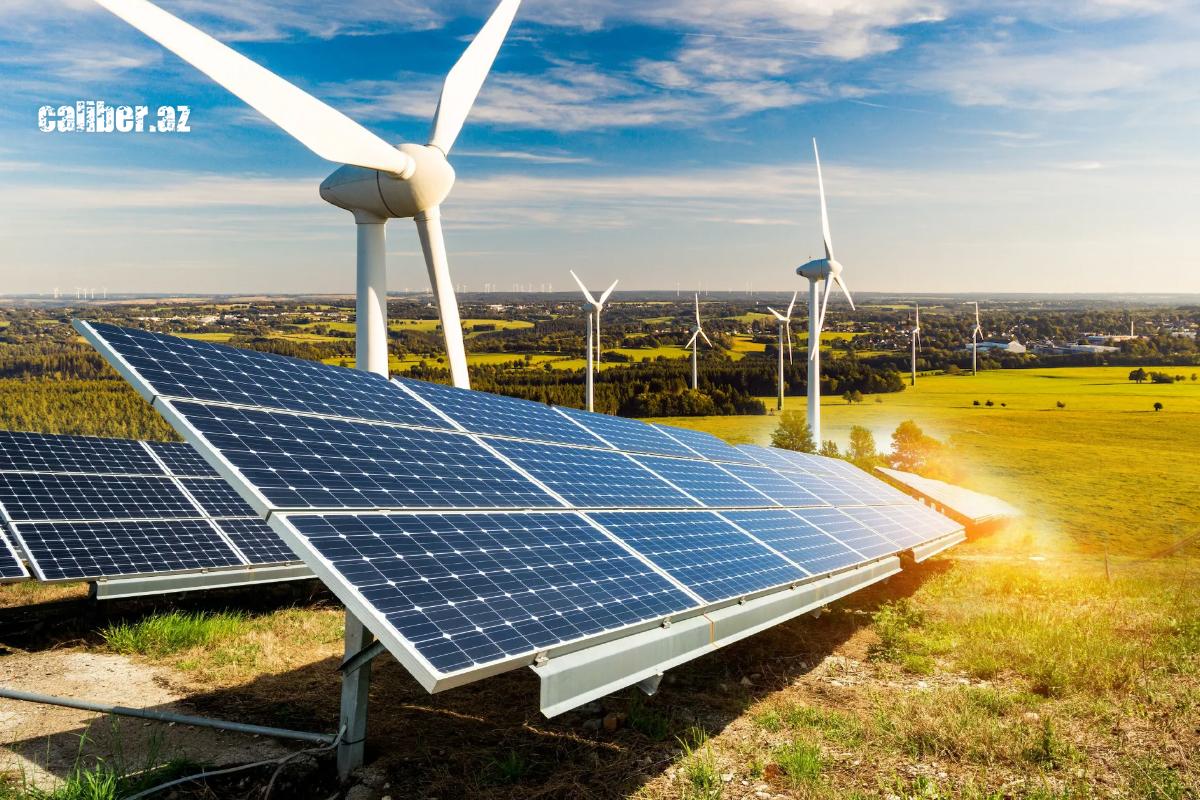
About one-third of Azerbaijan’s total renewable energy potential—around 10 GW—is concentrated in the Karabakh and East Zangezur economic regions. To harness this potential, the Ministry of Energy, with support from Japanese energy company TEPSCO, has prepared a conceptual plan to transform the liberated territories into a “green energy” zone.
The renewable energy potential in the Nakhchivan Autonomous Republic (NAR) is also significant, estimated at 5 GW. In the coming years, 1.5 GW of wind and solar capacity will be commissioned there, with planned electricity exports of at least 1 GW to Türkiye and Europe. To support these developments, high-capacity substations, power transmission lines, and SCADA control centres are being upgraded or built from scratch in both Karabakh and NAR, designed to export at least 2 GW, primarily from renewable sources.
President Ilham Aliyev emphasised that, with the expansion of green energy generation in the country, opportunities will increase to save natural gas, which can then be directed for export.
“One of the aspirations of Azerbaijan is to become a regional AI hub, an IT hub, and I think we have the potential to do that. We are working now with partners with respect to the creation of data centers. As you know, data centers need a lot of energy. Today, the only country in the broader region which has extra capacity of electric power is Azerbaijan,” President Aliyev said. “Today, we have 2,000 megawatts or 2 gigawatts of extra capacity, which we do not use for our domestic purposes, and which can be exported or can be consumed here.”
As a transport hub of the Caspian region, Azerbaijan today is ahead of many neighbouring countries in implementing large-scale transport infrastructure projects. Over the past 20 years, nearly 21,000 km of roads have been built or renovated in the country. Azerbaijan now ranks first in the CIS and 24th out of 141 countries worldwide in the road infrastructure quality index.

According to the State Agency for Automobile Roads of Azerbaijan, between 2015 and 2025 nearly 10,827 km of roads, avenues, and streets were commissioned, including in Baku, where 129 new bridges, 40 overpasses, 8 road tunnels, and 52 underground and aboveground pedestrian crossings were built.
In the past five years, road construction has focused on the Karabakh and East Zangezur economic regions. Work is progressing rapidly on 44 roads of various categories, along with 47 tunnels, 447 bridges, 16 viaducts, and other infrastructure, covering more than 3,720 km in total.
Railway modernization has also advanced significantly. Azerbaijan added 1,562 km of new railway lines, renovated 1,906 km, and acquired modern trains and carriages. Construction is ongoing on the Barda-Aghdam and Aghdam-Khankendi railways, while the international Goris-Aghband railway project is nearing completion, with over three-quarters of its 110.4 km single-track section already laid.

In recent years, a breakthrough has been achieved in air transport infrastructure: the Fuzuli, Zangilan, and Lachin airports have been commissioned, AZAL has significantly increased passenger traffic and the number of flights, and with the new terminal, the Heydar Aliyev International Airport will have an annual capacity of 20 million passengers.
“We built 2,500 kilometers of roads in Baku alone. Can you imagine? In the city, 2,500. We all – maybe not all of us – but Mirshahin and myself remember very well the road from here to Baku city. That was the only one. So, a lot will be done on that. We have already adopted a program for additional 10 metro stations in Baku. Seven have been built during my term, but it is not enough. So, 10 more will be built – more bridges, more tunnels,” said President Ilham Aliyev.
Currently, Baku has 27 metro stations with a total network length of 40.7 kilometres. One of the main priorities for the development of the Baku Metro is the construction of 10 new stations and the full commissioning of the new “Purple Line”, which will extend into the city centre. Work is also underway on separating the “Red” and “Green” lines for independent metro operation with shorter intervals, and each line will have its own depot. In the future, the “Green Line” is planned to be extended along 8 November Avenue from the Khatai station to the Hazi Aslanov station.
Regarding urban public transport, over the past few years, the fleet of Bakubus LLC has grown to over 1,300 buses and electric buses, and modern bus depots have been established in the Nakhchivan Autonomous Republic, Ganja, and Sumgayit.







 editor@caliber.az
 +994 55 444-88-98
 Азербайджан, Баку, ул. Низами, 203, Af Business House, 5-й этаж