










Georgia vs EU: Could visa-free travel suspension spark a political crisis? Expert opinions on Caliber.Az
Georgia’s Prime Minister Irakli Kobakhidze stated that the European Union would not be able to provoke a revolution in the country by cancelling the visa-free regime for Georgian citizens.
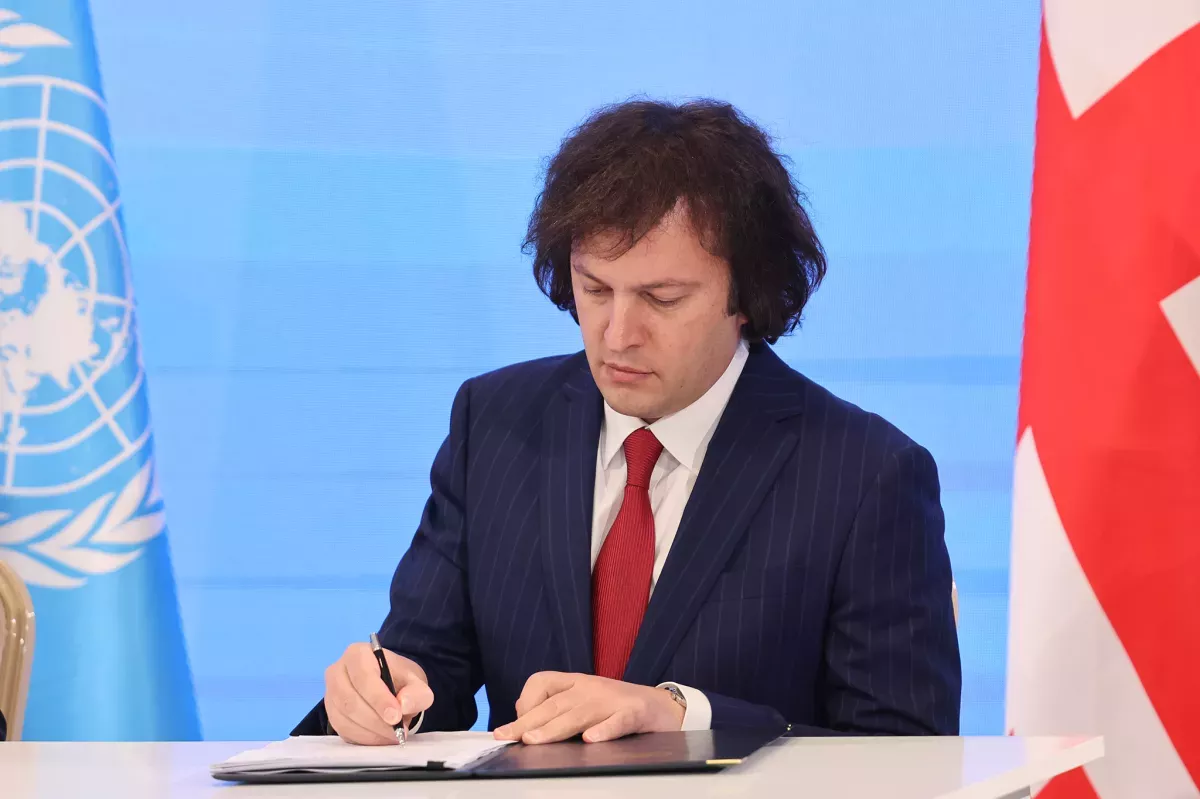
“The EU’s instruments of blackmail are worn out, and the cancellation of the visa-free regime is no longer an effective lever of pressure. Georgian society thinks soberly and takes a pragmatic view of the decisions of the European bureaucracy,” Kobakhidze noted in an interview with the First Channel of the Public Broadcaster.
He expressed hope that the European Union would make a pragmatic decision and refrain from cancelling the visa-free regime for Georgian citizens.
According to the European Commission’s annual report on the visa liberalisation suspension mechanism, published on December 19, “Ultimately, Georgia could lose its visa free status entirely and be transferred to the EU list of visa-required third countries.”
“The Commission has raised concerns about serious breaches of fundamental rights and freedoms in Georgia, including violations of non-discrimination principles, and has repeatedly called on the Georgian authorities to take immediate action to address these issues and implement the Commission's recommendations. Despite this, Georgia has violated numerous commitments undertaken during the visa liberalisation dialogue and failed to implement the recommendations of the Seventh Visa Suspension Mechanism report,” the document states.
According to the report, “given the systemic and deliberate nature of this backsliding, the Commission will consider appropriate measures under the revised Visa Suspension Mechanism.” The press release notes that this mechanism will come into effect on 30 December 2025.
The European Commission’s report also mentions “security concerns in Georgia,” which are allegedly “linked to Russian influence.”
“While most partners meet anti-corruption commitments, Georgia has reversed earlier reforms. Several countries still face vulnerabilities in document security, including forged or fraudulently obtained passports and identity changes used to evade EU security checks. These issues must be addressed to safeguard the integrity of visa-free travel,” the European Commission’s report emphasises.
How likely is it that public dissatisfaction with the current government in Georgia could increase if Brussels suspends the visa-free regime for all Georgian citizens? Could such a scenario potentially trigger revolutionary processes?
Well-known Georgian experts answered these questions for Caliber.Az.
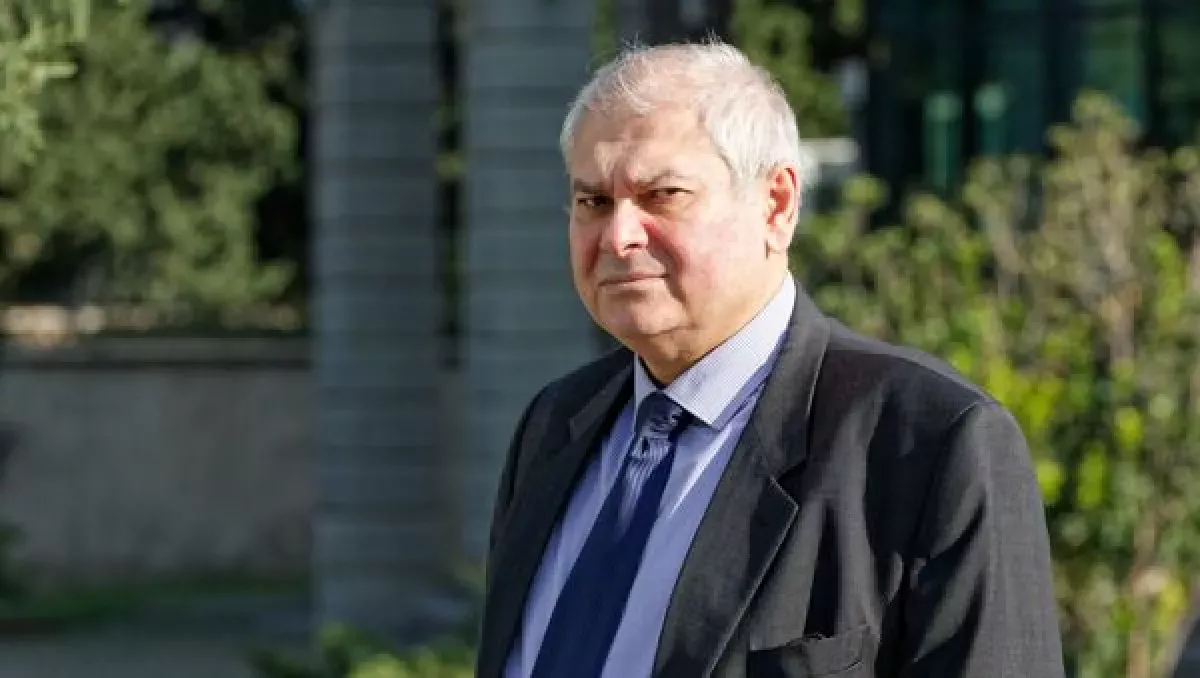
Professor of Political Science and Honoured Journalist of Georgia, Badri Nachkebia, noted that, as of today, the confrontation between the EU and Georgia’s current authorities has indeed reached a high level.
Professor of Political Science and Honoured Journalist of Georgia, Badri Nachkebia, noted that, at present, the confrontation between the European Union and Georgia’s current authorities has indeed reached a high level.
“Societal polarisation has reached the point where some opposition members, under one pretext or another, are, according to the authorities, legally detained. Despite this, the government continues to defend its position and to prove its legitimacy, primarily to the European bureaucracy, which has imposed certain sanctions. And, as expected, the EU’s latest move will be sanctions affecting the entire Georgian population in the form of suspending the visa-free regime. I believe society is, in one way or another, prepared for this.
The key point is that this confrontation with the EU is occurring against the backdrop of its active support for military operations in Ukraine. There is also the perception that the EU expects Georgia to join the military confrontation with Russia. However, Georgian society is unlikely to accept this. Therefore, in this case, the ruling authorities in Georgia have little to worry about—they hold a trump card: they are safeguarding peace,” the professor explained.
He emphasises that this trump card cannot be beaten by any of the arguments put forward by those claiming that a revolution is possible in Georgia.
“I believe the question will ultimately be framed as: war or peace? The state and the ruling forces will again insist that meeting the opposition’s demands would sharply worsen relations with Russia and could lead to catastrophic consequences, including military clashes. For Georgia and its population, with their long experience of confronting Russia, this is simply unacceptable. The country has enjoyed a period of peace amid surrounding conflicts. Therefore, even if the Brussels bureaucracy takes such a step, there may be dissatisfaction, large protests, and mass demonstrations, but a new revolution as such should not be expected,” Nachkebia said.
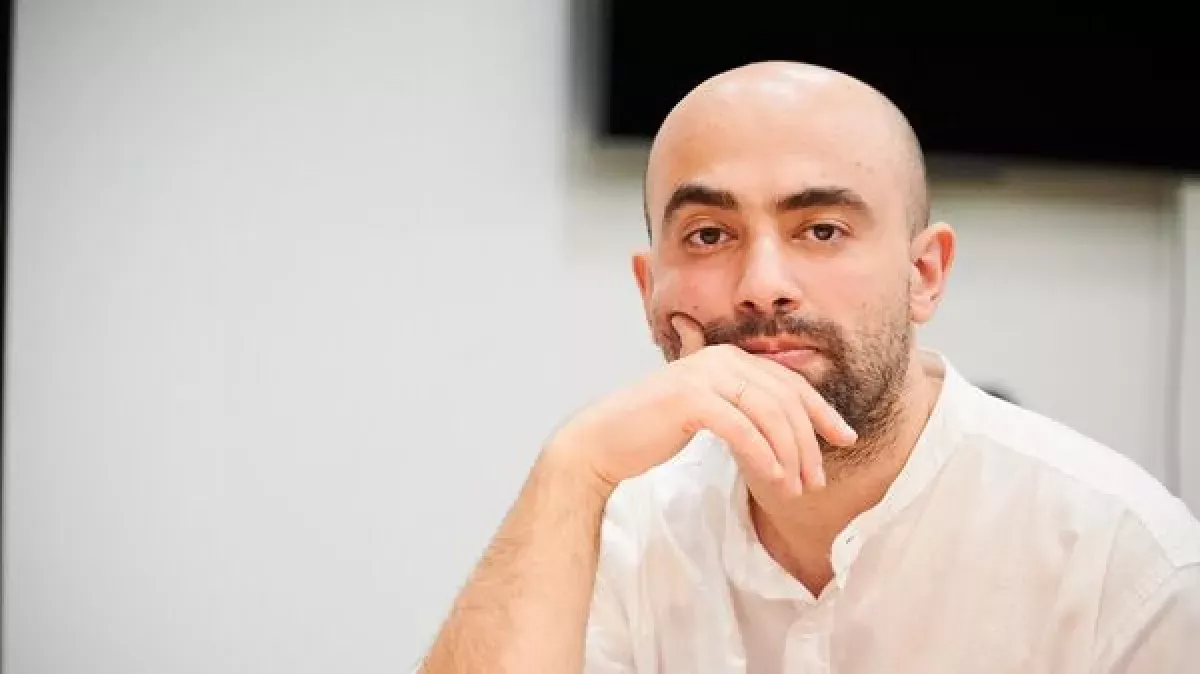
Political analyst and founder of the SIKHA Foundation research centre, Archil Sikharulidze, stated that there is no democratic backsliding in Georgia, since democratic backsliding implies a deterioration in statistical indicators.
“In Georgia, only perception-based indicators are deteriorating. And this so-called ‘perception of democracy’ is shaped by people who are engaged in political struggle and confrontation with the Georgian Dream. The European Commission publishes negative assessments precisely in terms of perception, while at the same time giving very positive evaluations in those sections that deal with statistics.
The reason that Georgian Dream adopted a series of laws, commonly referred to as a ‘tightening of the screws,’ is that groups funded by the same European Commission are actively trying to undermine order in the country, inflict economic damage on Georgia, and destabilise the situation. Therefore, as soon as the European Commission ceases such activities and 200 people stop deliberately marching through the city, taking photos for social networks and claiming that sooner or later Georgian Dream must be overthrown as an allegedly pro-Russian force, democracy will return to its proper place. Such methods cannot be used in any civilised country in the world," — says the researcher.
As for the possible cancellation of the visa-free regime for Georgian citizens, such a step is theoretically possible; however, according to him, it would be absolutely insane and would deal a final blow to Europe’s position in the country.
"The European Union, practically without providing any explanation, cancelled all projects and all funding. Europe, in essence, completely withdrew its support for Georgia and redirected these funds to the so-called civil society. This caused at least indignation, because when you stop financing, for example, cancer patients and, in effect, tell them: ‘go to the rallies, overthrow your government,’ while simultaneously funding affiliated NGOs, people naturally ask — ‘where are the values here?’
There are also questions regarding the advisability of cancelling the visa-free regime, for instance, for members of Georgian Dream. For them, this would not be a limitation. It is possible to impose sanctions on certain party representatives or some judges, but they are ready for that — it is not a problem for them. If the EU leadership truly wanted to impose restrictions on all citizens of the country, they would have done so already. However, this is not happening because Brussels clearly understood that even such a step would not lead to a revolution in Georgia. The visa-free regime is not a pressing issue for Georgian citizens.
As a result, by taking such a step, the EU would only give the Georgian Dream an excellent opportunity to once and for all close the topic of dialogue with the European Union. After that, Brussels would be left with no instruments or mechanisms of influence. The EU understands this, and that is why, instead of taking real action, it limits itself to threats. And threats have long ceased to be taken seriously — the Georgian majority is simply tired of constant pressure from the European Union," concluded Sikharulidze.







 editor@caliber.az
 +994 55 444-88-98
 Азербайджан, Баку, ул. Низами, 203, Af Business House, 5-й этаж