










Germany’s new calculus in the South Caucasus Fresh signals from Berlin
Recently, we witnessed the adoption of a strategic partnership agenda between Armenia and the EU. And just days ago, Prime Minister Pashinyan paid an official visit to Berlin, where Armenia and Germany signed a declaration on the strategic agenda of bilateral partnership. The document formalised the transition of relations between the two countries to a new level and outlined key areas of cooperation.
On the one hand, Friedrich Merz’s meeting with Pashinyan and the declaration they signed can be seen as a continuation of the European Union’s policy. On the other hand, these developments may also be interpreted as Berlin’s desire not to entrust its relations with the South Caucasus solely to Brussels, but rather to build pragmatic ties with the region’s states on a bilateral basis.
Against this backdrop, it is noticeable that Merz is indeed trying to avoid wording that would cast Germany in an Armeniacentric light. For example, at the joint press conference with Armenian Prime Minister Nikol Pashinyan, the German Chancellor stated, among other things, that it was precisely the initialling of the draft peace agreement between Azerbaijan and Armenia that opened a European perspective for Yerevan.

In this seemingly simple remark lies an undeniable truth: Armenia’s decades-long occupation of Azerbaijani territories, followed by Yerevan’s attempts after its defeat in the 44-day war to revive the “Karabakh case”, hindered Armenia’s development and deprived it of the opportunity to build the most favourable relations both with the countries of the region and with the wider world. Merz’s statement also implies that it is precisely the normalisation with Azerbaijan that enables Armenia to break free from conflict-driven politics, strengthen its international agency, and thereby secure the most advantageous terms in its dealings with various centres of power. A deeper reading of his words also reveals an implicit acknowledgement that the biased stance of some European politicians—who previously sought, and still seek, to obstruct a just settlement of the conflict—does not in fact serve Armenia’s interests.
Another important development should also be recalled here. On the eve of Pashinyan’s visit to Berlin, Chancellor Merz phoned President of Azerbaijan Ilham Aliyev. The very fact that the conversation was initiated by the German side immediately before hosting the Armenian leader indicates Berlin’s markedly respectful attitude towards Baku. It is evident that Friedrich Merz considered it necessary, among other matters, to discuss with Ilham Aliyev a range of issues of shared interest to Germany, Azerbaijan, and Armenia.
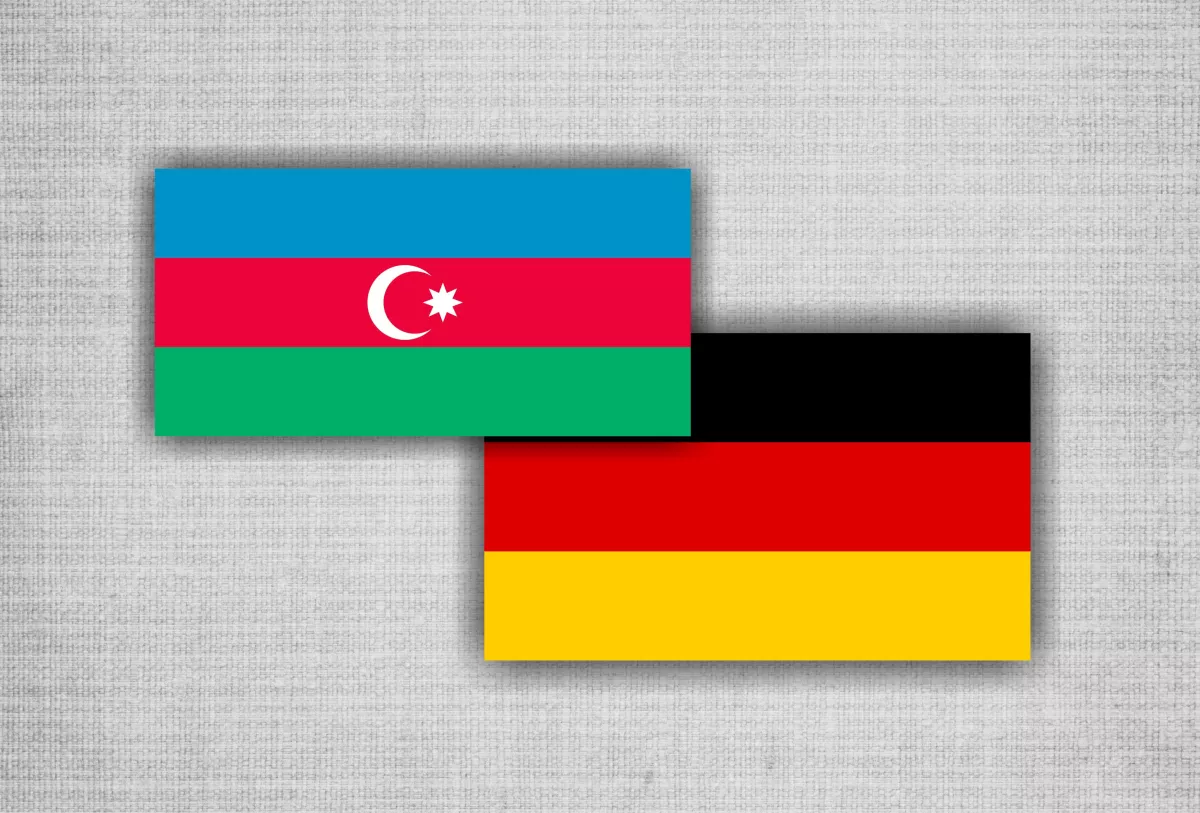
The phone call from German Chancellor Friedrich Merz to President of Azerbaijan Ilham Aliyev was a significant signal: Germany is demonstrating a growing interest in deepening its cooperation with Baku. A strategic calculation is evident here—the desire of Berlin to secure its position within the emerging system of regional connectivity and energy security, where Azerbaijan plays a pivotal role.
The previous German government led by Olaf Scholz was not known for a proactive, pragmatic and, crucially, balanced approach in its relations with Azerbaijan, often falling under the influence of Paris and Brussels. Now, however, Berlin appears determined not to miss the moment and is orienting itself towards a more long-term partnership model.
In other words, there is reason to believe that Chancellor Merz is reassessing his country’s policy in the region. He seems to be pursuing a clearer, results-oriented strategic line in the South Caucasus and Central Asia, recognising Azerbaijan’s role as a key hub in the new transit and energy routes.







 editor@caliber.az
 +994 55 444-88-98
 Азербайджан, Баку, ул. Низами, 203, Af Business House, 5-й этаж