










Immunity to recession: Azerbaijan's growing economy amid global challenges Analysis of key takeaways from President Aliyev's speech
Despite the influence of negative processes in the global market in the first half of 2023, Azerbaijan is developing its economy very successfully. It has achieved tangible GDP growth, increased foreign trade indicators, ensuring a high level of trade surplus and a positive balance of payments. These achievements contributed to the implementation of large-scale transport, energy, and other projects, as well as to the expansion of financing of the Karabakh region revival programs.
At the government meeting held on July 11, Azerbaijani President Ilham Aliyev reported on the country's socio-economic achievements in the first half of the year and set up forthcoming tasks for the current year.
Having successfully overcome the difficulties of the post-pandemic period and having competently assigned a growing number of tasks associated with the restoration of the territories liberated from occupation, Azerbaijan's economy has been demonstrating positive growth dynamics for almost two and a half years.
Supported by external demand, the oil and gas sector is developing very successfully, the non-oil industry, agrarian and transportation spheres are not lagging behind, the construction industry is gaining momentum, and tourism and services are successfully recovering. Thus, last year Azerbaijan's GDP reached a record level of $78.9 billion, and the volume of foreign trade exceeded $50 billion, with a trade surplus of $25 billion.
Positive dynamics of the domestic economic development were also observed in the first half of this year, despite some reduction in prices in the energy market, recession in the EU countries, monetary problems in our country's leading trading partners - Türkiye and Russia - as well as the still persisting negative impact of imported inflation.
"In general, over the past six months, the development of Azerbaijan's economy has been in a positive direction: the domestic non-resource sector increased by 3% overall, and at the same time the non-oil industry segment grew by 6.5%," President Ilham Aliyev said, speaking at a meeting dedicated to the socio-economic results of the first half of the year. - The main direction of our activity in this period was to ensure sustainable development of the country - growth of the non-oil sector, reconstruction of Karabakh and East Zangazur, a continuation of reforms in economic and social spheres".
The key successes achieved during the reporting period include a significant improvement in the financial situation of the republic, which is due to a number of positive processes.
"The strengthening of discipline in the financial sector, the continued reforms of tax and customs bodies, and transparency – all these factors have allowed us the opportunity to review the budget in the middle of the year and conduct reconciliation. This is very gratifying because the collected funds have significantly exceeded the forecast. Our state budget this year has already reached a record level – it has risen to the level of more than $19.4 billion. However, the acquisition of additional revenues in the first half of the year allowed us the opportunity to make additions to the budget to address urgent issues, and we did that. Today, our budget is in excess of $21 billion," the head of state noted, emphasizing that it enabled Azerbaijan to implement the main investment projects of the country.
It is appropriate to remind here that according to the recently adopted amendments to the state budget of the current year, additional revenues will amount to $2.058 billion, thus the initial forecasts on the revenue part of the state budget will increase by 9.8%, exceeding $19.8 billion.
In the updated budget layout, 52.5% of revenues will be provided by the oil and gas sector - it will account for more than $10.4 billion and 8.9% growth. The rest will come from the non-resource sector: these revenues will amount to slightly less than $9.4 billion and are expected to grow by 10.8% compared to the initial forecast.
The head of state emphasized that in the process of adopting the budget amendments, the two main directions for which the additional revenues will be allocated were very clearly defined.
"Our two key directions during the reconciliation are very clearly defined. In total, more than $1.7 billion manats were added, of which $1 billion was channelled into the restoration of Karabakh and Eastern Zangazur, and $647 million were allocated for strengthening our military potential. In other words, the lion’s share of this amount has been channelled into these two directions, and this is only natural. Because these are the two main tasks facing the country today," President Ilham Aliyev noted.
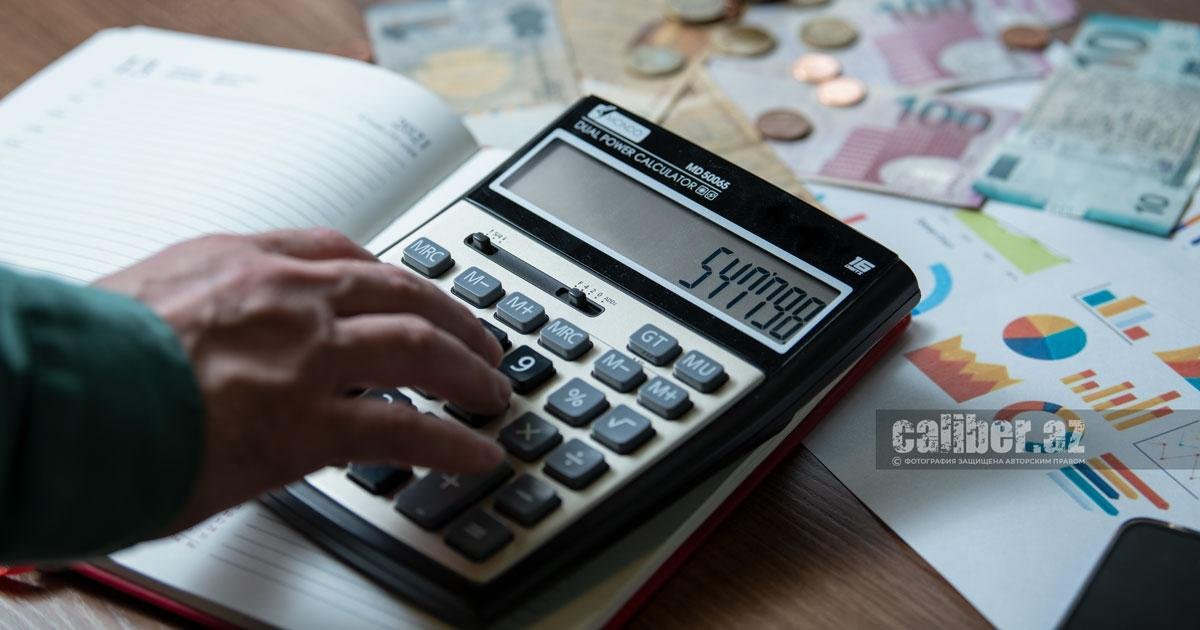
The meeting also touched upon another aspect of the budget policy related to the reduction of the external debt of the republic: this indicator is decreasing both in absolute figures and as a share of GDP. If at the beginning of 2022, the external debt amounted to 17% of the gross domestic product, by the beginning of this year this indicator has decreased to less than ten per cent.
This is an extremely important achievement, especially when compared to neighbouring countries and even the performance of highly developed nations, where the level of external debt to GDP often reaches 130-150 per cent or more.
"I said a few years ago that we should set a goal, and we did set it, that our foreign public debt should be below 10% of our gross domestic product. It should be at that level. We have already reached this. We have reached this goal. In absolute terms, our debt totals $6.7 billion, which accounts for about 10% of our gross domestic product." the head of state noted.
The President of Azerbaijan emphasized that the final GDP figures will be calculated at the end of the year, but already at the end of the first half of the year the volume of the country's economy has exceeded $35 billion, and this gives grounds to make positive forecasts.
Compared to many countries of the world, where imports prevail over exports, the dynamics of Azerbaijan's foreign trade are very positive, the head of state believes: "The foreign trade balance of the republic is positive, i.e. its surplus is at a very high level, and in the first half of the year it was somewhere around $10 billion. If these rates are maintained, imagine what indicators we will achieve by the end of the year, and, naturally, it will have a direct impact on ensuring macroeconomic stability.
The macroeconomic stability maintained over the past years is an extremely important factor ensuring the sustainability and progressive movement of the domestic economy.
"The manat exchange rate has been stable for six years, and this is one of the rare phenomena in the world practice, especially in the current conditions. Preservation of macroeconomic stability naturally affects the country's economy, but first of all, it has the most serious impact on people's living standards. In our country, both the minimum wage and the minimum pension are regularly increased. At the same time, the manat is stable," President Ilham Aliyev said.
The manat exchange rate has managed to remain unshaken during the most difficult period of the pandemic, the oil price drop in 2020, the subsequent recovery from the crisis, imported inflation, the energy and food crises in 2021-2022, and other global negativity observed today. Importantly, unlike many foreign trade partners, Azerbaijan has so far managed to avoid such a problem as monetary inflation.
This is due to the steps taken last year by the Central Bank to maintain macroeconomic stability: the use of various monetary mechanisms, and raising the discount rate, which ensured the stability of the manat - the most important anti-inflationary factor. The equilibrium in the foreign exchange market strengthens the main anchor of price stability and to some extent neutralises the external negative brought in mainly by imported inflation.
"Of course, double-digit inflation should make us think twice. I hope that by the end of the year, inflation figures may come down to single digits. Here, along with natural reasons, there are also subjective factors that should be more seriously studied - it is necessary to make proposals on steps to be taken by the end of the year," the head of state said, emphasising that against the background of Azerbaijan's overall economic potential and the results achieved in the economic sphere, inflation at the level of 12% is certainly undesirable.







 editor@caliber.az
 +994 55 444-88-98
 Азербайджан, Баку, ул. Низами, 203, Af Business House, 5-й этаж