










Iran’s Velayati threatens Trump Route “Rediscovering” the obvious
Just as tensions in Iranian–Azerbaijani relations appeared to be easing, with Azerbaijan noting Tehran’s increasingly constructive approach—demonstrated in particular by visits from President Pezeshkian and Foreign Minister Araghchi—controversial statements have again emerged from Iran’s capital.
This time, Ali Akbar Velayati, senior adviser to Supreme Leader Ali Khamenei on international affairs, told the Armenian ambassador to Tehran, Grigor Hakobyan, that Iran opposes “U.S. President Donald Trump’s plan for the Caucasus, as it poses a serious threat to Iran’s security.”
It should be noted right away that there is no “Trump plan for the Caucasus” whatsoever—the Iranian politician is clearly referring to the U.S. president’s peacekeeping mission and the Washington Declaration. However, let us not quibble over words and focus on the substance of his statement.
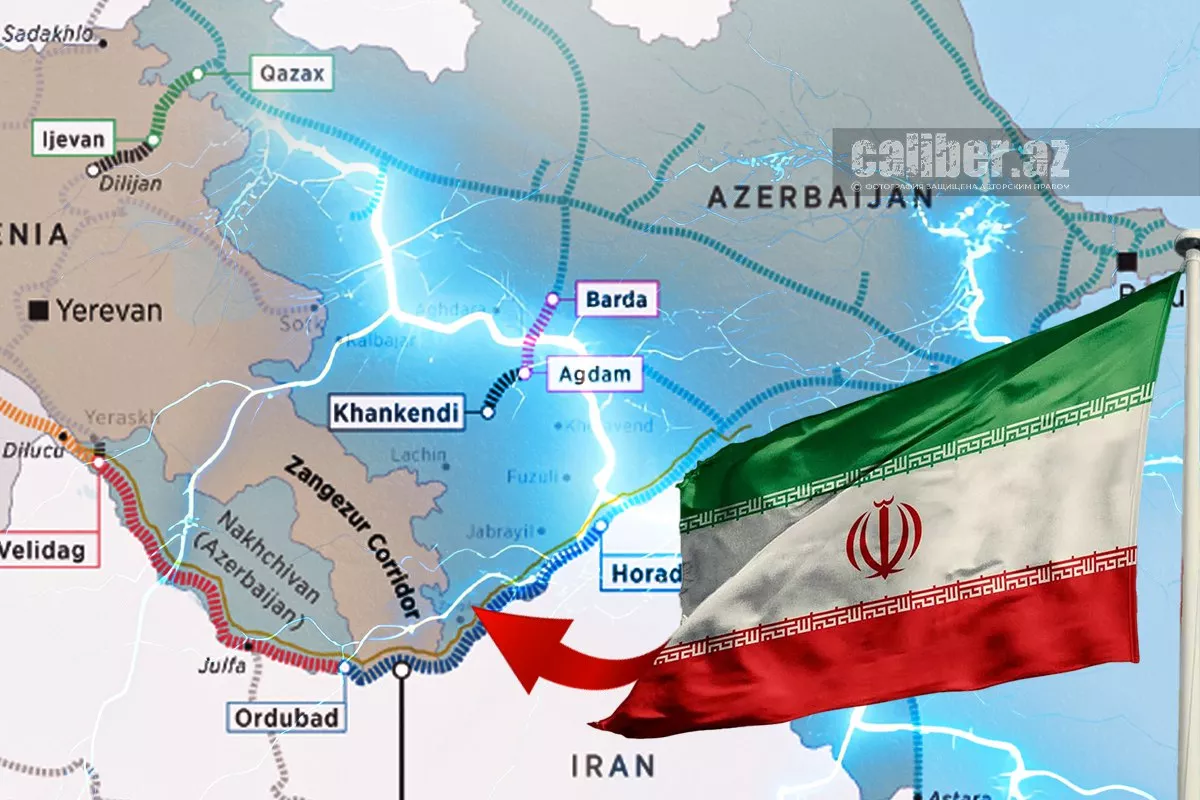
“The so-called Trump plan regarding the Caucasus is no different from the Zangezur Corridor, and the Islamic Republic is absolutely opposed to it,” Velayati said. He explained that the corridor creates “conditions for NATO’s presence north of Iran” and poses a serious threat to the security of northern Iran and southern Russia. He also stated that this plan is “practically the same project whose name has merely been changed and is now being pursued in the form of the entry of American companies into Armenia.”
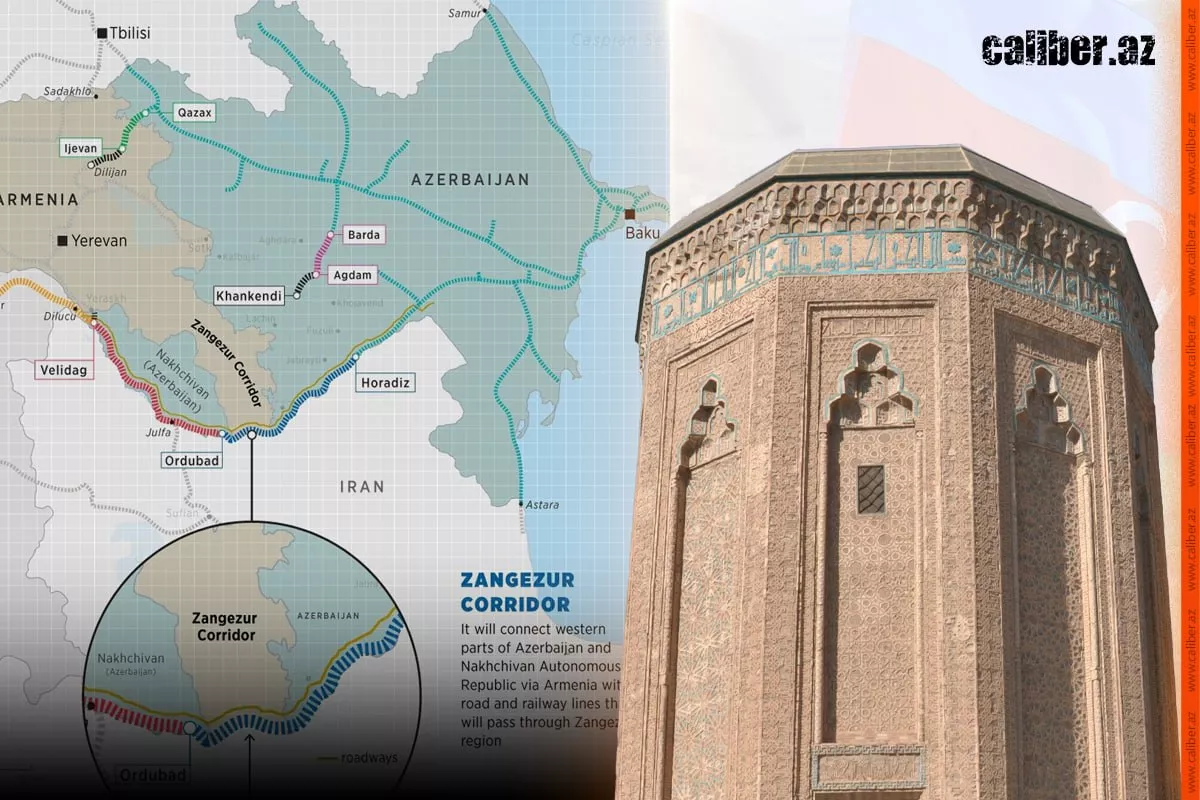
Notably, part of what Velayati said is entirely accurate, and in the most ironic sense, he is “discovering America.” The so-called “Trump Route” is indeed the same project—the Zangezur Corridor—designed to open communications between mainland Azerbaijan and Nakhchivan. There was never any intention to give Iran the impression that this was a different project; the name “Trump Route” was not invented to mislead Tehran’s leadership.
At the same time, this appears to be exactly the impression Tehran wishes to project. There is, however, a clear explanation: having suffered a crushing geopolitical and military setback this year, Iran is attempting to artificially inflate its own importance.
As for the fact that Americans have now appeared in the logistics project, the “blame” lies, at least in part, with the Iranians themselves. According to the 2020 Trilateral Statement, control over transport communications was supposed to be exercised by the Russian FSB Border Service. For a long time, Tehran repeatedly threatened Yerevan and Baku with almost military intervention if the corridor project were implemented, and apparently tried to persuade Moscow not to carry it out.
Moscow indeed did not make significant efforts in this regard—not so much, it seems, because of Tehran’s entreaties, but because it calculated that keeping the issue in limbo would serve its own interests. As a result, Russia’s obligations under the Trilateral Statement were not fulfilled, and Baku and Yerevan turned to Washington. Now, with the project practically on the verge of implementation, Iranian officials naturally regret that Americans, rather than Russians, will be stationed along the Armenian section of the Zangezur Corridor. However, as the saying goes, the train has already left the station.
Meanwhile, Velayati’s revelations did not end there and, moreover, began to take on a truly tragicomic character. Khamenei’s adviser noted that the United States is entering the region militarily under the pretext of carrying out economic activities.
“Experience has shown that the Americans first enter sensitive regions with seemingly economic projects, but gradually their presence expands to military and security dimensions,” he said, adding that “the opening of US presence at Iran’s borders in any form has clear security consequences.”
In this context, it is worth reminding Velayati that Iran has already experienced painful security consequences from U.S. actions—without any economic pretext and without any actual presence in the South Caucasus. This occurred on June 22, 2025, when the Americans launched several dozen Tomahawk missiles at Iranian nuclear facilities, destroying the most important one, at Fordow, with a giant bunker-buster bomb.
Prior to this, Israel, an ally of the U.S. and acting with its direct blessing, annihilated Iran’s entire air defence system through airstrikes, leaving the country’s skies virtually undefended. Now, any NATO aircraft can freely crisscross Iranian airspace as many times as it wants without consequences. That is the real threat, not the so-called “Trump Route.” Yes, the Iranians probably scrambled to patch up their air defence system—tightening a bolt here, welding a shield there—but they possess nothing technologically capable of long-term resistance in the air.
This raises the question again: what American military threat from the South Caucasus is Velayati referring to, when the real U.S. threat has already been realised in the most prosaic way—through violation of Iranian airspace and the destruction of its air defence?

Moreover, the Americans surely have many more surprises in store for Iran, and it must be emphasised that the likelihood of these surprises being delivered is in no way connected to the “Trump Route.” Iran’s nuclear programme, as demonstrated by the June attack, provides Washington with far greater opportunities in this regard. Quite recently, for example, President Trump suggested that the United States could strike Iran again if the leadership of the Islamic Republic refuses to reach a deal with Washington and continues its missile programme.
It should be noted that striking an opponent you have recently attacked is psychologically and technically much easier than striking a country that has not previously been subjected to military action. In this sense, if Washington decides to remind the world of its military power, it is unlikely to find a better target than Iran.
Azerbaijan is not relishing such a possibility. More importantly, it strongly opposes war or devastation in a neighbouring country, especially one where tens of millions of Azerbaijanis live. Baku simply call on the Iranian political elites to assess reality more soberly, to stop threatening projects that have nothing to do with Iran or its national security, and to focus on the country’s pressing problems—resolving the water deficit… and, of course, not forgetting about the air, the very air in which hostile aircraft fly.







 editor@caliber.az
 +994 55 444-88-98
 Азербайджан, Баку, ул. Низами, 203, Af Business House, 5-й этаж