










Kocharyan’s army day message A toothless attempt at revanchism
Today, one of the leaders of the Karabakh clan, former President of Armenia Robert Kocharyan, congratulated the Armenian people on Army Day. From start to finish, however, his message is riddled with low-grade manipulation. Here is the first line, which follows directly after the greeting: “With pain, we note that over the past 8 years, everything possible has been done to weaken, divide, and break our most combat-ready and victorious army in the region.”
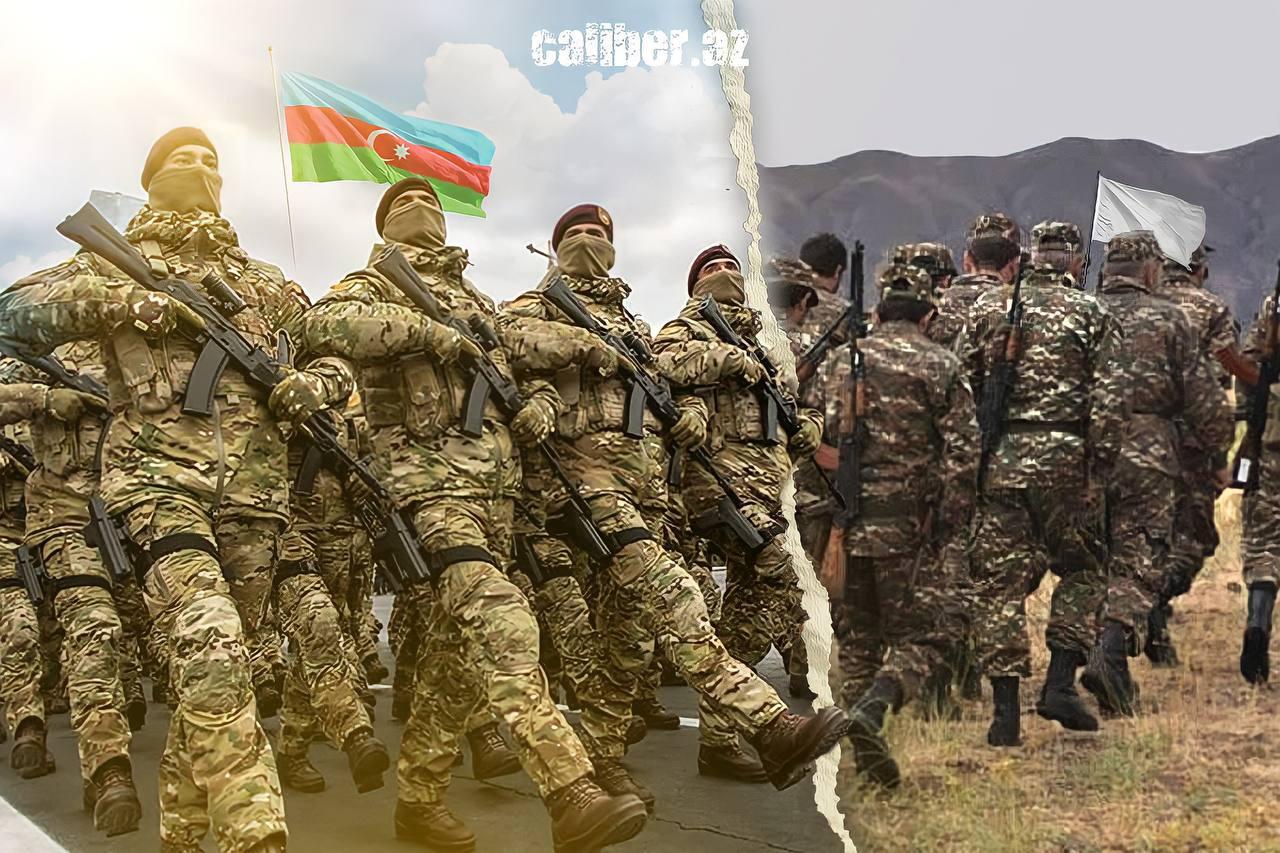
Kocharyan is fully aware that the Armenian army was never the most combat-ready or victorious force in the region. He knows perfectly well that it has always been, and remains, the Azerbaijani army that holds that position—a status achieved not overnight, but through persistent state-building efforts that began in 1993.
Yes, the Armenian army, entrenched in occupied Karabakh (which, by the way, was aided in its occupation by one state) and surrounded itself with Ohanyan’s mined and deeply echeloned lines, was not weak. But this fact only highlights the strength of the Azerbaijani Armed Forces and the courage of their personnel. They were so superior to the Armenian forces that they not only defeated them on the battlefield but also forced twelve thousand Armenian soldiers to become deserters—that is, to simply flee.
Next, Kocharyan writes: “The obsession of the political leadership with the idea of shifting the blame for their mistakes onto the army has not gone without consequences for our armed forces.”
We won’t delve into the twists and turns of Armenian political struggles. However, it is worth recalling that Pashinyan and his team are not so much shifting responsibility onto the army itself as onto the military paradigm shaped by the leaders of the Karabakh clan—a paradigm that proved helpless in the face of the “Iron Fist.”
Towards the end of his address, Armenia’s second president states: “The main guarantor of a genuine, long-term, and dignified peace for all states is a strong and combat-ready army, and we cannot be an exception.”
It is, of course, difficult to disagree with this statement. However, it is important to understand the implications behind this claim—in plain terms, where Kocharyan is steering the narrative. Logic suggests that the next “point” in his congratulatory message should contain a thesis about reviving the army with the goal of seeking revenge. And here something strange happens. Kocharyan does attempt to make some sort of revanchist statement, but it comes across as extremely unconvincing. Here is what he says in conclusion: “I am full of hope that we will be able, in the shortest possible time, to change the situation, restore the strength and spirit of the army, which will ensure stable peace.”
The words “change the situation” can only be interpreted as a desire for a military revanche; however, in the context of the following words about “restoring the strength and spirit of the army,” they come across as quite “measured” or restrained. After all, he doesn’t explicitly mention revanche, the “return of Artsakh,” or anything of the sort.
This is very interesting. Such a cautious choice of words suggests that even if the author of the message himself believes in the possibility of a military revanche, he sees direct appeals to revanchism as a factor that could harm his party in the growing pre-election struggle for parliamentary seats. This indicates that the topic of war and revanche meets with outright rejection by the majority of Armenian society. Adding to this the widespread rejection among Armenians of the Karabakh clan itself, the choice of such a “toothless” wording becomes entirely understandable.

Kocharyan is using a military holiday to try to awaken in Armenians a sense of nostalgia for a “victorious army,” since, in theory, it should be associated in the public mind with his name. However, it is likely that he will achieve exactly the opposite result. Armenian society, sobered by the defeat in the 2020 war, the lightning-fast anti-terrorist operation by the Azerbaijani Armed Forces in September 2023, and Prime Minister Nikol Pashinyan’s promotion of ideas about the futility of old myths of a “greater Armenia,” will naturally ask Kocharyan why, knowing that military victory cannot be transformed into political gains, he, as the country’s leader, drove the negotiation process into a dead end.
Azerbaijan’s victory has finally washed away the remnants of Kocharyan’s political cloaks. All that remains for him now is to convince people that, although he may be a poor politician, he is a good “military commander.” Alas for him, even this myth is doomed to vanish. As relations with Azerbaijan normalise and stability and prosperity take root in the South Caucasus, Armenian society will gradually come to realise that if Kocharyan was ever good at anything, it was only in thoughtless adventurism that plunged Armenia into regional isolation for a full thirty years.







 editor@caliber.az
 +994 55 444-88-98
 Азербайджан, Баку, ул. Низами, 203, Af Business House, 5-й этаж