










Poverty, drought, and the fury of Iran’s cities Why are people rising against the regime?
The government has accused the protesters of having ties to foreign states. However, video footage from Iran shows hundreds of thousands of people of all ages taking to the streets of cities. They are shot at, killed, and yet crowds often fight back—attacking government Basij fighters and administrative buildings.
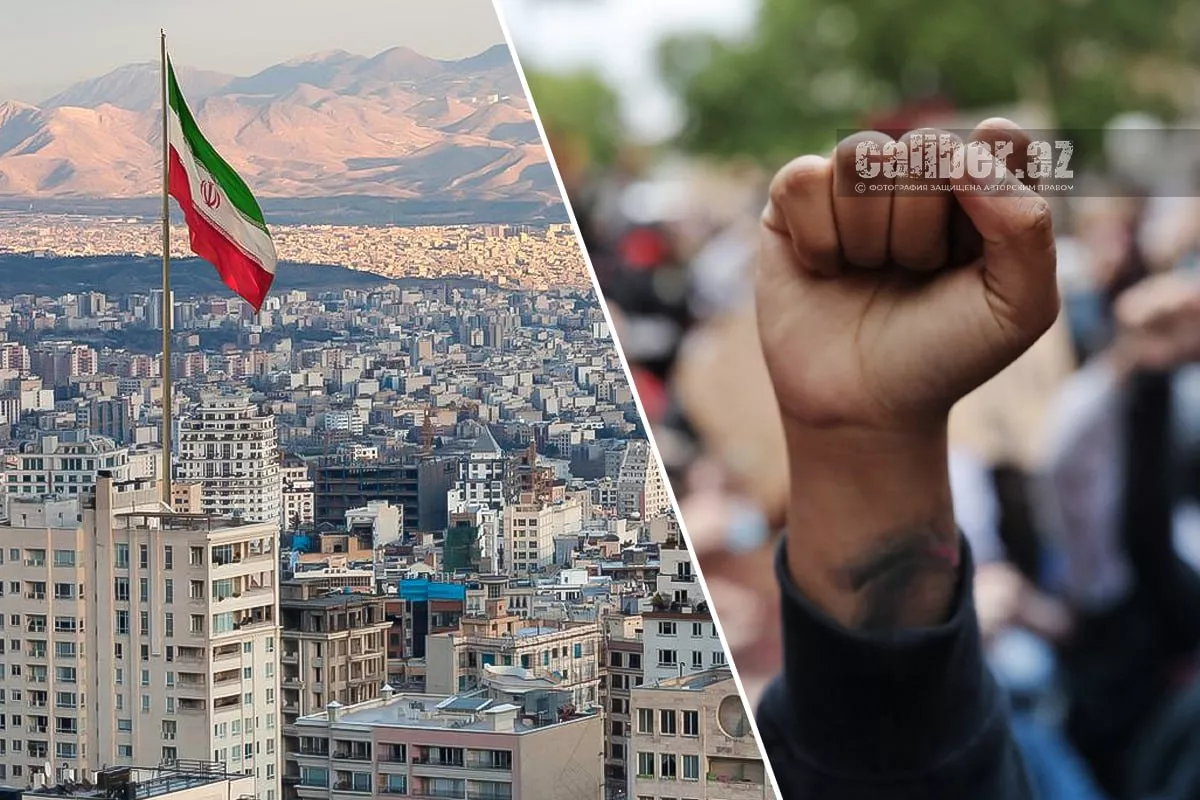
What is happening in Iran is a political earthquake, driven primarily by domestic causes. In 2009, millions took part in the so-called “Green Revolution,” protesting against the falsification of election results. Those protests were suppressed with violence, yet since 2017, Iran has seen virtually continuous protests. Workers and medical staff strike over rising prices and worsening working conditions, while students, members of religious movements, and national minorities also take to the streets.
The new uprising in Iran, which began in late December 2025, is unprecedented. First, the number of participants may already be comparable to the events of 2009.
Second, unlike previous protests, crowds have begun resisting security forces and destroying government institutions.
Third, the movement has spread to hundreds of small towns, where local residents have taken up arms. In these areas, traditional tribal clans and religious sects are strong, many people own firearms, and attempts to disperse protests sometimes turn into full-scale street battles.
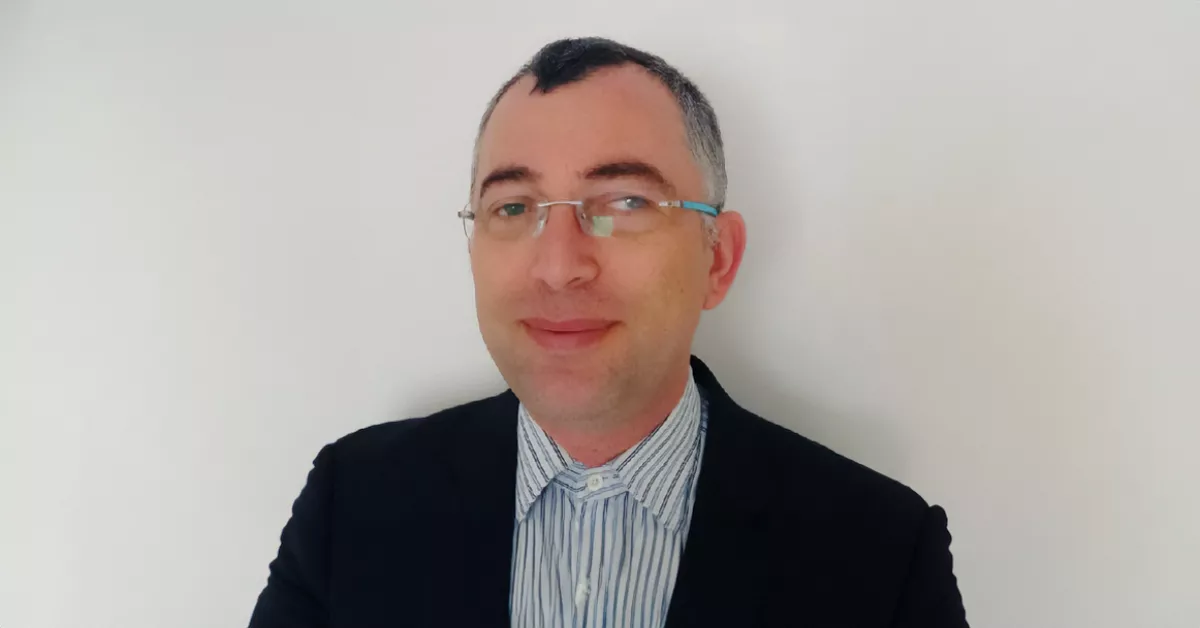
Israeli military-political analyst Alexander Grinberg, after studying the situation, concluded that Iranians are facing a phenomenon that can be called a “crisis of calculation.” In his view, the current uprising was triggered by a “collapse of the computational horizon” necessary for the economic existence and survival of Iran’s population. Grinberg also cites the analytical Telegram channel Chashmeh, which introduced the concept of “Bi-Ghabliyat-e Mohasebeh”—“inability to calculate.” This idea has become a theoretical framework for understanding what is happening.
The essence is as follows: in any economy, market participants—from street vendors to the largest importers—operate under a predictable horizon of events. Taxes, exchange rates, and prices may fluctuate, but usually within ranges that allow for calculation. This relative stability enables businesses to manage risks and plan future operations.
In December 2025, the rapid collapse of the Iranian rial destroyed this planning horizon. For the bazaar—the historical and economic heart of Iranian society—this meant it became impossible to set prices. Selling goods turned irrational, as the cost of procurement could exceed the selling price within just a few hours. As a result, at the end of December, traders went on strike—first in Tehran, then across the country.
Business traditionally avoids political upheaval: money prefers quiet and stability, because only then does it “work.” But the rapid collapse of the Iranian currency—by no means the first in recent years—has shown that further commercial operations are becoming impossible. The radical slogans quickly adopted by bazaar traders—“Death to the Islamic Republic!”, “Shah Reza Pahlavi, come back!”—reflect a refusal to live in a system unable to provide the basic conditions for business. Economic demands were no less uncompromising: “Business is impossible with a 150,000-Toman dollar.”
Hundreds of thousands of people from all social classes—workers, specialists, students, pensioners—rapidly joined the bazaar protests. The reasons were the same: the impossibility of planning their own future and threats to physical survival. Although there is not yet widespread hunger in Iran, society recognises that it is approaching this state. With official inflation at 42.2% (likely a significant underestimate) and food prices rising by 72% year-on-year, the average Iranian family faces an inability to calculate the measures necessary for survival. Prices are rising rapidly while around 70% of the population lives at or below the poverty line.
The budget proposed by the regime for 2026/2027 allows for the possibility of a 62% increase in taxes. This further severs the link between the governance system and citizens’ ability to plan their own lives.
Other factors highlighted by Grinberg include the collapse of infrastructure, which has manifested in energy and water crises. In a country with the second-largest gas reserves in the world, where 80% of power plants run on gas, there is a shortage of energy resources—during winter or the hot summer, cities experience rolling power outages. But the most dramatic problem is the water crisis. Due to inefficient use of limited resources, desertification is advancing, and water supplies are depleting. In summer and autumn 2025, hundreds of Iranian cities entered a critical red zone, where water outages began. It reached the point that the President of Iran openly mentioned the possible relocation of the capital’s residents due to the water shortage. It remains unclear where and how 10 million people could be relocated, and where they could find work and housing—especially amid the ongoing economic crisis.
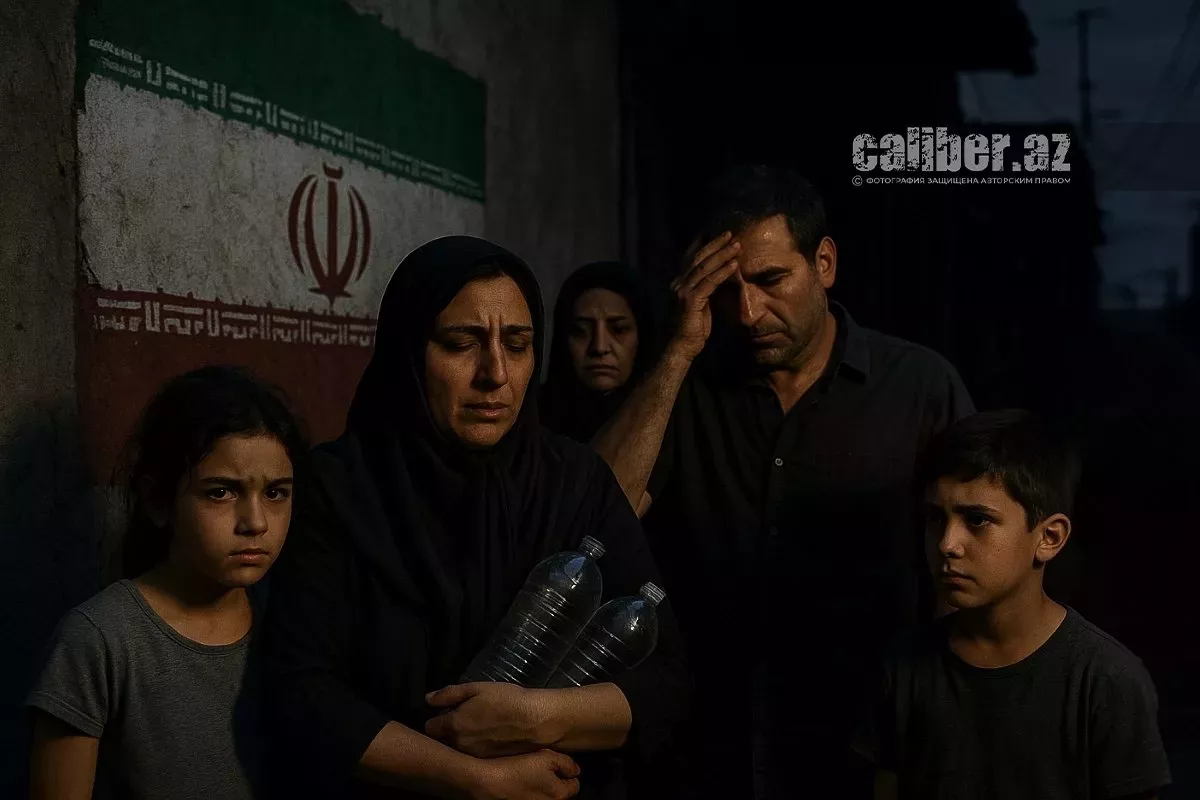
The rapid impoverishment of the population, combined with growing energy, water, and environmental problems, leaves people with no choice. They fear the bullets of the Basij, but they rise against the regime because they fear an unpredictable, catastrophic future in the Islamic Republic even more.
Iran’s deep crisis is linked to the failure of the system’s mechanisms. First, the regime has positioned itself against the United States and Israel in the struggle for dominance in the Middle East, suffered a series of military defeats, and faced sanctions that have devastated the economy.
Second, the governance system has proven ineffective: the network of the largest state-owned and private companies is controlled by security forces and their relatives, soaked in budgetary resources, squandered, and run incompetently. The ruling class, composed of millionaires and billionaires, desperately clings to power. Losing power would also mean losing wealth—and possibly life. They thrive on massive subsidies from the treasury—essentially squeezing resources from the rest of the population.
However, this ruling layer is increasingly isolated from other social groups. From the perspective of millions of Iranians, things cannot continue this way. People are ready to take to the streets because they see the regime as a threat to their very existence. They do not know how to live on in the Islamic Republic.







 editor@caliber.az
 +994 55 444-88-98
 Азербайджан, Баку, ул. Низами, 203, Af Business House, 5-й этаж