










Red Dragon and Black Continent China’s foreign minister tours Africa
Every January, Chinese diplomacy seems to start the year by taking Africa’s pulse. For 36 consecutive years, the first foreign visit of China’s foreign minister has been to this continent — a tradition that has gradually become a political symbol: a reminder that Beijing is building not just roads and ports, but a bridge between eras and civilizations.
In 2026, this tradition was once again continued by China’s Foreign Minister Wang Yi, who toured Ethiopia, Tanzania, and Lesotho. The trip became a kind of “diplomatic cardiogram” of modern China — a country steadily strengthening its role on the African continent.
Wang Yi explained why Africa remains the first stop on Chinese diplomats’ itineraries: it is a symbol of the continuity of friendship, stability of policy, and solidarity among developing countries. China and Africa, he noted, are connected by 2.8 billion people, a shared historical experience, and a common aspiration for modernization. “No matter how the international situation changes, China will be the brother who first extends a hand to Africa in difficult times,” the minister declared.
However, behind the polished rhetoric, alongside the pursuit of mutually beneficial partnerships, lies China’s ambition to expand its geopolitical influence worldwide. In this context, securing access to strategically important mineral resources and simultaneously creating markets for Chinese goods remains a central theme of China’s policy in Africa. Another key factor is investment in, and the strengthening of, coastal infrastructure linked to China’s global Belt and Road Initiative. In this regard, Beijing’s engagement with Africa is only set to deepen, and Wang Yi’s tour provides further proof of this trend.
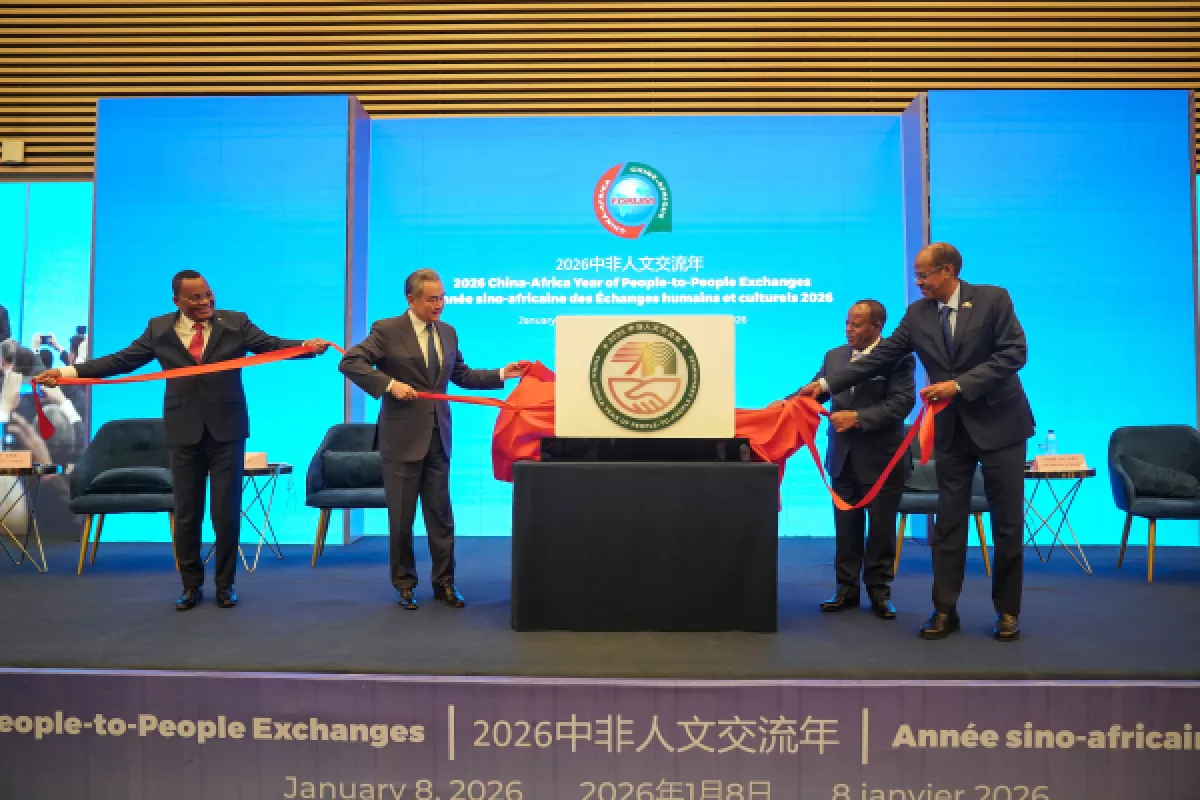
At the headquarters of the African Union (AU) in Addis Ababa, Wang Yi participated in the opening ceremony of the “2026 China-Africa Year of People-to-People Exchanges” and held the ninth China–AU Strategic Dialogue. The African Union, he emphasized, is the “locomotive of the continent,” driving it toward unity. In 2026, marking the 70th anniversary of diplomatic relations between China and Africa, Beijing is focusing not only on infrastructure but also on culture, education, digital cooperation, and mutual learning.
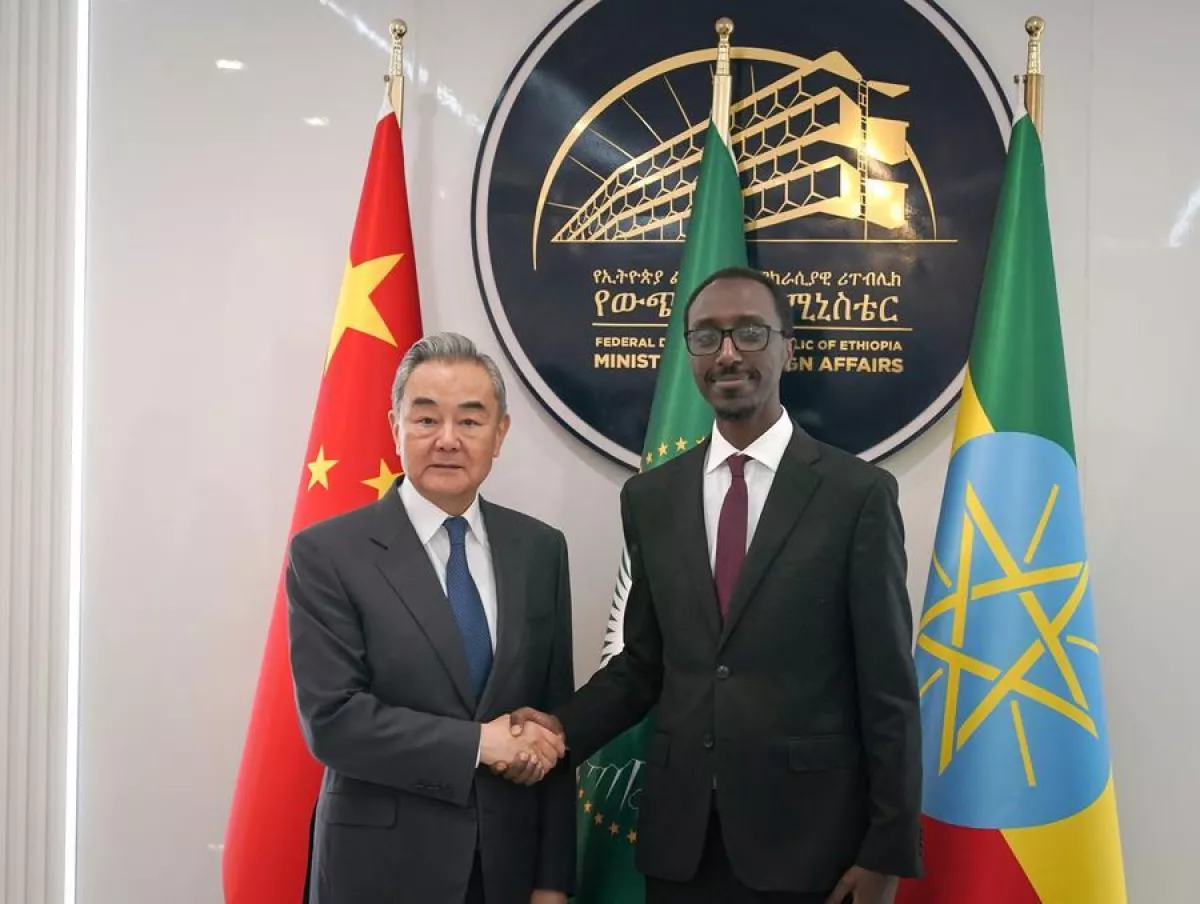
In the Ethiopian capital, Wang Yi held talks with Prime Minister Abiy Ahmed and Foreign Minister Gedion Timotheos. China and Ethiopia reaffirmed their commitment to developing an “all-weather strategic partnership” and emphasized joint modernization efforts. Key areas of focus include the digital economy, artificial intelligence, green energy, and logistics. China pledged to further develop the Addis Ababa–Djibouti railway, turning it into a model of mutually beneficial cooperation. Ethiopia, in turn, reiterated its adherence to the “One China” principle and its support for Beijing’s efforts to safeguard national unity.
In Tanzania, the Chinese minister recalled a symbol of a previous era — the Tanzania–Zambia Railway (TAZARA), built in the 1970s with China’s support despite its own economic challenges. Today, Beijing aims to breathe new life into this route, transforming it into a “Belt of Prosperity” and a “Development Corridor,” along which new enterprises of various types are expected to grow. Tanzanian Foreign Minister Dr. Mahmoud Thabit Kombo and President Samia Suluhu Hassan praised China’s global initiatives and expressed their readiness to develop cooperation in infrastructure, education, and interparty relations.
The final stop of the tour was Lesotho. In Maseru, the foreign ministers of both countries signed a joint communiqué on developing a strategic partnership. Both sides reaffirmed their support for the “One China” principle, condemned the use of human rights issues as a tool of pressure, and expressed their readiness to resist unilateral sanctions and protectionism.
The visit to Somalia’s capital, Mogadishu, was postponed; however, Wang Yi held telephone talks with his Somali counterpart. Against the backdrop of the crisis triggered by Israel’s recognition of the self-proclaimed Somaliland at the end of 2025, China took a firm stance. Wang Yi emphasized that Beijing “consistently supports Somalia in defending its sovereignty and territorial integrity” and opposes any contacts between Somaliland and Taiwan. Somalia, which holds the presidency of the UN Security Council in January 2026, reaffirmed its commitment to the “One China” policy.
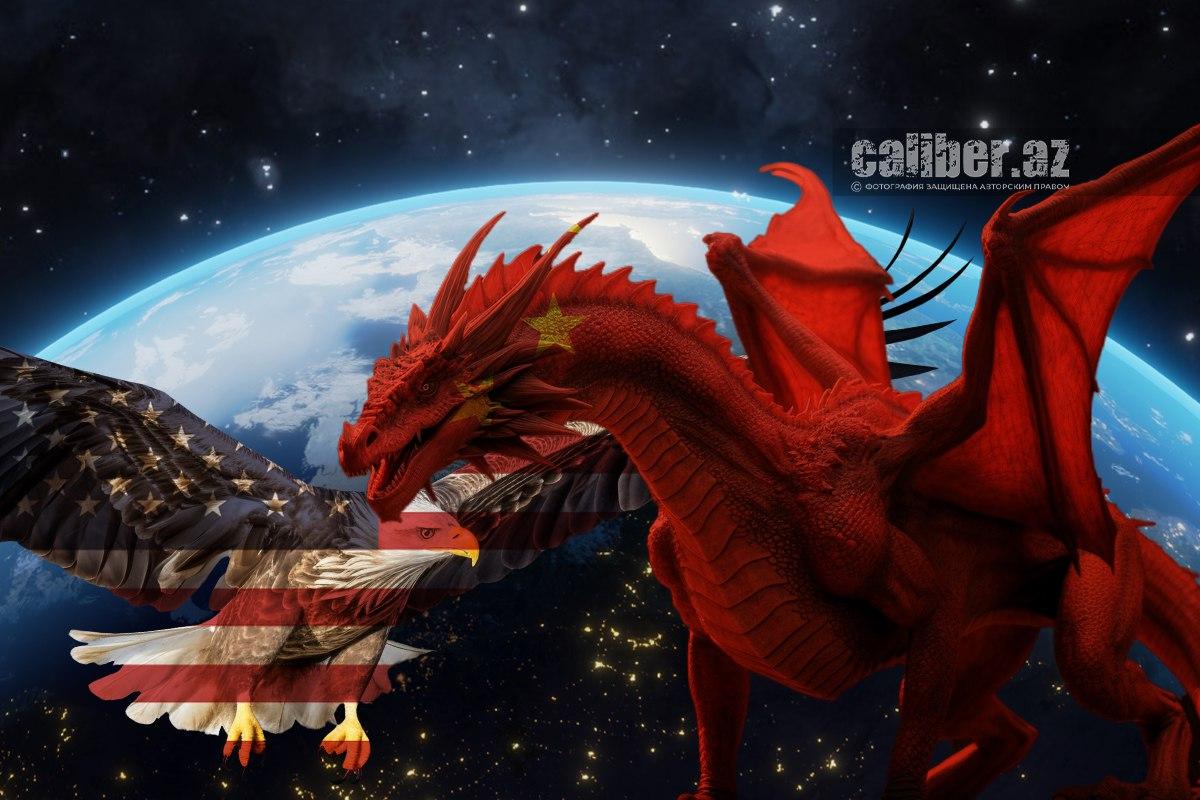
Wang Yi’s Africa tour was far more than a series of protocol meetings. It became a “field laboratory” for Chinese foreign policy, testing not only the principles of the Global South — independence, equality, and development without diktat — but also Beijing’s ability to consolidate and assert its geopolitical influence globally. This context is especially significant given that global geopolitical tensions are likely to enter a more acute phase in the near future. The United States, as outlined in its new National Security Strategy, intends to intensify efforts to strengthen trade relations with African countries. Moreover, containing China is identified as Washington’s main foreign policy objective, meaning such efforts will extend wherever possible — including on the African continent.







 editor@caliber.az
 +994 55 444-88-98
 Азербайджан, Баку, ул. Низами, 203, Af Business House, 5-й этаж