










The drone era How Azerbaijan rewrote the rules of war
When future historians describe the art of warfare in the first quarter of the 21st century, they will inevitably note that the most profound transformation in the nature of armed conflicts was not initiated by great military powers with their trillion-dollar defence budgets – it was accomplished by a relatively small country located at the crossroads of Europe and Asia.
In the fall of 2020, Azerbaijan conducted an operation that, over forty-four days, demonstrated to the world a fundamentally different model of warfare, in which unmanned aerial vehicles became the backbone of the country’s entire military machine.
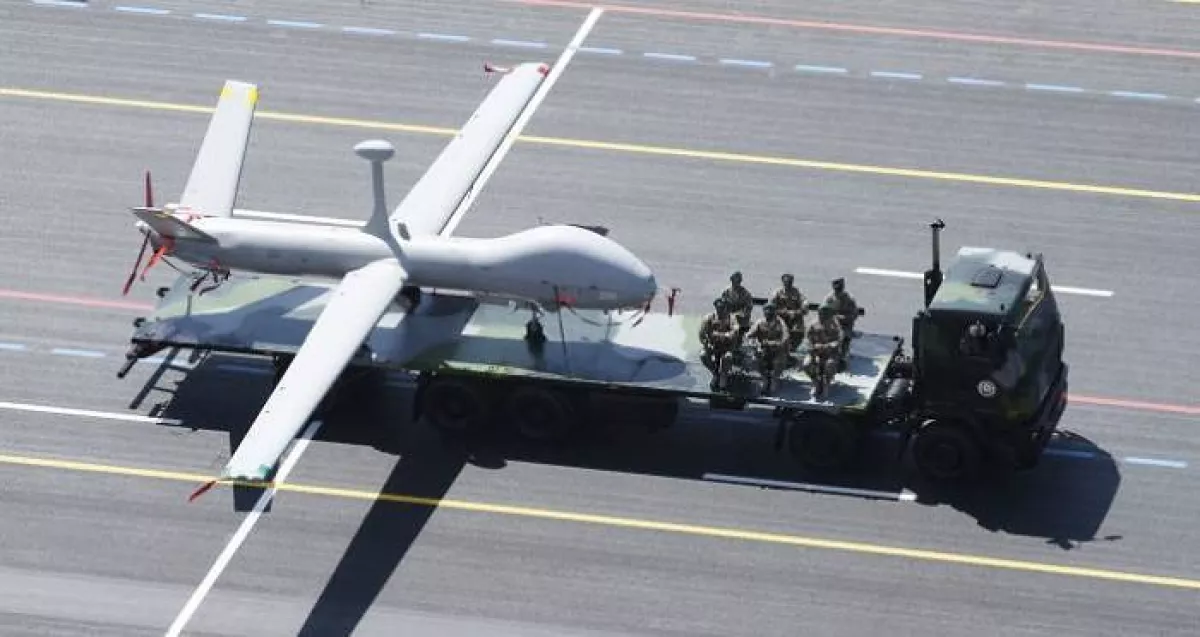
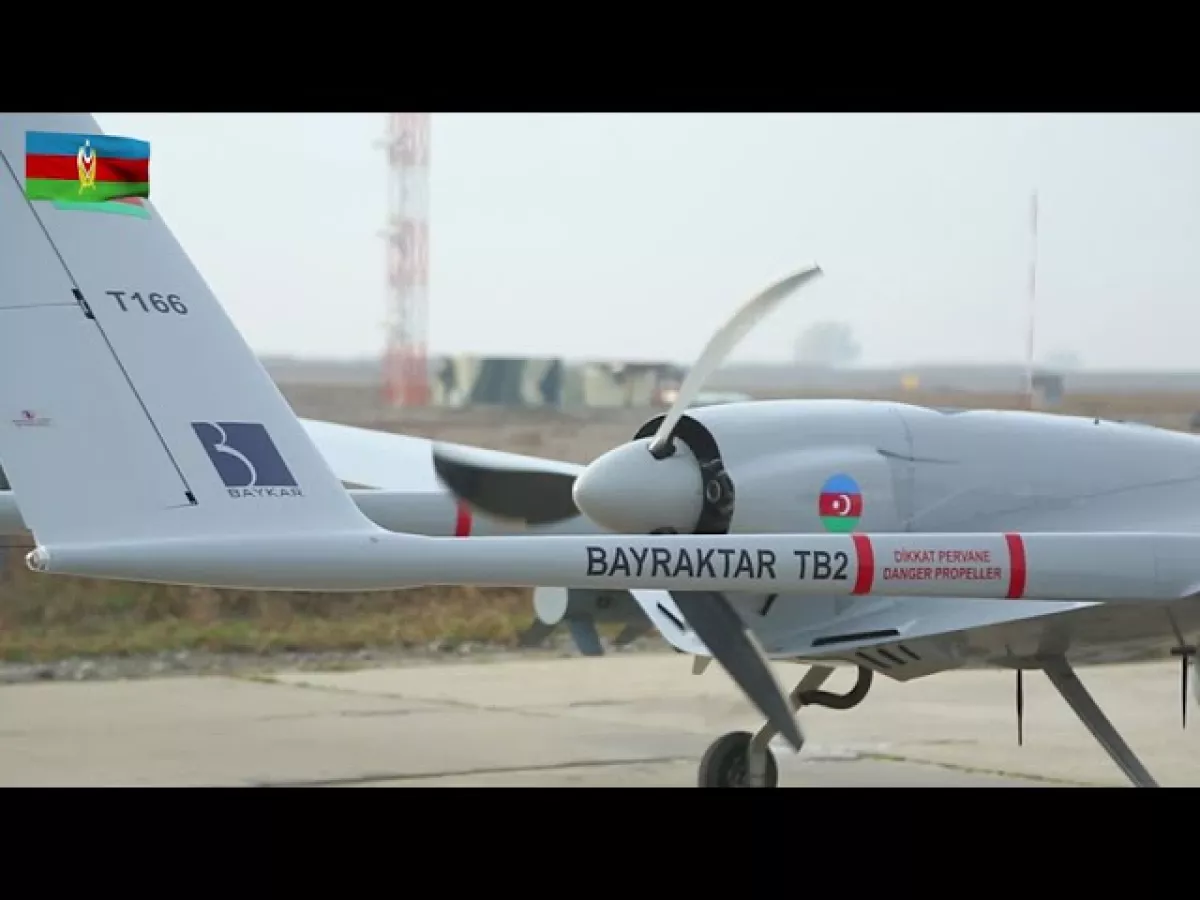
Undoubtedly, drones had been used in armed conflicts even before the Second Karabakh War — one only needs to recall their deployment in Iraq, Afghanistan, Yemen, and Syria since the early 2000s, or the use of Turkish Bayraktar TB2 drones in Libya. However, in all these cases, unmanned aerial vehicles functioned as a supplement to conventional military forces — conducting reconnaissance, delivering precision strikes on pre-identified targets, and providing situational awareness.
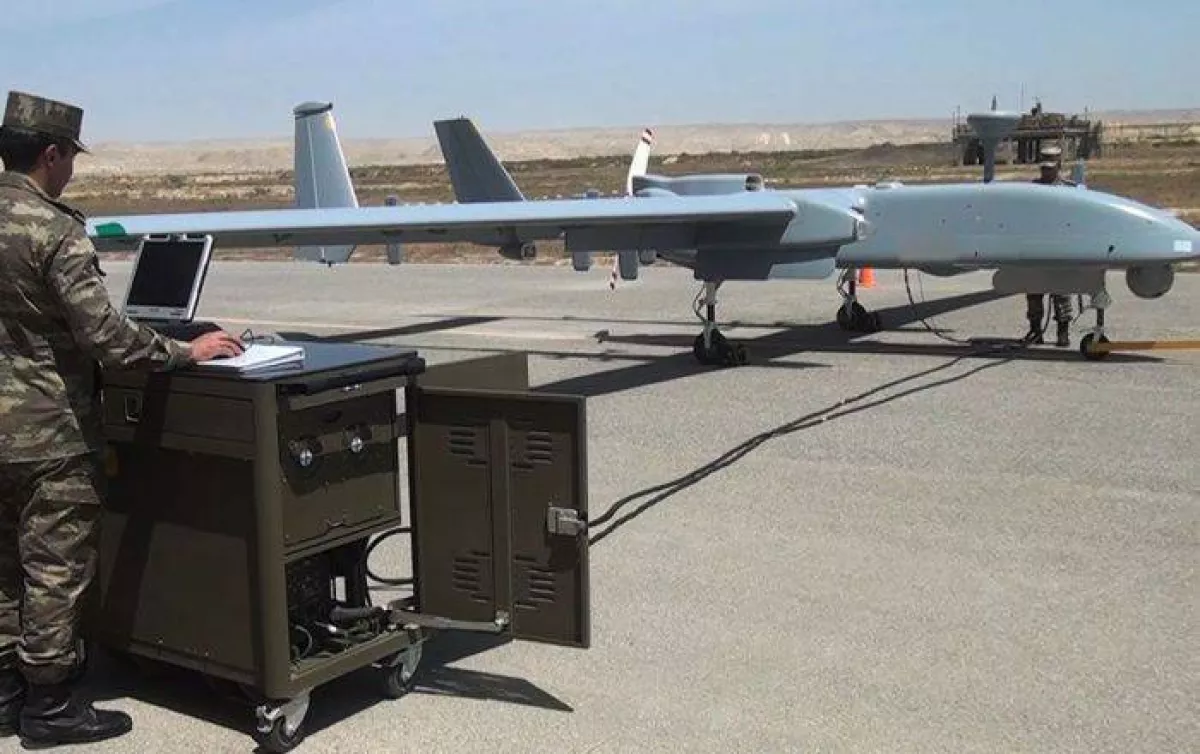
It was Azerbaijan that made a qualitative leap in the use of UAVs, building a system in which drones of various types and purposes were integrated into a unified combat mechanism operating in coordination with artillery, electronic warfare systems, and ground units. Bayraktar TB2 strike drones destroyed enemy air defence systems and armoured vehicles; Israeli-made loitering munitions like Harop and SkyStriker targeted radar stations and command posts; meanwhile, reconnaissance drones transmitted coordinates in real time to adjust fire. It was a full orchestration of the airspace over the battlefield, where each drone performed a strictly defined role.
The results were staggering. The Armenian army in Karabakh, entrenched in mountainous positions and equipped with a layered air defence system based on Soviet and Russian complexes, was methodically stripped of its detection and strike capabilities. The anti-aircraft systems responsible for maintaining the resilience of the defence became the first and primary targets for the drones. Once the “umbrella” of air defence was breached, Armenian armoured vehicles, artillery positions, and rear-line communications were left defenceless. The losses in personnel and equipment that Armenia suffered in the very first days of the war undermined its ability to mount organised resistance. The classic model of positional defence, built up over nearly thirty years of occupation, crumbled under the strikes of UAVs, whose cost was orders of magnitude lower than the equipment they destroyed.
It was precisely this cost ratio that became another revolutionary lesson of the Second Karabakh War. A loitering munition could take out an anti-aircraft missile system worth millions. A strike drone, operated by a controller dozens of kilometres from the front line, could destroy a tank whose crew had undergone years of training. This arithmetic of war made a sobering impression on general staffs and military academies around the world, as it called into question the rationale for colossal investments in traditional weapons platforms. Why produce a tank costing eight million dollars if it can be destroyed by a device worth a hundred thousand?
Conflicts that erupted after 2020 confirmed the validity of Azerbaijan’s approach with ruthless clarity. The full-scale Russian-Ukrainian war, which began in February 2022, instantly became a testing ground for the very principles that Baku had demonstrated two years earlier. Ukraine, using the same Bayraktar TB2 drones and deploying mass production of FPV drones, managed to inflict significant damage on Russian armoured columns.
However, the scale of the confrontation between the two armies quickly revealed the next stage of evolution: drone-on-drone warfare, a contest between electronic warfare systems and unmanned platforms, and a race between strike capabilities and interception methods. Both sides ramped up the production of cheap drones at dizzying speed — Ukraine set up thousands of FPV drone assembly workshops, while Russia purchased Iranian “Shahed” drones. The battlefield in Donbas and around Kherson looked fundamentally different from any previous conflict: the sky over the trenches was filled with dozens and even hundreds of small drones, hunting individual soldiers, armoured vehicles, and artillery crews.
The Middle Eastern crisis added yet another dimension to this picture. The confrontation between Iran, Israel, and the United States, which intensified in recent months, demonstrated how drone technologies are transforming the balance of power between states with fundamentally different technological capabilities. Deprived of access to Western military technologies due to years of sanctions, Iran relied on mass-producing relatively simple but numerous unmanned platforms. Its kamikaze drone, the “Shahed,” became a game-changing weapon. Waves of Shaheds forced the adversary to expend missiles worth millions to intercept devices costing only tens of thousands. This asymmetry, first so vividly demonstrated by Azerbaijan in 2020, took on a strategic dimension in the confrontation between the U.S.–Israel bloc and Iran.

In turn, Israel, one of the world’s leaders in drone technologies and the supplier of the very loitering munitions that Azerbaijan so effectively used during the Patriotic War of autumn 2020, found itself forced to rethink its own defensive doctrine. Massive drone strikes by pro-Iranian proxies — Hezbollah, the Houthis, and Iraqi Shiite militias — were overloading an air defence system traditionally designed to counter ballistic missiles and aircraft. The Israeli military was compelled to develop laser interception systems like Iron Beam precisely to address the inefficiency of countering drone attacks with missile-based solutions. This technological response was a direct result of the challenge that unmanned platforms posed to conventional defence systems.
A single logic runs through all of these conflicts, one that had its starting point in the Second Karabakh War. Drones have become a structuring element of combat operations, shaping tactics, strategy, operational planning, and even geopolitical calculations. Today, a state without advanced unmanned forces is as vulnerable as a country without an air force was in the 20th century. The difference is that the entry threshold to the “club” of powers with significant drone capabilities is incomparably lower than the cost of building an air force. This circumstance is fundamentally reshaping the global balance — allowing both small and medium-sized states to possess strike capabilities that, just two decades ago, were the privilege of the world’s major powers.
Azerbaijan’s contribution to this transformation goes far beyond the specific military success of 2020. Baku developed a model that stands apart from all previous cases of drone use due to its systemic approach. The Americans employed drones for “targeted eliminations” — essentially as flying snipers. The Turkish military used them as flying artillery, striking convoys and positions. Baku, however, built what military analysts later called a “system of systems”: a layered deployment of unmanned aerial vehicles of various classes, each performing a specific task within a unified operational design.
The most important aspect of Azerbaijan’s experience was precisely integration. Simply having drones in a military arsenal had long ceased to be unique — dozens of countries today possess unmanned systems of various types. The fundamental distinction of Azerbaijan’s approach was that Baku did not merely purchase drones; it developed a doctrine for their use, trained operators, established a command hierarchy along with horizontal connections between different branches of the armed forces, and refined coordination between unmanned and manned systems, aerial strike assets and artillery, as well as between reconnaissance and strike operations. This integrative work, carried out well before the onset of hostilities, ensured the devastating effectiveness that the world witnessed in the autumn of 2020.
Military academies and analytical centres around the world continue to study the lessons of the Second Karabakh War, and the volume of this research is only growing as new conflicts unfold. Each of these — whether the battles near Bakhmut, clashes in Khartoum, or the Iran–U.S.–Israel duel in the skies of the Middle East — confirms the fundamental conclusions drawn from the analysis of Azerbaijan’s campaign. Drones have irreversibly changed warfare. Yet merely possessing this weapon does not guarantee victory — what is decisive is the ability to integrate different types of unmanned systems into a unified combat architecture, embed them within the existing military structure, and ensure synergy between new technologies and traditional means of waging war.
Azerbaijan was the first to assemble all the elements of this mosaic and demonstrate the results in practice: in less than six weeks, it defeated an army that had controlled the dominant heights of the Karabakh region for 30 years. And all of this was achieved thanks largely to the very “system of systems,” at the core of which were UAVs.
The world has entered the era of drones. This is acknowledged everywhere today — from the Pentagon on the banks of the Potomac to the General Staff on Frunzenskaya Embankment, from Tel Aviv’s “Kirya” to the headquarters of defence corporations across Europe and Asia. The question of how to fight with drones, against drones, and through drones is shaping military development agendas for decades to come. And in any serious study of this issue, the unquestionable starting point is the forty-four days of autumn 2020, during which Azerbaijan rewrote the alphabet of war.







 editor@caliber.az
 +994 55 444-88-98
 Азербайджан, Баку, ул. Низами, 203, Af Business House, 5-й этаж