










Trump’s National Defense Strategy Redefining America’s role on the global stage
Last week marked one year since the start of Trump’s second presidential term. On this occasion, global media outlets have been eagerly discussing the outcomes of his actions over the past year. Precisely on the first anniversary of his second presidency, Trump presented a rather grandiose project — the Board of Peace — and did so on a major international platform: the Davos Forum. This is a landmark decision, as it essentially involves the creation of a new international structure that many politicians and analysts already view as a real alternative to the UN, with the potential over time to carry even more weight than the UN Security Council.
On the other hand, considering Donald Trump’s attention to various geopolitical details, it is hardly a coincidence that the Pentagon released the U.S. National Defense Strategy on January 24, 2026.
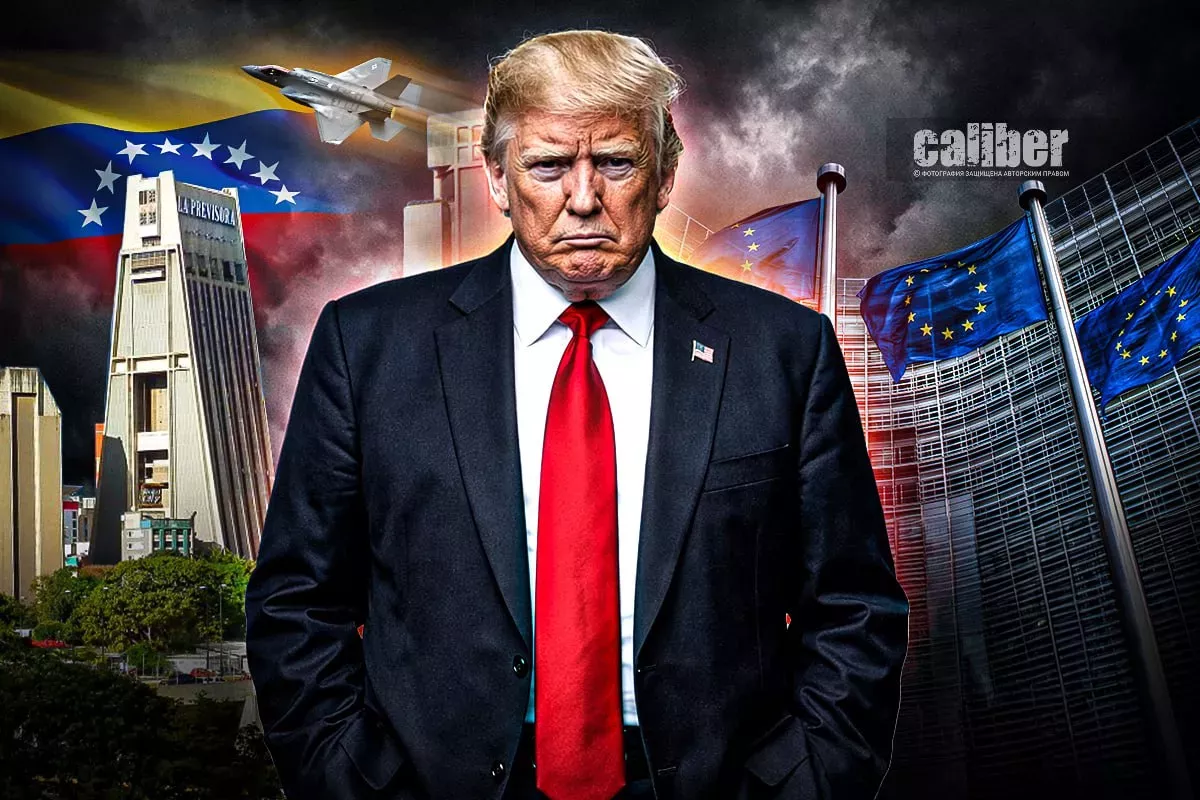
Even in its original wording, the document criticises previous U.S. administrations, which, it claims, too long disregarded the real interests of Americans, squandering “our military advantages and the lives, goodwill, and resources of our people in grandiose nation-building projects,” as well as on “ self-congratulatory pledges to uphold cloud-castle abstractions” in international relations — in particular, the so-called “the rules-based international order.”
Assuming the presidency in January 2025, at a time when the U.S. was approaching the brink of “disastrous wars for which we were unprepared,” Trump, according to the document, courageously put Americans first to truly make America great again. Overall, the key provisions of the Strategy align almost completely with the principles of his election campaign, clearly demonstrating adherence to the declared political course and core slogan.
According to the Strategy, the U.S., possessing the most powerful military the world has ever seen, no longer intends to be distracted by interventionism, endless wars, regime change, or nation-building. At the same time, Washington emphasises its readiness to prevail in any military actions it deems necessary to protect its own interests. This approach is explicitly framed not as isolationism, but as a matter of common sense in service of American national interests.
In this logic, the U.S. will not compensate for security deficits of allies caused by the “irresponsible choices” of their own leaders. The United States intends to insist that allies and partners contribute to collective security, and only if they accept the corresponding responsibility will Washington be willing to extend a helping hand.
The document also identifies one of the main goals of U.S. defence policy as protecting American interests in the Western Hemisphere, with the next priority being the containment of China, described as “the second most powerful country in the world.” Importantly, this containment is to be achieved through strength rather than direct confrontation. The underlying aim is not to dominate China, but to “prevent anyone, including China, from being able to dominate us or our allies.”
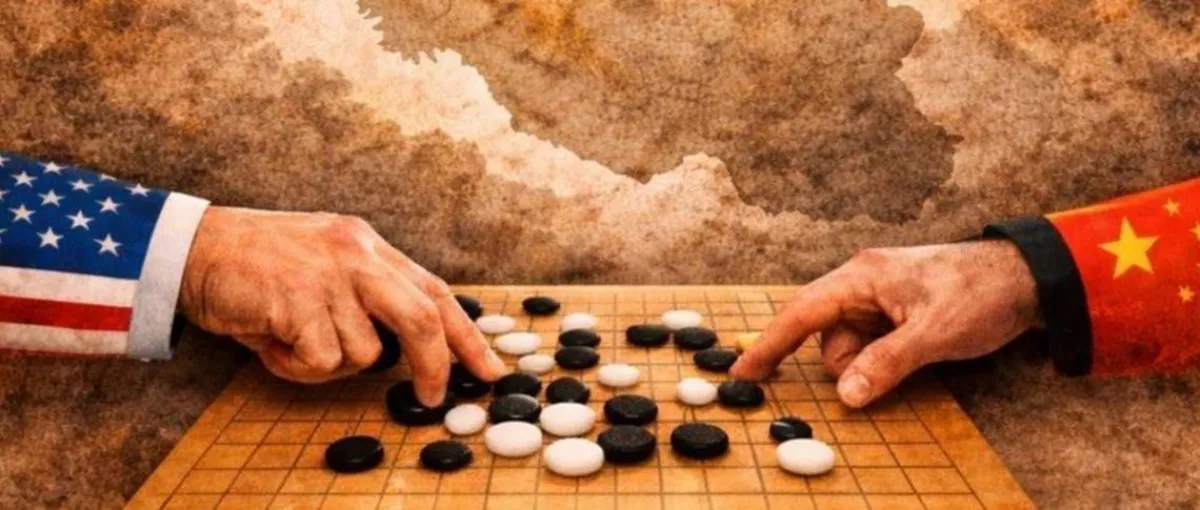
Accordingly, Washington does not seek regime change in China, advocating instead for the achievement of a dignified peace on terms that, while favourable to the United States, are also acceptable to China.
In this context, the document calls for a redistribution of responsibility among allies and partners worldwide, who, under the “America First” framework, are expected to play a leading role — not as dependents of the previous generation.
As a result, in Europe and other regions, allies are tasked with taking the primary role in countering threats that are significant to them, albeit with critically important — though more limited — support from the U.S. According to the Strategy, this approach will enable Washington’s allies not only to assume primary responsibility for supporting Ukraine’s defence but also to deploy the forces necessary to deter or defeat potential adversaries in each key region of the world, including scenarios involving simultaneous aggression.
This is how conditions for a durable peace through strength on a global scale are envisioned. At the same time, by expanding transatlantic defence-industrial cooperation and reducing barriers to defence trade, Washington is prepared to “maximize our collective ability to produce forces required to achieve U.S. and allied defense objectives.”
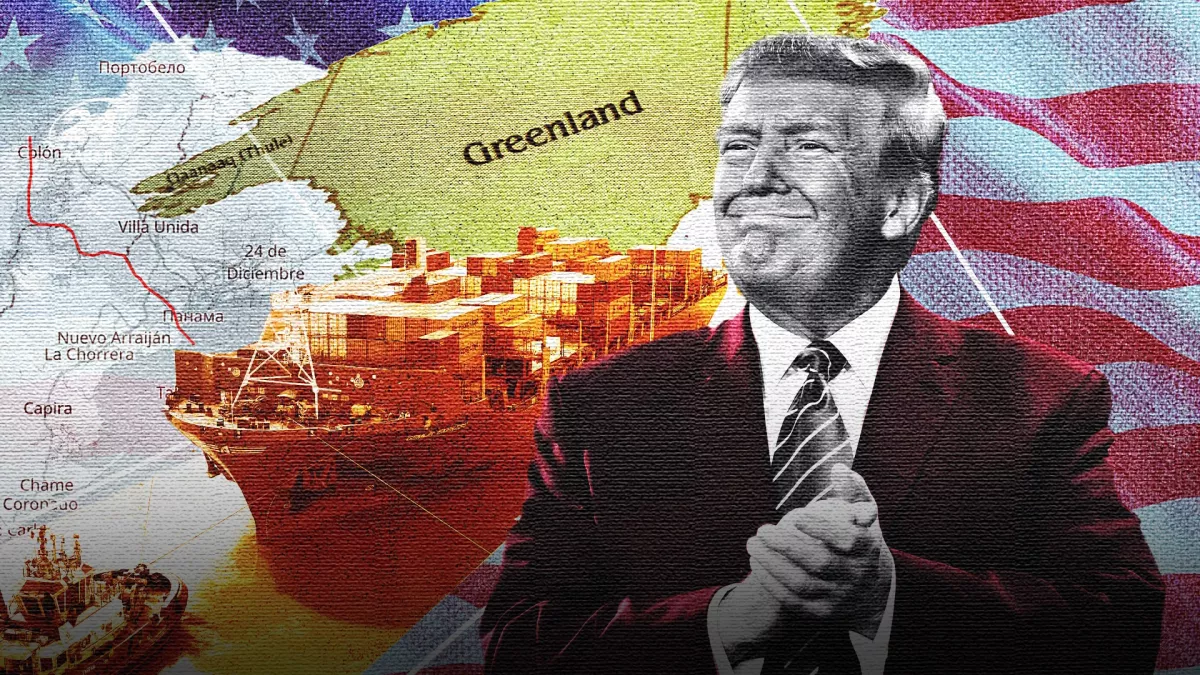
At the same time, the Strategy, while confirming U.S. military-commercial access to key territories — primarily the Panama Canal, the Gulf of Mexico, and Greenland — also affirms the president’s ability to conduct decisive operations against targets anywhere, including from U.S. territory. The document separately emphasises that there is no intention of “implanting our way of life by force,” reflecting a focus on the prosperity of Americans.
In the same vein, the Strategy assesses Russia in the near future as “a persistent but manageable threat to NATO’s eastern members for the.” While noting that Russia retains significant reserves of military-industrial capacity and concentrates its military activity primarily in Eastern Europe, the document simultaneously points out Moscow’s lack of ability to claim “European hegemony.” At the same time, U.S. agencies are tasked with ensuring the country’s readiness to defend against Russian threats, with Washington continuing to play a vital role within NATO.
Regarding Iran, the Strategy asserts that it “will not be allowed to acquire nuclear weapons.” For North Korea, primary responsibility for containment is placed on South Korea, with critically important but more limited support from the U.S. In the Middle East, Washington intends to expand the capacity of regional allies and partners to assume primary responsibility for containing Iran and its proxies, including by facilitating integration between Israel and U.S. partners in the Arabian Gulf based on the Abraham Accords.
According to the Strategy, this approach, reinforced by measures to defend against cyber threats, ushers the United States into “a new golden age,” where the nation’s aim is not aggression or perpetual war, but peace compatible with the interests of potential adversaries — provided their demands are “reasonable and cabined.” In this context, Washington declares that it does not seek to humiliate or subjugate opponents, asking only for respect for the interests of the U.S. and its allies.
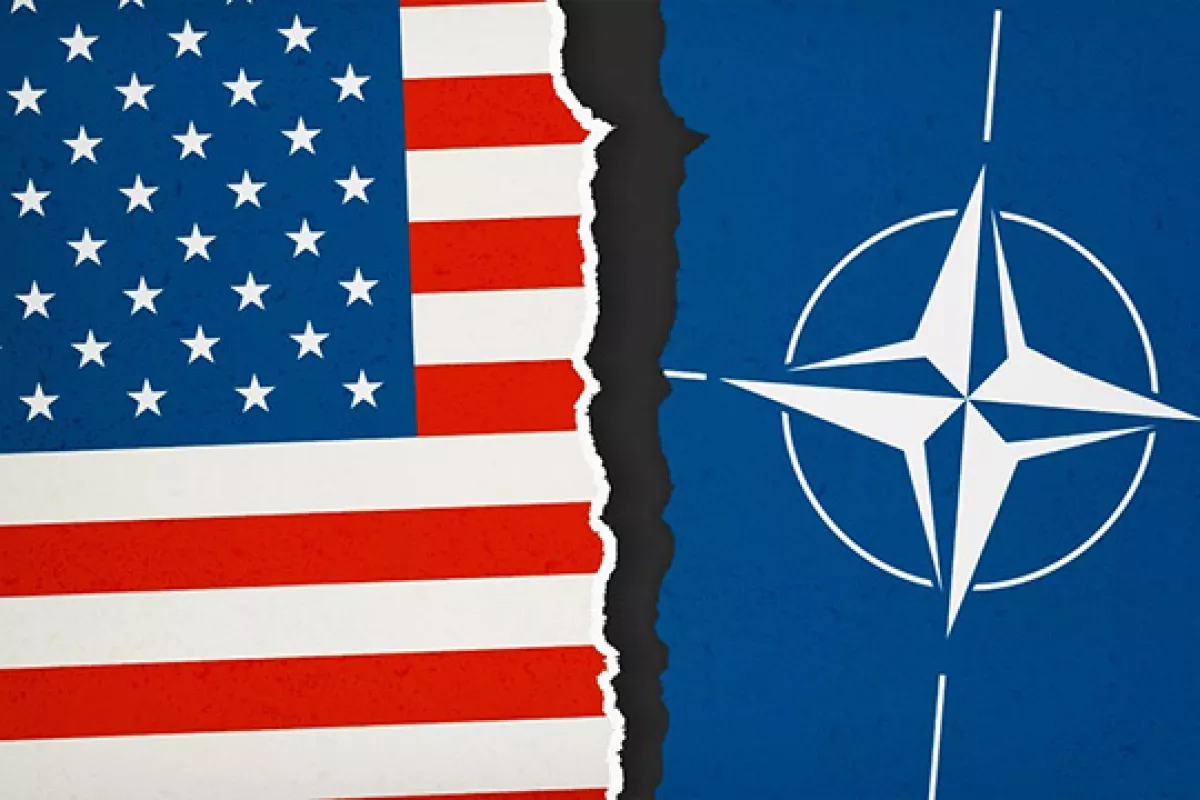
Thus, the released Strategy undermines the widely held view — especially in Europe — that the U.S. is preparing to exit NATO or abandon support for its European partners. It should be noted, however, as Trump repeatedly emphasised during his election campaign, that the U.S. no longer intends to serve as an unconditional “security umbrella” for Europe without substantial investments on Europe’s part in its own defence.
In line with those same campaign promises, the Strategy confirms Washington’s refusal to impose the American way of life on other regions. Even regarding China, the document’s rhetoric remains relatively restrained, limited to recognising geostrategic competition with Beijing — provided, of course, that no serious anti-American actions occur.
Analysts also note that the Strategy effectively does not regard Russia as a geopolitical actor on China’s level, explicitly stating Moscow’s lack of potential to dominate Europe.
In sum, Trump continues to implement his “Make America Great Again” agenda, fulfilling one of his key campaign promises: to substantially strengthen the U.S. military, enabling it to respond quickly and effectively to local challenges in various regions of the world when necessary.
Experts agree that, regardless of one’s opinion of this course, Trump has consistently carried out the main provisions of his election programme. This, in turn, stands out as one of the key achievements of his first year as the 47th President of the United States.







 editor@caliber.az
 +994 55 444-88-98
 Азербайджан, Баку, ул. Низами, 203, Af Business House, 5-й этаж