










Trump warns of “decaying Europe” Analysts break down US president’s view
In an interview with Politico, U.S. President Donald Trump described Europe as a region falling apart under the pressure of the migration crisis. As examples, he cited Paris, London, and Stockholm, claiming that these European capitals have become less safe due to the mass influx of migrants.
Trump emphasised that he would support European politicians who share his views, particularly Hungarian Prime Minister Viktor Orbán. At the same time, he called EU leaders “weak” and described the European Union countries as being in decline.
What is behind Trump’s irritation? How deep is the divide between the U.S. and the EU? Caliber.Az correspondent turned to foreign experts with these questions.
Doctor of Philosophy, Israeli political scientist Dmitry Radyshevsky, believes that there is nothing impulsive or emotional in Trump’s statements.
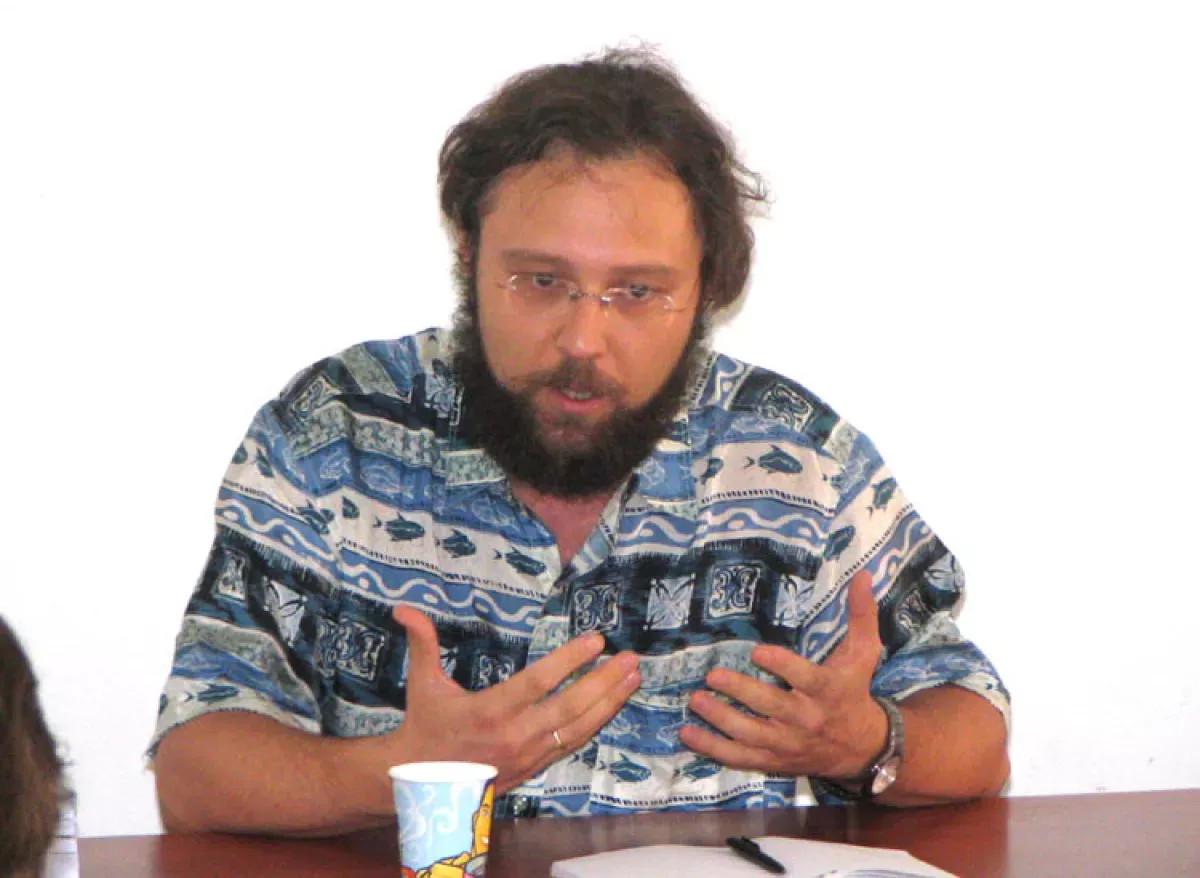
“None of this started yesterday. American conservatives—the Republican Party, the sensible conservative majority, and the political class that represents them—have for decades watched the left attempt to change the fundamental character of the United States by promoting globalism in politics, economics, society, and ideology. Trump’s first victory in 2016, then the stolen victory in 2020, and his current support—all of this reflects the majority’s desire for conservative values. These values can be called Western or Biblical: respect for private property, a rational organisation of personal life, recognition of the two sexes created by the Almighty, and universal commandments,” he emphasised.
According to the expert, the left’s attempts to overturn these foundations in the U.S. have failed.
“Trump’s victory restored normalcy to America. State institutions have ended the madness of gender diversity, and imposed political correctness has disappeared from the military. America is being reborn and is becoming strong again. Americans and European conservatives hoped that Europe would also come to its senses and stop self-destruction, but that did not happen,” the expert noted.
Radyshevsky believes that European elites missed the chance to take advantage of Trump’s return.
“Trump is reshaping Europe in America’s interests, but this aligns with the interests of sensible Europeans. I lived for a long time in England, France, and Germany—there, the majority says the same as in the U.S.: Europe is heading toward a cliff due to uncontrolled migration, political correctness, the erosion of family values, the aggressive promotion of homosexuality, and socialism. European conservatives wanted to rely on Trump, but the elites—in England, France, Spain, and Germany—cling to power, demonising dissenters, including the Alternative for Germany party,” added the political scientist.
He emphasised that accusations against European conservatives, including claims of antisemitism, are absurd.
“As an Israeli Jew, it is obvious to me that the Alternative for Germany is a very pro-Israel party. But the German elites fight to maintain their dominance, using the law as a tool of pressure and preventing the people from participating in governance,” he stated.
According to the political scientist, Europe has been unable to seize this historic moment, and the new U.S. National Security Strategy only reinforced what Trump has long been saying.
“The document explicitly states: in 20 years, Europe will change beyond recognition. The Republican Party has always said that the U.S. should prioritise its own interests rather than impose democracy. America has spent many years trying to diplomatically persuade Europe to return to traditional values, but we have yet to see that,” Radyshevsky said.

American analyst, geopolitical and security expert, and editor-in-chief of The Washington Outsider, Irina Tsukerman, believes that Trump’s irritation with Europe is not tied to a single event. His criticism is based on a long-standing perception of the EU as a structure that lives under the American security umbrella while simultaneously trying to limit U.S. economic and political influence. When he speaks of Europe as a decaying group of countries, it reflects not momentary emotions but a fundamental distrust of European institutions, which he considers slow, complacent, and incapable of adapting to contemporary threats.
“The Ukraine issue intensifies this conflict but does not define it. Trump has long believed that Europe shifts responsibility for its own security onto the U.S. He interprets Europe’s position on Ukraine as an example of strategic weakness and political moralising without real contribution. Therefore, his statement that he is sidelining Europeans from the Ukrainian deal is a continuation of this long-held view. Trump is convinced that the resolution of the conflict should be determined by Washington, and that Europe lacks both the strength and the clear strategic thinking to be an equal partner,” the political scientist noted.
According to her, Trump’s sharp dissatisfaction is also linked to the European Commission’s sanctions against the social media platform X.
“For Trump, this is not just about a specific fine. He sees such decisions as part of a broader European trend toward hyper-regulation of the digital sphere, which he interprets as a tool to pressure American tech companies. His irritation is based on the belief that Europe, having failed to create its own digital giants, tries to compensate by strictly regulating American platforms.
At the same time, it must be acknowledged that the European regulatory environment has indeed become one of the strictest in the world. American companies constantly face costly requirements regarding privacy, competition, and content. In the eyes of the American political class, Europe sometimes appears as a regulatory exporter that imposes its standards on the entire world, leveraging the size of its market. Trump uses this issue to reinforce his image as a defender of American entrepreneurship against external constraints,” the expert explained.
Tsukerman also emphasised that, compared to the Russian model of social media regulation, Europe’s approach remains legalistic. Platforms are not banned; rather, they are pointed to specific violations and offered procedures for appeal.

“Some of Trump’s statements, such as that Europe is heading in a very bad direction, are also connected to his broader worldview. He believes that the European model of liberal bureaucratic integration has exhausted itself. In his view, Europe is losing economic weight, technological leadership, and strategic autonomy. He interprets European internal debates about identity, immigration, and security as signs of disintegration and weakness. This reinforces his conviction that the U.S. should not allow Europe to dictate rules in either the economy or international negotiations.
On the other hand, Trump’s irritation is intensified by Europe’s attempt to act as a moral arbiter on issues where he sees his position as pragmatic and more realistic. He perceives European comments on his approach to Ukraine as attempts at moral pressure without strategic responsibility. This also strengthens his desire to show that decisions will be made in Washington, not Brussels.
Negative remarks about Paris and London further this narrative. For Trump, these are not just beautiful cities he once admired—they become symbols of the ‘decaying’ Europe. Talking about Paris as a ‘much different place’ and especially attacking London’s mayor Sadiq Khan, whom he calls terrible, incompetent, and disgusting, serves multiple purposes. On one hand, it is a blow to the European political class associated with multiculturalism and a liberal immigration agenda. On the other hand, it sends a signal to his own U.S. base: this is what happens when power is given to such people and such ideas, and this is what I will not allow to happen in America.
Trump emphasises that it pains him to see what is happening because he has European roots. This adds an emotional layer to his criticism. He is, in a sense, saying: I am not against Europe itself, I am against what the current elites have turned it into. This allows him to attack the EU as harshly as possible without appearing openly anti-European in his own rhetoric. He positions himself as someone who wants to ‘save’ Europe from its leaders, even though his political project essentially entails sharply weakening European influence and redistributing power in favor of the U.S. Trump relies on Europeans’ weaknesses but presents them in an extremely simplified and emotional way, almost as proof that Europe is already doomed,” Tsukerman concluded.







 editor@caliber.az
 +994 55 444-88-98
 Азербайджан, Баку, ул. Низами, 203, Af Business House, 5-й этаж