










Washington in search of a new concert of great powers? Beyond the UN and G7
American journalists report the existence of an extended version of the U.S. National Security Strategy. One topic that allegedly did not make it into the official document appears particularly interesting: the idea of creating a new platform for regular dialogue and coordination among the world’s key powers.
The recently released new edition of the U.S. National Security Strategy (NSS) continues to generate new controversies and news stories.
Analysts around the world barely had time to “digest” the official version of the document when information emerged that a longer draft of the strategy had been discussed in the White House before its publication. According to the American outlet Defense One, its journalists gained access to parts of the NSS draft that ultimately were not included in the final document. In the article that caused a stir, Defense One mentions three topics that were either completely left out of the official text or only partially reflected in it.
Missed emphases?
First of all, it is emphasised that in the draft strategy, Washington’s rhetoric and intentions regarding Europe were formulated even more sharply and directly than in the final version. In addition to criticising transatlantic allies for “censorship of free speech” and bringing the continent to the brink of “civilizational erasure,” the unpublished sections of the document allegedly declared an aim to “Make Europe Great Again.” This phrase echoes Donald Trump’s signature domestic political slogan: “Make America Great Again.” From this, journalists infer that the current U.S. administration seeks to promote the development of European countries in line with its own ideological vision.
Specifically, they claim that corridors of American power wanted to focus Washington’s attention on a small number of European allies where Trump-aligned politicians hold office or enjoy strong public support. Defense One reportedly included Austria, Hungary, Italy, and Poland on this list. According to the extended NSS draft, the strategy would involve working more closely with these countries to pull “them away from the [European Union].” To achieve this, the current administration is said to be prepared to “support parties, movements, and intellectual and cultural figures who seek sovereignty and preservation/restoration of traditional European ways of life…while remaining pro-American.”
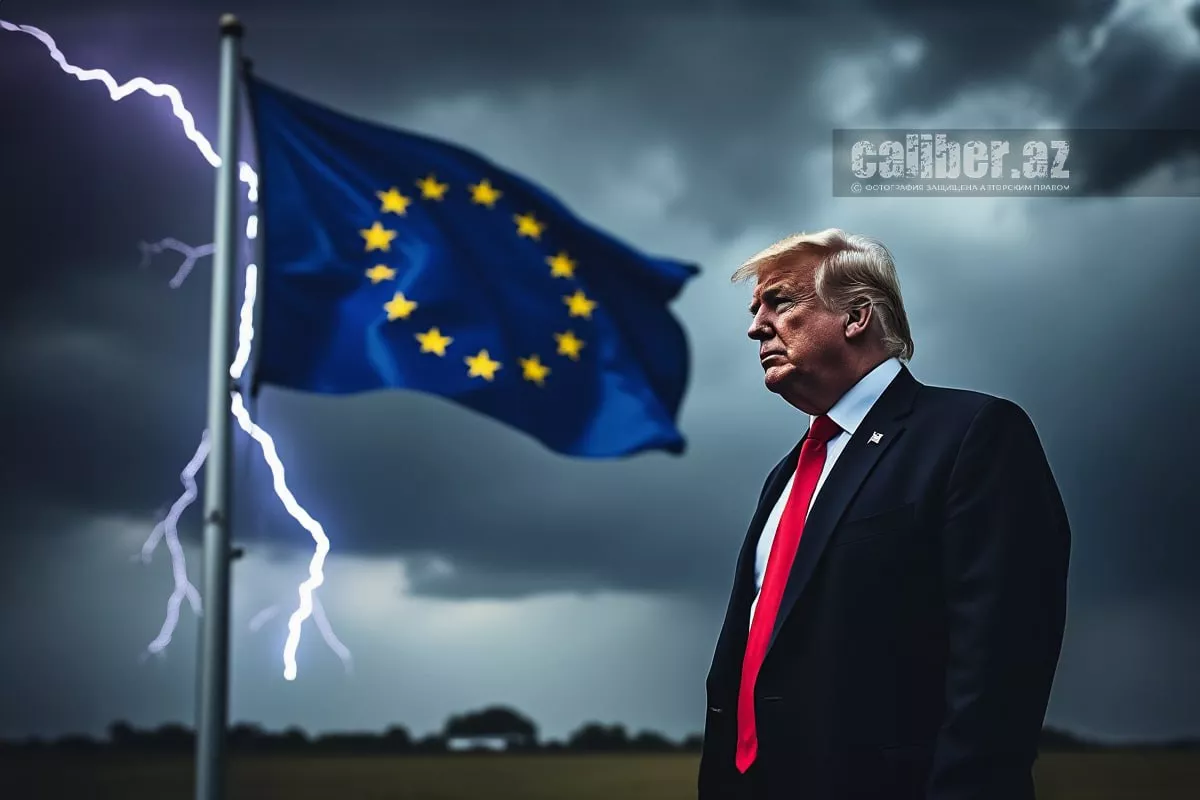
According to Defense One, the U.S. authorities no longer consider Europe among the world’s key centres of power. The extended NSS reportedly proposes creating a new platform for regular communication and cooperation among the great powers to coordinate decisions on the most important global issues. Neither the EU nor individual European countries are included in the list of participants. The powers considered most significant today are the U.S., China, Russia, India, and Japan—referred to collectively as the “Core 5” (C5).
Finally, another topic that, according to American journalists, is not fully reflected in the officially published version of the National Security Strategy concerns the global hegemony that the U.S. has not achieved in previous decades.
Defense One cites the following quote: “Hegemony is the wrong thing to want and it wasn’t achievable.” However, this idea is also clearly present in the officially released document, albeit with slightly different terminology and a number of fairly contradictory statements. There, the Trump administration systematically argues that their predecessors unjustifiably “convinced themselves” that “permanent American domination of the entire world was in the best interests” of Washington. This argument is supported by a classic realism principle in international relations theory: it is harmful to national interests to spread resources across non-priority objectives.
After the Defense One publication caused a media stir, the White House was compelled to respond. Its spokesperson, Anna Kelly, stated that “no alternative, private, or classified version” of the National Security Strategy exists.
Historical pattern
Regardless of whether the Defense One information is accurate, at least one of the topics allegedly omitted from the official NSS appears particularly interesting and relevant for discussion: the idea of creating a new platform for regular dialogue and coordination among the world’s key powers. According to journalists, such a hypothetical platform was even referred to in Washington as the “Core 5.” What is most remarkable here is not the specific number or composition of such a group. The idea itself is intriguing, even if it was never seriously discussed by the White House.
It is clear that no country in the world—large or small—wants, for obvious reasons, to be excluded from the table where the main planetary issues shaping the fate of the world are discussed. This is especially true in the 21st century, when we are accustomed to valuing the sovereign equality of all states, at least symbolically. Yet it is difficult to ignore a pattern that has manifested itself throughout history: if the most powerful and ambitious players on the international stage lack effective mechanisms to reconcile their interests, trouble is inevitable. Conversely, only through such mechanisms can already existing crises be resolved.

Examples of this pattern are found throughout history—both on the eve of major wars and in their aftermath. One can even start from very ancient times, when states in the modern sense did not yet exist, and from the Peace of Westphalia in 1648, which effectively established the sovereign state as the foundation of a new system of international relations in Europe.
Interestingly, the Westphalian system equalised the sovereign status of all states, including smaller ones. The balance of power it embedded relied in large part on the many small European actors, whose very existence prevented any single great power from becoming overwhelmingly dominant over others. Nevertheless, such a system was made possible mainly by the mutual understanding among the key powers. It was ultimately their uncoordinated interests and overreaching ambitions that led to its collapse.
The same, of course, can be said of the so-called “Concert of Europe,” established at the Congress of Vienna in 1814–1815, which drew a line under the Napoleonic Wars. The concert concept is a direct embodiment of the idea that coordinating the interests and actions of major powers is the key to peace and development for all. This logic underpinned all subsequent, more or less stable systems of international relations and security.
Of course, small states can also play a noticeable role in world affairs. In some cases, their influence far exceeds their size or resource capacity, which can seem almost miraculous. Yet trends and major developments in international relations primarily depend on the large actors. This, one could say, reflects the very nature of international relations. Its defining feature is the absence of a universally recognised hierarchy. In other words, unlike the internal organisation of states, in relations between states no one has—and cannot have—a legitimate right to the final word. No state has legitimate grounds to claim the role of global arbiter or world police. The only source of legitimacy in world politics is international law—but even that exists only as long as states collectively choose to uphold it.
In such a non-hierarchical environment, power automatically becomes the main factor in international relations. It always has been, and always will be. The possession of power and the willingness to use it determine what happens in the world and what the international (dis)order looks like. This is why key actors—the great powers—by definition come to the forefront. Consequently, coordinating their interests and actions is capable of providing decisive answers to questions of war and peace.
Is there room today for a new concert of great powers?
To increase the chances for peace, especially amid systemic changes in international relations, what is needed is not just a mechanism for coordination among the largest states, but an effective one. This is why the allegedly discussed C5 idea in Washington seems particularly intriguing. Existing multilateral platforms, designed to some degree to coordinate the interests of major actors, clearly fail to fulfil this task today.
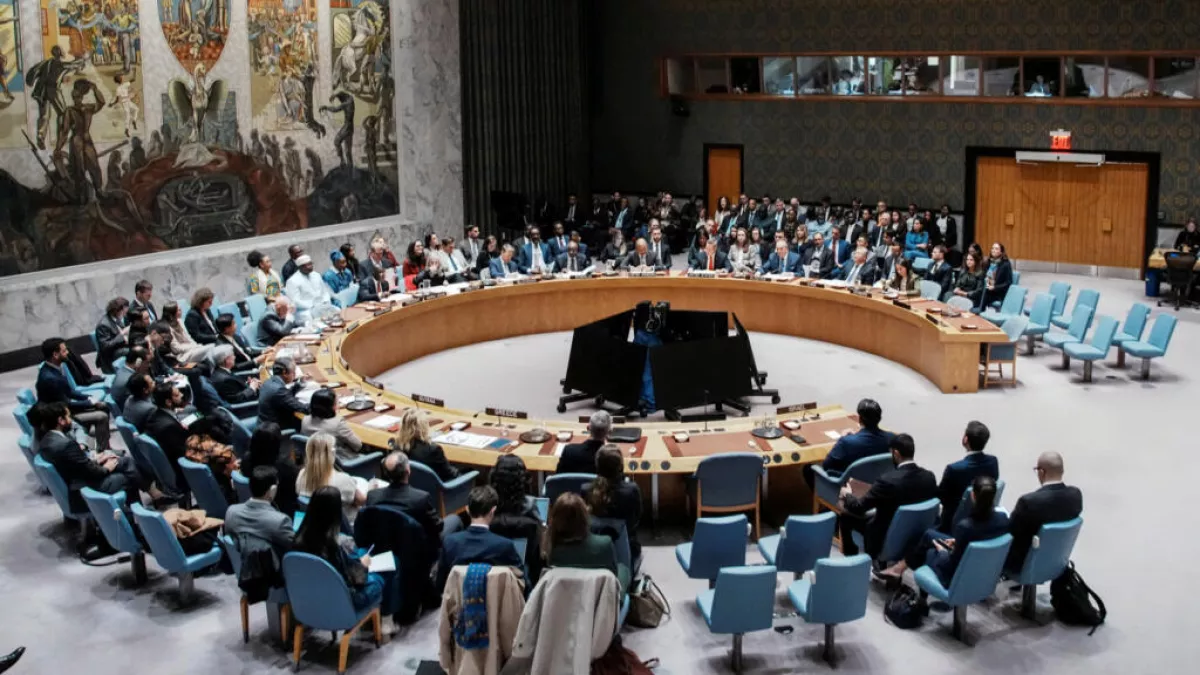
The most obvious example is the UN Security Council. According to the UN Charter, it is the primary body responsible for maintaining peace and security worldwide. Yet its declining relevance to global dynamics has long been apparent. Notably, as early as 1993, an Open-Ended Working Group was established to examine all aspects of Security Council reform. In UN corridors, it later earned the informal nickname the “never-ending working group,” because, decades later, little progress has been made, and the crisis of both the Security Council and the UN system has become chronic.
The same can be said of other platforms that claim global significance. Take the Group of Seven (G7), for example, which was essentially the West’s attempt to assume global governance. The G7’s crisis can be explained by several factors.
First, the West’s diminishing weight in an increasingly multipolar world.
Second, the declining internal cohesion of the West amid the U.S.’s adaptation to new global conditions.
Third, the G7’s lack of effective instruments to address the most pressing problems of today.
Against this background, is there any reason to expect that the “Core 5” mentioned by Defense One would somehow change the situation in an American way? That its proposed composition, which excludes European states, would overcome the inefficiencies inherent in the UN Security Council or the G7? Unlikely. At certain historical stages, effective coordination of the great powers’ interests is, unfortunately, inherently difficult. Perhaps we are living in such a period now.
However, if the Donald Trump administration did indeed discuss the idea of a global C5 or something similar, this line of thinking generally reflects a historical norm and a contemporary world need. At the very least, such a platform could help “feel out” a new balance of power on the planet by peaceful means amid ongoing transformations. This would undoubtedly serve the interests of the majority of countries and peoples.







 editor@caliber.az
 +994 55 444-88-98
 Азербайджан, Баку, ул. Низами, 203, Af Business House, 5-й этаж