










Washington sees no need to tread carefully with EU Trump bets on resistance
The European Union is dissatisfied with American criticism regarding its handling of rights and freedoms, even though it had previously welcomed similar attacks on other nations. Once again, it has become evident that such criticism always has geopolitical motivations. Disagreements between Brussels and Washington are intensifying, and U.S. President Trump increasingly regards the European Union as irrelevant. The unprecedentedly serious disagreements between the EU and the U.S. are becoming chronic, despite equally unprecedented concessions from the EU leadership. Observing the EU’s inability to manage even its own eastern flank, the American side is acting in Europe without regard for Brussels.
Supporting resistance within the EU
The new U.S. National Security Strategy, released last weekend, delivered a harsh verdict on the European liberal establishment. It highlighted the threat of "civilizational erasure" facing the EU due to migration, and censorship that "undermines political liberty and sovereignty" in EU countries.
The strategy declared that the U.S. would "cultivate resistance" within the EU in order to "correct its current trajectory."
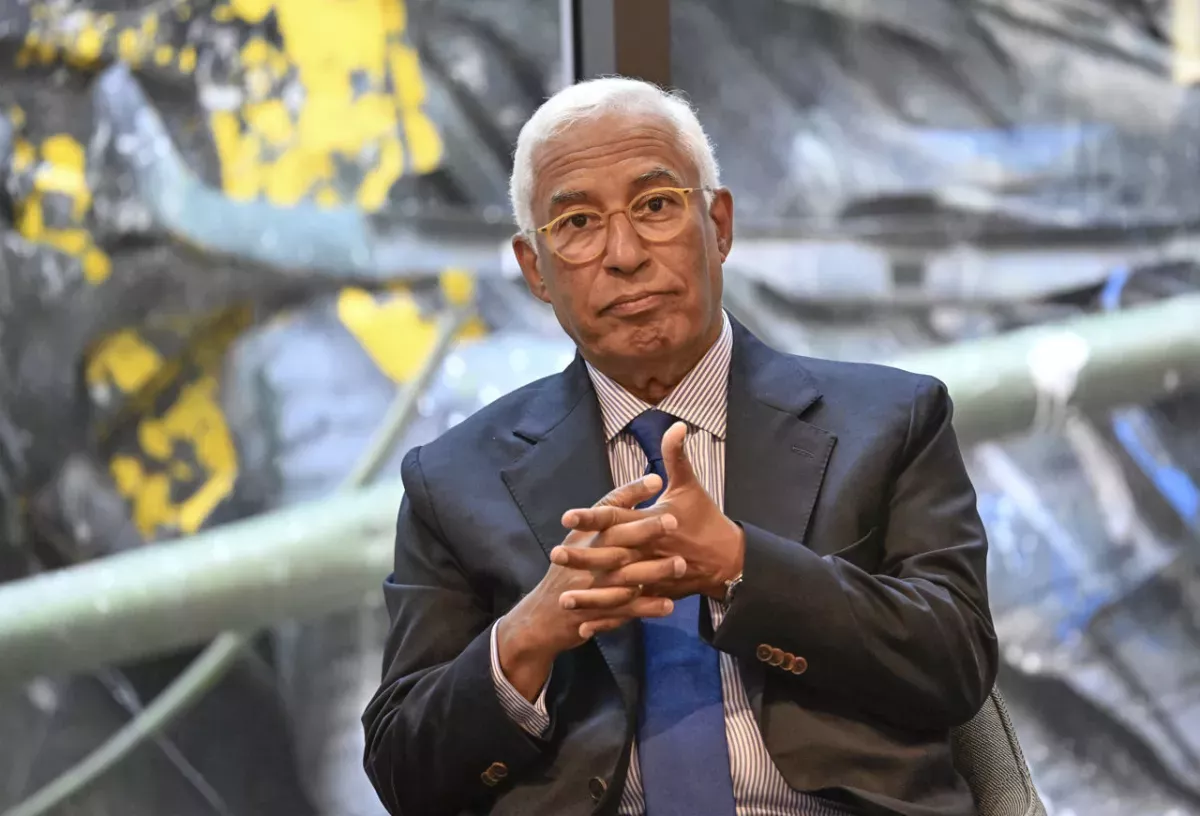
This was followed by a week of indignant reactions from EU leaders. The harshest statement came from European Council President António Costa. He noted that the EU leadership had long had disagreements with Trump over issues like the climate crisis, but the new strategy went beyond that: "What we cannot accept is this threat of interference in Europe’s political life."
The former Portuguese prime minister, now in a high Brussels post, has a far from stellar background, including anti-corruption investigations against him and his associates. Yet he proudly delivered grandiose, if confused, statements: “Allies do not threaten to interfere in the domestic political choices of their allies,” the former Portuguese prime minister said. “The US cannot replace Europe in what its vision is of free expression … Europe must be sovereign.” Given his, to put it mildly, limited influence over EU policy, these words were hardly convincing.
Other EU and national politicians chose their words carefully when commenting on U.S. actions or pretended nothing had happened. For instance, EU diplomatic chief Kaja Kallas told the Doha forum that "there is a lot of criticism [of the EU in the new U.S. strategy], …. some of it is also ‘true’," and despite periodic disagreements, "we are the biggest allies, and we should stick together."
However, what else could European liberals have expected? They did everything possible to prevent Trump’s victory in the elections. After his return to the White House, leading European politicians quickly switched to flattering Trump, but at the level of mass politics, media, and propaganda, the new U.S. administration continued to be portrayed as a source of danger to liberal projects.
For example, the French organisation Reporters Without Borders released this year’s Press Freedom Index, ranking the U.S. 57th—behind all European countries, and even behind Mauritania, Gabon, and Armenia. Just last week, the EU fined the social network X, owned by Trump’s controversial yet close associate Elon Musk, €120 million.
This is not a coincidence
Criticism of EU liberal elites by Washington has been voiced repeatedly in recent months by various American officials and institutions. EU leaders and liberal media reassured themselves that these were merely isolated, poorly thought-out outbursts, and that they could "manage Trump," deceive him, and steer him toward the desired policy. Hence, the tasteless flattery and obsequiousness, endless promises to spend more on defence, or invitations for Trump to stay in royal palaces and have breakfast with monarchs. Presumably, the architects of such “special operations” considered themselves cunning manipulators, but this approach was entirely inadequate for a U.S. president with extensive managerial experience.
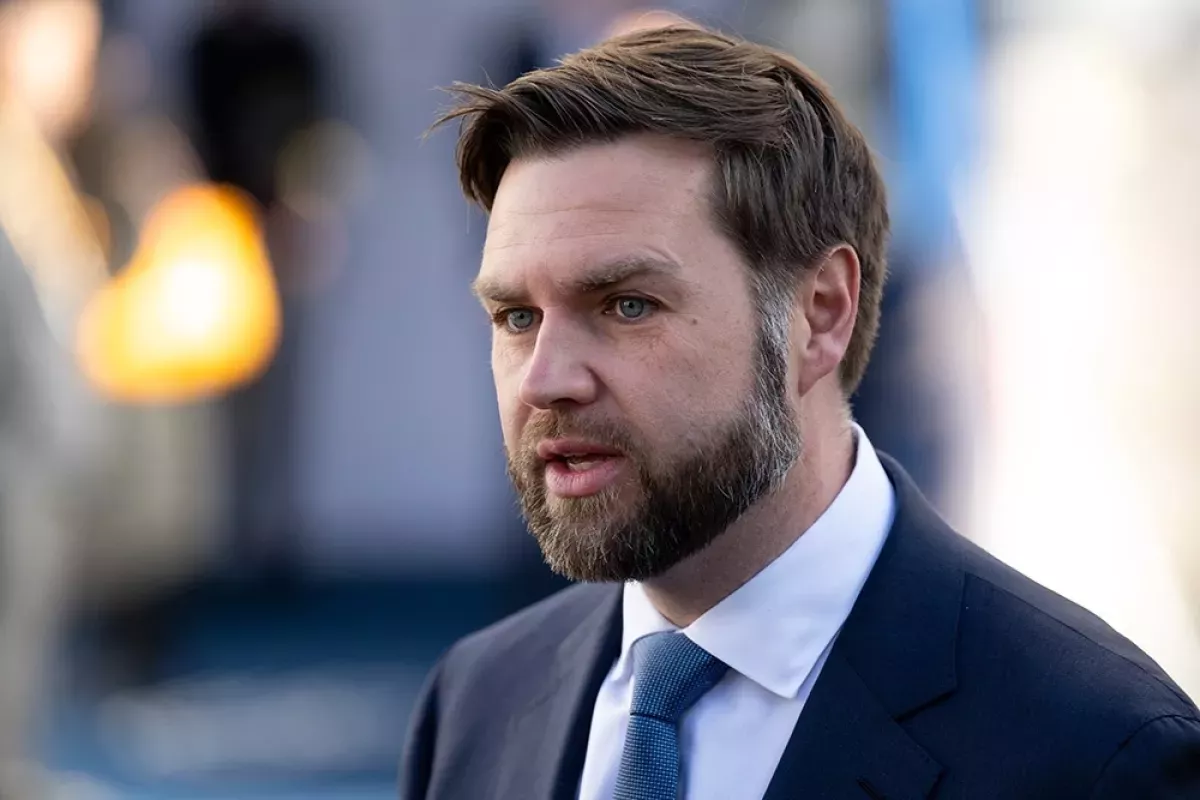
This denial of reality prevented Euro-elites from responding promptly to signals from across the Atlantic. The first warning came from Trump’s probable successor, Vice President Vance, at the February Munich conference. He directly told EU leaders that they were suppressing freedom of speech, failing to handle massive illegal migration, and ignoring the real wishes of voters. This was dismissed, as he had just assumed office, and his words were deemed not significant.
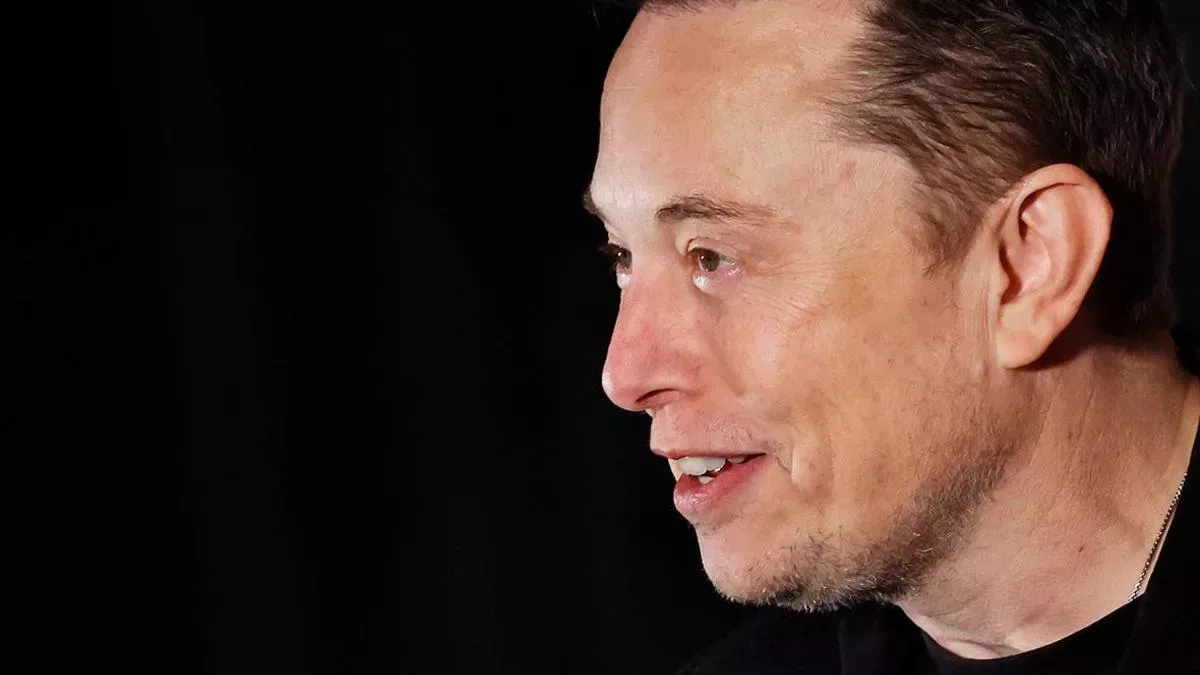
Then came a series of sharp statements by Musk, who did not shy away from expressing his opinions—for instance, after the recent fine, he called for the dissolution of the EU and "returning sovereignty to individual countries." Occasionally, criticism also came directly from President Trump. On December 9, Politico published an interview in which he spoke bluntly about Europe, focusing on uncontrolled migration and the EU’s inability to resolve the Russia-Ukraine conflict, without mentioning EU rights and freedoms.
The current U.S. national security strategy is a logical formalisation of the new administration’s stance. Deputy Secretary of State Christopher Landau succinctly explained it, saying that "unelected, undemocratic, and unrepresentative" EU authorities undermine U.S. security.
In other words, the current U.S. leadership’s position is consistent and cannot be reduced to the caricature European liberal media have painted—namely, that Trump randomly changes foreign policy. The second accusation—that Trump is ready to "abandon Europe for Putin"—is also misleading. In reality, the White House’s goal is to maintain global hegemony, which requires refocusing its and its allies’ efforts on countering China, ending the hopeless war in Eastern Europe, and, if possible, limiting China’s leverage over Russia through rapprochement with Moscow. This is why the new U.S. National Security Strategy calls for halting NATO expansion—likely to appease Moscow and detach it from Beijing, as expansion for its own sake would lead to nothing good.
The White House also understands that entrenched European liberal elites will never accept this course, at least because they fear losing power if the Eastern European confrontation diminishes without a Russian capitulation and subsequent “golden shower” of reparations from a boundless Russia. In short, the U.S. sees no future for the current rulers of Europe and openly bets on opposition within the EU (such as Hungary) and within its countries. Contacts between Trump’s team and Europe’s critical forces have already become routine.
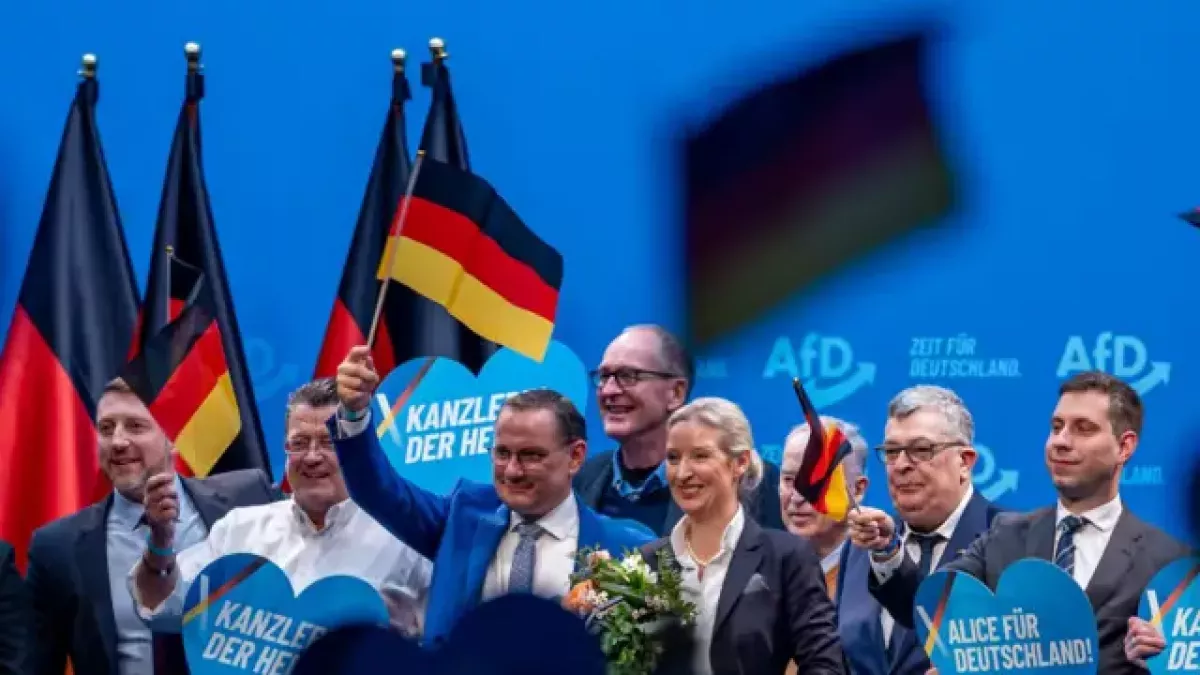
Liberal media and commentators portray this opposition as "nationalist, far-right" and almost fascist. This is difficult to agree with. For instance, Germany’s AfD promotes anti-war and anti-militarist slogans and recently opposed another "war with history," criticising the Eastern European–imported campaign of renaming everything associated with the GDR and communist past. AfD’s ratings are now consistently higher than even the strongest ruling parties.
Trump’s actions, therefore, do not appear adventurous. On the contrary, his opponents in the EU are objectively weak, and he practically follows Nietzsche’s advice: “push the one who is falling.” They are weak politically and morally (if such a concept exists in today’s liberal politics). In Germany, mainstream media lament the current chancellor’s remarkably low ratings, even lower than his predecessor's, against the backdrop of reintroducing conscription (despite protests) and economic decline, yet the government bears no responsibility. Conducting elections becomes risky for the current European establishment. If they cannot annul results in time (as happened in last year’s Romanian elections), non-liberal, Trump-friendly forces may rise to power—as in October in the Czech Republic, where "the Czech Trump," Andrej Babiš, won parliamentary elections.
The European “Liberal Titanic” approaches an iceberg
The current U.S. criticism of the EU is only the tip of the iceberg of problems facing the EU’s “Liberal Titanic.” The rift between the EU and the U.S. is growing, catalysed by Trump’s policy on managing relations with Russia. This is not a whim of the American leader but reflects real U.S. needs as the leader of the "collective West" in redirecting allies’ focus toward countering China. This explains why Washington firmly opposed the EU leadership’s attempts to push for the expropriation of Russian assets within the bloc this week.
Trump’s stance is not an isolated decision against key Western countries. Opposition to such expropriation came not only from U.S. allies in Europe, like Hungary, but also Belgium, France, and even Japan, which was also asked to confiscate similar assets on its territory. EU foreign affairs chief Kaja Kallas recently called Belgium’s concerns over the expropriation “justified” in El País.
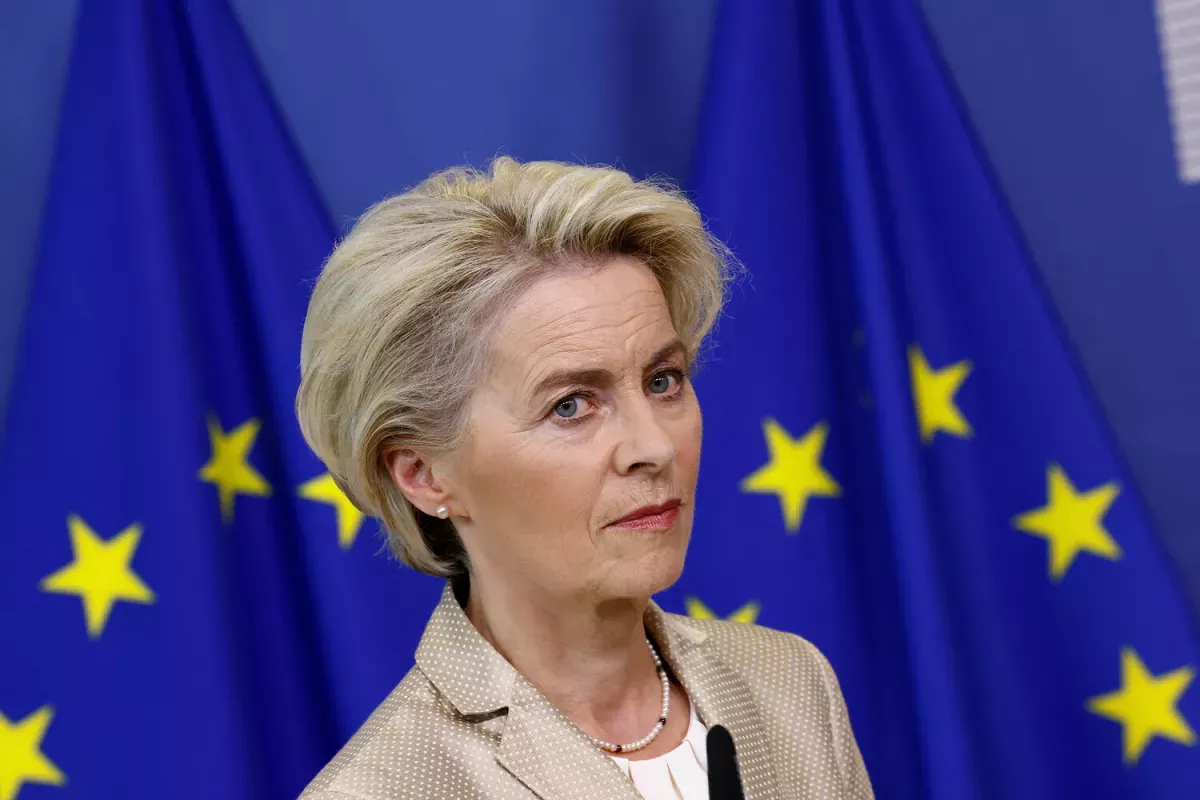
To push the expropriation plan at the December 18–19 EU summit, European Commission President Ursula von der Leyen intends to seek a qualified majority vote rather than unanimous consent. Without this, the plan cannot pass. Thus, American criticism of such plans is informed by real European realities and far better understanding than EU liberal elites.
For this reason, Washington sees no need to be polite toward the EU. Last week, the U.S. Secretary of State ignored, for the first time since 1999, a meeting of NATO foreign ministers. Marco Rubio was expected to present new details of negotiations with Russia, but given European leaders’ negative stance toward U.S. efforts, this could have led to further attempts to sabotage talks. Therefore, the Americans chose to skip the Brussels event. Nevertheless, NATO Secretary General Mark Rutte stated there was "close coordination with the Americans" and praised Trump’s peacekeeping efforts.
Meanwhile, for Europeans, the situation was clear and disastrous. The absence of Rubio was not a one-off incident. The day before, U.S. negotiators Steve Whitkoff and Jared Kushner also skipped Brussels while returning from Moscow. EU leaders and President Zelenskyy of Ukraine, who had just toured the continent, were waiting for them. Yet the Americans chose to go straight home.
Some European liberal commentators claim that Washington is isolating itself and call the new U.S. National Security Strategy a "new Monroe Doctrine," supposedly isolating U.S. foreign policy. But by staying away from Brussels meetings, the U.S. lost nothing and once again made it clear that its European partners cannot undertake any real effort, even on the crucial issue of the Ukrainian crisis, without U.S. support.
The meeting confirmed that Europeans cannot provide Ukraine with stable arms supplies or security guarantees. Two new U.S. weapons packages worth €500 million have been agreed upon, financed by only four countries—Germany, the Netherlands, Norway, and Poland. The rest abstained, and major economies like France and Italy have long refused to buy U.S. weapons.
Security guarantees fared no better. The Finnish prime minister, taking a radical stance against Russia, distanced himself from the idea, stating that it should be addressed by major European countries and the U.S. He did not understand why his country was listed as a potential guarantor in the peace plan for Ukraine.
In the end, the Brussels meeting confirmed to Washington the need to revise transatlantic relations. The White House hints that the EU and the European segment of NATO are dysfunctional, and EU allies have become a burden rather than partners, obstructing the strategic reorientation of the collective West toward countering China. The American elite has ample reason to neutralise the EU as a global competitor. The surprising part is that European elites still cannot muster the strength to refresh their leadership through opposition and act as a dynamic, independent force on the world stage. Instead, EU liberals cling to power with "blue fingers," sacrificing the future of their countries and continent for their ambitions.







 editor@caliber.az
 +994 55 444-88-98
 Азербайджан, Баку, ул. Низами, 203, Af Business House, 5-й этаж