










Yerevan dusts off the archives A whiff of the past from the government office
Recently, the Armenian government released a set of 13 archival documents covering the negotiation process with Azerbaijan — from settlement options discussed within the OSCE Minsk Group format to correspondence between Serzh Sargsyan and Russian President Vladimir Putin.
In Yerevan, this is being presented as “an act of transparency and an honest conversation about the past”, but the way the publication is structured suggests otherwise. The archives were not released to analyse the mistakes made during negotiations with Baku, but rather as part of an internal political struggle and an attempt to repackage and shift responsibility for defeat.
For Azerbaijan, there is nothing new in these materials. On the contrary, they once again confirm the consistent line that Baku has maintained over the years.
The position of the Azerbaijani state has always been perfectly clear. The goal was the restoration of the country’s territorial integrity, not adaptation to an imposed status quo. Over the years, both comprehensive and phased settlement schemes (the so-called 5+2 format) were discussed within the OSCE Minsk Group.
Baku understood well that a significant part of the proposed options did not correspond to the national interests of Azerbaijan. At the same time, as a responsible actor within the international system, Azerbaijan could not simply withdraw from the negotiating process. Amid the ongoing occupation, such a step would have been immediately used against the country and portrayed as a refusal to pursue a peaceful settlement.
Therefore, while the technical schemes were examined, the strategic objective remained unchanged. It was never about consolidating a truncated arrangement, but about the full return of all occupied territories and the restoration of sovereignty across the entire country.
Against this backdrop, the “Meghri–Karabakh” formula once again appeared among the documents released on December 2. The Armenian side is trying to present it as evidence of a willingness to exchange territories, although in reality the meaning of this concept was quite different. National Leader Heydar Aliyev used this stage of the negotiations as a tool in a higher-level political game — as Caliber.Az has previously written.
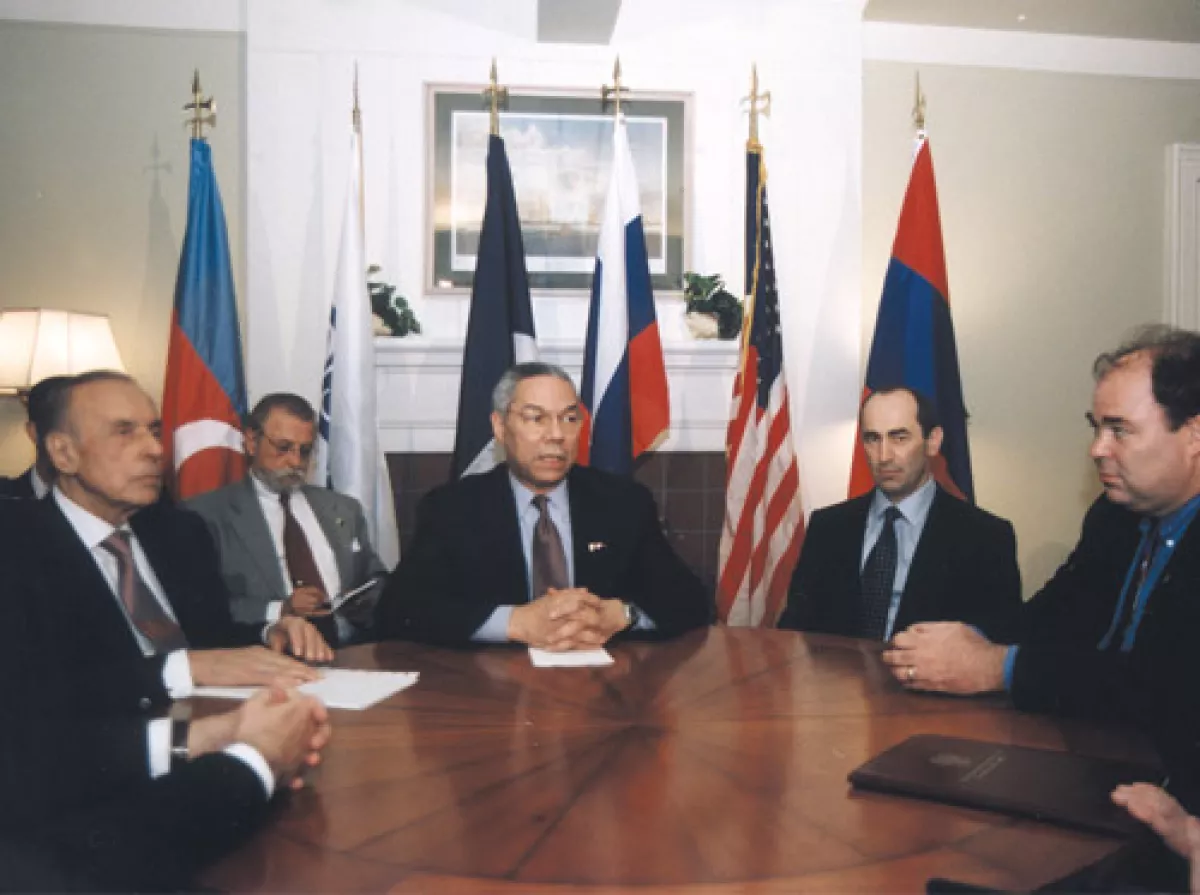
It is worth recalling that the formula envisaged exchanging the territory of the former Nagorno-Karabakh Autonomous Oblast (NKAO) and the “Lachin corridor” for Armenia’s Meghri district. And here a crucial point must be emphasised: agreeing to discuss the “Meghri–Karabakh” formula does not mean signing off on it. The Azerbaijani leadership never for a moment considered relinquishing any part of its homeland in return for correcting an injustice created by the Bolsheviks — that is, establishing a land connection between the country’s main territory and Nakhchivan.
As a result, thanks to Heydar Aliyev’s grandmaster-level political skill, Yerevan’s attempts to present the puppet regime as a party to the negotiations were neutralised. The process was ultimately brought into the only correct format — direct talks between Azerbaijan and Armenia, that is, with the real party responsible for occupation and aggression. Over time, Yerevan realised it had fallen into a diplomatic trap, but by then it could no longer change anything.
The Kazan episode of 2011 is also illustrative. At that time, an option that contradicted Azerbaijan’s national interests was once again put on the table. President Ilham Aliyev rejected it. The sovereignty and territorial integrity of the country were never treated as bargaining chips or something to be exchanged for dubious guarantees. This was a fixed, unwavering position, and the meeting in Kazan simply confirmed it once again.
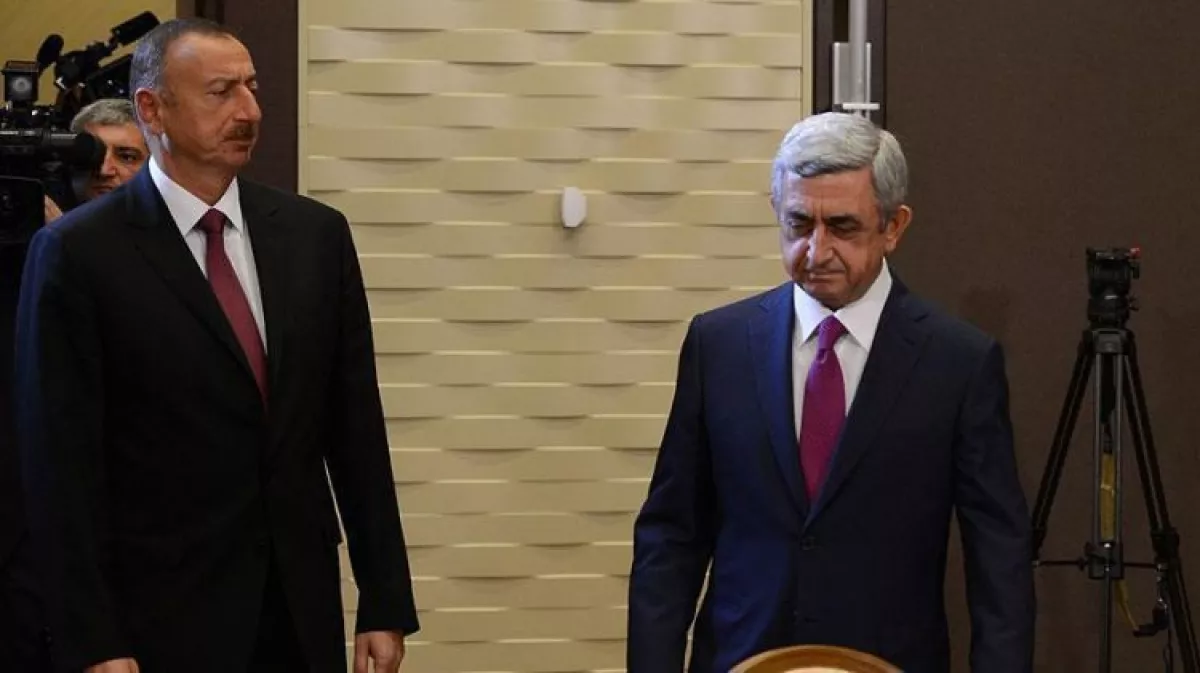
There is a basic rule of diplomatic practice that the Armenian interpretation of history prefers to ignore: nothing is agreed until everything is agreed. Any drafts, working proposals or technical formulas remain merely tools for testing each side’s position until a comprehensive political decision is reached. This is exactly how Azerbaijan treated the models under discussion. Baku used the negotiating platform to record the Armenian side’s attachment to the logic of occupation and to prevent the consolidation of the status quo into a permanent arrangement.
The publication of Serzh Sargsyan’s letter to Vladimir Putin only confirms what was already obvious. Armenia did not view the negotiations as a path to settlement. Its aim was to preserve the status quo created by occupation, while simultaneously employing rhetoric about “compromises” that had nothing to do with its real intentions.
Azerbaijan, meanwhile, was building an entirely different strategy. Throughout the negotiation years, the country strengthened its economy, modernised its army, enhanced its standing in international platforms, and secured the adoption of documents reaffirming the principle of territorial integrity. A new regional reality was taking shape. When the negotiations reached an impasse and Armenian provocations along the former line of contact intensified, Azerbaijan restored its territories by military means. In doing so, it implemented in practice the UN Security Council resolutions that had remained unfulfilled for more than a quarter of a century.
In the end, Armenia’s current “openness” says more about Armenia itself than about the essence of the negotiation process. Moreover, the unilateral disclosure of confidential materials without the consent of the other party falls outside the norms of proper diplomatic practice. For Azerbaijan, however, this is no cause for concern. Baku can reveal any page of the negotiation history without fearing questions from either external partners or its own society. Azerbaijan’s line was straightforward, consistent and transparent — and its outcome is well known to the entire world.
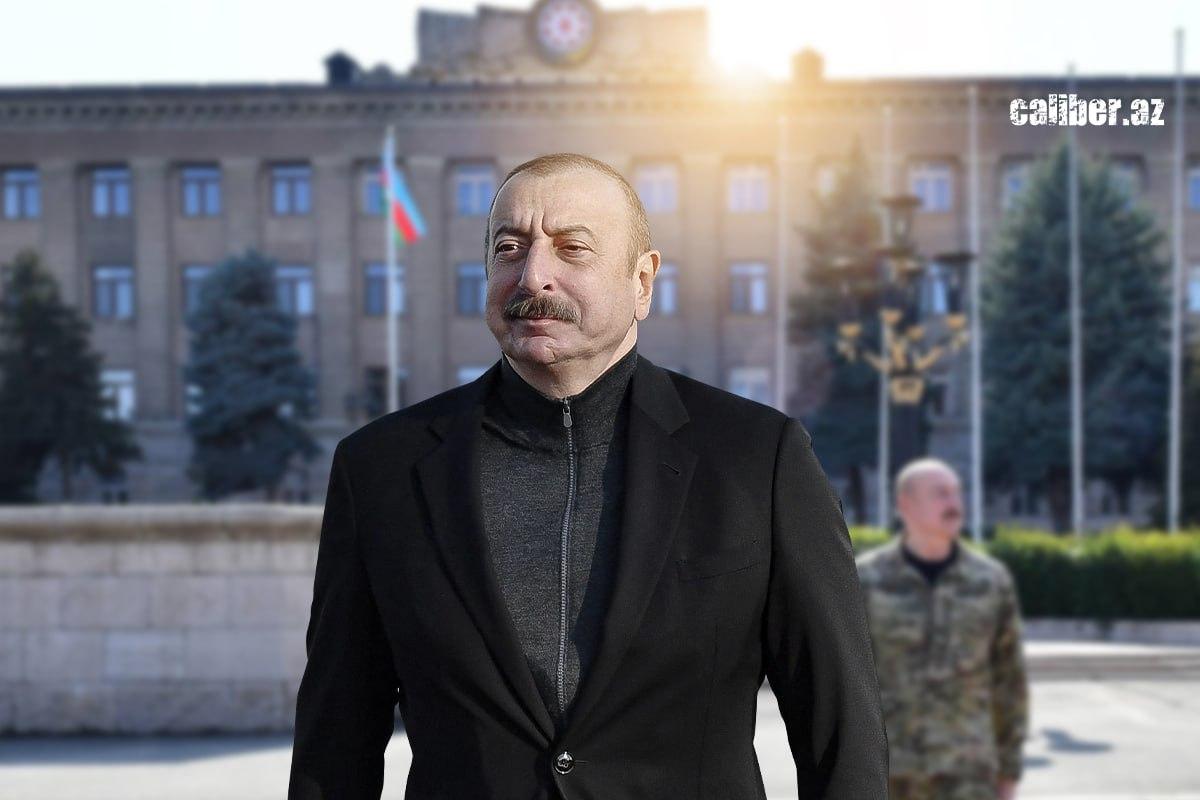
For Yerevan, the publication of the archives has become part of an internal political struggle. The materials are being used in the pre-election context to shift responsibility within the Armenian political sphere, rather than to analyse the substance of the negotiation process. The released documents highlight the key point: Azerbaijan conducted negotiations exactly as long as there were even minimal grounds to expect results, and then achieved what the diplomatic process itself was never able to deliver.







 editor@caliber.az
 +994 55 444-88-98
 Азербайджан, Баку, ул. Низами, 203, Af Business House, 5-й этаж