










A migrant in Russia? Guilty by default! Bastrykin speaks the language of xenophobia
In recent years, Russia’s law enforcement system has undergone a noticeable transformation—not in form, but in substance. Whereas state structures previously operated within a legally coherent framework, relying on statutes, statistics, and procedural formulations, today public statements from law enforcement increasingly take on a different character. Rather than dwell on a lengthy introduction, let’s get straight to the point.
Among representatives of the Investigative Committee of the Russian Federation, the shift from professional, technical language to evaluative statements—often laden with social and cultural implications—has become a notable feature of contemporary Russian public politics. This is especially clear in discussions of crime, where the focus has shifted from specific acts to the ethnic and national origins of individuals, particularly migrants.
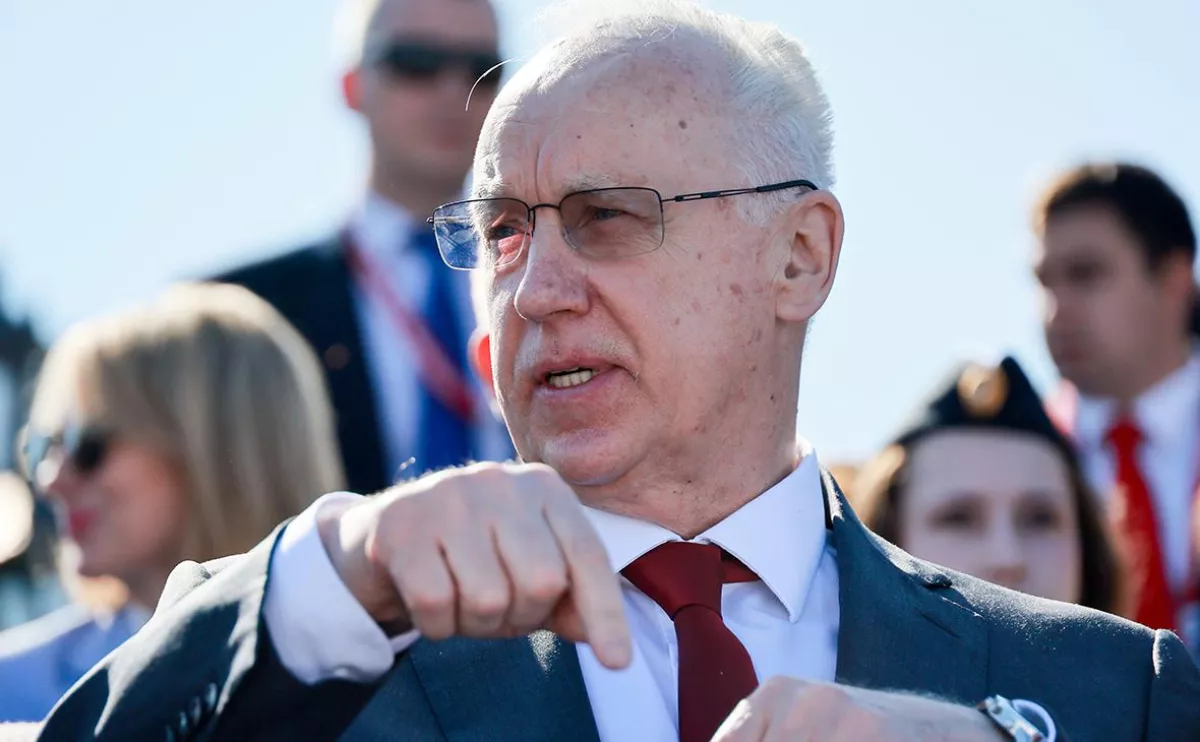
A key role in this process is played personally by Alexander Bastrykin, the Chairman of the Investigative Committee, whose public statements in recent years have consistently gone beyond the bounds of traditional investigative language. He shapes an overall narrative in which ethnic background is presented as a significant factor in criminal activity. For example, at the St. Petersburg International Legal Forum, Bastrykin stated: “According to the results of January–March 2025, there has been a 15% increase in the number of crimes committed by foreign nationals,” adding that “of the total number of serious and especially serious crimes committed by migrants, more than half are related to the illegal drug trade.”
Such rhetoric inevitably raises questions: what does nationality have to do with it, and why is it placed at the centre of assessments of the crime situation? After all, criminal law is supposed to deal with the actions of specific individuals and the degree of their guilt—not their membership in a particular social group.
At the same forum, Bastrykin emphasised that the rise in crime among migrants during the current period is “simply unacceptable” and even described it as a threat given the country’s state of special military circumstances. He also focused on crimes committed by underage migrants, portraying their actions as coordinated and directed against “peers of Slavic appearance.” In such statements, the blending of statistics with evaluative judgments often creates a persistent association between ethnic status and the perceived danger posed by the group as a whole, effectively turning nationality into a key interpretive marker.
The shift from describing specific offences to constructing images of social threats is not merely a stylistic feature of speech. Where facts, circumstances, and motivations of actions were once analysed, today increasingly generalised formulations are used that shape persistent associations in the public mind: “foreign national,” “migrant,” “person of non-Slavic appearance” as a potential source of danger. As a result, crime ceases to be perceived as an individual act committed by a specific person and instead comes to be seen as a manifestation of the “behavioural patterns” of a particular ethnic group. In other words, this transformation of legal language affects how the very essence of justice is perceived: responsibility and guilt become increasingly associated not with an individual’s actions but with ethnic origin and nationality.
The paradox lies in the fact that crimes involving ethnic Russians do not become a reason for sweeping generalisations about the “cultural traits of the majority” or the “social environment.” This creates an asymmetry, where law enforcement in the media sphere appears biased and focused on one social group while leaving another outside such generalisations. Naturally, this difference in presentation fosters a fragmented public perception of justice: citizens begin to notice that methods and emphases vary depending on the group to which the offender belongs.
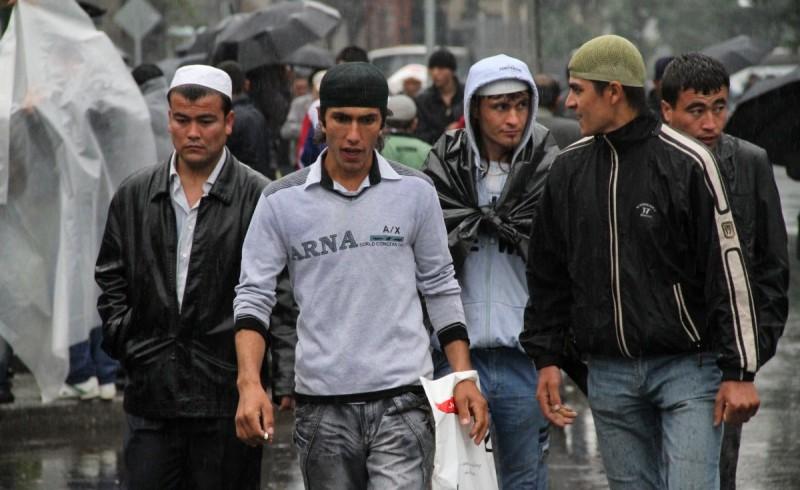
At the same time, human rights advocates describe the Investigative Committee head’s statements about rampant crime among migrants as political declarations and warn that authorities may abuse inspections. Yelena Burtina, Deputy Chair of the “Civil Assistance” Committee, which works on migrant protection, stated that Russian law enforcement inflates the figures on crimes committed by migrants. According to her, the actual number does not exceed 4%. A similar figure was cited last year by Konstantin Romodanovsky, head of the Federal Migration Service. He argued that discussions of foreign nationals’ criminality are “pure populism,” as they account for only 3.5% of all crimes committed in Russia.
Nevertheless, the wheel has already been set in motion, and Bastrykin is actively turning it. Yet where law is replaced by ethnic rhetoric, its universality disappears. Where citizens are divided into “natives” and “outsiders,” equality before the law vanishes. In a civilised society, the law either applies equally to everyone or ceases to be law. The longer official statements continue to substitute legal criteria with ethnic ones, the harder it will become to restore law enforcement to the bounds of neutrality and fairness.







 editor@caliber.az
 +994 55 444-88-98
 Азербайджан, Баку, ул. Низами, 203, Af Business House, 5-й этаж