










Azerbaijan’s golden bet Rising prices, Central Bank buys, and growing production
The past year, and likely the current one, will be remembered for an unprecedented surge in gold prices. In 2025, the cost of the precious metal in U.S. dollars rose by more than 70%, a trend that has continued into early 2026.
Recently, February futures on the New York Comex hit a historic high, approaching $5,097 per troy ounce. Prices had been accelerating since the spring of 2025 due to a combination of global geopolitical tensions, pressure from the White House on the U.S. Federal Reserve, and growing investor demand for precious metals as a safe-haven asset.
These factors have only intensified in 2026, prompting analysts at Goldman Sachs to raise their year-end forecast to $5,400 per ounce.
According to research by the World Gold Council (WGC) and several leading banking institutions, the record global demand for gold in 2024–2025 was largely driven by massive purchases from central banks and unprecedented growth in interest from private investors. Much of this surge in gold’s appeal as a safe-haven asset has been linked to the protracted war in Ukraine and escalating tensions in the Middle East and South Asia.
Economic experts also pointed to key factors driving the market: a cycle of interest rate cuts and monetary easing by the U.S. Federal Reserve and other major global regulators. Typically, gold prices rise when the U.S. dollar weakens—lower Treasury yields and increased global currency supply make the “yellow metal” more attractive.
In addition, President Donald Trump’s trade policies, including tariffs on China, India, and the EU, further stimulated demand and pushed gold prices to new heights.
These trends continued into 2026, and on January 26, 2026, February gold futures on the Comex reached a historic high of $5,096.9 per troy ounce.
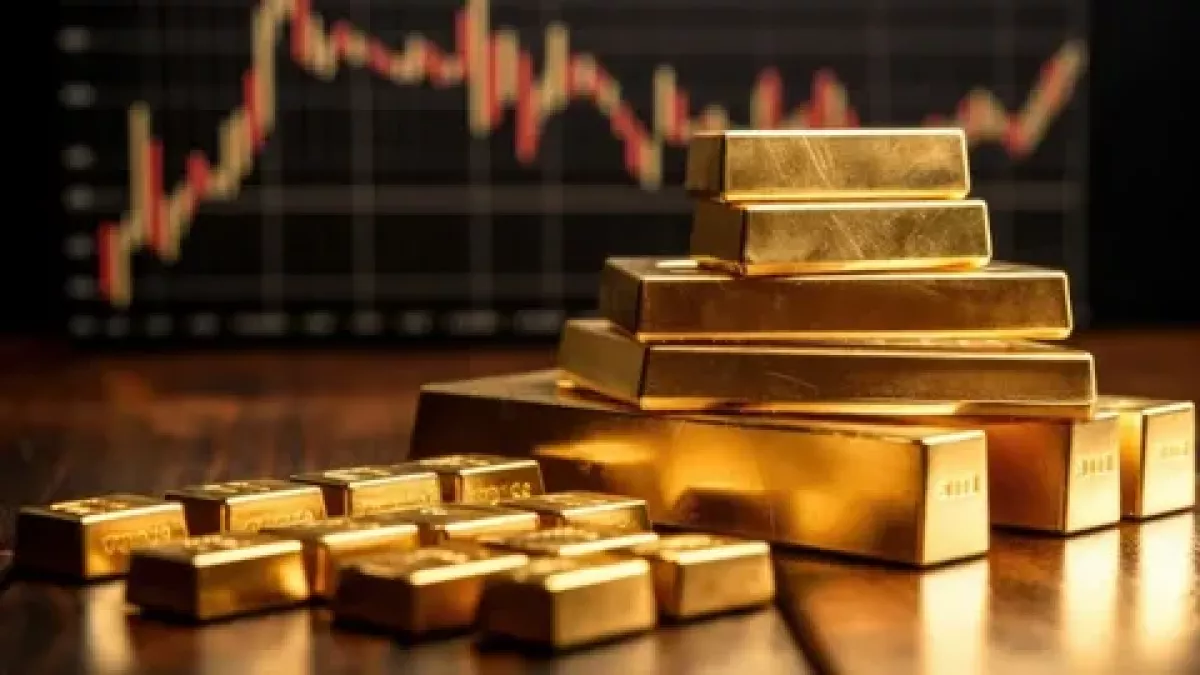
Price growth this year continued amid escalating tensions in various parts of the world, from Greenland and Venezuela to the critical situation linked to unrest in Iranian cities and threats by the U.S. to strike the Islamic Republic of Iran (IRI). Rising geopolitical risks only strengthen the role of the “yellow” metal as a hedge against instability and uncertainty, stated a recent release by the British international financial group HSBC. For instance, the recent sharp rise in gold and silver prices occurred amid geo-economic challenges, including those related to Greenland.
Investors are also pouring funds into safe-haven assets due to renewed criticism by Donald Trump of the U.S. Federal Reserve (Fed), which undermines confidence in the regulator’s independence. Specifically, Trump has criticised the Fed and its chairman, Jerome Powell, for not cutting the refinancing rate quickly enough, in his view. In this context, analysts at the leading global banking and investment group Goldman Sachs forecast that the Fed will lower its benchmark rate by 50 basis points this year; it currently stands at 3.5–3.75%.
Gold has gained additional upward momentum from so-called “depreciation trading”, a trend in which investors reduce their holdings of government bonds and U.S. dollars in favour of alternative assets, particularly precious metals. According to Goldman Sachs, this trend is fueled by concerns over the long-term outlook for monetary and fiscal policies in the world’s largest economies, prompting investors to buy gold through various instruments, including call options, which allow them to acquire the metal later at a pre-agreed price.
Analysts also expect global central banks to continue purchasing gold in 2026, averaging around 60 tonnes per month. Regulators in emerging economies are increasingly seeking to diversify their reserves in favour of the metal. Since early 2025, holdings in gold-backed exchange-traded funds (ETFs) have risen by roughly 500 tonnes, surpassing previous forecasts and reflecting sustained investor appetite for the “yellow metal.”
In this context, Bloomberg reports that Goldman Sachs has recently raised its year-end 2026 gold price forecast by over 10%, bringing it to $5,400 per troy ounce. Previously, the bank had projected annual growth to reach around $4,900 per ounce. Analysts note that investors are increasingly using gold to hedge long-term risks, including concerns over the sustainability of fiscal policies, and are expected to maintain their positions throughout the year.
Goldman Sachs also warns that prices could surpass their forecast, as private investors continue diversifying portfolios amid global economic policy uncertainty. However, the bank cautions that if concerns over the long-term outlook for monetary policy ease, gold prices could decline, reflecting a reduced need for hedging against macroeconomic risks.
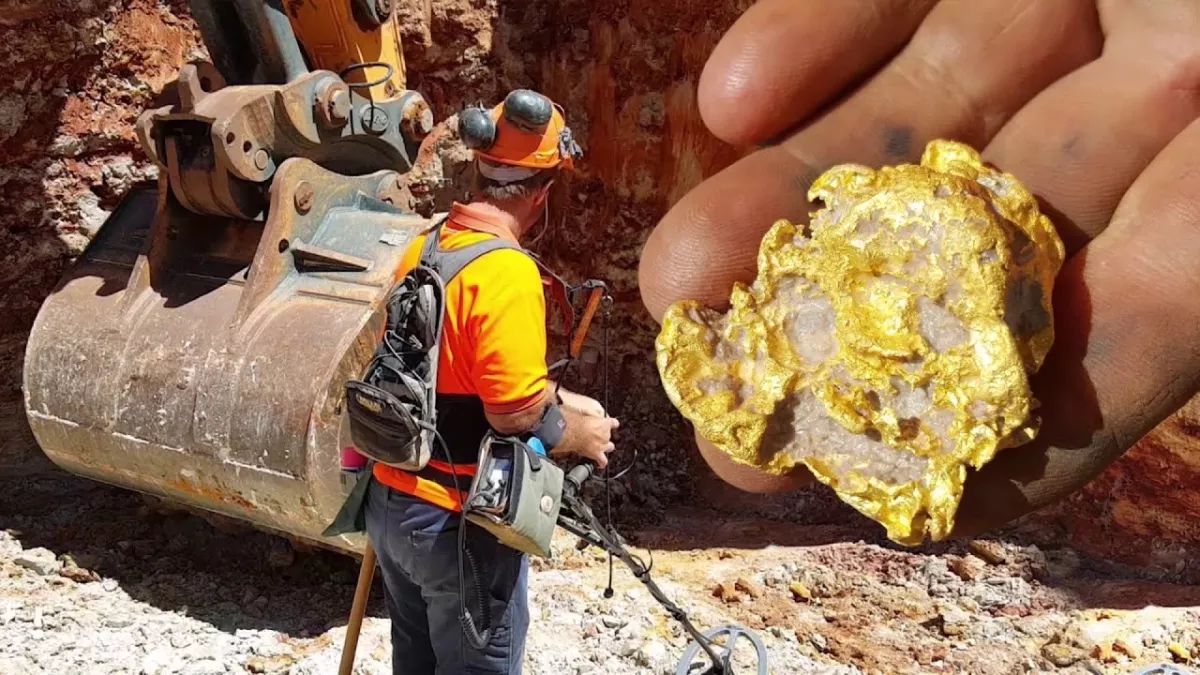
The global gold trends are also clearly reflected in Azerbaijan, where, during the first three quarters of 2025, the share of gold in the total portfolio of the State Oil Fund of Azerbaijan (SOFAZ) reached 32.8%. In response to growing risks in global financial markets, by December 2025, SOFAZ had increased its gold reserves to 184.8 tonnes.
Investments in gold help hedge against currency depreciation and declines in securities prices. Overall, SOFAZ’s investments in the “yellow metal” exceeded 21 billion manats ($12.3 billion) at the start of 2025 and continued to grow dynamically throughout the year. According to the 2026 state budget approved by the president, the share of gold in SOFAZ’s investment portfolio is planned to reach 35%, with a maximum deviation margin of ±4%, underscoring the fund’s commitment to using precious metals as a core risk-management tool.
The global trends observed today are undoubtedly encouraging leading Azerbaijani producers, including the state-owned AzerGold and the private Anglo Asian Mining (AAM), to increase precious metal production. According to State Statistics Committee data, over the past year Azerbaijan produced more than 2,965 tonnes of gold, which is 11.3% higher than the figure from the previous year.
Specifically, the British company Anglo Asian Mining (AAM) extracted 25,061 troy ounces of gold in 2025, 1.7 times more than the year before. Final production figures from AzerGold have not yet been published; however, in September, the company’s chairman, Zakir Ibrahimov, projected an expected output of 71,000 troy ounces of gold for the past year.
Significant volumes of gold concentrate produced in Azerbaijan are sent to Switzerland for refining and subsequently sold abroad. According to updated data from the “Export Review” by the Center for Analysis of Economic Reforms and Communication (CAERC), between January and November last year, Azerbaijan exported gold worth $297.4 million, which is 59.4% higher than during the same period the previous year.
In the foreseeable future, the country’s revenues from the export of gold, silver, and copper are expected to increase significantly, both due to the projected rise in global prices for these metals and the plans of local mining companies to develop new ore deposits and expand production.







 editor@caliber.az
 +994 55 444-88-98
 Азербайджан, Баку, ул. Низами, 203, Af Business House, 5-й этаж