










Belarus looks east: Minsk–Beijing cooperation in focus Education connects two nations
Cooperation between Minsk and Beijing has long been strategic in nature. An important aspect of this cooperation is the development of joint educational and cultural projects.
The Minsk–Beijing educational axis
No more, no less — the name and legacy of Confucius are becoming popular in Belarus today. However, this ancient Chinese teaching in the Belarusian land will be discussed later. For now, Minsk and Beijing are focusing on modern educational programmes and technologies.
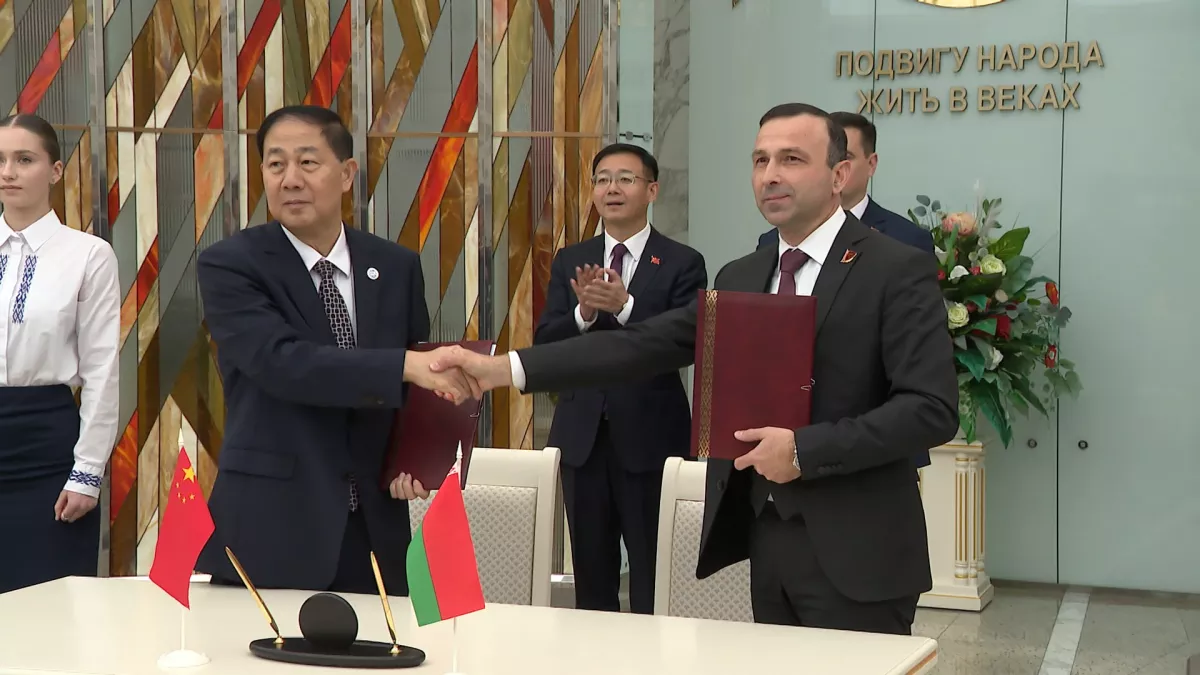
In October 2025, Belarus and China signed a declaration on cooperation in the field of higher education. This document is one of many agreements concluded in recent years between the two countries.
On November 18, a new joint educational institute of Huaiyin Normal University and the Maxim Tank Belarusian State Pedagogical University was opened in Minsk.
What connects China and Belarus, separated by thousands of kilometres and seemingly very different traditions and cultures? In the distant year of 1994, the first president of independent Belarus, Alexander Lukashenko, inherited a difficult legacy. During the perestroika period and the early 1990s’ neoliberal reforms, the Belarusian economy was shaken to its foundations. Industrial output plummeted, jobs were cut en masse, and people went months without receiving their wages.
Fortunately, the social sphere was not completely destroyed by the “reformers,” and the sharp rise in prices was partially offset by low housing costs, free education, and healthcare. Today, all of that is history: modern Belarus is a country with a stable economy and a developed social sector. The Chinese experience of a state-regulated and supported economy clearly resonates with the Belarusian model.
It is therefore no coincidence that the third country Alexander Lukashenko visited as president was China. This took place in January 1995, six months after he took office. During that official visit, the Belarusian president familiarised himself with the operations of several Chinese economic facilities. Since then, the Belarusian leader has visited China many times. Naturally, the focus of these talks was primarily on the economy: China is Belarus’s second most important trading partner after Russia.
However, significant attention has always been paid to cooperation between the two countries in the field of education. After all, knowledge itself is ultimately an economic force.
Confucius in the land of the “Pesniary”
In 2024, more than 11,000 students from China were studying in Belarus. Moreover, since 2019, the number of Chinese students in Belarusian universities has tripled. Considering that there are roughly 30,000 international students in the country, one in every three is Chinese.
Regular meetings are held between the education ministries of the two countries, a forum of university rectors takes place, and the Belarus–China Association of Universities as well as the Education Cooperation Commission of the Belarus–China Intergovernmental Committee are active. Within the framework of cooperation with China, six laboratories and five joint training centres have been established in Belarus. Forty educational programmes are currently being implemented.
Many Belarusians are also eager to learn Chinese, pursue education in China, and work for Chinese or joint Belarus–China companies.
Now, a bit about “Confucianism” in Belarus. As early as the summer of 2006, the Republican Confucius Institute of Sinology (RCIS) was opened at Belarusian State University (BSU) in Minsk. Following this, Confucius centres and classrooms were established at BSU, as well as at Belarusian State Economic University, Yanka Kupala State University of Grodno, Belarusian State University of Informatics and Radioelectronics, and in secondary schools and gymnasiums in Minsk, Brest, Mogilev, Orsha, Volkovysk, and Baranovichi.
In 2011, a Confucius Institute was also opened at Minsk State Linguistic University.
In 2017, the Confucius Institute appeared at Francisk Skorina Gomel State University, and several schools in Gomel also began teaching Chinese. In 2020, a Confucius classroom was established at Baranovichi State University.
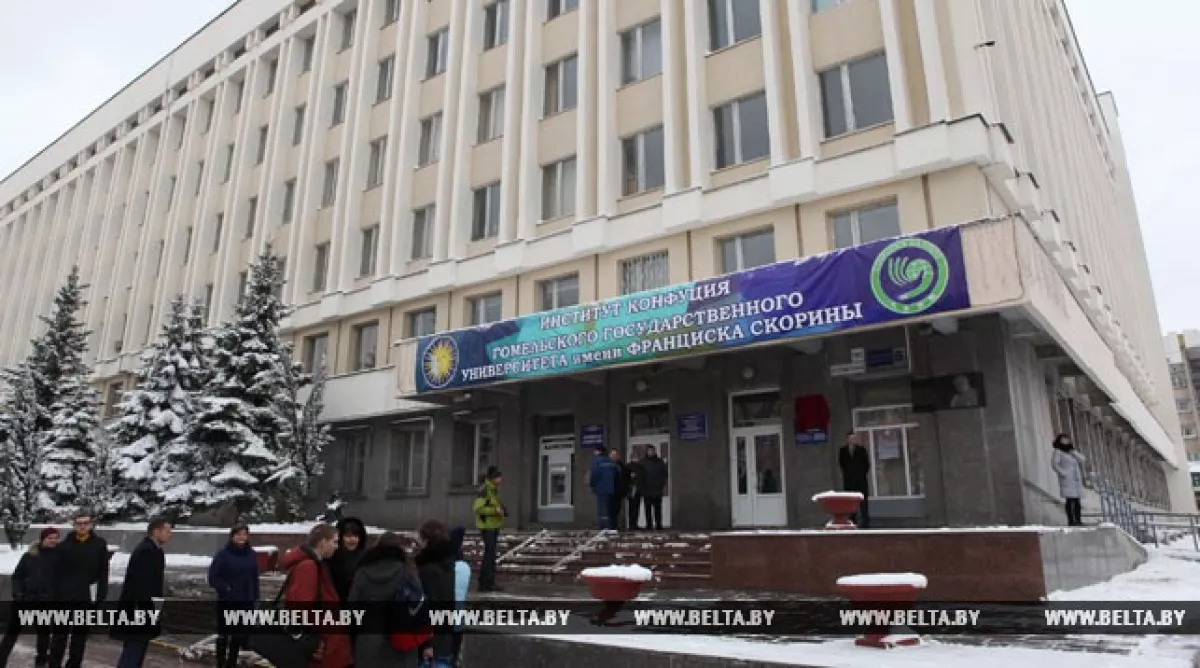
In 2011, the Republican Confucius Institute of Sinology at BSU was recognised as the “Best Confucius Institute of the Year,” and in 2018 it became a model Confucius Institute. The Republican Confucius Institute of Sinology closely cooperates with the Ministry of Education of China, the Chinese International Education Foundation, Dalian Polytechnic University, and other organisations.
In November of this year, Anatoly Tozik, Director of the Republican Institute of Sinology at BSU, and Deputy Director Liu Sulin participated in the World Chinese Language Congress in Beijing.
In March of this year, Anatoly Tozik and Liu Sulin also took part in the international forum “Overcoming Poverty and Global Development” in Luzhou.
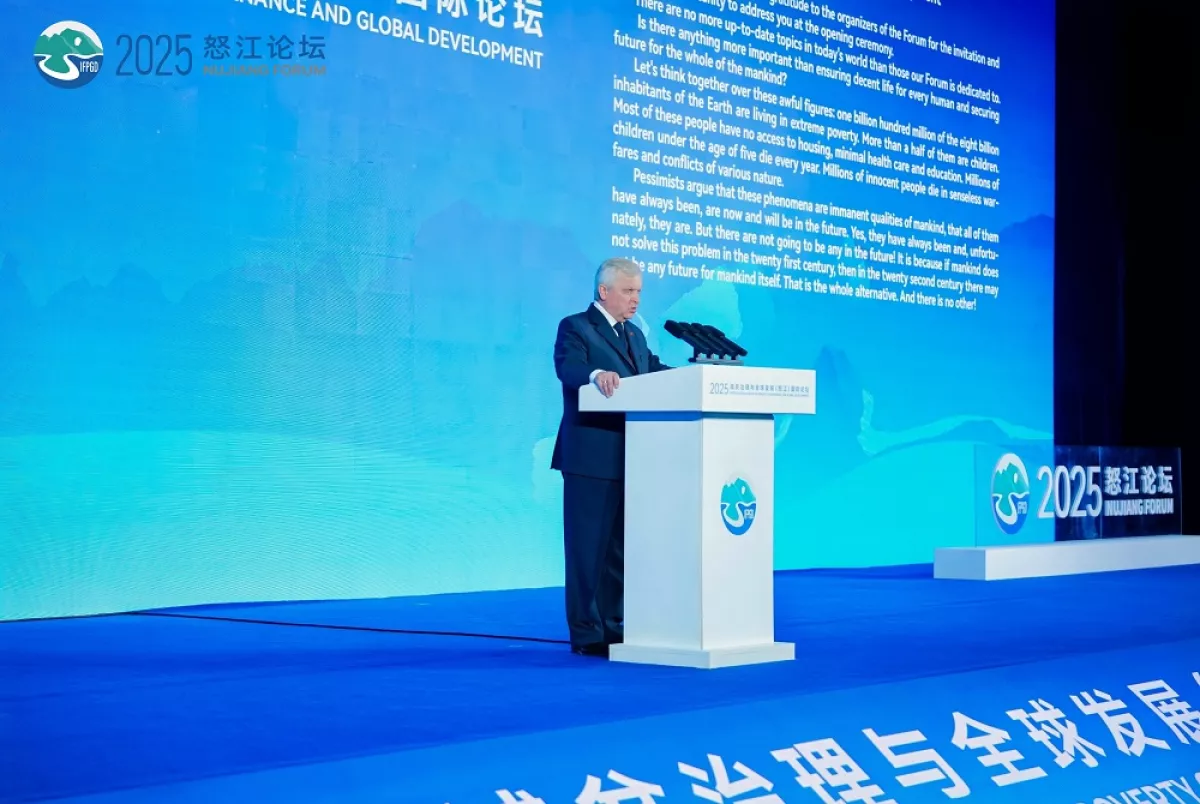
Speaking there, the director of the Belarusian Confucius Institute said: "Let us listen to the voice and initiatives of China. Behind them lies the wisdom and experience of many millennia. There is no need to look for any hidden agenda or ulterior motive in China’s initiatives. More than 20 years of my life and professional activity have been connected with China. I spent five years living and working in this great and remarkable country as an ambassador of my homeland — the Republic of Belarus. This gives me the right to assert that China, perhaps like no one else, is objectively interested in the peaceful development and well-being of all countries and peoples. Because only under these conditions can it realise its dream of the great rejuvenation of the Chinese nation… And is it really normal that the wealth held by the richest one per cent of the world’s population exceeds the total wealth of the remaining 99 per cent?"
One Belt – unified knowledge
According to the Chinese Ambassador to Minsk, Xie Xiaoyun, last year 50,000 people were studying Chinese in Belarus. Many universities in China also have departments dedicated to the Belarusian language.
Chinese language education began in Belarus back in 1993 — the year after diplomatic relations between the two countries were established. At that time, Chinese primarily attracted enthusiasts and connoisseurs of Buddhist philosophy, Eastern martial arts, Chinese literature, and poetry. Today, Belarus regularly holds examinations in Chinese (Putonghua, or Mandarin) according to the HSK, HSKK, and YCT systems. After successfully passing these tests, up to a thousand young Belarusians are sent annually to study and intern at Chinese universities and linguistic camps.
At the Belarus–China Industrial Park “Great Stone,” the largest in Europe, job applicants with knowledge of Chinese have an advantage. Certificates from Chinese language exams also help with employment in joint Belarus–China companies and in Belarusian organisations that have business ties with China. For example, several years ago, OJSC Gomselmash, which actively cooperates with China, was literally searching for specialists fluent in Chinese.
At the Belarusian Confucius Institute, Chinese language teachers are trained with a BSU diploma. The institute also offers commercial courses for adults and children, courses in traditional Chinese painting, the Republican School for Young Sinologists, and many other programmes. Competitions in Chinese calligraphy and traditional tea ceremonies are also held.
Starting September 1, 2025, the Confucius Institute, together with the BSU Faculty of Economics, began offering a new programme: International Economics and Trade with Advanced Chinese Language Studies.
When a delegation from the Chinese Ministry of Education, led by Vice Minister Xu Qingsen, visited the BSU Confucius Institute in May this year, the children’s course students welcomed the guests with songs in Chinese.
At the recently opened joint educational institute of the Maxim Tank Belarusian State Pedagogical University (BSPU) and Huaiyin Normal University, 142 Chinese first-year students will study in the programmes Music Education, Art Education, and Physical Education. Upon graduation, they will receive two diplomas — one from the Belarusian university and one from the Chinese university.
Finally, why does Minsk need signs in Chinese? Some of the first signs with Chinese characters appeared on the M2 highway near the Kurgan of Glory (the Mound of Glory ). In 2017, the first ATMs in Belarus supporting the Chinese language became operational. At Belarusbank, they explained that this was due to the many Chinese projects implemented in the country, and above all, it was a “gesture of respect.” That same year, information in Chinese also began to be displayed at Minsk National Airport. In the capital itself, 55 information stands in Chinese were installed, and signs with Chinese characters also began to appear at train stations.
By developing the study of Chinese language and culture, and establishing joint programmes with colleagues from China in the field of education, Belarus is looking toward the future — envisioning it based solely on mutually beneficial and equal cooperation among all countries and peoples united by a shared destiny on a common path.







 editor@caliber.az
 +994 55 444-88-98
 Азербайджан, Баку, ул. Низами, 203, Af Business House, 5-й этаж