










Direct routes, false alarms What new routes mean for the South Caucasus
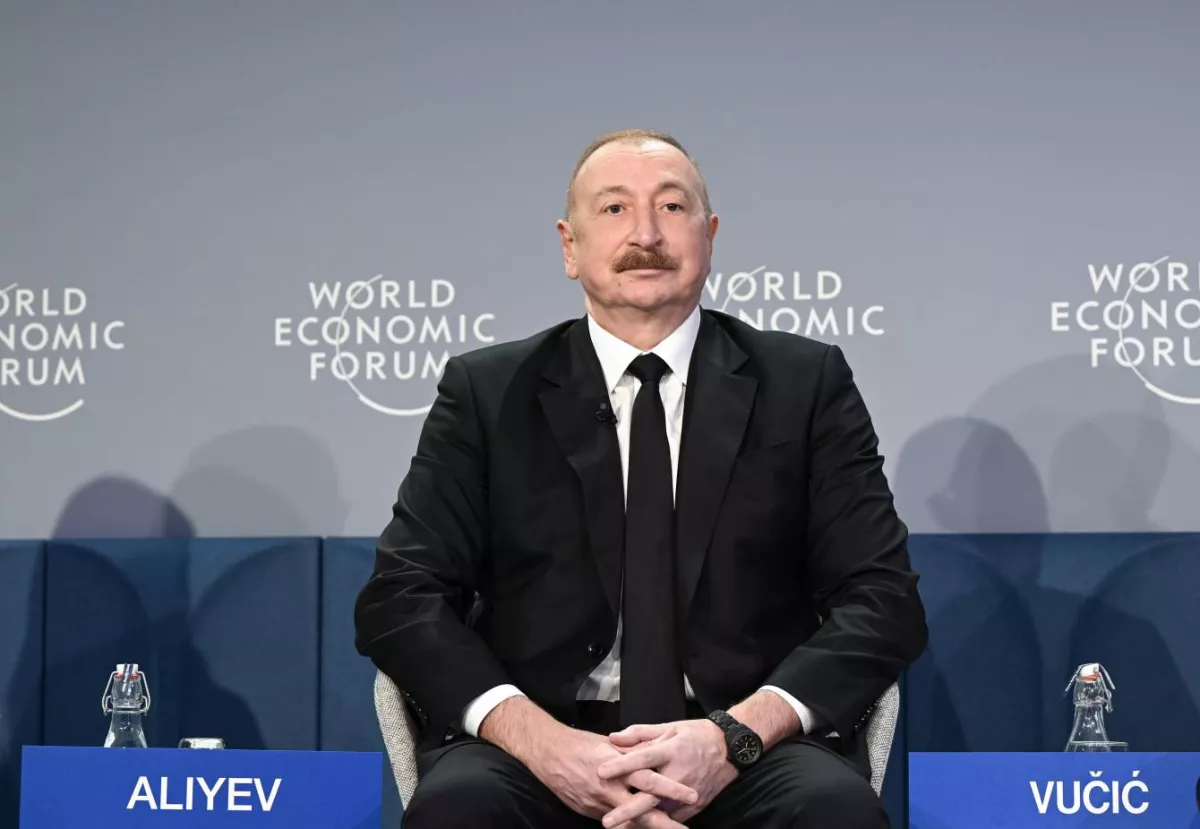
At the World Economic Forum in Davos, Azerbaijani President Ilham Aliyev stated that, in the future, Armenia and Azerbaijan could redirect freight transport along direct routes through each other’s territories. Georgian media did not lack commentary on the supposed “significant losses” for the Georgian side in such a scenario. Representatives of Georgia’s pro-Western opposition were particularly active, claiming that international transit would now supposedly bypass “Russia-linked” Georgia.
Meanwhile, deliveries of goods destined for Armenia directly via the Azerbaijan-Armenia border, as well as the rerouting of part of Armenian exports through Azerbaijan, will have practically no impact on the key transit route through Georgia—the Middle Corridor. Georgian Prime Minister Irakli Kobakhidze also stated that the alternative route does not pose a threat to Georgia.
“We welcome the restoration of relations between our neighbours, including the development of trade and economic ties. As for our transit function, we are making very large investments in its development. This involves road infrastructure, ports, airports, and various other infrastructure facilities. It is based on positive expectations regarding the steady growth of transit. I would like to provide a simple indicator confirming that the alternative corridor does not pose a threat to Georgia: the volume of cargo through the Middle Corridor has increased sevenfold over the past five years,” said the Georgian prime minister.
According to Irakli Kobakhidze, in the context of the rapid growth of shipments along the Middle Corridor, the main task for the Georgian side is to make the most efficient use of existing infrastructure to accommodate the increasing freight turnover.

“At such growth rates, the alternative corridor will only serve as a supplement to our transit function. Therefore, all this talk is nothing more than empty speculation. We will continue to invest to the maximum extent in developing the so-called transport connectivity function,” he emphasised.
The launch of direct cross-border freight transport between Azerbaijan and Armenia has also been positively assessed by Vato Shakarishvili, Executive Secretary of the United Neutral Georgia party. Commenting on Azerbaijani President Ilham Aliyev’s remarks in Davos, he noted that the emergence of new potential transit routes in the region would represent not a threat to Georgia, but an additional opportunity.
According to Vato Shakarishvili, opposition media are spreading a distorted interpretation of Ilham Aliyev’s words in an attempt to construct a false narrative suggesting that Georgia is allegedly losing its transit role and that new routes will bypass the country. He recalled that the Azerbaijani president was in fact speaking about work on a new Asia–Europe transport corridor as a complement to the existing route passing through Georgia, stressing that an increase in the number of routes benefits suppliers and consumers alike, as well as transit states.

“Georgia’s liberal radicals, of course, are unable to grasp how important deeper regional cooperation is, along with new joint economic projects, the strengthening of the region’s role in terms of connectivity, and how all of this contributes to the establishment of lasting peace. Meanwhile, peace is precisely what is vital for the implementation of such processes. If one takes a sober look at the new reality and refrains from trying to forcibly drag the country into the ruins of NATO and the European Union, the emergence of new (potential) transit routes in the region will represent not a threat, but an additional opportunity for Georgia,” Vato Shakarishvili noted.
He also stressed the importance of internal political stability, minimising the risks of destabilisation, and preserving neutrality, which, in his view, serves as a guarantee that the country will not be drawn into a confrontation with Russia.
It should also be noted separately that the very fact of unblocking the border between Azerbaijan and Armenia is of significant importance for progress towards the restoration of Georgia’s territorial integrity.
The Azerbaijan–Armenia border remained closed for many years due to the first precedent of separatism and occupation in the South Caucasus—in Azerbaijan’s Karabakh region. The restoration of Azerbaijan’s territorial integrity and the dismantling of the separatist entity ultimately made it possible to resume direct transport links between Azerbaijan and Armenia, as Ilham Aliyev stated in Davos. Accordingly, it is of critical importance for Georgia that the precedent of opening direct transport routes following the de-occupation of territories and the elimination of separatist formations be extended as soon as possible to its own still-occupied regions—Abkhazia and the Tskhinvali region.
Meanwhile, Moscow is far more interested in restoring transit through these regions than Tbilisi itself. Russia has even built a logistics terminal at its own expense in occupied Abkhazia—along the administrative boundary line with the rest of Georgia—which currently remains non-operational.

Georgian media have previously raised the issue of a possible opening of cargo transit between Russia and Georgia via Abkhazia, using the agreement on so-called “corridors” through territories not controlled by the Georgian authorities. This refers to an arrangement concluded in 2011 during the presidency of Mikheil Saakashvili, aimed at unblocking Russia’s accession to the World Trade Organisation. However, Georgian Prime Minister Irakli Kobakhidze has unequivocally rejected such a scenario amid the ongoing occupation regime and Russia’s so-called “recognition” of the separatist entities.
“We do not recognise any so-called state border—this is a complete falsehood, and on this basis there can be no question of such a thing on our part. Previously, under the former government, a specific agreement was signed under which the authorities at the time agreed to Russia’s accession to the WTO, and an understanding was reached that, with Swiss mediation, a mechanism for cargo transportation should be created. However, since then this issue has been frozen, and no steps have been taken by us in this direction. Accordingly, all of this is nothing more than speculation,” Irakli Kobakhidze stated.
The launch of transit across the Azerbaijan–Armenia border will become an additional factor pushing the Kremlin to reconsider its policy towards Georgia’s occupied territories. In order to slow the irreversible loss of influence in the South Caucasus under these conditions, Russia needs to reliably link its own transit communications with the Middle Corridor. However, accomplishing this task is impossible without unblocking convenient transport routes through Abkhazia and the Tskhinvali region.
At the same time, transit through these regions is fundamentally impossible without Moscow’s withdrawal of its so-called “recognition of independence” and the launch of a de-occupation process. The Georgian authorities have repeatedly emphasised this position, and Azerbaijani President Ilham Aliyev’s statement that “one day the route will pass through Armenia” only further strengthens the Georgian government’s argument.
By Vladimir Tskhvediani, Georgia, exclusively for Caliber.Az







 editor@caliber.az
 +994 55 444-88-98
 Азербайджан, Баку, ул. Низами, 203, Af Business House, 5-й этаж