










European Union takes control of Armenia Elections as a geopolitical test
In light of significant political events in Armenia, the European Union, so to speak, has rolled up its sleeves and is seriously intending to take personal control over the parliamentary elections scheduled for June 2026. EU High Representative for Foreign Affairs and Security Policy Kaja Kallas made the remarks to journalists ahead of a meeting of EU foreign ministers in Brussels.

“We have discussions, first for breakfast, we have Armenia. Of course, Armenia has elections coming, and what can we do to help them? They have asked [for]similar help to fight the malign influence, like we granted to Moldova,” she said.
There’s no need to read tea leaves to understand which country, or rather, which state, the senior EU diplomat was referring to—especially since she had previously stated that, ahead of Armenia’s parliamentary elections in 2026, Russia had stepped up its disinformation campaign. And here, the pattern is obvious: on this issue, the positions of Yerevan and Brussels regarding Moscow coincide, which, in turn, theoretically turns the Republic of Armenia into a new arena of geopolitical confrontation.
Notably, Armenia’s Foreign Minister Ararat Mirzoyan also participated in the meeting of the Council of Foreign Ministers of the EU member states, and, at the very beginning of December, during his official visit to Brussels, discussed with Kaja Kallas the deepening of Armenia–EU partnership, including the development of a new regional agenda.

However, despite this entire track of close rapprochement with the West, the Armenian side avoids making direct statements regarding threats originating from Russia in connection with the country’s upcoming political events. For example, at a press conference in Brussels on December 2, unlike Kaja Kallas, who openly accused Russia of hybrid attacks, Mirzoyan refrained from directly criticising the Kremlin, limiting himself to diplomatic formulations about the importance of cooperation with the EU to counter such threats and strengthen institutions. This restraint may be explained by the Armenian authorities’ desire not to complicate already difficult relations with Russia, as well as by economic considerations—namely, Armenia’s continued participation in the Eurasian Economic Union (EAEU).
All of this does not prevent the Armenian government from simultaneously talking about its plans to join the European Union. Recently, Prime Minister Nikol Pashinyan confirmed that “Armenia’s exit from the EAEU is not an end in itself, but joining the European Union is an end in itself.”
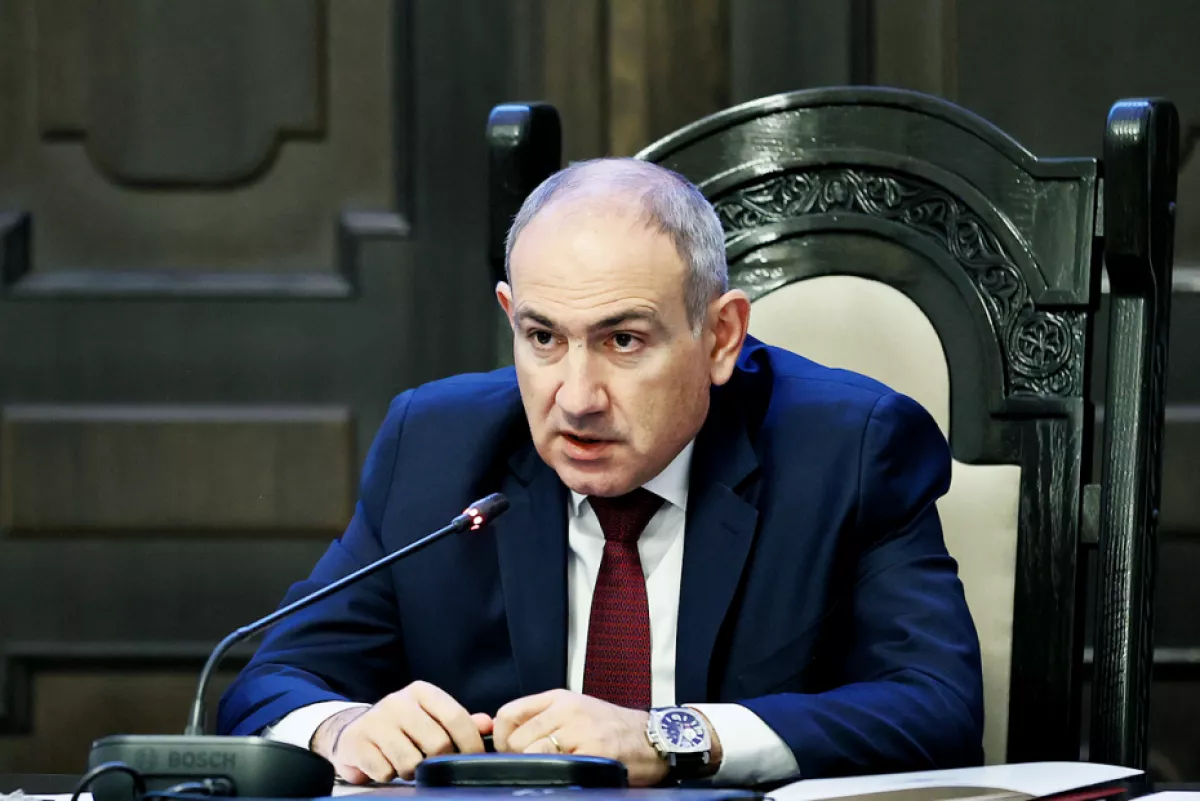
“On the one hand, Armenia’s exit from the EAEU is not an end in itself, but on the other hand, Armenia’s membership in the EU is an end in itself. We understand that simultaneous membership in the EU and the Eurasian Economic Union is impossible. We understand that there will come a point when a decision must be made. But right now, we are not at that point, so there is no need to make such a decision,” he said, clearly aiming to capture Moscow’s attention.
Moreover, Yerevan’s position regarding the adoption of a law to begin Armenia’s accession to the EU was presented by the Armenian leader as an additional incentive to implement reforms and bring all sectors in the country in line with European Union standards. At the same time, the Armenian leader emphasised that Armenia’s engagement with the EU is not being developed in opposition to Russia or the EAEU.
It can be assumed that Pashinyan’s statement was nothing other than a response to remarks by Russian Deputy Prime Minister Alexey Overchuk, who said that Russia considers Yerevan’s actions as the beginning of Armenia’s exit from the EAEU.

In other words, despite Brussels’ statements and pressure from Moscow, Armenia’s “sitting on two chairs” policy remains unchanged. This raises a very reasonable question: “Will the Armenian authorities be able to maintain a balance in relations with Russia amid Brussels’ tight control over the upcoming parliamentary elections?” All the more so as the European Union has demonstrated a willingness to fund the protection of Armenia’s information space ahead of the elections, as it did previously in Moldova.
In October last year, the European Commission adopted a Growth Plan for the Republic of Moldova worth €1.8 billion, backed by the Reform and Growth Facility for the period 2025–2027. This became the largest EU financial support package since Moldova gained independence and aims to stimulate the growth of the Moldovan economy. Moreover, the plan brings the country closer to EU membership by accelerating reforms.
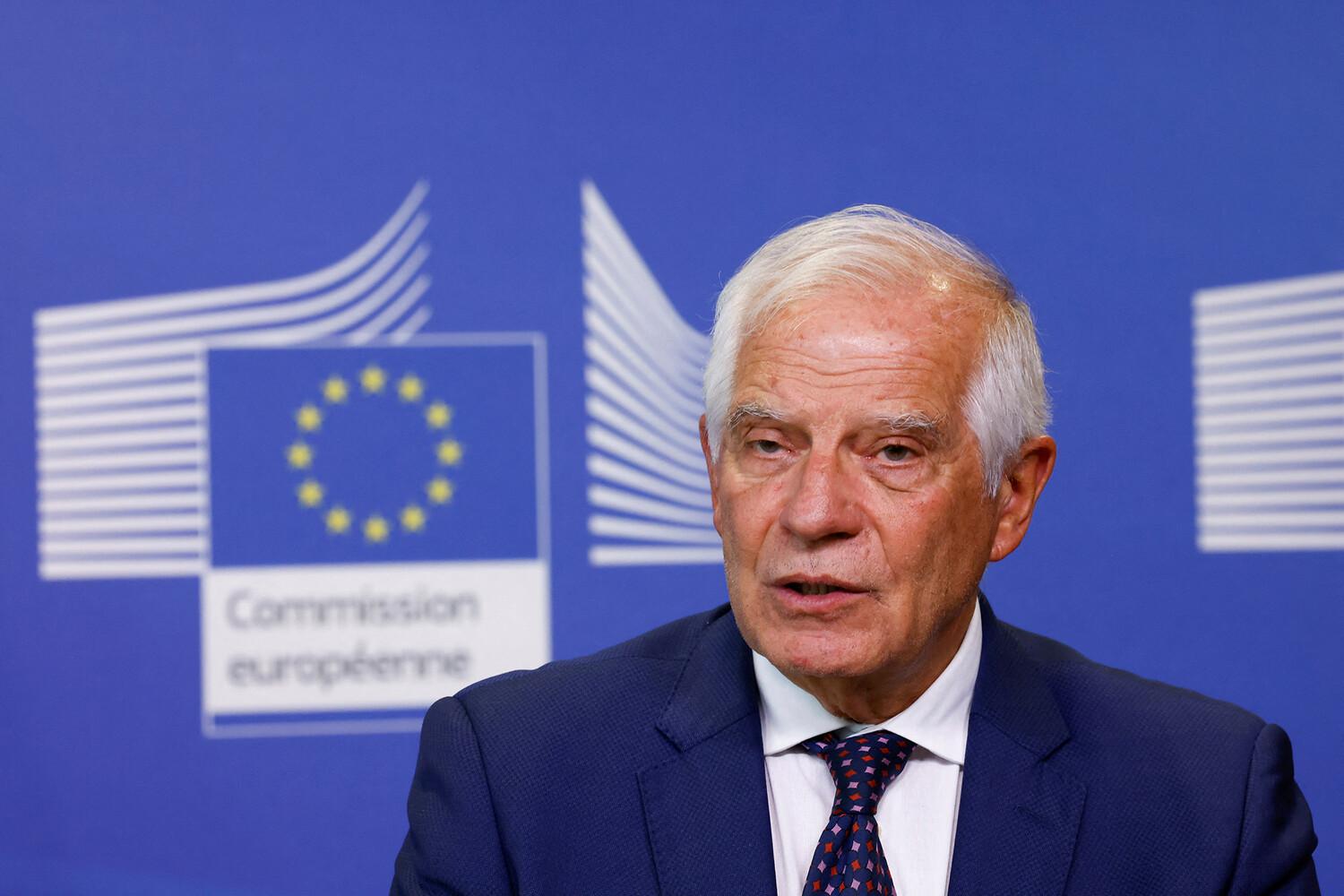
On that occasion, then Vice-President of the European Commission Josep Borrell stated: “The new Growth Plan for Moldova is another example of the EU’s support for the country’s security, peace and prosperity. It will strengthen Moldova’s economy and create opportunities for all Moldovan citizens. The plan is a recognition of the impressive results that Moldova has already achieved on its EU path. It will drive further progress on fundamental and socio-economic reforms. Moldova’s future is in the European Union.”
As for Armenia, following the signing in Brussels of the strategic partnership agenda, Kaja Kallas announced the provision of a €15 million aid package to the country to support peace and enhance resilience. In addition, EU Commissioner for Enlargement, Marja Kos, announced an additional €5 million in aid. Separately, a €12 million aid package was announced to counter cyber threats and foreign information manipulation, referred to in EU terminology as Foreign Influence and Manipulation of Information (FIMI).
Nevertheless, when drawing parallels between Moldova and Armenia, one important nuance must be kept in mind: Yerevan’s policy fundamentally differs from that of Moldova, primarily due to the lack of a clear decision on its future foreign policy direction. Chisinau long ago made a definitive bet on European integration, while Armenia oscillates between the West and Russia, which significantly reduces the likelihood of the country joining the EU, at least in the near future.
On the other hand, the European Union’s intention to counter external threats in Armenia’s upcoming parliamentary elections suggests that this initiative is driven primarily by Brussels’ own interests in the South Caucasus, a region once traditionally considered under Russian influence. The logical conclusion is that, in order to take deeper root in Armenia and thereby strengthen its position in the region, the European Union will do everything possible to protect Armenia’s information space from the “Russian trace,” with all the consequences that entails.







 editor@caliber.az
 +994 55 444-88-98
 Азербайджан, Баку, ул. Низами, 203, Af Business House, 5-й этаж