










Fake arithmetic of the revanchists Who is stirring up Armenian society?
The Washington agreements reached on August 8, 2025, which marked the final stage of the Armenian–Azerbaijani peace process, set official Yerevan on a path toward meeting the key demands of Baku’s peace agenda. As part of this process, Armenia de jure agreed to the dissolution of the OSCE Minsk Group, which officially ceased to exist on December 1. Additionally, the Armenian authorities have planned a nationwide referendum on the country’s constitution, which currently includes territorial claims against Azerbaijan.

Recently, Prime Minister Nikol Pashinyan, speaking at a meeting at the German Council on Foreign Relations in Berlin and answering a question about whether he plans to introduce changes to his country’s Constitution, noted that it is precisely the constitution that is seen as the main obstacle to signing a peace agreement with Baku.
“...our constitution contains a provision according to which ratified international documents have supreme legal force over domestic legislation. Let us imagine that a peace agreement is signed, and afterward we must submit it to the Constitutional Court to verify its compliance with our constitution. If our Constitutional Court decides that it fully complies with our constitution, then there will be no obstacles to its approval, and once approved, in accordance with our constitution, it will have the highest legal force in our country. I have clearly stated that if our Constitutional Court decides that it does not comply with our constitution, then I personally will come forward with an initiative for constitutional amendments,” he said.
Thus, the prime minister essentially reiterated the point he made after the meeting in Washington. At that time, speaking with journalists, he emphasized that the necessary amendments to the Armenian Constitution would be made regardless of the Constitutional Court’s decision: “If, during the ratification process, our Constitutional Court decides that the currently initialed peace agreement with Azerbaijan, and subsequently in case of its signing, would contradict the constitution, I myself will personally initiate changes to the constitution.”
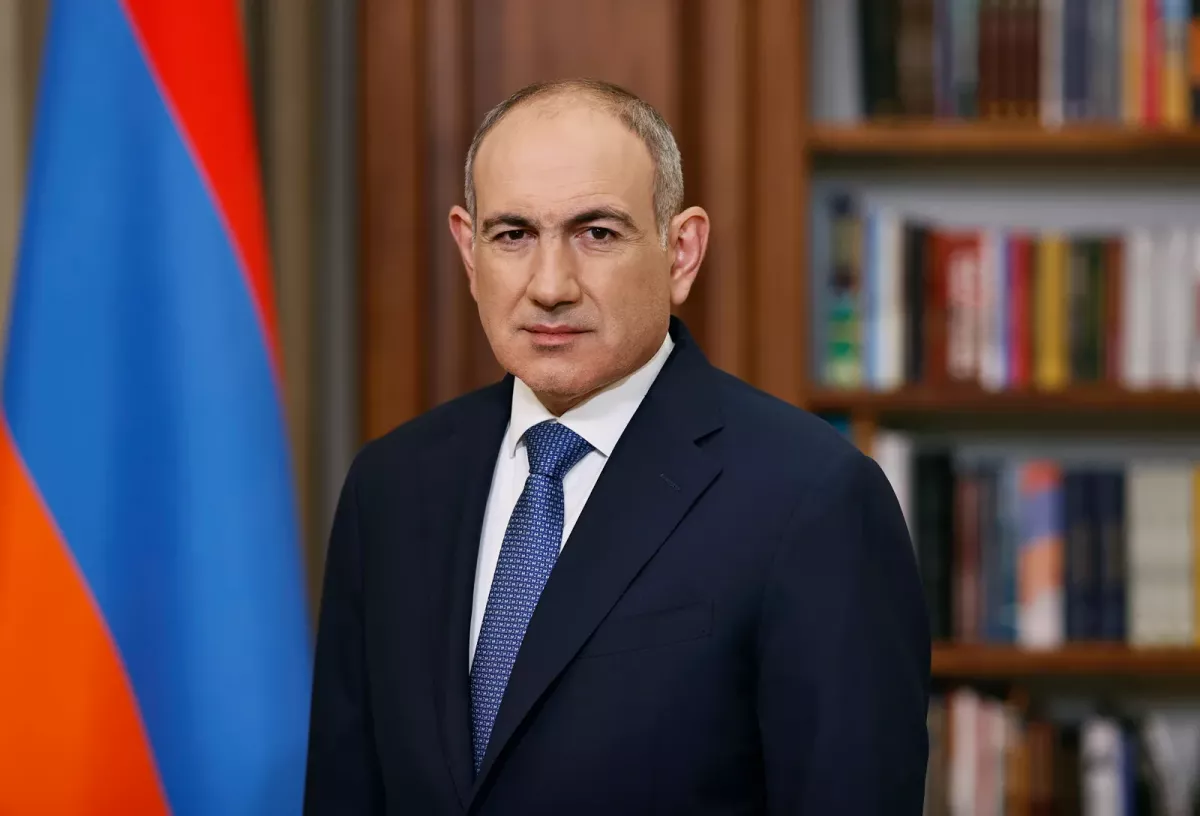
Notably, this message by the Armenian prime minister was clearly addressed to the Chairman of the Constitutional Court, Arman Dilanyan, who had previously claimed in an interview with Radio Free Europe/Radio Liberty that Armenia’s Constitution allegedly contains no territorial claims not only against Azerbaijan but also against any other country, even calling Baku’s accusations “false.”
However, as we can see, the Armenian leader holds a different position on this issue. Moreover, in a recent conversation with journalists, Pashinyan stated that Armenia would not be able to make territorial claims against Azerbaijan, even if it wanted to.
“Why? Because in the first article of that agreement — which is already a public document — it is written that, based on the reality that the administrative borders of the [former] Soviet Union’s republics have become state borders, the parties recognize each other’s territorial integrity, sovereignty and political independence.
In the second article it is said that on that basis the parties have no territorial claims against each other and commit themselves not to present territorial claims in the future as well. In another article it says that the parties cannot make reference to their internal legislation as justification for failing to implement the agreement. Therefore, when this agreement is ratified, even if Armenia wants to, it cannot have territorial claims against Azerbaijan — that is the first [option.] The second option [is that the Constitutional Court of Armenia] decides the agreement does not comply with our constitution. I said at the time that I myself say that in that case, I will myself initiate constitutional amendments,” said Nikol Pashinyan.

The current Armenian authorities’ stance on amending the country’s constitution has not gone unnoticed by opponents of Pashinyan’s policies. They seize every opportunity to convince Armenian society that a peace agreement with Azerbaijan would be futile from Armenia’s perspective. In this effort, social content is often used as a tool to shape public opinion, as demonstrated by a recent Gallup International survey on constitutional changes, which appears to align with the interests of Robert Kocharyan and Serzh Sargsyan.
Recently, at a press conference, the head of Gallup International’s Armenian office, Aram Navasardyan—known for his pro-Kocharyan stance—stated the following: “7.3% of respondents believe that Armenia needs an entirely new constitution, meaning they agree with Nikol Pashinyan’s initiative. 20.7% think that some articles should be amended. And 57.1% of respondents believe that the constitution should remain unchanged.”

It is perfectly clear and completely transparent that such provocative leaks are carried out with a single purpose: to torpedo the peace process in the region and sow seeds of doubt within Armenian society, even though the majority of the population supports the policies of the current authorities—a fact repeatedly demonstrated by their disregard for revanchists’ calls for mass protest actions. Even the zealous attempts by the Armenian Church, which wields significant power in Armenia, to overthrow the legitimate government have ended in complete failure.
Therefore, on the eve of these momentous political events, the citizens of Armenia must consolidate even further and resist the opposition’s propaganda machine, which spares no means—including the use of false arithmetic. After all, it is their choice that will determine the future not only of the Republic of Armenia in particular but of the entire South Caucasus as a whole.







 editor@caliber.az
 +994 55 444-88-98
 Азербайджан, Баку, ул. Низами, 203, Af Business House, 5-й этаж