










Filigree diplomacy and sovereignty Aliyev on Azerbaijan’s strategic vision
President Ilham Aliyev demonstrates remarkable skill in articulating the multifaceted nature of Azerbaijan’s foreign policy. The term “filigree” is particularly apt in this context, reflecting the precision and subtlety of his approach. This quality stands out as one of the key strengths of the head of state.
Official Baku consistently shows that its foreign policy is multi-vector while remaining firmly anchored in the protection of national interests. These nuances were clearly reflected in President Aliyev’s recent interview with local television channels.
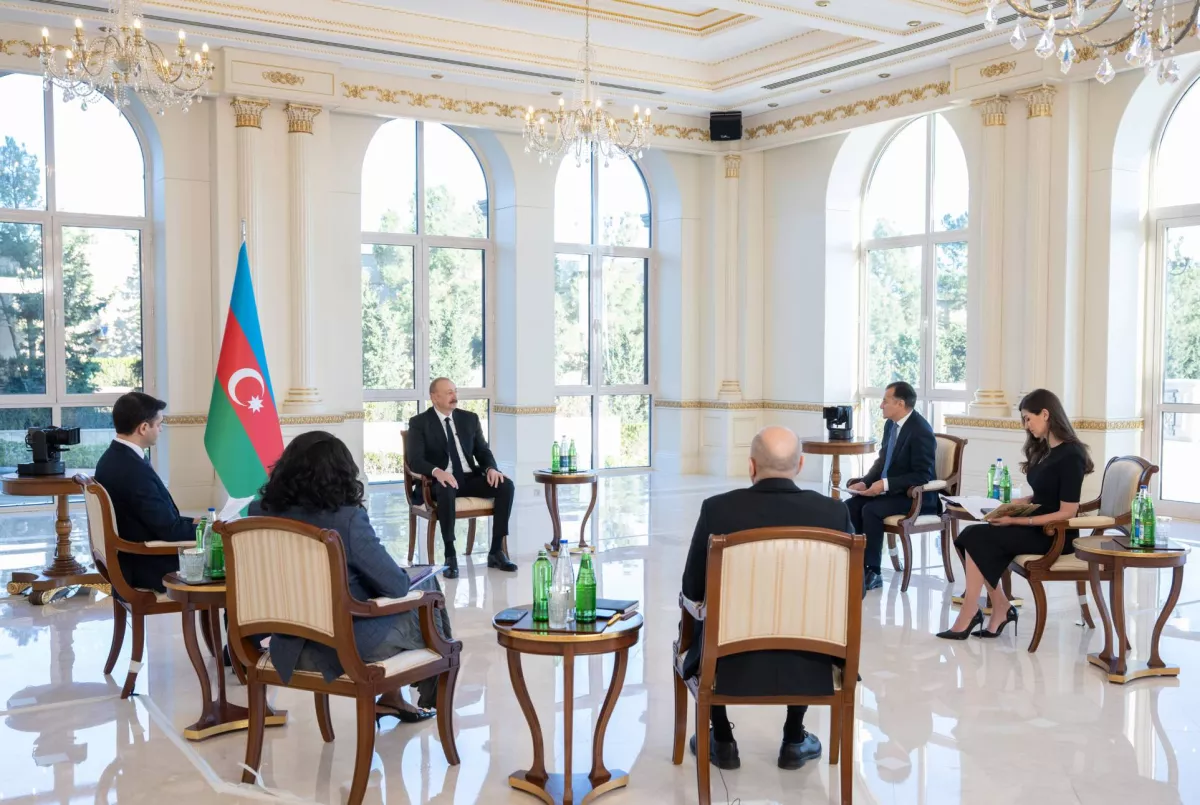
First, President Aliyev highlighted several of the most significant events of 2025 for Azerbaijan, describing them as historic—particularly for their symbolic impact on the global stage. Reflecting on the conclusion of the war with Armenia, which secured a decisive victory for Azerbaijan both on the battlefield and diplomatically at the world’s No. 1 office, he called this one of the most important milestones in the history of Azerbaijan’s independence.
For those who may not have fully appreciated its international significance, President Aliyev characterised 2025 as a historic year in the context of Azerbaijani–American relations. Emphasising the pragmatism and professionalism of Donald Trump’s administration, as well as its clear understanding of America’s national interests, he outlined a path for cooperation between Washington and Baku—two nations with strong regional influence and strategic potential. Such a partnership is mutually important: it serves U.S. interests in the region while remaining vital for Azerbaijan’s foreign policy and security goals.
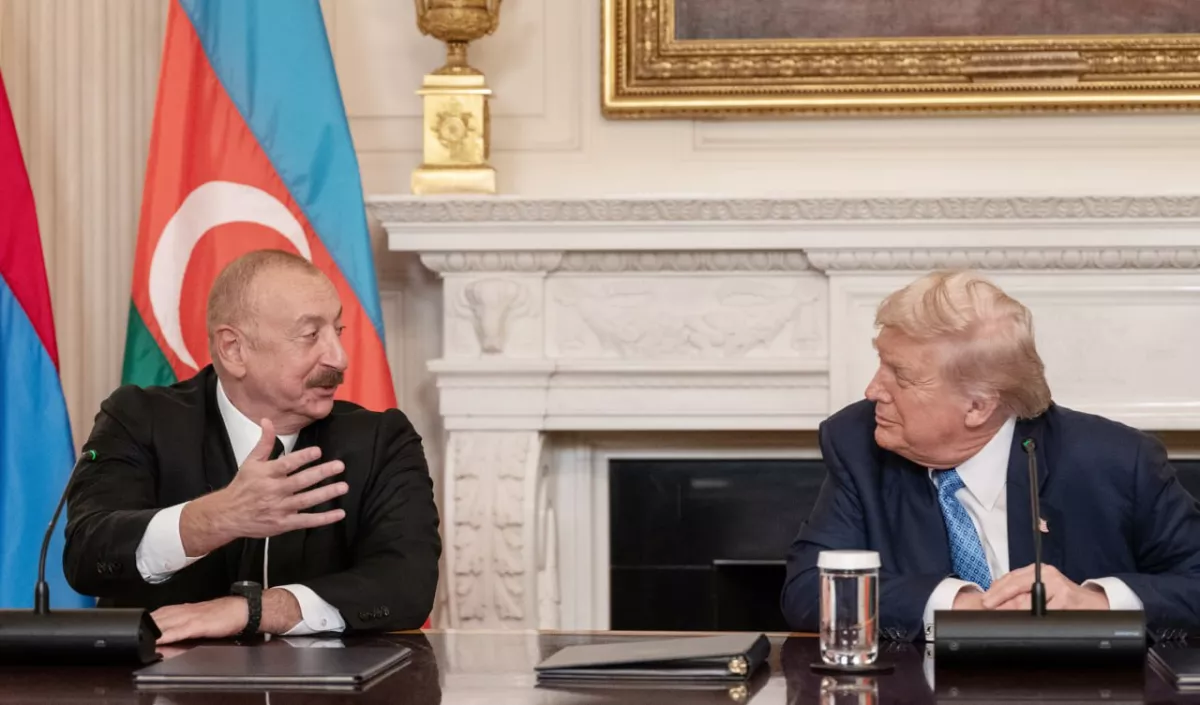
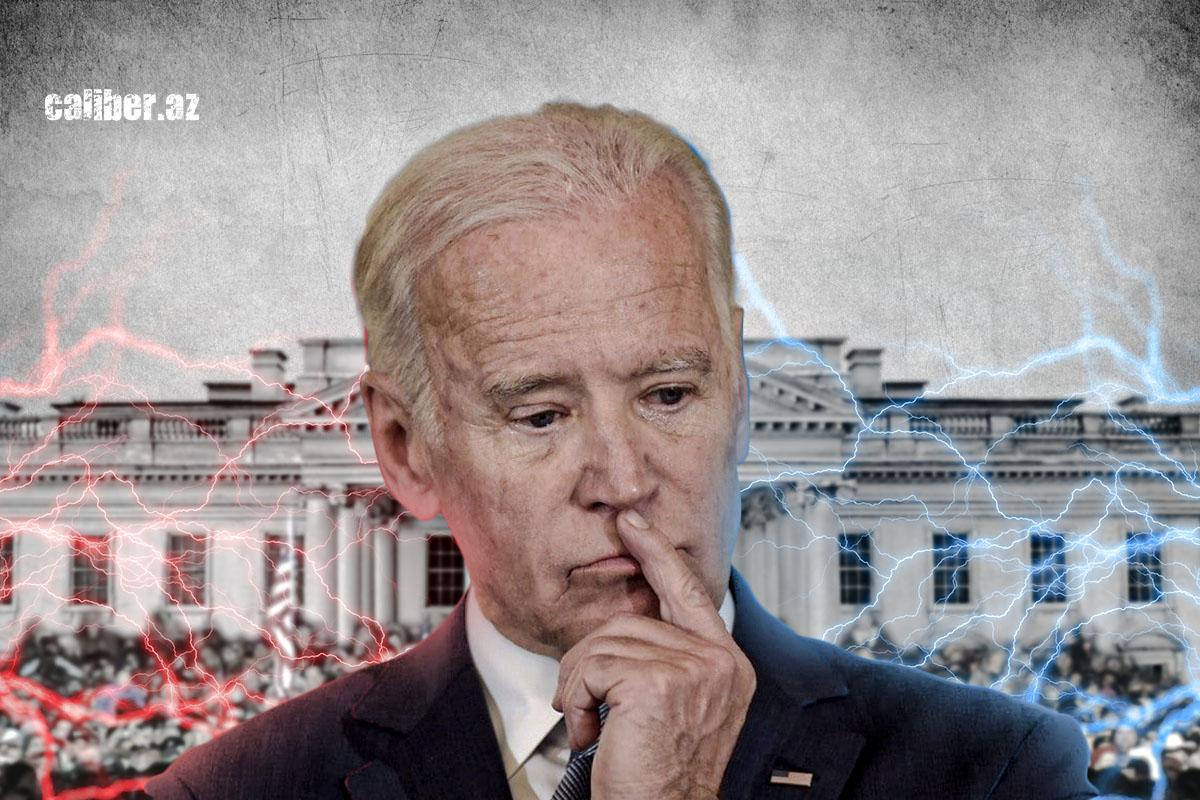
A sign of mutual understanding was the suspension by Trump, in the presence of President Aliyev at the White House, of the implementation of Section 907—a move carrying symbolic significance, especially given that one of the initiators of this unjust provision was the well-known Joseph Biden, then a senator. Following this, President Aliyev addressed the ongoing work on preparing the Charter on Strategic Partnership between the two countries.
The uniqueness of the bilateral relationship in this context was reflected in the fact that, according to Ilham Aliyev, the August 2025 agreements in Washington realised Azerbaijan’s long-held dream of creating a geographic link between the main part of the country and its Nakhchivan Autonomous Republic. In this regard, President Aliyev assured that the Zangezur Corridor—which, regardless of its name, will become part of the East–West and East–South routes, and potentially the North–South route—will be opened. Consequently, all issues vital to Azerbaijan within the process of normalisation with Armenia were resolved in accordance with the will of the Azerbaijani people.
Against this backdrop, today the relations between Azerbaijan and the United States—previously plunged into crisis by the ungrateful Biden-Blinken administration—are developing in a highly practical and results-oriented direction.
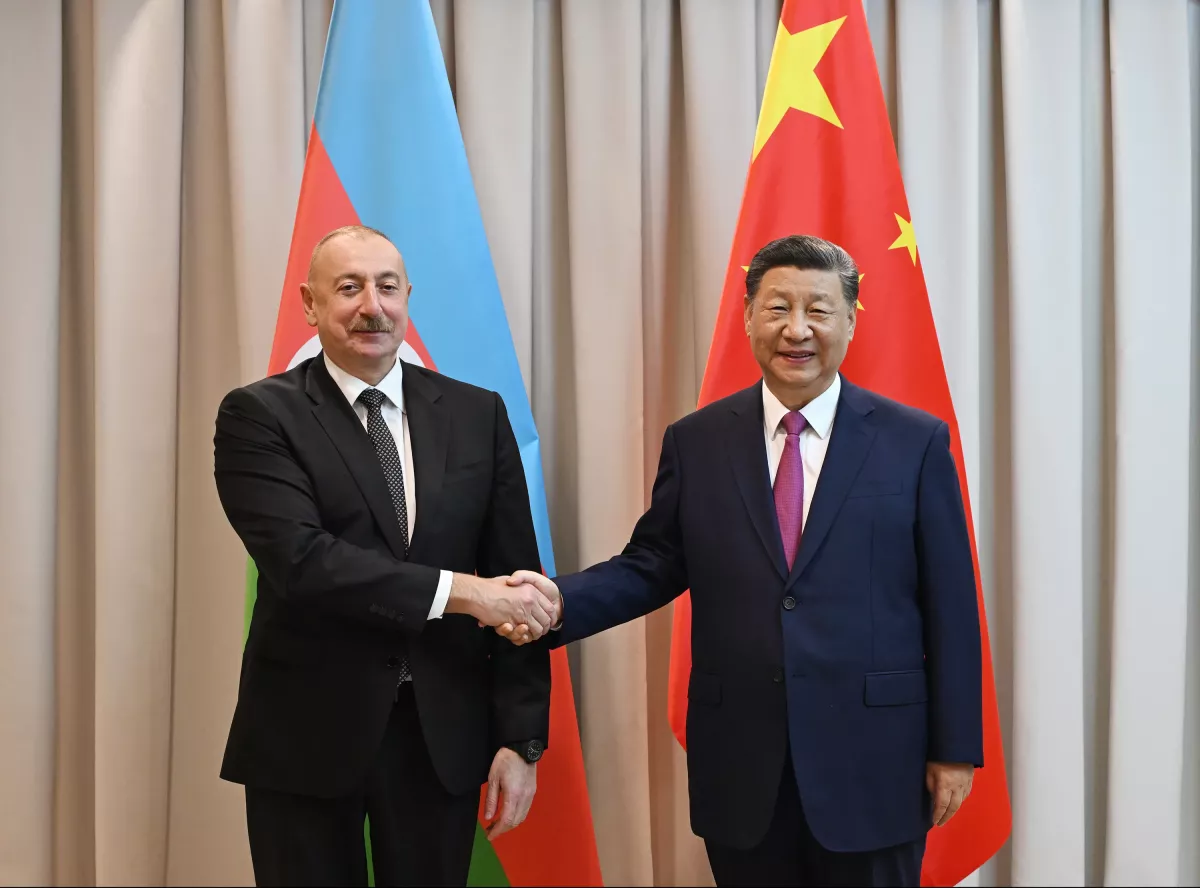
Following the American vector, President Aliyev highlighted Azerbaijani–Chinese relations in particular, through the lens of the signed Joint Declaration on Comprehensive Strategic Partnership. By describing China as one of the leading countries in the world, Ilham Aliyev effectively signalled that Washington and Beijing are the most significant international actors today.
The nuance here is that, at this historical juncture, many world-class politicians seem to be choosing between Beijing and Washington. Official Baku, however, once again offers these actors a geopolitical lesson of a fundamentally different kind. This is multi-vector foreign policy, grounded solely in the protection of the nation’s interests.
In this context, Ilham Aliyev also highlighted a new area of cooperation between China and Azerbaijan—military-technical collaboration—which speaks for itself.
President Ilham Aliyev also highlighted Azerbaijan’s international significance through its membership in the D-8 Organisation for Economic Cooperation, which unites the largest countries of the Muslim world and had not admitted new members since its founding. He further noted Azerbaijan’s full membership in the Advisory Council of Central Asian States (CA), a development that fundamentally changes the region’s geopolitical landscape.
As the country’s leader specified, the Central Asian–Azerbaijani alliance and the transformation of the C5 into C6 are of enormous importance globally, since connectivity, transport, and logistics now play a vital role for many leading international actors. These actors clearly understand that the only country capable of geographically linking Central Asia with the West is Azerbaijan. In this context, Ilham Aliyev described Baku as a “living bridge,” particularly given the intensive work underway to lay a fibre-optic cable along the Caspian seabed, among many other projects.
Considering the international significance of the Zangezur Corridor as a branch of the Middle Corridor, Azerbaijan’s role as a transport hub is increasing—especially as the country has no direct access to open seas. Moreover, the region will effectively have two routes: the Zangezur Corridor through Armenia and the Araz Corridor through Iran. This will practically connect Nakhchivan, East Zangezur, and Karabakh into a single regional network.
Naturally, President Aliyev devoted special attention to the unity of the Turkic world, recalling his proposal to hold joint military exercises this year among the Organisation of Turkic States (OTS) members. Here, the foresight of the president was evident, as he drew attention to a global trend: “Might is right.” Emphatically reiterating the absence of international law in today’s world, President Aliyev stated that the present era belongs to strength, cooperation, and alliances. At the same time, he made it clear that no country or leader should act unlawfully.
Against this backdrop, he highlighted the growth of Azerbaijan’s power, including its military capabilities. He also cited figures showing that in 2025, the country produced military equipment worth 1.4 billion manats ($823 million), and that currently, Baku exports military products to nearly 20 countries.
“We must be strong and ready to defend our land at any moment, and I am sure that from now on, not a single inch of our land will fall under anyone's feet,” President Aliyev said. “There is both strength and determination for that. There is the unity of the people. There is a strong state of Azerbaijan.”
President Aliyev also addressed the question of Azerbaijan’s potential participation in operations to stabilise the situation in the Middle East. He did so in his characteristic straightforward manner, calling things by their proper names. Highlighting his surprise at the statement by the U.S. Ambassador to the UN, who suggested that Baku had agreed to take part in certain actions in the Middle East, Aliyev stressed that the affairs of Arab countries should be resolved by the Arab countries themselves, and non-Arab Muslim states should not run ahead of the locomotive. Noting that “we never engaged in combat operations, and I am not considering any participation in combat operations outside of Azerbaijan,” the president also pointed out the lack of clear information regarding who would issue a mandate and what it would entail. Based on this, Baku sent the American side a questionnaire with more than 20 questions.
President Aliyev also spoke on the subject of “blue fuel,” emphasising the important role of Azerbaijani gas in ensuring energy security. This is made possible by a diversified system of pipelines and Azerbaijan’s strong reputation as a reliable supplier with good political connections, since the majority of the country’s clients are members of the European Union.
An important aspect of the president’s responses yesterday was highlighting one of Azerbaijan’s strategic goals—becoming a regional centre for artificial intelligence (AI) and information technology. In this context, data centres are being established, which require substantial energy for their successful operation. Azerbaijan is seen as the only country in the region with sufficient additional electricity production capacity to support such initiatives. At the same time, the creation of a cybersecurity centre and other related projects positions Baku as an AI hub, with American companies considered key partners in this endeavour.
This again underscores President Ilham Aliyev’s insight that political independence can only be secured on the foundation of economic independence. In this context, he highlighted several key economic indicators, including Azerbaijan’s historically low external debt, which the country can easily service, as its reserves exceed debt by 16 to 17 times.
Thanks to the rise in global gold prices, the State Oil Fund earned over $10 billion, confirming the accuracy of Azerbaijan’s economic forecasts. Today, the country’s total reserves are estimated at $83–84 billion—placing Azerbaijan among the world’s highest per capita in terms of national reserves.
Analysing the financial and economic situation of Azerbaijan and Armenia, the head of state drew attention to the growth of trade between Armenia and Russia, calling the figures a result of Yerevan circumventing sanctions. However, he noted that neither the European Commission, the European Parliament, nor PACE has made any remarks to Armenia. In contrast, Azerbaijan’s GDP grows not because of any external assistance or sanctions evasion, but solely due to its strong economic performance. It is precisely this solid economic foundation that allows Baku to successfully implement social policies, particularly the realisation of a number of significant social reform packages, all rooted in the interests of Azerbaijani citizens.
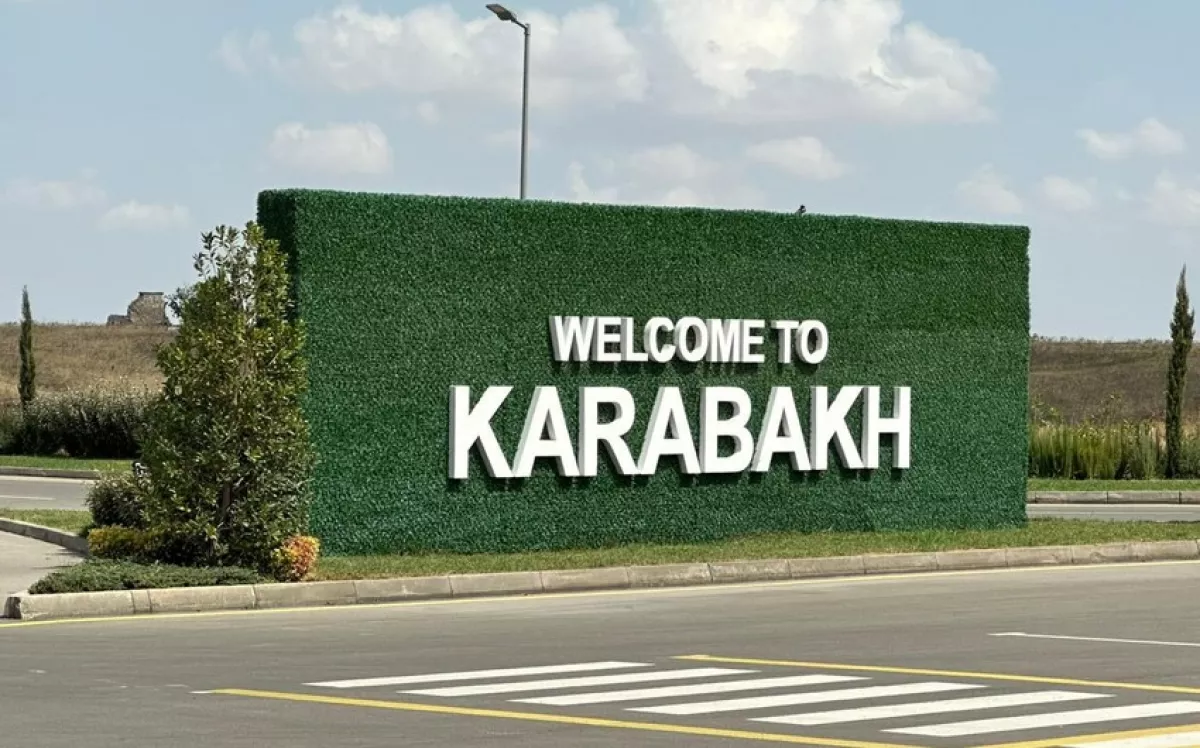
For example, in recent years, the state has provided housing for 16,000 families of martyrs and war-disabled veterans. At the same time, territories liberated from occupation are being developed. Thanks to careful planning, these areas are now connected to the central infrastructure, a ring energy system has been established, and reservoirs have been restored or built from scratch. Finally, today Karabakh and East Zangezur are home to 70,000 people.
From a social perspective, it is important to highlight the president’s emphasis on ensuring that the Azerbaijani language is never overshadowed by any other language.
As in previous interviews, President Ilham Aliyev addressed key issues across all sectors programmatically and strategically, delivering clear messages to multiple audiences—messages that are certain to be carefully considered and analysed.
In this context, he also underscored the limitations of existing international structures, including the UN, describing them as rudimentary. Against this backdrop, he highlighted the emergence of a new global reality, in which even relatively small countries can wield significant political, military, and economic influence.
In concise terms, President Aliyev reaffirmed that maintaining peace, security, and stability requires strength. In this regard, Azerbaijan’s successful pursuit of its strategic goals is evident—a fact clearly demonstrated in his interview.







 editor@caliber.az
 +994 55 444-88-98
 Азербайджан, Баку, ул. Низами, 203, Af Business House, 5-й этаж