










Georgia tightens rules on protests Streets no longer call the shots
On December 10, 2025, the Georgian Parliament adopted amendments to the Law on Assemblies and Demonstrations, significantly tightening the rules for holding political rallies. These changes allow the authorities to legally prevent attempts to overthrow the constitutional order at an early stage, using “Maidan-style” scenarios similar to those recently attempted by the pro-Western opposition.
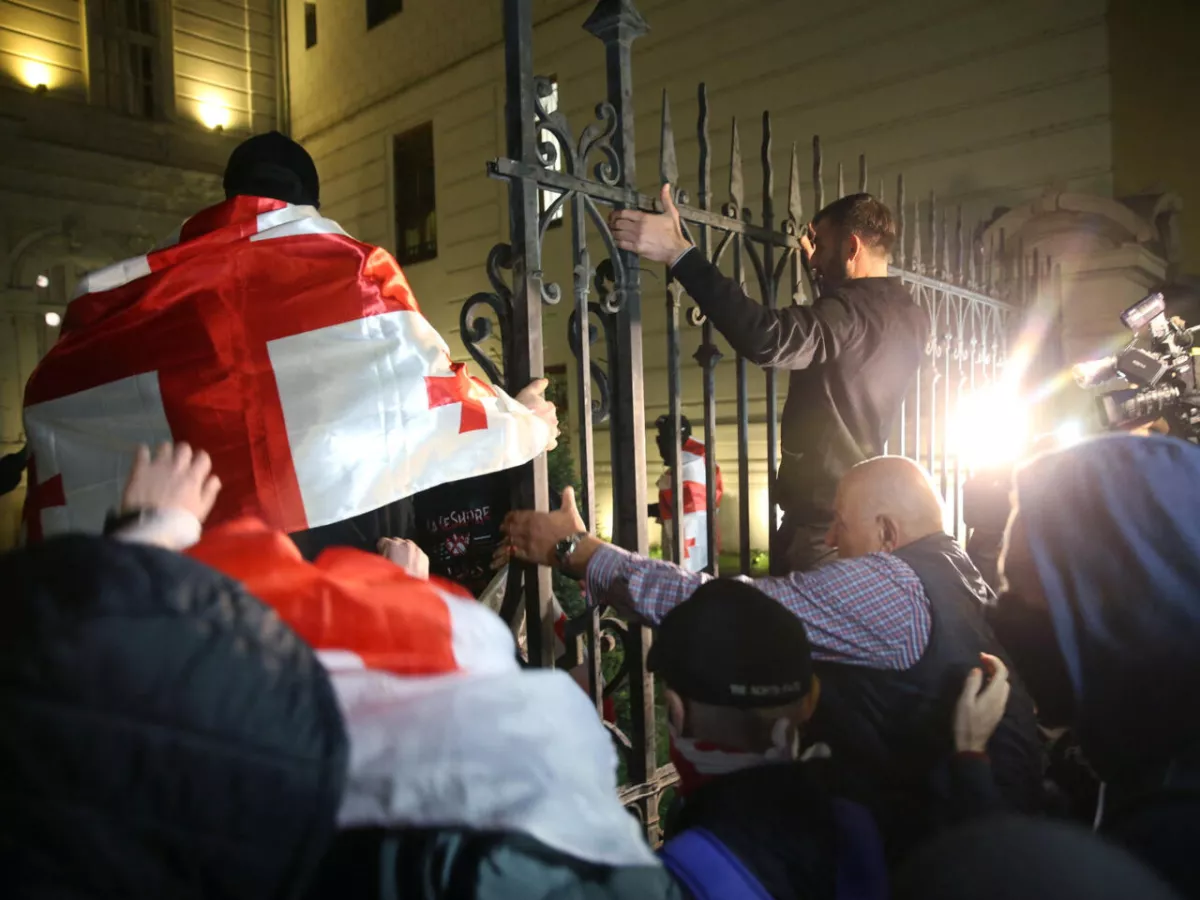
Under the amendments, organisers are required to notify the Ministry of Internal Affairs at least five days in advance if the rally is planned in areas with large crowds. Blocking roads and sidewalks will only be considered lawful if a sufficient number of participants is present.
After receiving the notification, the Ministry of Internal Affairs has the right to propose that organisers change the location or route of a rally if its conduct poses a threat to public order, the normal functioning of government and public institutions, enterprises, organisations, transportation, as well as the free movement of people or human rights and freedoms. If organisers refuse to comply with the proposed conditions and continue the event in a way that restricts the rights and freedoms of other citizens, participants may face administrative detention of up to 15 days, while organisers may face up to 20 days. For repeated violations, criminal liability is possible, including imprisonment for up to one year.
There is no doubt that if these amendments had been adopted a year ago, the opposition and its Western patrons would have reacted far more harshly. At the height of last year’s protests, enforcing such restrictions on mass gatherings was virtually impossible. Today, aside from the expected accusations by the opposition of “building a dictatorship,” there has been little noticeable reaction to the obvious obstacles for organising protests. There have also been no attempts to hold large-scale rallies openly “in defiance” of the new legislation.
Pro-Western opposition protest activity has effectively fizzled out on its own. Even active opponents of the Georgian Dream party have grown tired and disillusioned with street-based methods of challenging the government. Although opposition figures continue to claim they intend to carry out protests in a “new format” — including gatherings in underground pedestrian passages — it is clear that such actions no longer pose a serious threat to the constitutional order, unless, of course, there are blatant provocations or terrorist acts.
Moreover, opposition leaders themselves have effectively been looking for a reason to scale back street activism. Each time it became increasingly difficult to mobilise people for rallies: participant numbers dwindled, while foreign sponsors pressed more insistently for “detailed reports” and photographs of Rustaveli Avenue filled with demonstrators. This was necessary to support statements by Western politicians about the alleged “unceasing outrage of the Georgian people against the pro-Russian government.”
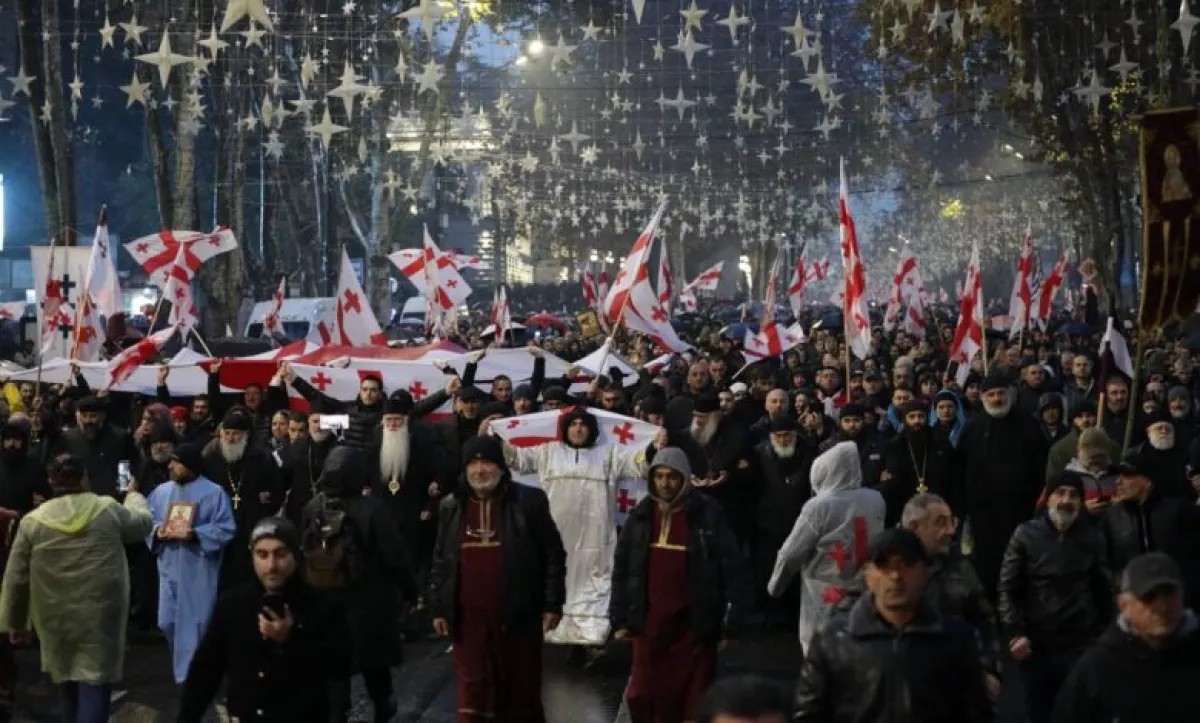
Indeed, on December 7, 2025, Rustaveli Avenue in central Tbilisi was briefly filled with protest participants. However, this was not an action by the pro-Western opposition. This time, the Georgian Dream party faced criticism “from the right” — from uncompromising opponents of so-called “European values.” The event was organised by the Conservative Movement party, which the pro-Western opposition itself labels as “pro-Russian.” The protest targeted the allegedly pro-Russian Georgian Dream party, specifically over the investment agreement worth $6.6 billion signed by the Georgian government with Eagle Hills.
Participants opposed Eagle Hills projects from the UAE, particularly the construction of residential and infrastructure developments in the Gonio area (Adjara) as well as in Tbilisi. The rally featured poorly substantiated claims that the authorities intended to “populate Georgia with Arabs.” At the same time, Turkophobic and Islamophobic rhetoric was amplified by provocateurs, including Nikoloz Mzhavanadze, who released yet another video criticising Georgia’s cooperation with Türkiye and Azerbaijan.
The Georgian Dream government is unlikely to yield to “right-wing” pressure or encourage Islamophobic or “Arabophobic” sentiments. Such a stance would inevitably damage the country’s image in the eyes of foreign investors, complicate relations with Muslim states, and result in significant financial losses.
The experience of abandoning the Namakhvani hydropower project under pressure from street protest organisers is illustrative. As a result, the Georgian government lost arbitration and was forced to pay the Turkish company Enka compensation of $383.2 million, leading to substantial losses for the country.
If a similar scenario were to occur with investors from the UAE, the consequences could be even more serious for Georgia’s economy. Meanwhile, the propaganda about a supposed “threat of Arabs settling in Georgia,” voiced at the Conservative Movement rally, is plainly absurd: mass relocation from wealthier countries to less developed ones rarely happens — especially given that the standard of living in the UAE is far higher than in Georgia.
A few hundred wealthy foreigners purchasing expensive real estate and visiting the country for, at best, a few weeks a year cannot affect the demographic situation among the native population. On the contrary, the inflow of investment and infrastructure development could create conditions for the return of some labour migrants, thereby helping to improve demographic indicators.
Nevertheless, the Georgian Dream government managed to capitalise on the resonance of the Conservative Movement rally. Amendments to the Law on Assemblies and Demonstrations were adopted by Parliament shortly after the “anti-Arab” protest. In doing so, Georgian Dream signalled that the authorities are not willing to yield to street pressure — whether it comes from supporters of the European choice or from the “right-wing” opposition.
By Vladimir Tskhvediani, Georgia, exclusively for Caliber.Az







 editor@caliber.az
 +994 55 444-88-98
 Азербайджан, Баку, ул. Низами, 203, Af Business House, 5-й этаж