










How the US–Russia plan on Ukraine threatens global stability A calculated peace
The “diplomatic solution” to the Russian-Ukrainian conflict currently being promoted combines cynical bargaining with utterly unrealistic conditions. Even if Russia and the United States manage to impose this scheme on Ukraine, it will not hold for long. Moreover, by creating a precedent for large-scale border revision, this attempt to revive nineteenth-century norms in the modern era will first destabilise the regions neighbouring Russia, and then the wider world.
Three blows to international stability and security
There is no final version of the peace deal yet—its points are being modified, added, and removed. But one can already speak of a certain framework being developed by Washington and Moscow. Its current nineteen points amount to nineteen blows against the basic norms of international law. This sweeping agreement is openly promoted by both superpowers as foundational for new rules in global politics. As the Western press reports, the deal consists of four key components, which include not only “peace in Ukraine” and “security guarantees”, but also “security in Europe” and “the future of US relations with Russia and Ukraine”.
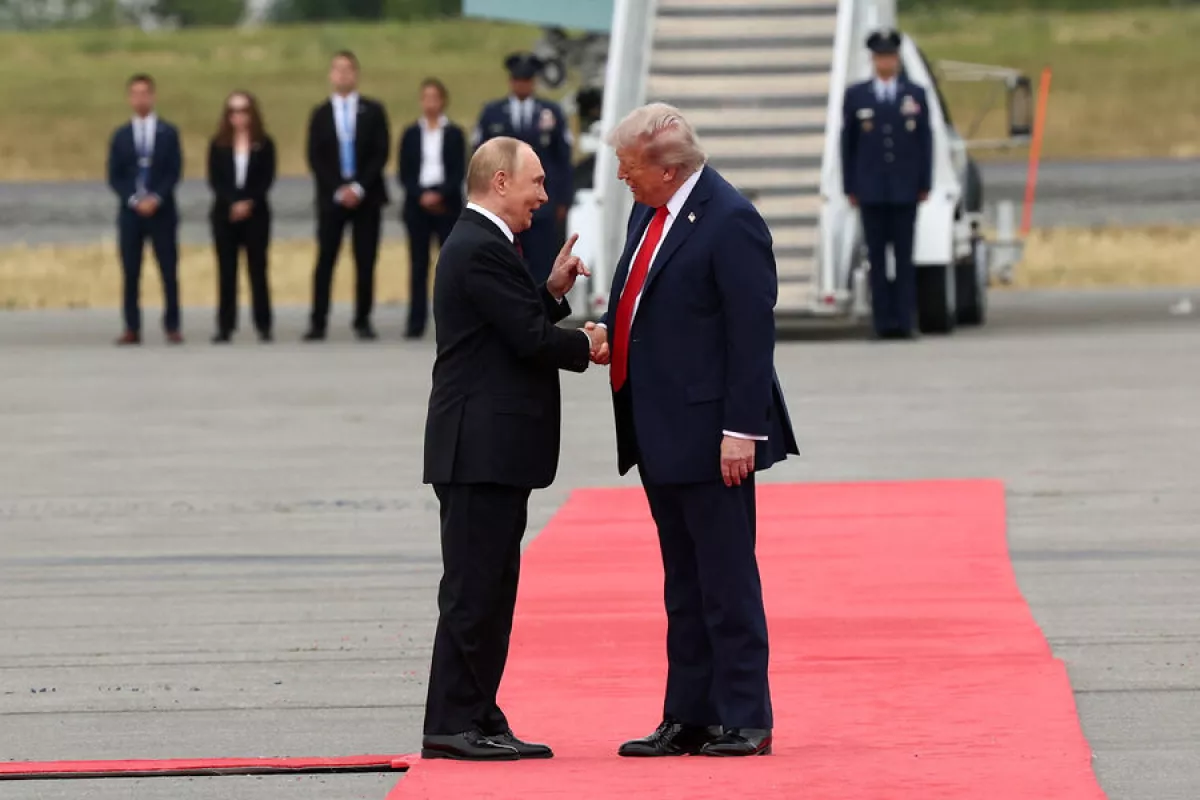
The consequences of such an agreement in its current form would be devastating for international politics—and, moreover, not all of them can even be predicted at this point. The radical revision of global political norms by the United States and Russia would weaken the international system itself, as well as security at every level. The stability and security of the post-Soviet space would be hit especially hard.
The proposed large-scale, unilateral, forceful alteration of Ukraine’s borders is unprecedented since World War II. International recognition of this territorial redrawing would undermine three foundational documents on which the system of international relations rests. On a global level, the UN Charter would be seriously undermined, particularly Article 2(4), which prohibits “the threat or use of force against the territorial integrity or political independence of any State.” On a continental level, the 1975 Helsinki Final Act of the Conference on Security and Cooperation in Europe—which enshrines the inviolability of borders and prohibits changing them by force—would be thoroughly trampled.
Of course, Russian commentators like to point out that the effectiveness of these two documents has long been undermined by Western actions—for example, in relation to Yugoslavia. But such criticism can no longer be taken seriously today, because if Moscow truly values international law and is outraged by its violation, why is it now trampling it so openly?
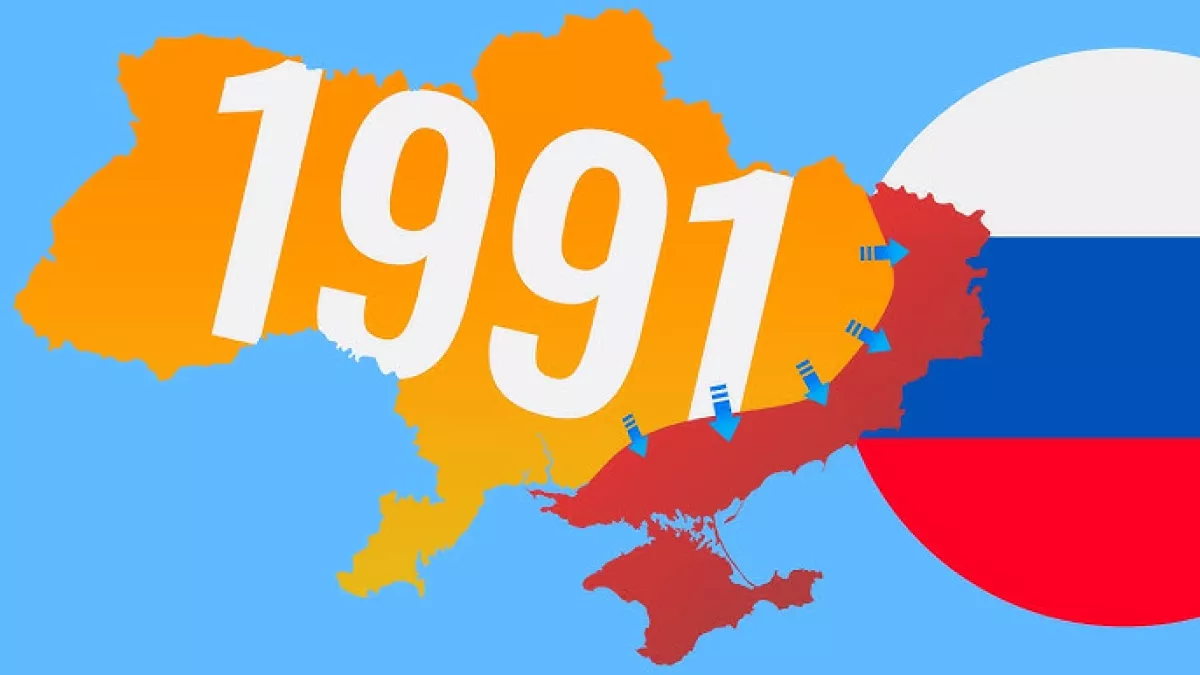
Perhaps the most dangerous aspect of the proposed deal is its blow to the 1991 Alma-Ata Declaration, which confirmed the borders of the former Soviet republics and enshrined the principle of mutual respect for each other’s territorial integrity. This is a document not only concluded with the active participation of the Kremlin itself, but also one that at the time served it well, providing a legal foundation for stabilising Russia’s borders and strengthening the territorial integrity of the newly formed Russian Federation.
Now, as Moscow effectively abandons the principles of this agreement in the case of Ukraine, it will be perceived as a dangerous precedent by absolutely all other post-Soviet republics without exception. After all, Kremlin-affiliated historians and propagandists could easily fabricate a host of claims to all or part of the territories of nearly every post-Soviet state. The groundwork for this has been laid over the past decade through increasingly absurd narratives about “Bolsheviks creating nations from nothing” or “gifts given by Soviet power to non-Russian peoples at the expense of Great Russians.”
This even applies to the countries of the South Caucasus and Central Asia! As a result, the peace deal currently being promoted will be perceived by these states solely as a threat, with all the ensuing consequences: increased militarisation, foreign policy reorientation, and limitations on Russian influence. This means the deal is doomed to fail—and with severe side effects for Russia in the form of confrontation with its neighbours. In short, the superpowers’ proposed agreement is not only cynical and immoral—it is also utterly unrealistic, condemned from the start.
A stillborn project
The deal is unrealistic both in its core premise and in the details. As for the premise, the main idea of the current Russian negotiators—to reduce a peace treaty with Ukraine to a collusion between Moscow and Washington—contradicts contemporary reality and looks like an attempt to resurrect schemes from a long-gone era. Apparently, in the new rounds of negotiations with Ukraine, the Russian side has finally retired Medinsky, obsessed with historical fantasies to the point that he seems to live in some nineteenth-century world. He has been replaced by someone of a completely different calibre: Kirill Dmitriev, head of the Russian Direct Investment Fund, educated and working in the US at genuinely serious institutions.
Yet, judging by the outcomes of the talks, the impression remains that “Medinsky’s shadow” still looms over the Russian negotiators, who are effectively proposing to Trump a creative recreation of a nineteenth-century geopolitical construct—the “concert of great powers.” This is political dead weight, not least because the world today is no longer confined, as it was two centuries ago, to Europe (the so-called collective West), and Europe itself no longer has such clear hegemons.
In the era of the “concert of great powers,” key issues of world politics were decided by a few major players without the participation of others. Small countries had to tolerate the diktat of the powerful; neither legal norms nor international organisations could protect them. Russia, by the way, was one of the great powers at the time, but it played an unenviable role—it was simply manipulated by Western countries, used as an enforcer either to suppress the Hungarian Revolution or to stifle modernising efforts in the Ottoman Empire. These nuances simply cannot fit into the minds of Russian officials dreaming of the “golden age” of tsarism.
Even the most basic understanding—that in recent decades the international system has changed, recognising the equality of sovereign states and the primacy of UN Charter norms—does not fit in their thinking. These changes did not occur by chance; they reflect the international reality and the shifting balance of power. The proposed plan attempts to annul these changes, making geopolitical deals between Washington and Moscow—bypassing the states they affect—more important than international norms. This is a return to the model of the Congress of Vienna in 1815, not even the Yalta Conference of 1945. But, as noted, the world today bears no resemblance to even the post-1945 order, let alone that of 1815. Two—or even three—players cannot dictate it!
Washington—and especially Moscow—should have realised this long ago, since illusory notions of international politics have repeatedly led to painful disappointments in recent years. For example, throughout the 2000s and 2010s, the Russian leadership tried to negotiate all European issues—ranging from security to the economy—with the major states of Western Europe, the so-called “Old Europe,” bypassing several Eastern European countries and even the United States. And Russia did achieve a great deal—after all, former German and Austrian foreign ministers eventually moved to work in Russia, and the country implemented major infrastructure projects such as the Nord Stream pipelines.
But it later became clear that all this was mere trappings: deals with the Germans, French, and British were worthless without the participation of Eastern Europeans and American allies. The radical stances of Poland and the Baltic states are partly a consequence of this approach.
In recent months, the balance has shifted, but the Russian side is making the same mistake. This time, it is trying to negotiate not with “Old Europe” but with the United States over Ukraine, bypassing Ukraine itself and both “old” and “new” European states. And again, we see that even the global hegemony of the US cannot guarantee the success of this scheme. Ukraine simply says “no,” and behind it stand the EU and NATO in clear support. The entire new “concert of powers” collapses almost immediately—the US-Russia deal is rejected, and Moscow and Washington are powerless to change that.
But it is not only the main idea of the current peace plan—resolving the Ukraine issue through a bilateral Russia–US deal—that looks unrealistic. The key points of the plan itself are equally unrealistic. Take, for example, the part that proposes to bar Ukraine from joining NATO. By doing so, Moscow is effectively dismissing Ukraine’s future political prospects, without even attempting to present a political proposal to the Ukrainians or showing the slightest willingness to engage seriously with anyone on the Ukrainian side. It simply demands primitive restrictions—on NATO membership, the size of the armed forces, and so on.
It is quite obvious, however, that such restrictions, in the absence of a political resolution to the Russian-Ukrainian conflict, will only push Ukrainians to find workarounds. And they will find them at the first opportunity, leaving Moscow powerless to intervene. A recent example is Finland’s accession to NATO and the subsequent deployment of forces along the Finnish–Russian border. Helsinki effectively dismissed the provisions of the Paris Peace Treaty as outdated, leaving the Kremlin with no choice but to pretend nothing had happened, even though Russia’s positions around St. Petersburg and the Baltic region were seriously weakened, regressing to something like 1940.
In other words, such simplistic restrictions achieve nothing in the long term. Stable security can only be ensured through political dialogue and good-neighbourly relations, where a neighbouring state chooses not to join a particular bloc because its relationship with Russia matters more.
The peace plan could spark wars worldwide
The current “peace plan” might seem like a clever business strategy to some. But this is not business—it is international politics, which operates on an entirely different logic. In that realm, the plan is worthless because it contains no genuine political solution; everything again comes down to force. And without a political solution, the war will not end—at best, hostilities might pause temporarily.
It seems that Russia has no intention of developing any political solutions to its problems with Ukraine, just as Russian leaders ignored the need for a political approach from the very start of the conflict. Even former Ukrainian President Yanukovych or other well-known Ukrainian figures like Medvedchuk were disregarded—Moscow had initially decided to press everything through force and even deny the very existence of the Ukrainian state.
To say that this is unexpectedly primitive for such a vast country is an understatement. It resembles only examples of territorial grabs in the developing world, such as Iraq’s occupation of Kuwait in 1990 under Saddam Hussein. At that time, the Iraqi leadership simply declared that Kuwait had never historically existed and made no effort to discuss anything with the Kuwaiti emir, annexing the emirate without offering even the semblance of a political alternative.
Iraq soon found itself in a dead end when even neighbouring Arab countries joined a US-led coalition to expel Saddam from Kuwait, unwilling to allow the principle of resolving disputes by force to take root in the region. The inevitable outcome of Russia’s essentially similar approach would be a bloody deadlock in the war.
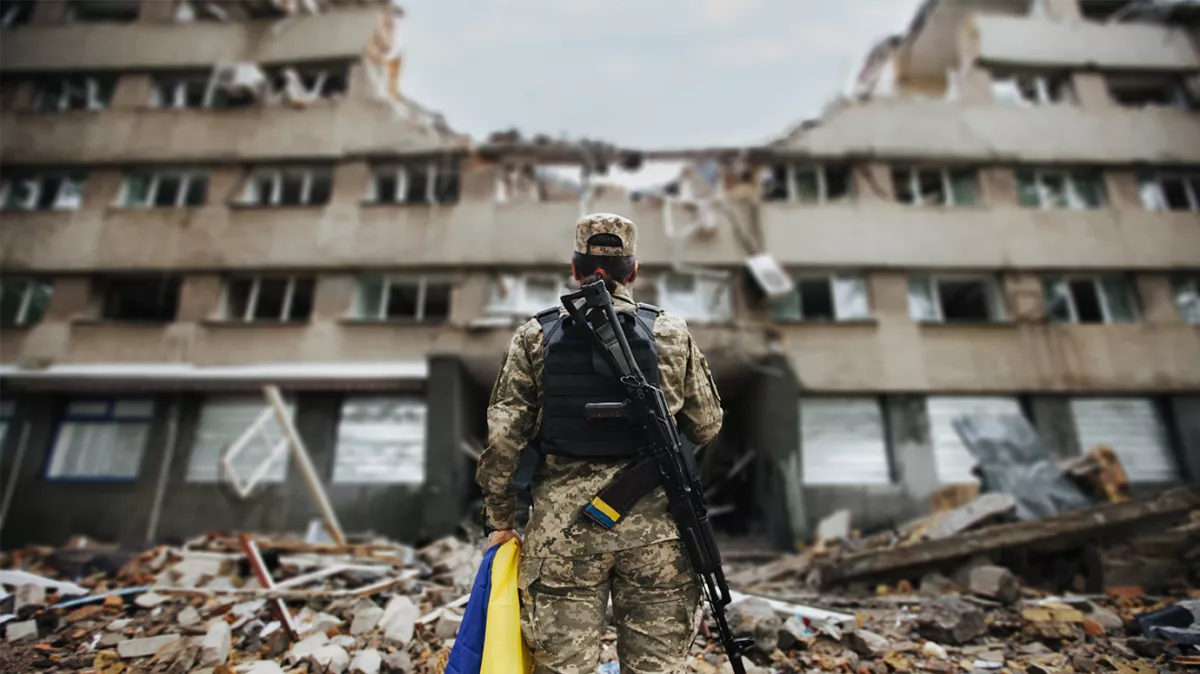
Ukraine, as one of the main successors of the USSR, serves as an important example for the other post-Soviet states. After all, if even this vast and strategically crucial country for the West can be redrawn, what message does that send to the rest? Recognition of forceful territorial seizures will inevitably create a precedent with far-reaching consequences, no matter what the parties say about the “uniqueness of the situation.”
The precedent of barring Ukraine from joining NATO could become equally universal. One cannot rule out the possibility that Russia and the United States might pressure Zelenskyy into signing a treaty with such restrictions. This would embolden radical factions within the Russian establishment, who would likely attempt to block other countries—not just Ukraine—from joining military and non-military blocs and alliances. For example, they might raise claims against members of the Organization of Turkic States or against Azerbaijan over the Shusha Declaration on allied relations with Türkiye. Naturally, no one will wait for these claims to materialise; all affected parties will take pre-emptive countermeasures.
As a result, the current “peace plan” by Russia and the United States could create numerous military flashpoints, since its implementation risks establishing a universal principle in which great powers dictate the fate of other states. This represents a systemic risk for all post-Soviet countries. For them—including Azerbaijan—the inviolability of borders and the freedom to join blocs and alliances are principles on which their strategic security is built.
However, the consequences of eroding and undermining these principles would not be limited to regions neighbouring Russia and the US—they would destabilise the entire world. Therefore, it is safe to say that Russia’s deal with the US will not resolve its problems with Ukraine. Beyond the EU–NATO countries, which have already confirmed their willingness to continue supporting Ukraine, the post-Soviet states will also oppose the proposed deal. And probably not only them—even Western opponents such as China or Iran have so far not endorsed Russia’s territorial claims over Ukraine.
These countries understand the implications of the current peace plan, which threatens all nations. Non-Western states, in particular, will see through Russia’s rhetoric about building a “multipolar world” when contrasted with its actual actions—a collusion with the United States that bypasses all countries directly affected by the deal.
Finally, as a result of this disastrous deal between the superpowers, trust in Washington will be further undermined. Whatever is said, it was the United States that was the main signatory of the 1994 Budapest Memorandum, which once provided security guarantees to Ukraine in exchange for the withdrawal of nuclear weapons from its territory. It should be emphasised that this memorandum was no ordinary document. Its promises were explicit—only Kyiv was able to secure such guarantees for itself; Belarus withdrew its nuclear weapons without receiving anything comparable.
And now the United States is willing to participate in the partition of Ukraine—let’s call it what it is—and, at the same time, again promises to provide security guarantees! What more can be said except one thing: the whole world is watching this circus and taking note. It is hardly surprising that, against this backdrop, even the United States’ key allies in the Middle East are beginning to form alternative alliances with China or create regional blocs.







 editor@caliber.az
 +994 55 444-88-98
 Азербайджан, Баку, ул. Низами, 203, Af Business House, 5-й этаж