










Iran as the late Soviet Union: parallels and contrasts Economic collapse, social unrest, and geopolitical strains
In 2025, Iran experienced a series of disasters, some of which are still ongoing. The country is facing one catastrophe after another. Even failures in the war with Israel were unable to unite society around the state. Nevertheless, the Islamic Republic regime has retained power.
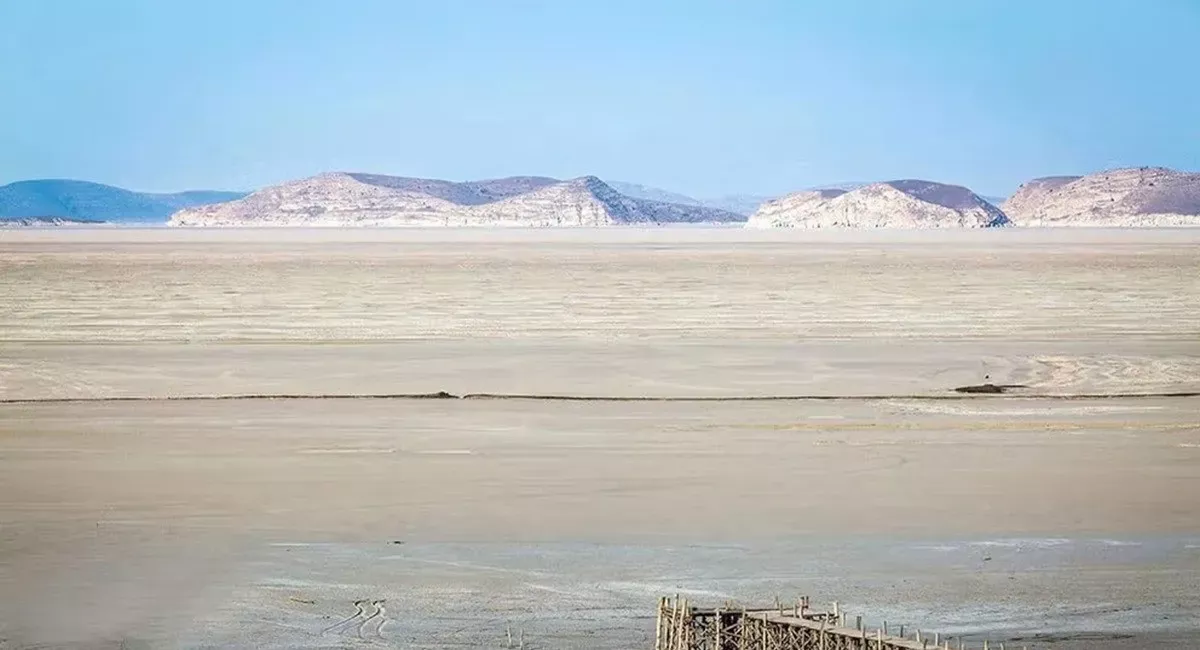
In recent months, an environmental catastrophe has come to the forefront. Desertification has intensified. Lake Urmia, once the largest in the Middle East, has disappeared. After a dry summer, hundreds of settlements faced water shortages, resulting in regular water outages. The lack of water in major cities led Iranian President Masoud Pezeshkian to publicly discuss the possibility of relocating part of Tehran’s population and moving the capital elsewhere. It is entirely unclear where millions of the capital’s residents would go and who would provide for their basic needs, including jobs.
The scale of Iran’s infrastructure and environmental problems is staggering: in addition to the water crisis, the country faces an energy crisis—authorities occasionally cut power to entire urban districts, despite the fact that Iran has the world’s second-largest natural gas reserves and significant oil deposits. In recent days, air pollution in the capital has also worsened, reportedly reaching hazardous levels.
Hashem Amini, head of the state company managing water resources, noted that approximately 50% of Iran’s population could soon face a shortage of drinking water. In less than 30 years, the volume of renewable freshwater sources has fallen from 132 to 90 billion cubic meters.
According to the Fars news agency, as of November 8, 19 of the country’s reservoirs—about 10% of all operational ones—are nearly empty, with water levels below 5%. However, in recent days, heavy rains in Iran have helped somewhat improve the situation.
These disasters have three main causes: climate change, sanctions, and incompetent management of Iran’s economy and natural resources. The country is under Western sanctions, which have cut it off from international investors, the latest technologies, and the ability to build up foreign currency reserves.
As a result, the regime focused on self-reliance, actively building factories and developing agricultural companies. For example, until recently, Iran imported about half of its food, but it has now decided to become self-sufficient. This led to the construction of hundreds of dams and increased use of river water and underground reserves to expand the cultivation of water-intensive crops, including rice.
Today, 80–85% of all water in Iran is consumed by the agricultural sector, and this burden has proven unsustainable. Water reserves are rapidly depleting in a country that has long struggled with desertification. On top of this, corruption and the incompetence of economic decision-makers have compounded the problem. The results have been catastrophic.
Due to sanctions on one hand, and the inability to develop domestic high technologies on the other, Iran is facing serious energy problems. About 70–80% of the country’s energy is produced by gas-fired power plants, with hydropower providing a significant portion. However, inefficient gas usage has caused supply shortages, and droughts have halted the operation of several hydroelectric plants. As a result, water outages have been compounded by power cuts.
In turn, power outages have led to the shutdown of hundreds of factories, schools, government institutions, and entire districts in some cities. In the regions plunged into darkness, protests erupted. A new slogan was added to the old ones: “Life, water, electricity!”
Iran is experiencing an unprecedented economic catastrophe. Inflation at 40–50% has pushed more than two-thirds of the population into poverty. The shift toward partial, temporary, and incomplete employment in privatised sectors of the economy is triggering widespread discontent and strikes, as it undermines the social contract that underpinned the Islamic Republic system and previously ensured relative stability for the working class.
Every day, different factories go on strike, demanding higher wages and better employment conditions. Most of these strikes are illegal: they are organised through meetings of workers’ collectives and secret initiative groups, rather than through official trade unions embedded in the system. These protests are potentially extremely dangerous for the government, as they can become uncontrollable. It was precisely such spontaneous strikes in the autumn of 1978 that paralysed the economy and contributed to the fall of the Shah’s regime.
In 2025, ethnic conflicts were less visible, but they have not disappeared. About half of Iran’s population belongs to national minorities. At the same time, tens of millions of Azerbaijanis cannot quite be considered a “minority”—they are a cornerstone of Iranian society. Alongside them, more than 10 million Kurds live in the country, as well as millions of Baloch and Arabs.
Many members of these groups are dissatisfied with the lack of education in their national languages and the absence of meaningful local self-governance. Discontent is also widespread regarding the “residual” allocation of funding: key resources are channelled to Persian-speaking regions. All of this has repeatedly turned ethnic regions into hotbeds of protests and uprisings.
Unsuccessful war
In 2025, the country experienced an unsuccessful 12-day war with Israel. During Israeli airstrikes in June, almost the entire military-political leadership of Iran was destroyed (including the Air Force headquarters and the leadership of the Islamic Revolutionary Guard Corps), the air defence system in western and central Iran was demolished, and key elements of Iran’s nuclear infrastructure were destroyed. The Israeli Air Force effectively gained control over Iranian airspace, enabling it to strike at any time and anywhere. This resulted in a partial loss of sovereignty. Israeli forces began controlling the movement of refugees, indicating which areas were safe for civilians, which were not, and where residents of the capital should evacuate.
Only the intervention of U.S. President Donald Trump, seeking to claim the mantle of peacemaker, stopped the war. However, before this, the Americans struck several key Iranian targets, effectively joining the Israeli bombings.
Iran’s air defence proved ineffective. Not a single Israeli Air Force aircraft was shot down; Iranian forces managed to destroy only two drones. Iran’s retaliatory missile strikes destroyed dozens of buildings in Israel, causing the deaths of several dozen Israeli civilians and injuring over a thousand. However, there is no evidence that these strikes inflicted significant military or infrastructural damage on Israel (apart from damage to one of its two oil refineries).
The approval ratings of Israeli Prime Minister Benjamin Netanyahu increased by several percentage points following the 12-day war, which could encourage him to launch further attacks. The Israeli government is reportedly waiting for a “green light” from Trump. Trump himself hopes to secure Iran’s abandonment of uranium enrichment and any attempts to develop nuclear weapons. However, if he concludes that Tehran is stalling in hopes of outlasting his presidential term, he will likely give Israel the “go-ahead” to continue bombings.
During the war with Israel, Iranians did not rally around the Islamic Republic. The results of a sociological study conducted by the Dutch group GAMAAN are therefore unsurprising. This group studies Iranians’ attitudes toward social and political issues using anonymous online surveys.
The latest survey, conducted in September on the topic “Iranians’ Attitudes toward the 12-Day War,” found that 41.3% support a change of power as the main condition for change in Iran. About 21.2% favour a radical transformation, moving from the Islamic Republic to another form of government. Gradual reforms were supported by 12.5%, and only 11.8% supported maintaining the principles of the Islamic Republic under Supreme Leader Ali Khamenei and the IRGC. Another 13.2% chose none of the proposed options. The survey revealed that, after the war with Israel, the share of regime-change supporters had increased by 6%.
Regarding the emotions experienced by Iranian citizens during the war, 42% felt anger toward the Islamic Republic, while 33% felt primarily anger toward Israel.
Perhaps the most telling figure is this: 63% of Iranians believe the 12-day war was a conflict between Israel and the Islamic Republic, rather than a conflict between Israel and the Iranian people. Only a third of citizens perceived the war in national-patriotic terms. It is clear that there was no rallying around the flag: Israeli strikes did not inspire a widespread desire to support the Islamic Republic.
Why? Possibly because a significant portion of Iranians perceive the regime as essentially an occupying authority. Iran is the only country where the public openly expressed joy at the failures of the national football team, which was accused of showing loyalty to the regime. After all, if the government cannot even solve the problem of supplying water to the capital, what kind of loyalty could it reasonably expect?
Like the late USSR
According to sociological surveys, 48% of Iranians have a negative view of Israel, while only 39% have a positive one. Yet these figures are striking: the Israeli government is generally perceived much more negatively across the Middle East.
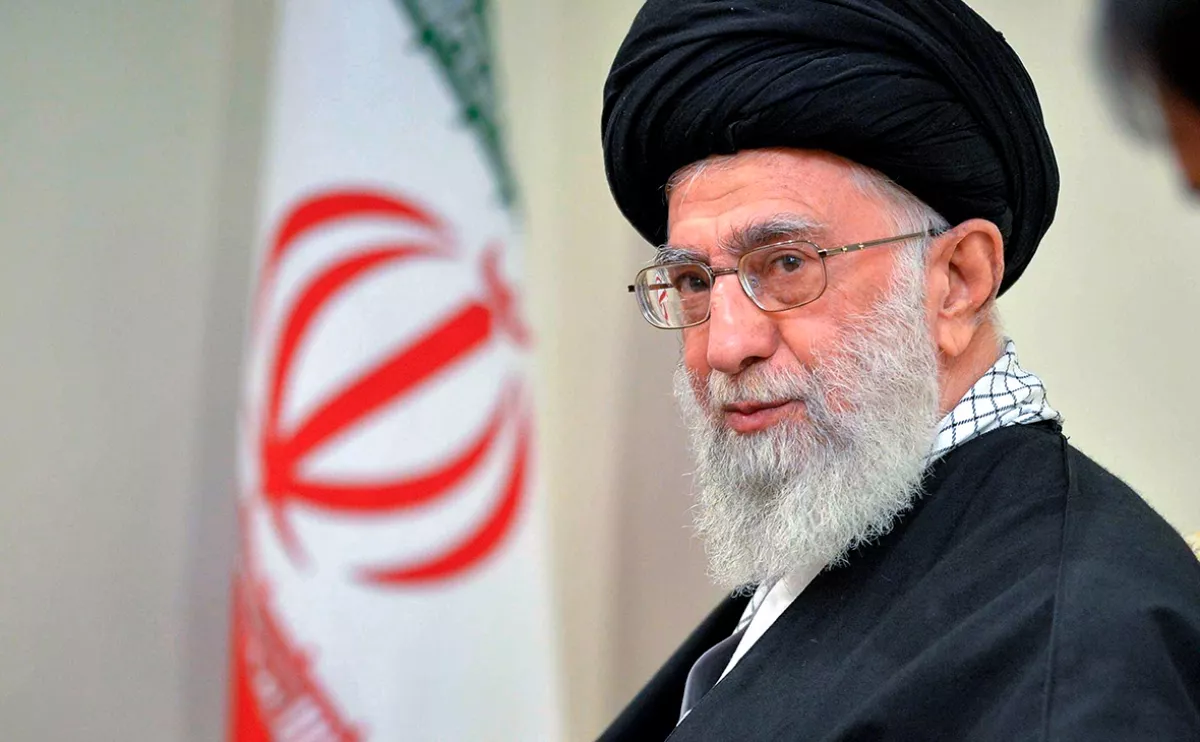
Perhaps part of Iranian society experiences an “allergy” to everything associated with Supreme Leader Ali Khamenei’s rule, including his anti-Israel propaganda. This sentiment will be familiar to many residents of the late USSR, a significant portion of whom viewed all official media messages with scepticism.
At that time, Soviet citizens faced similar problems: the economy was failing, it became difficult to obtain essential goods, strikes were on the rise, and the country was torn by ethnic and regional conflicts. Many began sympathising with the USSR’s main adversary—the Americans—and distrusted everything reported by state media.
This is a clear indication of a system’s fragility and loss of legitimacy. Could it be that the Iranian system is also experiencing its final days?
The USSR collapsed, yet the Islamic Republic of Iran endures. The likely reason is that governance in Iran is more decentralised than it was in the Soviet system. Various structures linked to the Islamic Revolutionary Guard Corps (IRGC) operate autonomously, instilling fear in the population, eliminating or arresting critics of the regime. Everyone in Iran knows that a person can simply disappear.
It is the IRGC—the second, roughly 100,000-strong Iranian army, originally formed from Islamist militias—that ensures the Supreme Leader’s power. The IRGC is the true centre of authority, controlling not only the security forces but also a significant portion of the economy, industry, and ministries. This structure bears primary responsibility for the dire state of Iranian society, its economy, and infrastructure.
Its leadership—dollar-millionaire elites owning key state and private companies—has firmly clung to power and is unwilling to relinquish its privileges.
Iranian society—whether the multiethnic working class, the middle strata, small business owners, students, or various ethno-religious communities and regions—has so far been unable to oppose this ruthless determination.
A Libyan scenario in Iran?
There is another important difference between Iran and the USSR. The Soviet Union possessed a large nuclear arsenal, which at the time was considered an absolute guarantee against foreign attack. Iran, despite years of attempts to develop nuclear weapons, never achieved this goal. Instead, it has faced sanctions that have devastated its economy and ecosystem, and it has experienced the full force of Israeli and American airstrikes.
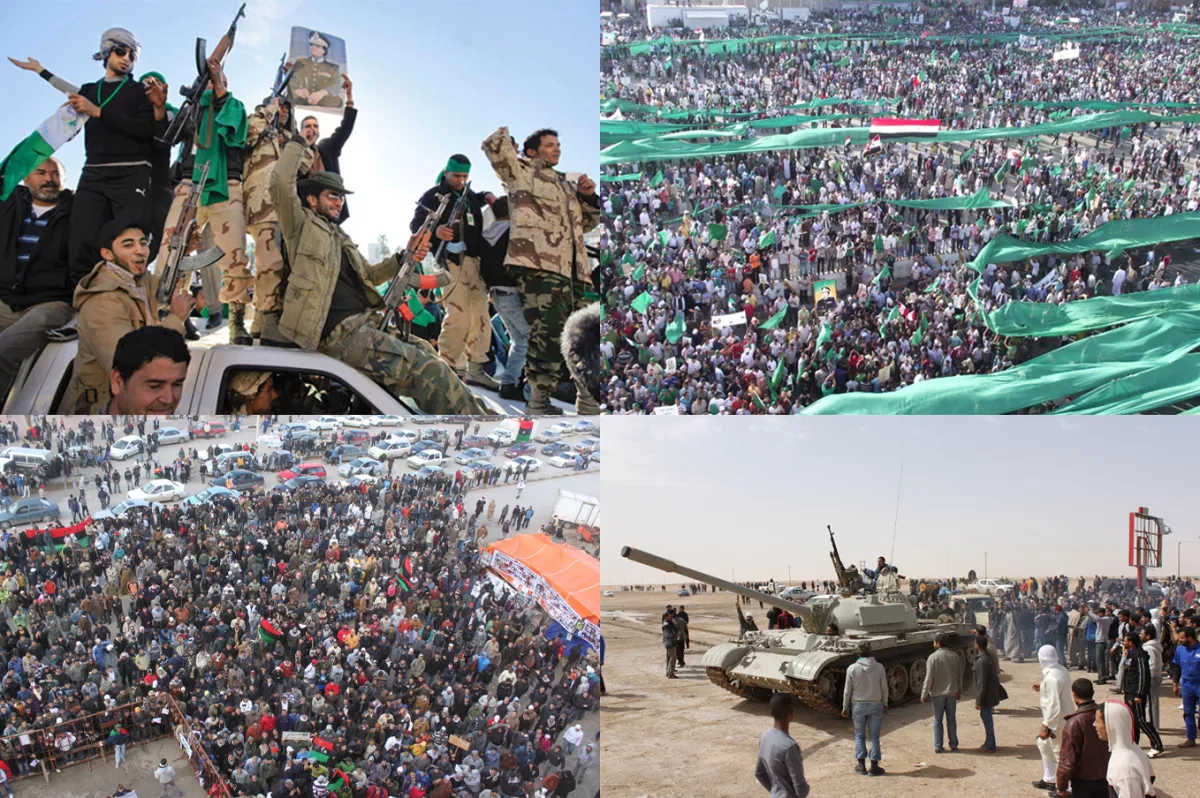
Today, the Islamic Republic faces the most frightening scenario for its leadership—a Libyan-style outcome like in 2011. At that time, an internal uprising against Muammar Gaddafi’s regime was supported by NATO airstrikes on government forces. It was precisely the combination of internal revolt and external military support that led to Gaddafi’s fall.
Israel’s leadership does not hide its desire to eliminate the power of the Supreme Leader and the IRGC, in other words, to dismantle Iran’s political system. Iranian political analysts refer to this as a “future attempt to fragment Iran.” If Israeli forces begin deliberately targeting the command centres of security forces, political control hubs, and attempt to isolate the capital from the provinces, it could lead to the collapse of the system.
If a large-scale internal uprising breaks out, Israel could again attempt to assert air superiority and provide support to it. Consequently, the Iranian leadership’s main goal today is to prevent such an uprising. And to minimise the risk of external strikes, the authorities simulate a negotiation process on nuclear issues with the U.S. President—the main patron of Israel.







 editor@caliber.az
 +994 55 444-88-98
 Азербайджан, Баку, ул. Низами, 203, Af Business House, 5-й этаж