










Macron’s hollow ambitions Empire dreams without political weight
The ongoing tectonic shifts in the global geopolitical landscape appear to have completely unsettled French President Emmanuel Macron. Confident that France can assume a leadership role in the European Union, he sometimes makes statements that seem absurd and disconnected from reality, including criticisms of U.S. President Donald Trump’s policies and actions.
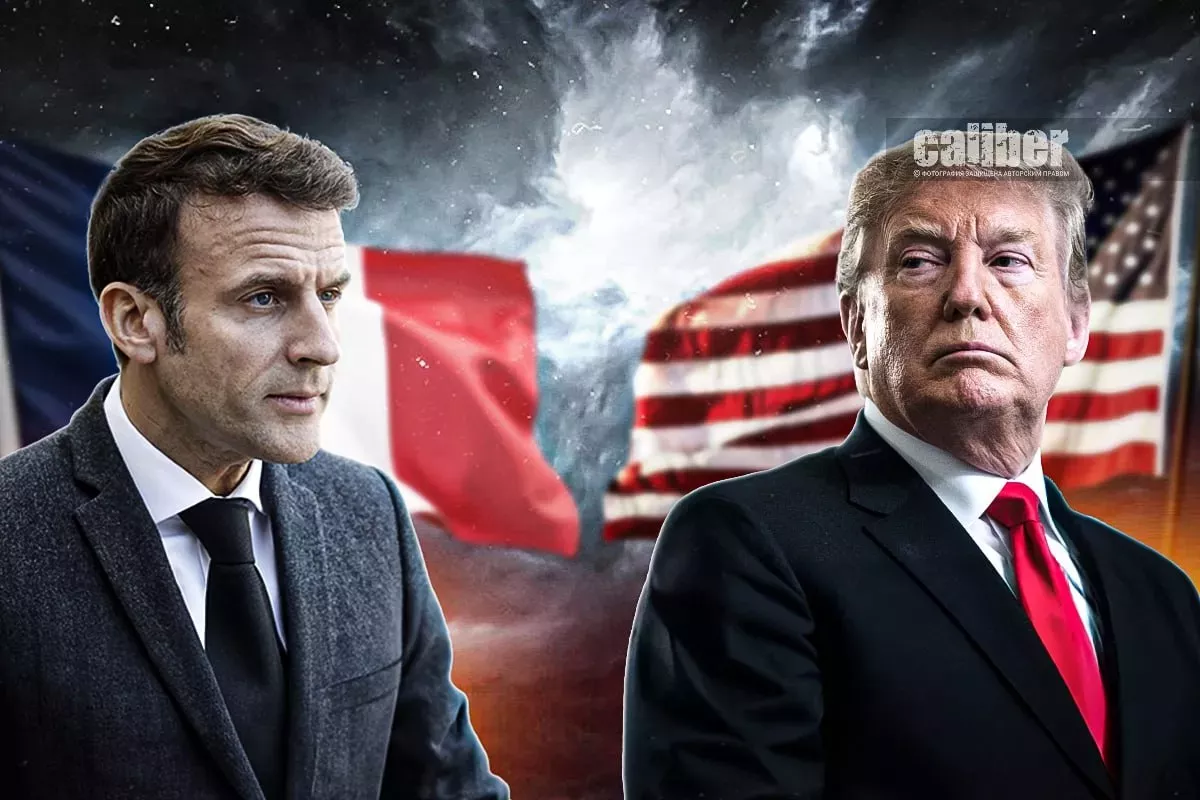
Recently, in his annual address to French ambassadors, Macron claimed that the United States is moving away from international norms and gradually turning its back on some of its allies.
"Multilateral institutions are functioning less and less effectively. We are living in a world of great powers with a real temptation to divide up the world," he said, clearly taking a jab at Washington.
The Élysée Palace’s unusually sharp outburst was triggered by a U.S. military operation in Venezuela that was personally authorised by Donald Trump — a move that resulted in the overthrow and capture of President Nicolás Maduro. What makes the French reaction especially striking is that President Macron had earlier suggested that, although Paris does not approve of the methods the United States used in the operation, the removal of Maduro was “good news” and something Venezuelans could “only rejoice” at.
This apparent contradiction on Macron’s part likely stems from personal resentment toward the U.S. president, who, during Macron’s visit to Washington in February 2025, seemed intent on reminding the French leader of his place — essentially giving him a “lesson in humility.”
Back then, instead of a ceremonial welcome, the White House greeted Macron with silence. American journalists captured the moment: the car bearing the U.S. and French flags waited patiently, but Trump did not appear. In the end, Macron had to enter the White House alone, in proud solitude.
The diplomatic “courtesies” did not end there. As the British tabloid Daily Express reported, Trump was accused of humiliating the French president during the Oval Office meeting by seating him on a chair at the edge of the table, while the U.S. president himself sat at the centre. This reception clearly did not align with Macron’s vision of France’s status on the global stage or his personal ambitions of a Bonaparte-style grandeur.
The incident evidently did not serve as a lesson for the French leader, and today, while criticising Washington, he has decided to cast himself as a defender of the rules and principles of international law. According to The Guardian, the French president stated that “Washington was ‘breaking free from international rules’ and the world risked turning into a ‘robber’s den’”.
And this comes from a man under whose leadership France has consistently pursued policies that violate the very norms and principles of international law. For instance, it is enough to recall how Paris openly supported the aggressor during Armenia’s occupation of Azerbaijani territories and, even in the post‑conflict period, actively supplied Yerevan with offensive weaponry.
Even more shocking is the statement by the President of the Fifth Republic claiming that he rejects new colonialism and new imperialism, as well as the strategy of defeatism in the face of threats—which, in his view, should instead be addressed through reinvestment in the United Nations. These words reek of hypocrisy and insincerity, a point reinforced by Macron himself, who stated at last year’s ambassadors’ conference on France’s foreign policy that some Sahel countries today exist as sovereign states thanks to the efforts of the French army.
This comment provoked discontent in the Sahel region. In particular, Chad interpreted it as “disrespect toward Africa and Africans.” Chad’s Foreign Minister and government representative, Abderaman Koulamallah, posted on social media: “History proves that Africa, including Chad, played a decisive role in liberating France during World War II, yet France has never acknowledged this fact.” The post also noted that, contrary to Macron’s claims, the French Republic never meaningfully equipped the Chadian army, and its “contribution” during difficult and unstable times often served only its own strategic interests, having little real impact on the development of the Chadian people.
In this context, another example can be found in Macron’s diametrically opposed statements regarding Algeria. In January 2023, in an interview with Le Point, he stated that he did not see the need to apologise to Algeria for the period when it was a French colony: “It’s not up to me to ask forgiveness, that’s not what this is about, that word would break all of our ties.”
The paradox, however, is that back in 2017, while a presidential candidate, during a visit to the country, Macron described France’s colonisation of Algeria as a crime against humanity and affirmed the need to apologise: “It’s truly barbarous and it’s part of a past that we need to confront by apologising to those against whom we committed these acts.”
Later, however, he unhesitatingly shifted his stance. As the French newspaper Le Monde reported, during a visit to the same country in August 2022, he even questioned the existence of an Algerian nation prior to colonisation.
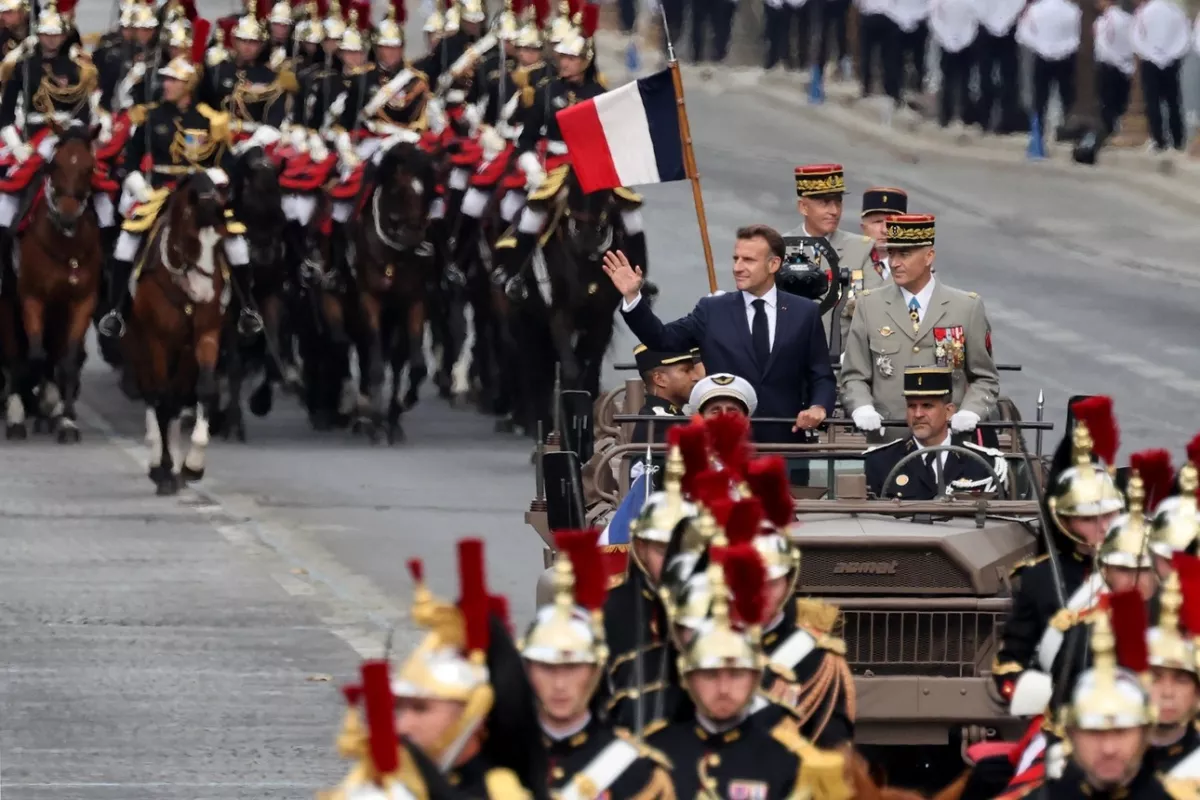
In summary, it can be asserted that all of President Macron’s words about “defending international law”, “rejecting neocolonialism”, and so on are nothing more than empty rhetoric, as all his actions indicate that he has no intention of yielding in his imperial ambitions to make France the political and military centre of Europe—and, as Politico recently suggested, perhaps even the world.
However, this goal is all but unattainable for the French Republic under Macron’s leadership. Before aspiring to the role of Europe’s leading power, he would first need to put his own house in order—a country that has been repeatedly rocked by public protests in recent years.







 editor@caliber.az
 +994 55 444-88-98
 Азербайджан, Баку, ул. Низами, 203, Af Business House, 5-й этаж