










Moldova at the crossroads: peace, war, and reunification Foreign experts on Caliber.Az
In an interview with British journalists Rory Stewart and Alastair Campbell, Moldovan President Maia Sandu openly stated for the first time that she would vote “yes” if a referendum on unification with Romania were held.
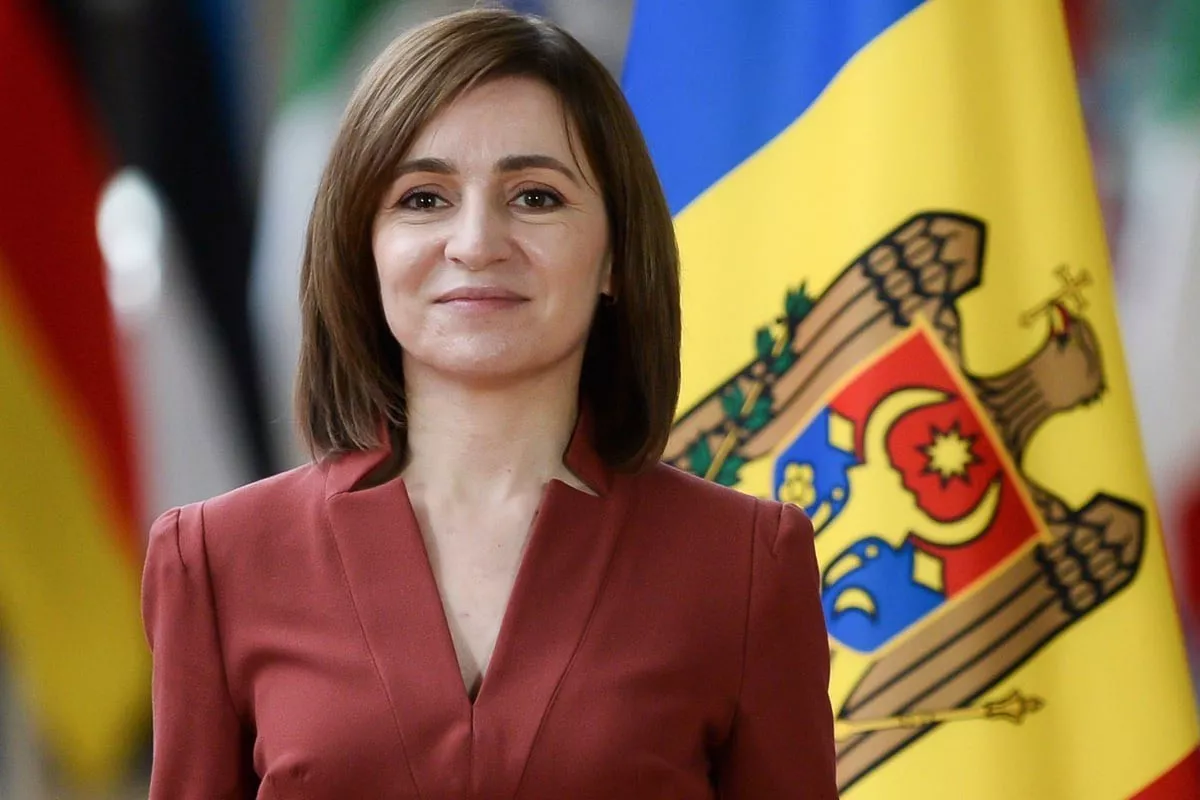
When directly asked whether she currently supports unification with Romania, Maia Sandu responded without hesitation: “If we have a referendum, I would vote for the unification with Romania. And why? Look at what's happening around Moldova today. Look at what's happening in the world. It is getting more and more difficult for a small country like Moldova to survive as a democracy, as a sovereign country, and, of course, to resist Russia. But, as the president of Moldova, I do understand, looking at the polls, that there is not a majority of people today who would support the unification of Moldova with Romania. But there is a majority of people who support EU integration, and this is what we are pursuing, because this is a more realistic objective, and it does help us, again, to survive as a democracy.”
Romanian President Nicușor Dan, who made his first official visit to Chișinău in 2025, reminded that a 2018 parliamentary resolution in Bucharest states that “when the Republic of Moldova is ready,” Romania would accept the territory.
Furthermore, Romania remains willing to seriously consider unification with Moldova. Romanian presidential advisor Eugen Tomac confirmed this following Maia Sandu’s statement, noting that Romania officially declared its readiness to discuss unification on March 27, 2018, and that the government’s position has not changed.
“Romania is ready to sit down at the table at any moment and seriously discuss this scenario only if Moldova considers it as an option. (...) It is their right to decide their future,” Tomac emphasised.
But how realistic is such a development in the current context? And what are public attitudes toward it?
Prominent Moldovan analysts shared their assessments with Caliber.Az.
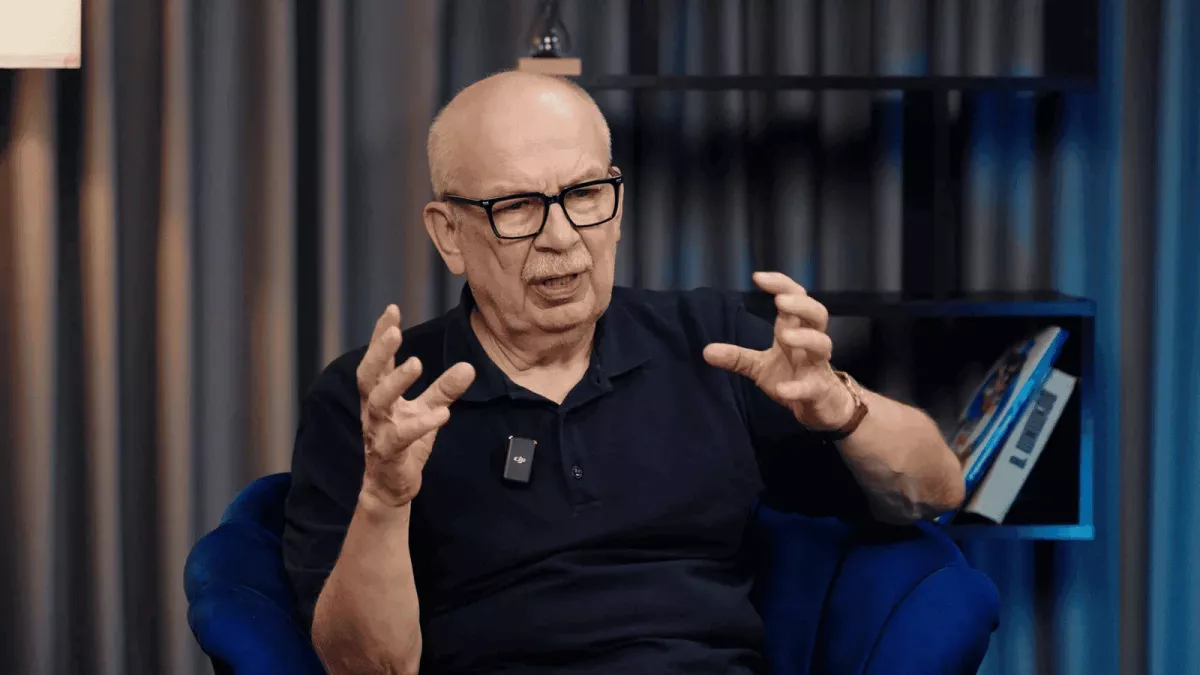
Political commentator Victor Ciobanu noted that the key phrase here is “If we have a referendum.”
“First, it’s a subjunctive statement, not an assertion, and second, it’s a personal opinion. Then comes the explanation from the perspective of the state: ‘As the president of Moldova, I do understand, looking at the polls, that there is not a majority of people today who would support the unification of Moldova with Romania. But there is a majority of people who support EU integration, and this is what we are pursuing, because this is a more realistic objective, and it does help us, again, to survive as a democracy,’” the expert reminded.
According to Ciobanu, if the president’s statement is divided into two parts, everything becomes clear: “Unification is an unrealistic goal, while EU membership is achievable. This is confirmed by all sociological surveys, the already held referendum on European integration, and the recent parliamentary elections, which in essence served as a repeat plebiscite. The majority of the population expressed support for the European course.”
Regarding unification with Romania, it can be said that the topic remains largely a matter of emotional aspirations and ideas, whereas European integration is guided by a clearly defined action plan.
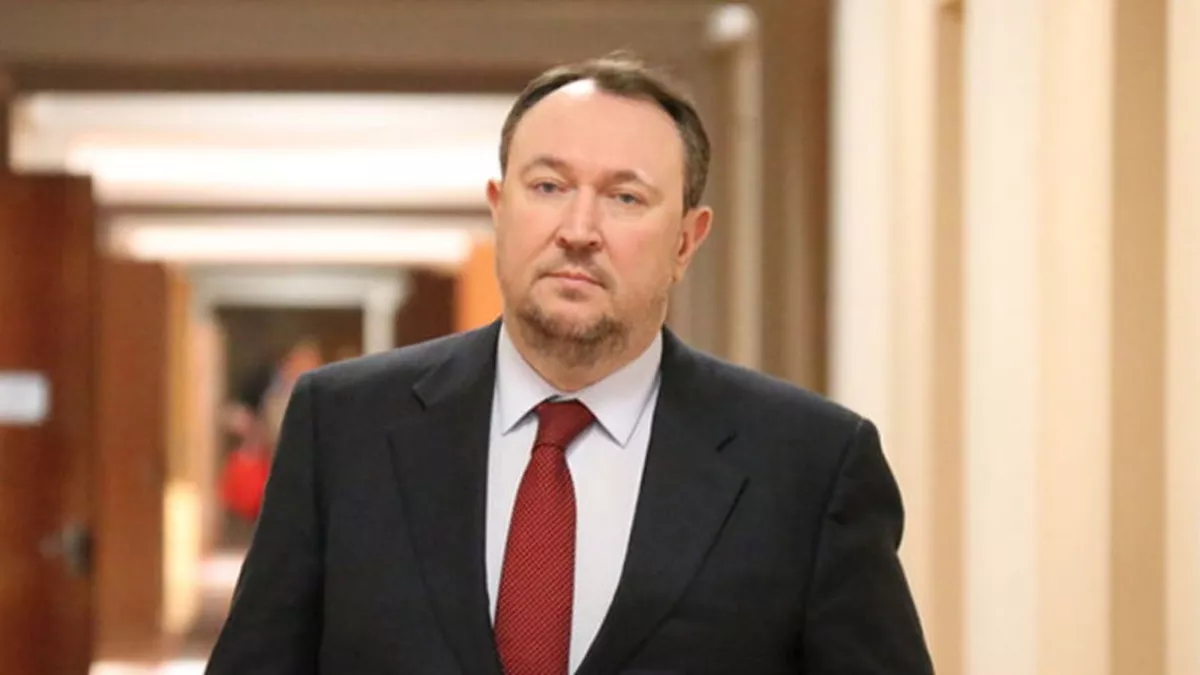
Former Moldovan Minister of Justice and former member of the Venice Commission of the Council of Europe, Alexandru Tănase, noted that 2026 began on the international stage with events of extraordinary significance — from the arrest of Nicolás Maduro to anti-theocratic protests in Iran — while on both sides of the Prut River, there appeared to be a brief period of relative calm.
“Yet this calm proved to be deceptively fragile. Moldovan President Maia Sandu’s remarks on the British podcast The Rest Is Politics once again thrust into the spotlight a topic with deep political, legal, and strategic implications. Her statement triggered a stormy and polarised reaction, underscoring that this issue remains sensitive, insufficiently analysed, and still poorly understood both in Romania and in Moldova,” Tănase said.
To preempt any attempts to take her words out of context, Tănase presents the key excerpt in full: “‘If we have a referendum, I would vote for the unification with Romania. And why?’ She gave a straightforward explanation: ‘Look at what's happening in the world. It is getting more and more difficult for a small country like Moldova to survive as a democracy, as a sovereign country.’”
At the same time, Sandu emphasised that, as head of state, she must take into account the real political and public sentiments. Tănase notes that this is not the first time she has framed it this way: “I may be mistaken, but I believe she first expressed this in an interview with Vasile Botnaru, and later in a conversation with Vitalie Cojocari, who was then a journalist at Pro TV București. At that time, such statements hardly sparked any debate. In that political context, they went almost unnoticed, treated as something self-evident. A significant portion of the active, pro-European socio-political audience shared the same view, even if they did not express it so directly,” Tănase explains.
He further clarifies that the sharpest criticism of Maia Sandu at that time came from the unionist camp.
“The reason was obvious: the PAS party, having secured a dominant position in Moldovan politics, effectively ‘absorbed’ unionism as a political force, reducing it largely to an identity reflex without independent electoral weight.
So what has changed now, and why has the reaction been so intense? The answer is simple — the context. Today’s context is fundamentally different.
Statements like those of Maia Sandu were made even before the war. Back then, almost no one considered the reunification of the two states a realistic prospect: nothing suggested that Russia would launch a full-scale invasion of Ukraine. Borders seemed unshakable, and such remarks were generally seen as political positioning — sometimes even a form of political theatre — rather than as a prelude to concrete action.
Today, the situation is fundamentally different. We live in an era where the redrawing of borders is openly debated, and the aspiration of us, the Romanians of the Republic, to live in the EU — safe and close to Romania — takes on an entirely new significance: not just political or strategic, but existential, directly linked to survival under the shadow of an imminent threat.
This existential dimension is neither abstract nor rhetorical. We do not want to see Russian tanks on the streets of Chișinău.
For these reasons, Maia Sandu’s statements can no longer be treated as mere theoretical speculation or rhetorical flourish. They must be read through the lens of consequences, with tangible implications and, in the present context, real — if uncomfortable — prospects of evolving into a concrete political scenario.
Maia Sandu did something exceedingly rare in modern politics: she was honest with the society that entrusted her with a mandate, openly stating her personal position on an exceptionally sensitive issue. And this issue is far from marginal or confined to television studios; it is discussed everywhere — from markets and offices to kitchens.
In Moldova, the fear of war is neither a media fabrication nor an electoral tool. It is a constant backdrop. The distance from the presidential palace in Chișinău to the nearest Russian serviceman is measured not in metaphors, but in kilometres — roughly 30 to 35.
The political picture is further complicated by the presence of a sizable ‘fifth column,’ which, regardless of ideological guise, ultimately serves a single interest — that of Russian intelligence. These are actors ready, if necessary, to destabilise the situation and strike a ‘deal’ with Putin, trading access to power for explicit or tacit consent to a renewed Russian occupation.
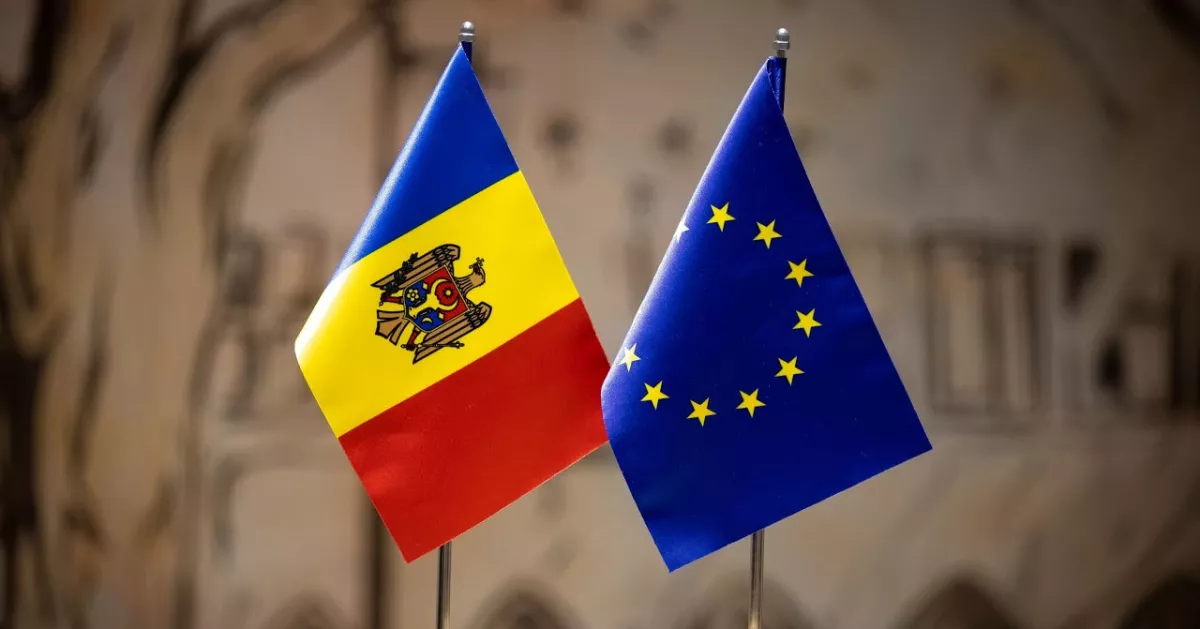
European integration primarily means the removal of physical borders and deep integration — above all with Romania, a country with which the Republic of Moldova shares language, culture, and history. Reunification, as a political project, would mean the immediate accession of Bessarabia to the EU. In other words, both paths — though pursued by different means — lead to the same outcome.
Therefore, the issue of reunification with Romania should already be approached as a project — not as a passing emotion or an election slogan — with the same seriousness we apply to the process of European integration. A project implies, above all, a method: a clearly defined roadmap, well-outlined technical stages, and an honest assessment of costs and benefits.
Regarding a referendum, several points need to be stated plainly. In 1812, 1940, and 1944, when Russia annexed this territory, no referendum was ever held. Therefore, it is by no means self-evident that a plebiscite should serve as the moral measure for rectifying historical injustices. The situation is somewhat like a person who has been kidnapped and held in captivity being asked in a ‘referendum’ whether they are allowed to go home.
Still, we live in the real world, and any project of such scale and irreversibility must, of course, be democratically legitimised. The prospects of such a plebiscite are far from negligible: the majority of citizens of Moldova would most likely choose security, stability, and peace — as an alternative to the looming threat of renewed Russian occupation.
By uniting with Romania, we would definitely return to the sphere of Western civilisation, where the protection of national minorities is not a concession but a standard, and where personal security and dignity are not subject to the whims of any regime. But for this discussion to be truly mature, we must be honest with society. We must call things by their proper names. We must not lull people with empty illusions. And, ultimately, we must confront a truth we often shy away from: our destiny lies in our own hands,” Tănase concluded.







 editor@caliber.az
 +994 55 444-88-98
 Азербайджан, Баку, ул. Низами, 203, Af Business House, 5-й этаж