










Moscow between ceasefire and rebellion Were there drones over Putin’s residence?
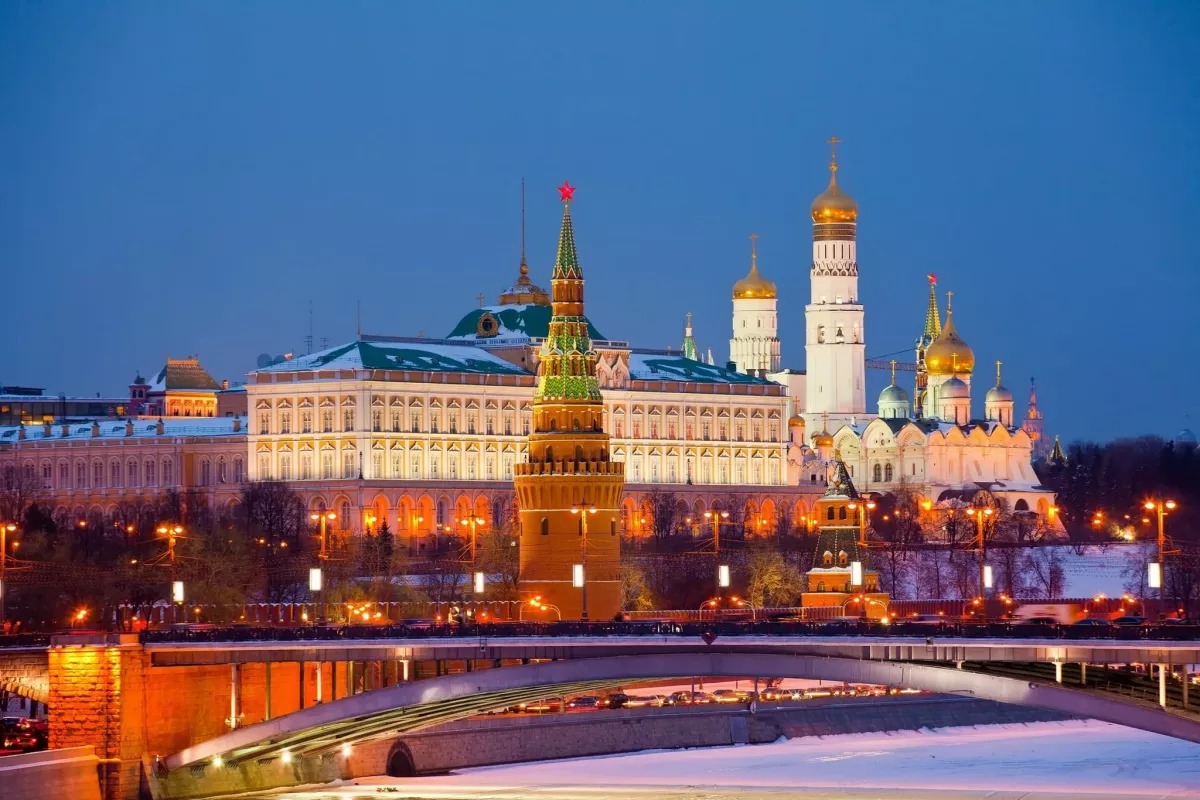
On December 29, 2025, Russian Foreign Minister Sergey Lavrov reported an attempted drone attack by Ukrainian forces on President Putin’s residence in the Novgorod region. The Russian diplomat’s choice of words — “reckless actions,” “will not go unanswered,” “targets for retaliatory strikes and the timing of their execution have already been determined” — was unusually harsh, standing out from previous incidents that were either downplayed or presented in very vague terms. This time, however, the Russian side aimed for an immediate international response — and it indeed followed.
In the days that followed, leaders and foreign ministries of several countries issued statements condemning the attack on one of Putin’s residences. Diplomatically speaking, Moscow achieved a certain effect: the information agenda shifted, and discussions of the U.S.-promoted peace process were pushed aside by the topic of an “assassination attempt on the president.”
However, it became clear within the first 24 hours that the Kremlin’s official version raised too many questions, even though President Putin’s press secretary, Dmitry Peskov, sought to leave no room for doubt. He dismissed any alternative interpretations as “mad” and claimed that the attack was allegedly also aimed at undermining Donald Trump’s peace efforts, at a time when Trump was actively promoting a truce between Moscow and Kyiv with U.S. involvement. This logical link seemed highly strained, yet it was immediately picked up by the Russian media.
The Ukrainian side responded quickly and firmly. Volodymyr Zelenskyy rejected the accusations of an attempt on Putin’s residence, emphasising that Ukraine does not target symbolic sites with no direct military significance. Even more telling was Brussels’ reaction. European Union foreign policy chief Kaja Kallas directly called Moscow’s statements a deliberate attempt to distract attention from the peace process, thereby signalling the EU’s position, which by that time was already considering the possibility of acting as a guarantor for future agreements.
Setting aside the emotional rhetoric and focusing on the facts reveals a much more down-to-earth picture. Even if Ukrainian drones did in fact fly over the Novgorod region—which, in itself, has not been confirmed by independent sources—their likely target was hardly the presidential residence. Ukraine’s military strategy in recent years has demonstrated a rational approach, prioritising logistics, energy, and military infrastructure. Symbolic strikes that yield no practical result run counter to Kyiv’s logic, given its limited resources and the constant pressure from a much larger adversary.
By contrast, such information operations fit neatly into Moscow’s logic. By the end of 2025, the Russian leadership found itself in an extremely vulnerable position. Advances on the battlefield in Ukraine had effectively stalled, the front had become entrenched, and human resources for a large-scale offensive without a full mobilization were exhausted. Opportunities to expand the occupation appeared minimal, while holding already captured territories demanded ever-greater expenditure. In this context, the U.S. proposal for a ceasefire—even a temporary one—objectively presented the Kremlin with a difficult choice.
On one hand, continuing the war in its current format leads to further economic depletion and rising domestic tensions. On the other hand, ending hostilities would amount to a public admission that, after almost four years of war, the stated objectives have not been achieved. The Donbas remains partially under Ukrainian control, there is no talk of a change of power in Kyiv, and Russia’s international isolation persists. For a political system built on the demonstration of strength, such an outcome is tantamount to a strategic defeat.
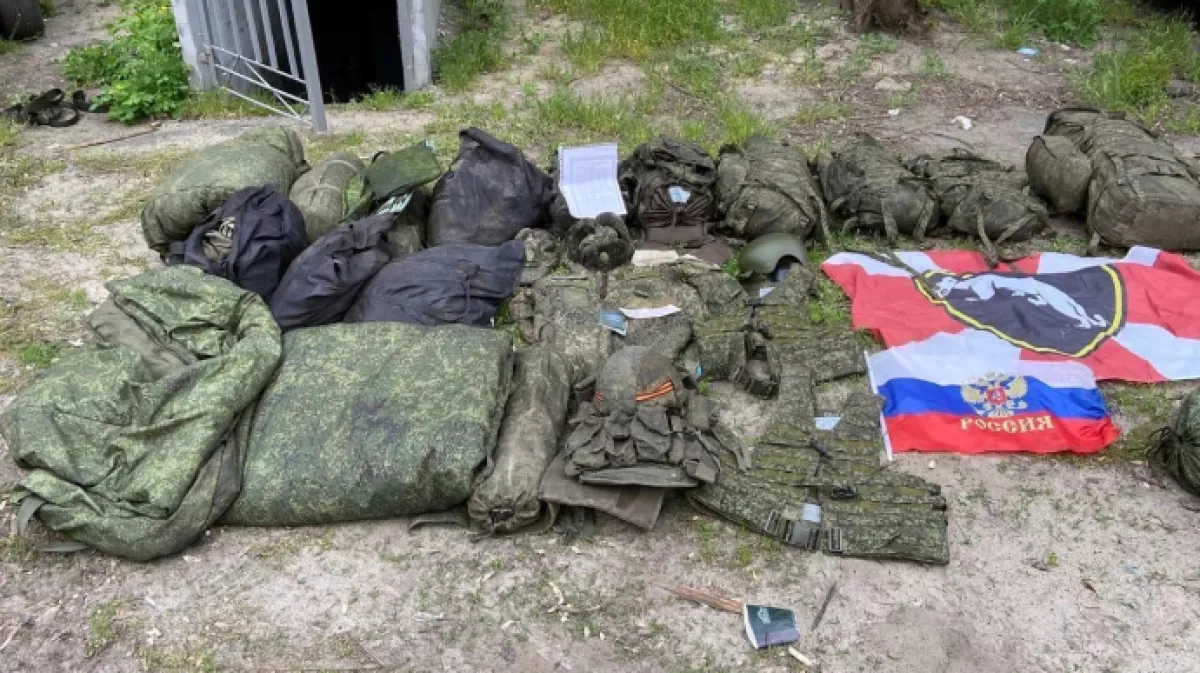
There is also another factor that the Kremlin prefers to mention only in whispers. This concerns the hundreds of thousands of participants in the so-called “special military operation,” most of whom would begin returning home if a ceasefire were implemented. As Putin himself stated in his “Year-End Summary,” the Russian troop presence in the operation zone totals 700,000. Demobilising even half of them would inevitably lead to a sharp rise in social tension in Russia’s hinterlands. These individuals would return to towns and villages where jobs, opportunities, and infrastructure to integrate them into civilian life are lacking. They would demand special treatment, benefits, payments, and respect — expectations that the state is objectively unprepared to meet.

Russia’s historical experience shows that such processes rarely proceed without pain. The late 1980s and early 1990s provided a clear example: veterans returning from Afghanistan, left outside the system, joined the ranks of criminal organisations. Extortion, protection rackets, and the rise of organised crime were then a direct consequence of the state’s inability to integrate people who had experienced war. Today, the situation could be even more dangerous. Yesterday’s fighters will have access to a significant amount of unregistered weapons, and their level of frustration will be far higher.
An additional source of instability is the mood among senior military officers. The general staff, seasoned by the Ukrainian campaign, is already showing dissatisfaction with the decisions of the political leadership and the quality of strategic management. A notable example is the case of Major General Ivan Popov, former commander of the 58th Army, who was arrested in May 2024 on charges of fraud involving metal supplies intended for fortifications and, in April 2025, sentenced to five years in prison, stripped of his rank, and fined. His arrest came after he publicly criticised the military command for problems on the Ukrainian front, for which he had been removed from his post. Initially, responsibility was attributed to Sergey Shoigu, then to Andrey Belousov, and today even the top political leadership is implicated, as systemic problems in the Russian army on the front have not disappeared. In these circumstances, a ceasefire may appear to part of the military as a surrender, for which someone must answer. Accordingly, the risk of military dissent and mutiny ceases to be theoretical.
Russian history knows similar precedents. In 1917, against the backdrop of army collapse, failures on the World War I fronts, an economic crisis, and a loss of trust in the authorities, a significant part of the elite—from industrialists to top military officials—began to see a forceful change of power as the only solution. The August uprising led by General Lavr Kornilov was an attempt to halt the country’s slide into chaos through a military coup. It failed, but the logic of the events is strikingly resonant with today’s situation. Modern Russia also faces a combination of a military deadlock, social fatigue, economic problems, and elite discontent.
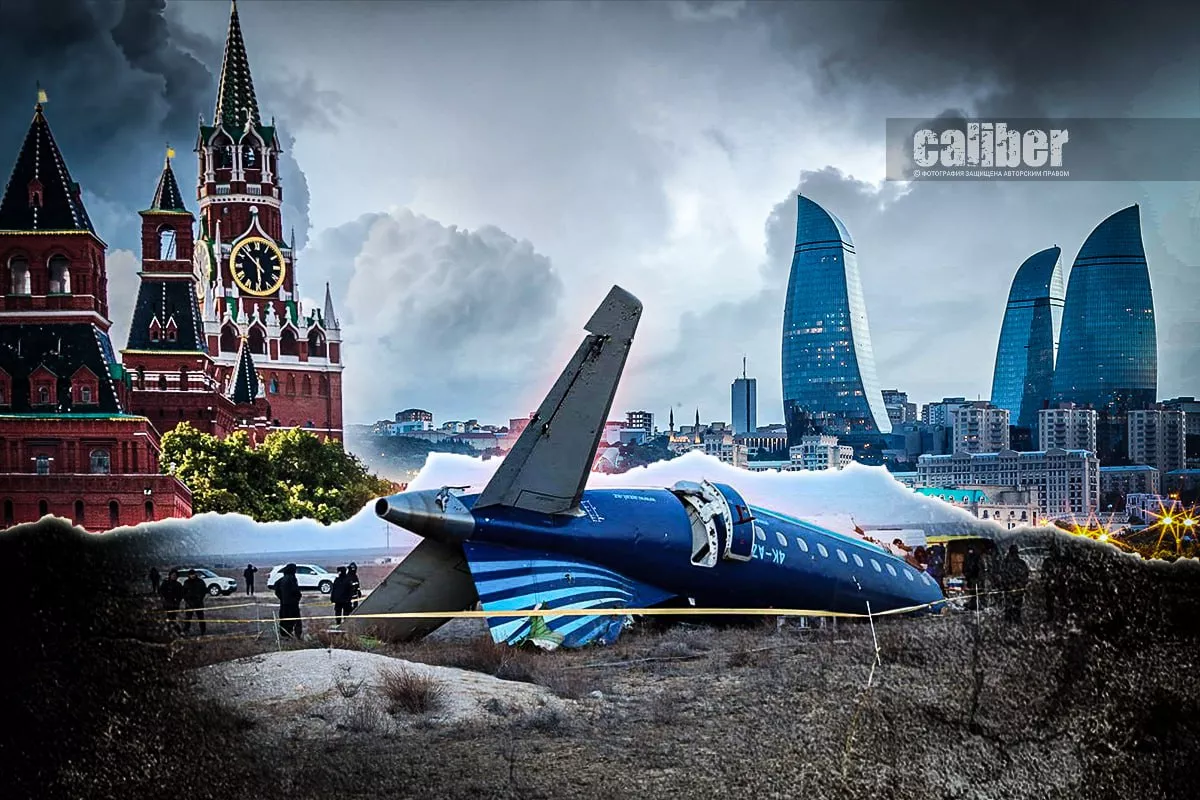
Against this backdrop, it becomes clear why the Kremlin seeks to disrupt the negotiation process. Direct confrontation with U.S. and Ukrainian initiatives would appear too overt, so fake narratives are employed to provoke an emotional reaction. A similar, even more cynical, pattern was observed in December 2024 with the downing of the Azerbaijan Airlines (AZAL) aircraft over Grozny. Within hours of the incident, Azerbaijani authorities determined that two factors had caused the tragedy: the deliberate jamming of GPS signals over Russian airspace, which led to the loss of accurate navigation data and greatly complicated the crew’s task, and the aircraft being struck by elements of the Russian Pantsir air defence system, causing critical damage to the fuselage and control systems, ultimately leading to the crash. Yet the Russian side persistently promoted its own versions of the incident, at times blaming a “collision with birds” or an “oxygen cylinder explosion.”
The story of the “attack on Putin’s residence” fits perfectly into this pattern of deception, portraying Russia as a victim, mobilising the domestic audience, sowing doubt among certain external partners, and, most importantly, postponing or stalling the discussion of a ceasefire indefinitely. This explains the sharp tone of official statements and the conspicuous hysteria surrounding the incident, which, on closer examination, turns out to be yet another political fabrication designed to buy time in a situation where the Kremlin has ever less of it.







 editor@caliber.az
 +994 55 444-88-98
 Азербайджан, Баку, ул. Низами, 203, Af Business House, 5-й этаж