










No chance for peace: EU discusses plans for war in Europe New Entente rising
The European Union is turning away from the American president’s peace initiatives on Ukraine. On December 18, the leadership of the European Commission nevertheless managed to secure funding for war-torn Ukraine from reluctant EU heads of state. European support proved strong enough that Ukrainian President Volodymyr Zelenskyy even dared to retaliate against Trump for the dressing-down he received in the Oval Office in January. He publicly stated that although the United States is currently against Ukraine’s NATO membership, politicians die—hinting at Trump’s age.
The EU peace plan published recently is aimed less at a peaceful settlement and more at the military transformation of the continent and a military solution to the conflict with Russia. It reflects the strategic designs of the global liberal establishment, for which Europe has become a bastion. These are serious ambitions: this week, the German parliament allocated 10% of the country’s budget to arms procurement. Germany has taken the lead in Europe’s military efforts.
But will European regimes collapse under the weight of mounting crises before a war begins—one that has every chance of becoming World War III?
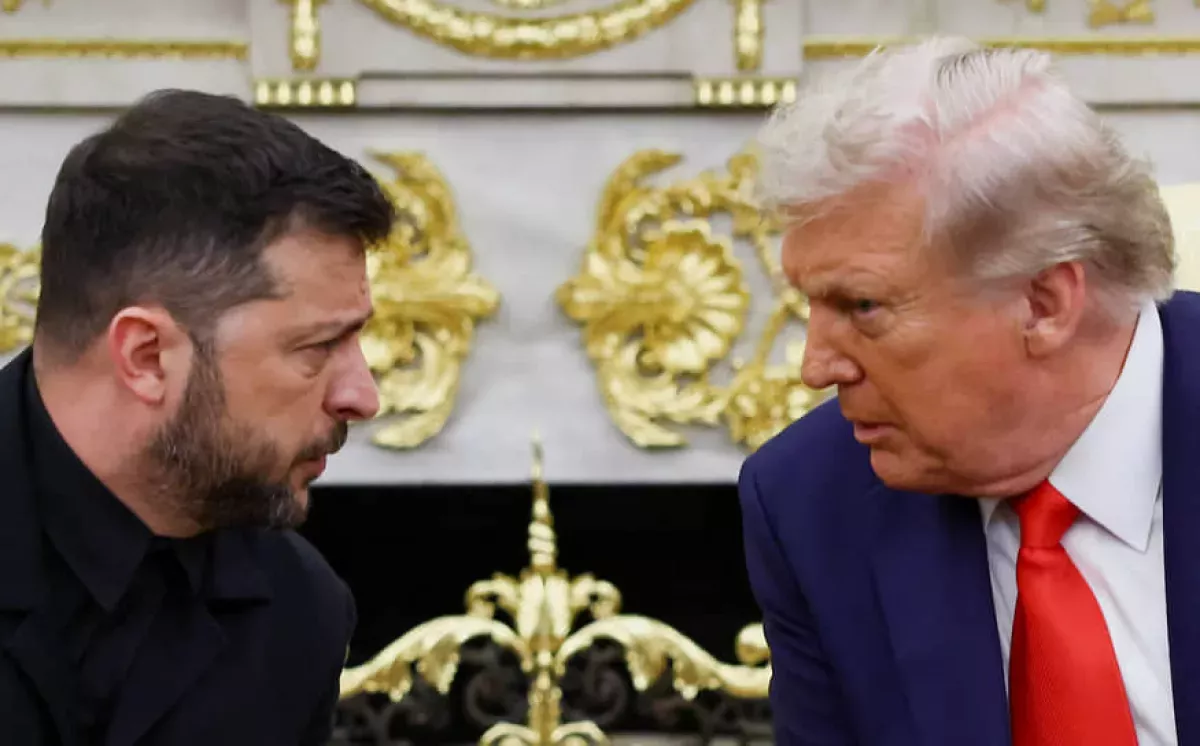
German politician claims that 360,000 Russian soldiers are deployed in Belarus.
The EU plan envisages the creation of a so-called “coalition of the willing,” an alternative to the NATO bloc. Given the historical parallels, it could be called the New Entente. Its composition began to take shape as early as last year during British-French summits involving the top leadership of the EU. The list of signatories to the European peace plan clarifies who is already prepared to take part in the New Entente: the EU, France, the United Kingdom, Germany, Italy, and Poland.
After a ceasefire along the current line of contact, the New Entente proposes deploying its troops on Ukrainian territory to enter the war against Russia if hostilities resume. What is troubling about this plan is its inconsistency. While it undermines the foundations of NATO under the pretext of U.S. intransigence as the alliance’s leader, the countries of the New Entente want to receive military support for their forces in Ukraine… from the United States.
Meanwhile, the U.S., in its own peace plan, has already made it clear that it does not intend to provide military support to the New Entente.
However, these diplomatic miscalculations are unimportant in this case, because, in essence, we are dealing with a military plan. The intentions outlined in it correspond to the real actions of the European coalition as a whole and of its individual members over a long period of time. This week’s news confirmed that these trends remain unchanged.
However, these diplomatic miscalculations are unimportant in this case, since we are essentially dealing with a military plan. The intentions outlined in it correspond to the real actions of the European coalition as a whole and its individual members over a long period of time. This week's news confirmed that the trends remain unchanged.
The ruling liberal elites of various shades in the EU are inclined towards a military solution to the Russian issue, and not only in Ukraine. This position is only weakly connected to objective strategic reality, as became clear from a statement circulated this week by the leading security expert of Germany’s ruling Christian Democratic Party.
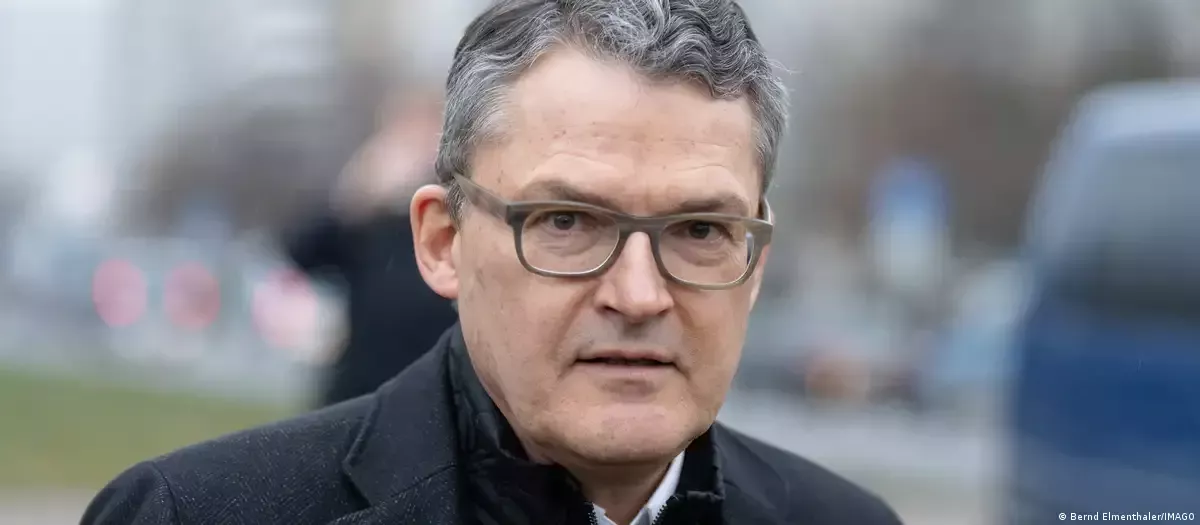
Roderich Kiesewetter spoke of the presence of 360,000 combat-ready Russian soldiers in Belarus. He provided no evidence, although he should have, since it would be impossible to deploy such a number in a small country without it being noticed.
This fantastical claim confused even the Lithuanian intelligence services and the military: on Wednesday, they stated that “reports of the mass deployment of Russian troops in Belarus are disinformation.”
But Kiesewetter was acting in line with his government’s overall narrative, helping to justify its actions. After all, on December 17, the relevant committee of the German parliament approved the largest package of military procurements in the country’s history since 1945. Its value amounts to €50 billion, equivalent to one-tenth of Germany’s annual budget.
By the end of the week, it became known that under a new law, German intelligence services will be authorised to carry out sabotage operations abroad and in cyberspace. And last weekend, Berlin decided to deploy additional troops to the border of Poland with Russia’s Kaliningrad region and Belarus, on top of the tank brigade recently stationed on the Lithuanian–Belarusian border and near Kaliningrad.
All this comes against the backdrop of a recent statement by one of Poland’s top military figures, Jarosław Gromadziński, who threatened Russia with “taking Königsberg [the Polish name for Kaliningrad]” in the event of an escalation. Gromadziński is not the first high-ranking Polish general to threaten Kaliningrad. The same was repeatedly stated for several years by the former commander of the Land Forces, Waldemar Skrzypczak.
However, Gromadziński is a far more influential figure with access to the corridors of power, both in Warsaw and in Brussels. He has just retired from the army, and in 2023–2024 he even commanded NATO’s rapid reaction forces, the so-called “Eurocorps.”
Given the symbolism of Kaliningrad as part of former East Prussia for Germany, and the fact that since the early 2010s—following the relocation of all German state institutions to the former Prussian capital, Berlin—Germany has increasingly associated itself with the legacy of Prussia, these Polish gestures are not mere provocations. They are aimed at very specific resentments within the German establishment.
Berlin is turning toward a region in which every village bears the traces of German military operations.
Missiles instead of vehicles
On December 15, the German newspaper Bild published a plan, agreed upon by the ruling coalition, for unprecedentedly close military cooperation between Germany and Ukraine. It предусматривает joint weapons production, technology sharing, and Germany’s access to all battlefield data.
As we can see, Germany—like the other EU countries—continues to become ever more deeply involved in the war with Russia, and in this strange war, declared by no one and to no one, the lines of confrontation are increasingly blurred. Germany has not only already financed Ukraine’s purely military expenditures to the tune of more than €40 billion. Its defence industry has also organised weapons production for the needs of the Ukrainian army on Ukrainian territory—initially through the repair and maintenance of armoured vehicles, and now extending to the production of artillery shells, armoured vehicles, and UAVs.
The new cooperation plan between Kyiv and Berlin will allow these projects to be scaled up severalfold and, as emphasised, will be implemented regardless of the outcome of peace negotiations.
This plan must be viewed in light of another intention that European countries have articulated from the very beginning of the American peace initiatives on Ukraine: a categorical refusal to accept even a moderate limitation on the size of the Ukrainian armed forces. Formally, the Europeans merely supported the Ukrainian government on this point, but it is unlikely that Kyiv itself would have insisted on such a clause on its own.
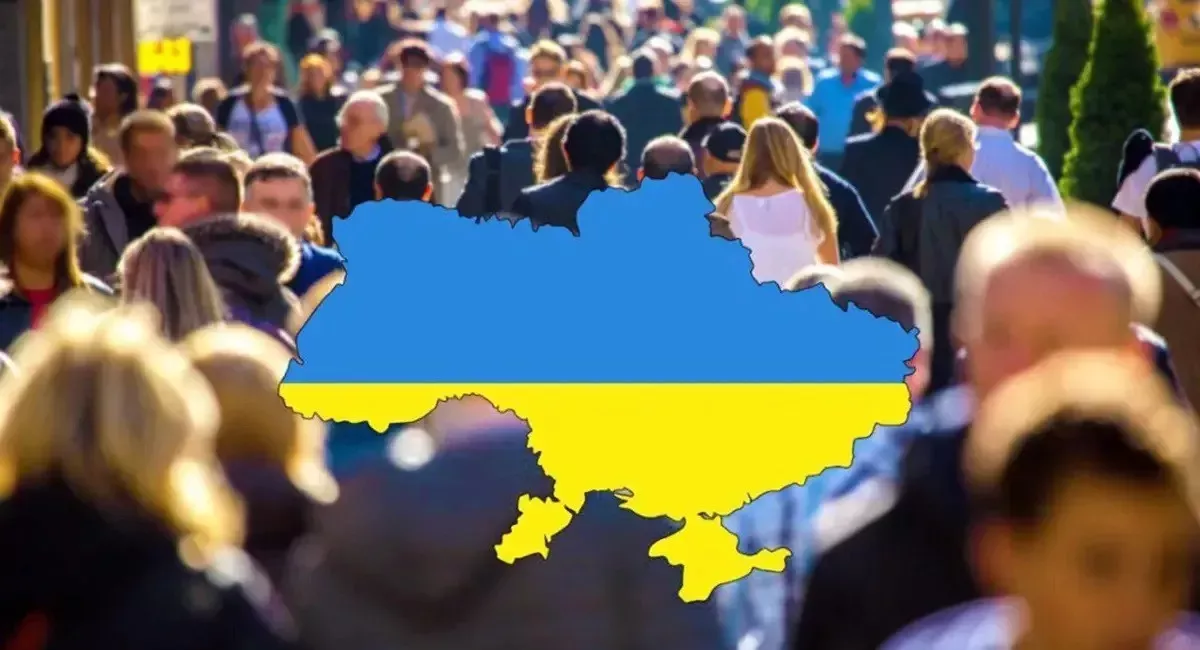
After all, this concerns maintaining a gigantic army. Kyiv and its allies refuse to reduce its size even to 800,000 personnel—a number that would be enormous even for a large and wealthy country.
Ukraine’s population, according to estimates, has now fallen to well below 30 million. Judging by indirect signs, the EU is preparing to finance this gigantic army; moreover, it could be used as a basis for building a European Union army.
In November, EU Commissioner for Defence Andrius Kubilius proposed deploying Ukrainian troops, after the end of hostilities, in all EU countries bordering Russia. It is worth recalling that all this is being discussed against the backdrop of plans to admit Ukraine into the EU as early as 2027—plans for which there is clear political will among the EU’s top leadership, ready to disregard all accession criteria and procedures in order to realise this objective.
A second important context for discussions about the deployment of the Ukrainian army within the EU is that the same Kubilius stated that EU countries should not rely solely on Article 5 of the NATO Charter on collective defence. Instead, they should establish a “clear mechanism” for activating the EU’s own collective defence framework. In other words, Kubilius once again emphasised the need to build an EU power bloc independent of the United States.
The EU leadership has a clear political will regarding the creation of a power bloc. At the beginning of the year, the European Commission presented an investment package of up to €800 billion for defence as a whole. In October, a project for arming EU countries was introduced, and the Commission, under Ursula von der Leyen—who continues to steadily expand her powers—began asserting control over defence procurement budgets. In November, the European Commission unveiled a comprehensive plan for the development of the arms industry.
By now, the defence industry in EU countries has already grown by 41% in terms of employment. The new plan will “retrain” an additional 600,000 workers for employment in the military industry by 2030. According to official statements, the retraining will target “workers from the automotive sector and related suppliers who are undergoing restructuring or face the threat of unemployment.”

Indeed, just recently, Volkswagen, for the first time in the company’s history, closed an entirely new factory in Dresden. Sanctions have worked, and dependence on Russian energy has been eliminated. The price: a decline in civilian industry and the militarisation of society across Europe. Those who do not find a place in the arms industry are being encouraged to join the military. In Germany, the reintroduction of universal conscription, which was abolished in 2011, is being prepared.
Loud rhetoric and unpreparedness for military confrontation
All these plans, and Russia’s response to them, inevitably fuel a spiral of escalation rather than making the continent safer. When people like Kubilius propose fantastical projects such as a “drone wall” against a Russian invasion, it makes sense to ask why neither Kubilius, during his time as Lithuanian prime minister, nor his successors bothered with even more prosaic defense needs—like building a bypass railway in the Baltics under the guise of Rail Baltica—if they are so eager for a war with Russia. That project has simply failed.
This is not the only example. Recently, former Deputy Chief of the Polish General Staff Leon Komornicki cited in an interview several cases of hypocrisy among politicians who, in words, advocate a tough military approach to Russia (a position held by all Polish governments since the late 2000s) but in practice either fail to take elementary defence measures or commit catastrophic errors in this area.
First, he pointed to the complete neglect of natural defensive boundaries. For example, to prevent refugees from crossing the border, the Polish authorities cleared vast areas of forest—including entire stretches in the protected Białowieża Forest. As Komornicki recalls: “Tanks cannot advance through old-growth forest. And we cut down 150 kilometres of forest—that is a crime.” Since the socialist era, the construction and maintenance of canals has also been entirely abandoned.
Second, there is the thoughtless construction of wire-and-concrete obstacles. According to the general, the government is obsessed with the idea of “concreting” the border: “They installed so-called ‘goats,’ that is, tank barriers. The Russians have known about all this for a long time.”
This is not only questionable from the perspective of modern mobile warfare, but these fortifications have already been abandoned: trees have even grown between the concrete barriers.
“Who is supposed to maintain all this?” Komornicki asks.
Third, there are ill-considered purchases of foreign military equipment, with the former deputy chief of staff hinting at excessive subservience to any American, not to mention European, hardware. Among these, he recalled, is a large amount of second-hand equipment, such as worn-out American Stryker APCs: “Without batting an eye, they grab what others want to get rid of.”
There are also controversial new systems, which are either sold with usage restrictions or whose use is limited by practical factors, such as the availability of ammunition and spare parts. In recent years, examples include systems like the Patriot, HIMARS, and Abrams.
We should add that this problem affects not only Poland, but also Ukraine and other Eastern European countries that have purchased American equipment. Yet, given the extreme pro-American stance of the Polish and some other regional governments, it is notable that a high-ranking Polish military officer now allows himself to harshly criticize American weapons. Komornicki explained, in simple terms, the structural problem with new weaponry, which combines high cost with limited production capacity.
For example, intercepting a Russian cruise or ballistic missile typically requires three Patriot interceptor missiles, each costing three to four million dollars. Warsaw ordered around a thousand of these missiles, but currently, the American industry produces only about 600 per year. In other words, EU countries would do well to consider such basic realities before planning military actions.
Here is another example. The aforementioned Polish general, Gromadziński, has stated that there is nothing to fear in attacking Kaliningrad, clearly hinting at the possibility of neutralising one of the main bases of Russia’s Baltic Fleet. Yet the state of the Polish Navy casts doubt on the credibility of these threats. Its major ships are outdated: the frigates have been in service for over 45 years, and the only corvette is not much younger at 38 years. The last operational submarine was built in 1985 and now rarely risks going to sea. Most of the other vessels serve auxiliary functions.
Of course, Warsaw recently announced the purchase of three A26 Blekinge-class submarines from Swedish company Saab for €2.3 billion, with the first delivery scheduled for 2030. In other words, bellicose rhetoric is far ahead of actual armament.
The last hope for Polish admirals lies in the ships of other NATO countries—back in January, the alliance launched the Baltic Sentry mission in the Baltic Sea. Additionally, NATO strategists point out that the accession of Finland and Sweden, with their naval forces in the Baltic, complicates Russia’s operations in the region.
But none of this makes the offensive intentions of Polish generals toward Kaliningrad any more realistic. After all, they would have to operate using allied, rather than their own, forces—and many of these forces could be diverted from the Baltic at a critical moment, as Western European countries deploy their navies worldwide.
That said, shortcomings in preparation do not mean that combat operations will not be launched—history offers plenty of such examples. One of them is Germany in 1941, which rushed into war against the USSR without even fulfilling its fuel stockpiling plans or properly equipping its troops for winter conditions.
The EU clouds the issue
The Americans do not wish to engage in such a risky confrontation with Russia. In October, the U.S. stated that it would not replace the brigade being withdrawn from Romania. And although Washington, Bucharest, and Brussels pretended that nothing had happened, it was clear that Trump was sending a signal—he sees no point in the hard clash with Russia that the EU is attempting to provoke.
In this situation, EU countries are increasingly relying on “strategic ambiguity” in their confrontation with Moscow. Under this pretext, after the current German government came to power in May of this year, Berlin stopped publicly disclosing the facts of its arms shipments to Ukraine. Now EU countries are further increasing this strategic ambiguity, creating the ability to deploy hundreds of thousands of soldiers to the borders of Russia and Belarus within days. In mid-November, the European Commission published its plan to enhance military mobility within the EU. The simplest part of the plan is the so-called “military Schengen,” which requires member states not to delay the approval for the passage of military equipment from another EU country for more than three days in peacetime, and more than six hours in wartime.
Additionally, the plan provides for the creation of a joint pool of transport vehicles for troop deployment, and a pool of vehicles that can be requisitioned for combat operations. The third component concerns funding infrastructure to improve secret military-transport corridors leading to the borders of Russia and its allies.
Given the questionable state of the EU’s military capabilities at present, this “strategic ambiguity” does nothing to enhance the bloc’s deterrence of Russia. On the contrary, it creates numerous opportunities for catastrophic misunderstandings and reactions on both sides.
Above all, it generates the image of a military machine supposedly ready to destroy Russia, at a time when the existence of such a machine is doubtful. How did the European Union arrive at such a dangerous policy?
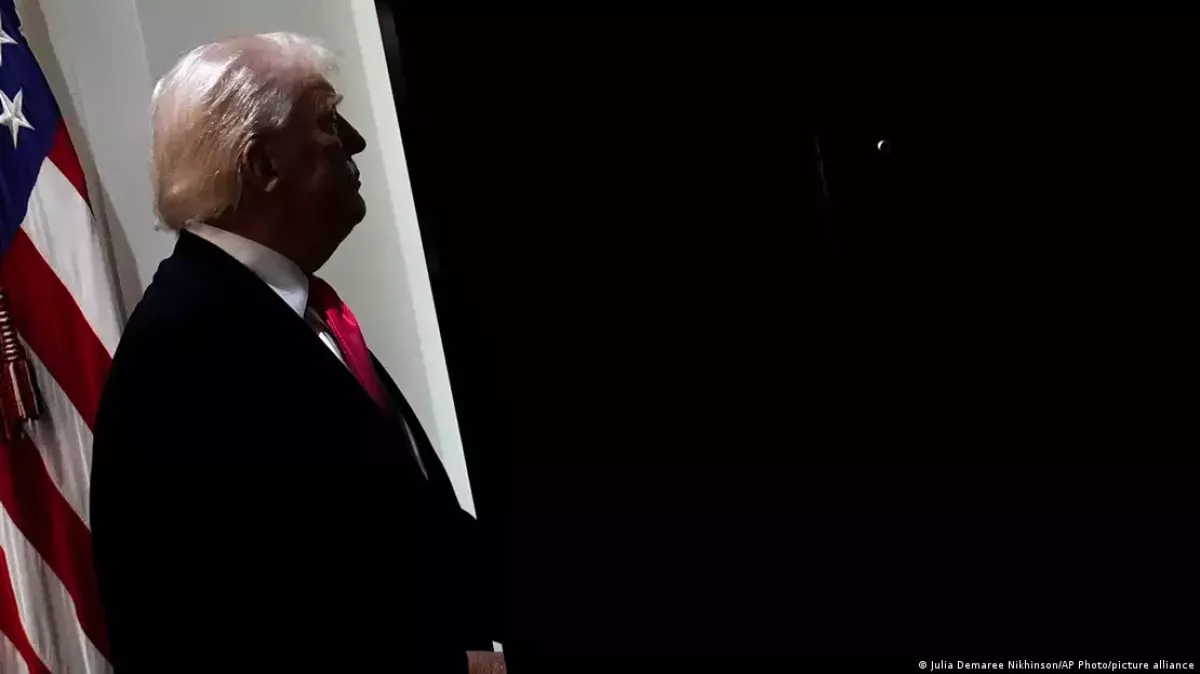
A crucial role in this was played by the liberal establishment’s desire, in several countries, to retain power through a hardline course in the face of a new illiberal opposition friendly to the hated Trump. However, betting on military solutions amid acute internal crises may accelerate regime changes in a number of EU countries.







 editor@caliber.az
 +994 55 444-88-98
 Азербайджан, Баку, ул. Низами, 203, Af Business House, 5-й этаж