










Pashinyan vs Garegin II: How will the clash end? Experts weigh in on Armenia’s church-state standoff
Armenian Prime Minister Nikol Pashinyan has called for the abdication of Catholicos of All Armenians Garegin II, describing him as a threat to the country’s national security.
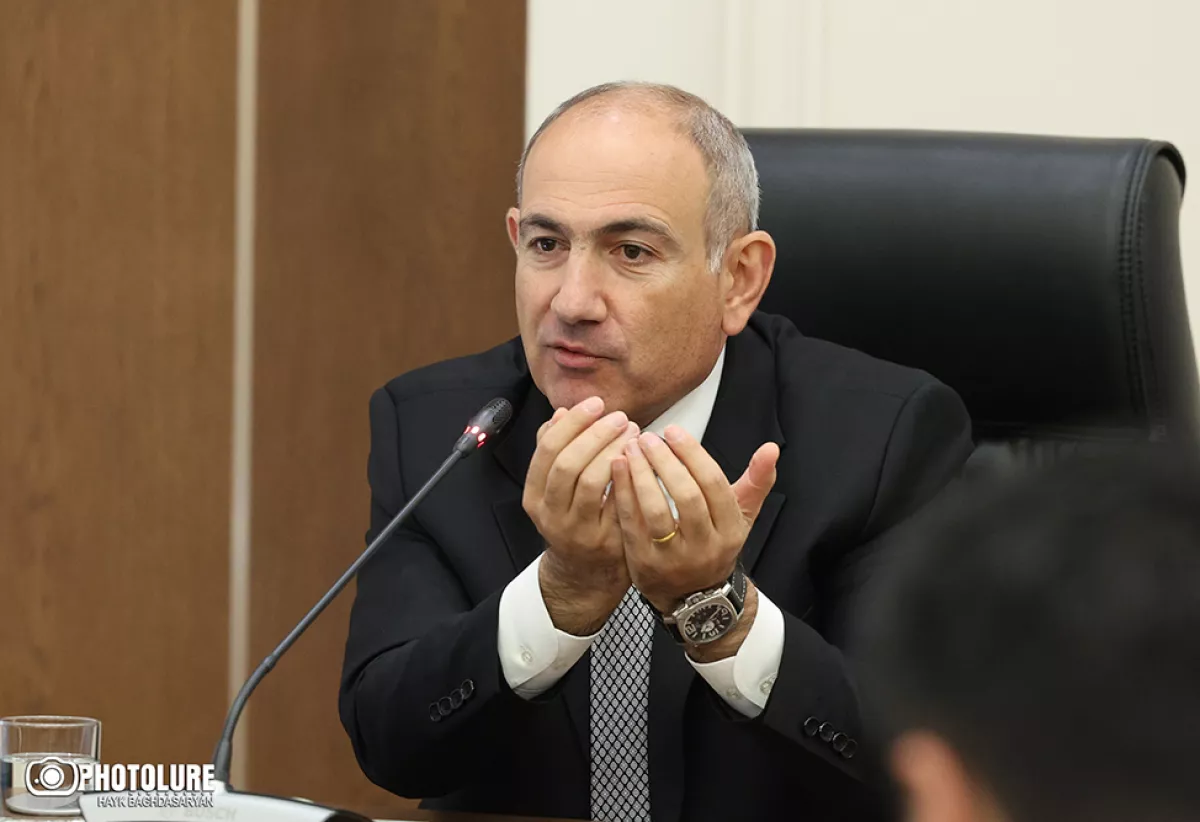
“Ktrich Nersisyan (the secular name of the Catholicos — ed.) is a threat to Armenia’s national security. I believe that nothing causes greater harm to the Armenian Apostolic Holy Church than the presence of Ktrich Nersisyan,” Pashinyan said at a briefing for journalists on December 4.
“This is not about someone demanding Ktrich Nersisyan’s resignation. We are saying that the process has begun and that he must step down. There is no question of choice here — whether to leave or not. He must go,” he added.
Pashinyan also noted that on Sundays he only attends church services where the name of the Catholicos of All Armenians is not mentioned.
“We ask clergymen to take into account the fact that we do not recognise Ktrich Nersisyan as the Catholicos,” the Prime Minister stated.
Meanwhile, 27 bishops and archbishops of the Armenian Church recently issued a statement expressing their loyalty and support for Garegin II.
“We consider any attempt to resolve intra-church issues through political interference unacceptable and dangerous. We also regard the arbitrary omission of the name of the Catholicos of All Armenians during the sacred liturgy as inadmissible and deserving of condemnation, as from an ecclesiological perspective, it contains elements of schism,” the statement reads.
So what is Pashinyan really trying to achieve by insisting on Garegin’s resignation? And is there even a mechanism that would allow the head of the secular government to remove the sitting Catholicos from his spiritual throne?
Well-known political analysts have agreed to comment on these questions for Caliber.Az.
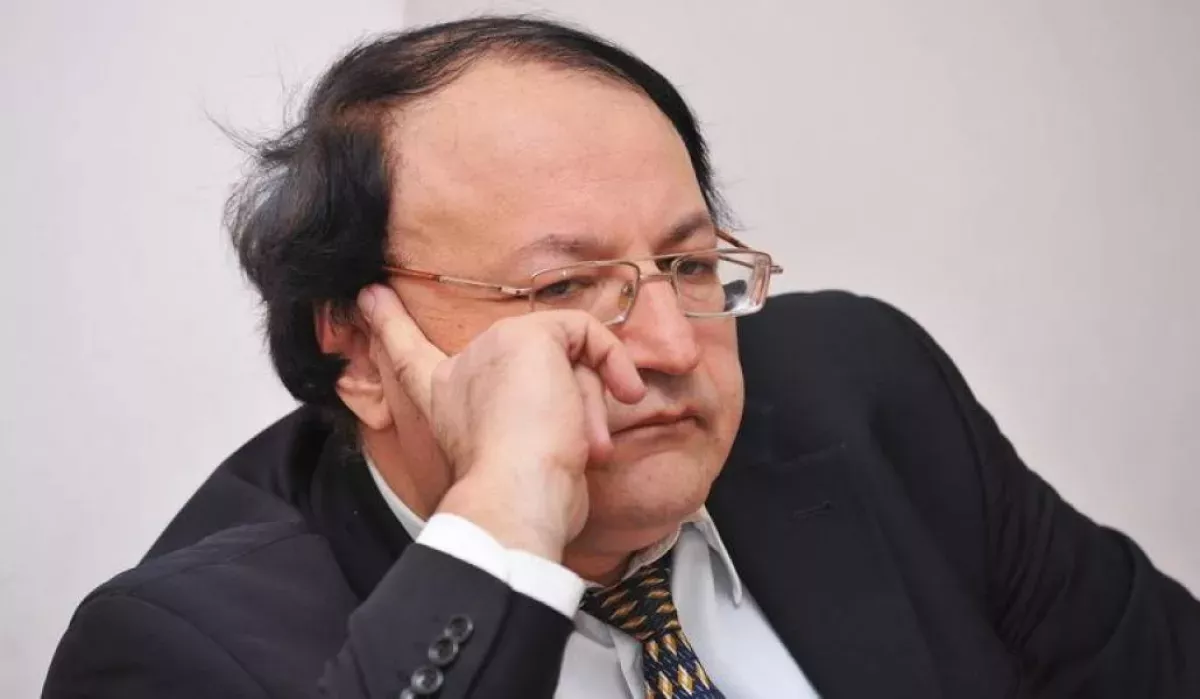
The Chairman of the Political Scientists Union of Armenia, Doctor of Political Science Hmayak Hovhannisyan, immediately stated that there are no legitimate mechanisms for the secular authorities—whether Pashinyan or anyone else—to remove or terminate the powers of the Supreme Patriarch-Catholicos of All Armenians.
“Therefore, determined at any cost to get rid of Garegin II, who immediately after the 44-day war publicly called for Nikol Pashinyan himself to resign, the Prime Minister of Armenia is forced to resort to methods of hybrid warfare against Garegin II and a number of other senior clergy members of the Armenian Apostolic Church. These individuals are not only defamed in pro-government media but, for the first time since the infamous Stalinist repressions against clergy in 1937, have been imprisoned, with some already receiving actual sentences.
The Prime Minister justifies this unprecedented situation for the Armenian Church by claiming that Garegin II allegedly serves the interests of a ‘foreign state.’ This clearly implies Russia, as Nikol Pashinyan also directs angry tirades against Garegin II’s brother—the head of the Russian and Novo-Nakhichevan Diocese of the Armenian Apostolic Church, Archbishop Ezras. Moreover, Pashinyan’s party members go further than their leader, asserting that it is precisely the Kremlin that prevents Garegin II, following the example of the penultimate Pope, from stepping down from the patriarchal throne and retiring from history. The climax was Pashinyan’s direct accusation that the Catholicos had been a long-standing ‘KGB agent,’” the political scientist explained.
He emphasised that today no one can predict with certainty how this situation will end.
“Essentially, a deadlock has emerged: there are no legitimate mechanisms to resolve it, and the use of force against clergy could provoke a strong backlash from other Christian churches. The likelihood of such a reaction is indicated by the fact that the current Pope, Leo XIV, during a liturgy at the Armenian Church of the Holy Mother of God in Istanbul, sent his fraternal greetings not to Ktrich Nersisyan, but to the Supreme Patriarch-Catholicos of All Armenians, Garegin II,” Hovhannisyan added.
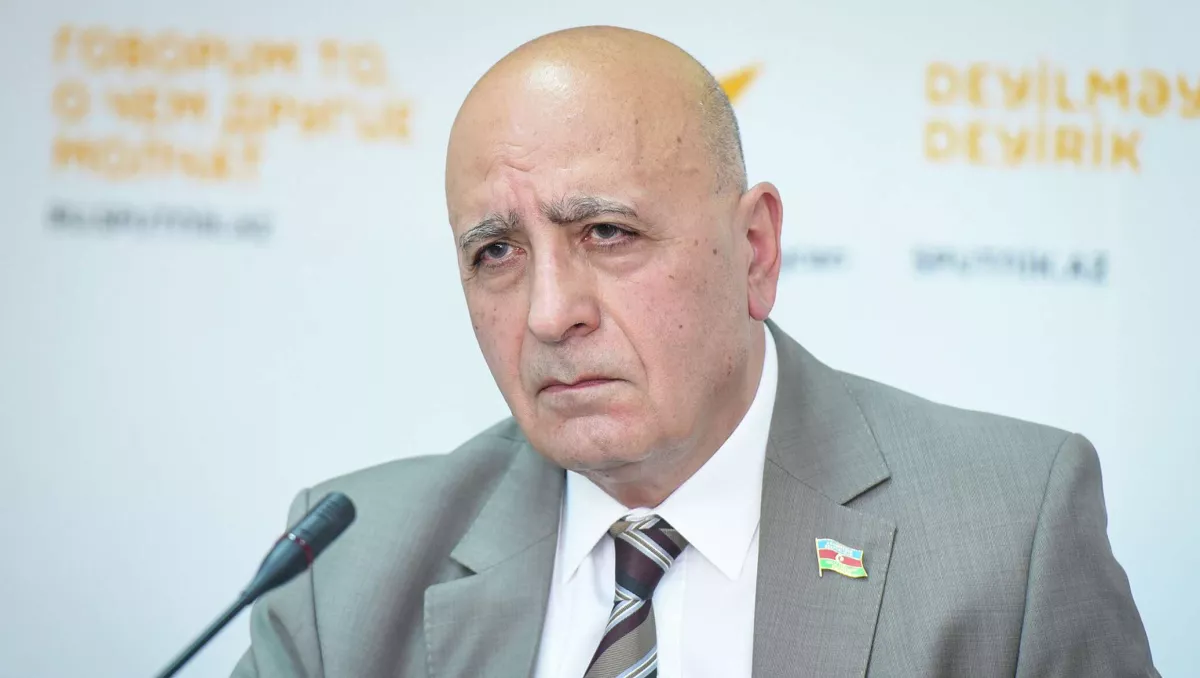
Azerbaijani MP and political analyst Rasim Musabayov, in turn, noted that he does not consider himself fully competent to comment on how the head of the Armenian Church could be removed or forced to resign.
“As far as I understand, the primary authority here lies with the church statutes, not the wishes of the Prime Minister of Armenia. But as someone belonging to the flock of the Armenian Church, he can express his doubts and make certain suggestions.
It should be noted that there is clearly a division within the Armenian Church: twelve bishops and archbishops expressed their dissatisfaction that one of their colleagues was filmed behaving inappropriately, not as a church hierarch. They demanded that disciplinary procedures be applied. The Catholicos refused to do so, which caused discontent among part of the episcopate. Well, let them sort it out,” the analyst said.
Essentially, he believes that Nikol Pashinyan, even if indirectly, is implying that Garegin II has long been under observation—and possibly even served as an intelligence officer, having previously taken an oath to the KGB of the USSR.
“And it is along this line that he once operated abroad—in Germany, within the framework of the Armenian diaspora church. Later, during Kocharyan’s time, he was elevated to the throne of the Catholicos of the Armenian Church. The connections of both Serzh Sargsyan and Kocharyan with the USSR—and later Russian—intelligence services are well known. In this sense, the implication is quite clear: Garegin serves Russia’s interests. His brother heads the Armenian Church on Russian territory—which encompasses roughly two million Armenians. Today, this is the wealthiest Armenian community abroad.
All of this allows Nikol Pashinyan to assert that the Catholicos serves Russian interests, including within Armenia. He does not name Russia directly, but this is evident from his previous statements.
What will happen next is hard to say. But it is obvious that the Armenian Church has engaged in politics and actively participated in attempts to remove Nikol Pashinyan from the position of Prime Minister. It is also clear that this will not go unanswered. We will be watching. Time to grab some popcorn, as they say in such cases. It’s going to be entertaining,” Musabayov concluded.







 editor@caliber.az
 +994 55 444-88-98
 Азербайджан, Баку, ул. Низами, 203, Af Business House, 5-й этаж