










Red caps over the Andes Pinochet follower takes power in Chile
The year 2025 marked a wave of electoral victories for right-wing politicians across the globe. In the final weeks of 2025, Chile added to that trend: right-wing politician José Kast won the presidential runoff. Widely regarded as the most far-right leader Chile has elected since the fall of Pinochet’s dictatorship in 1990, Kast, the son of a German immigrant and former Nazi party member, is a devout Catholic. He secured 58.3% of the vote, defeating his rival, Jeannette Jara, a former labour minister under liberal President Gabriel Boric.
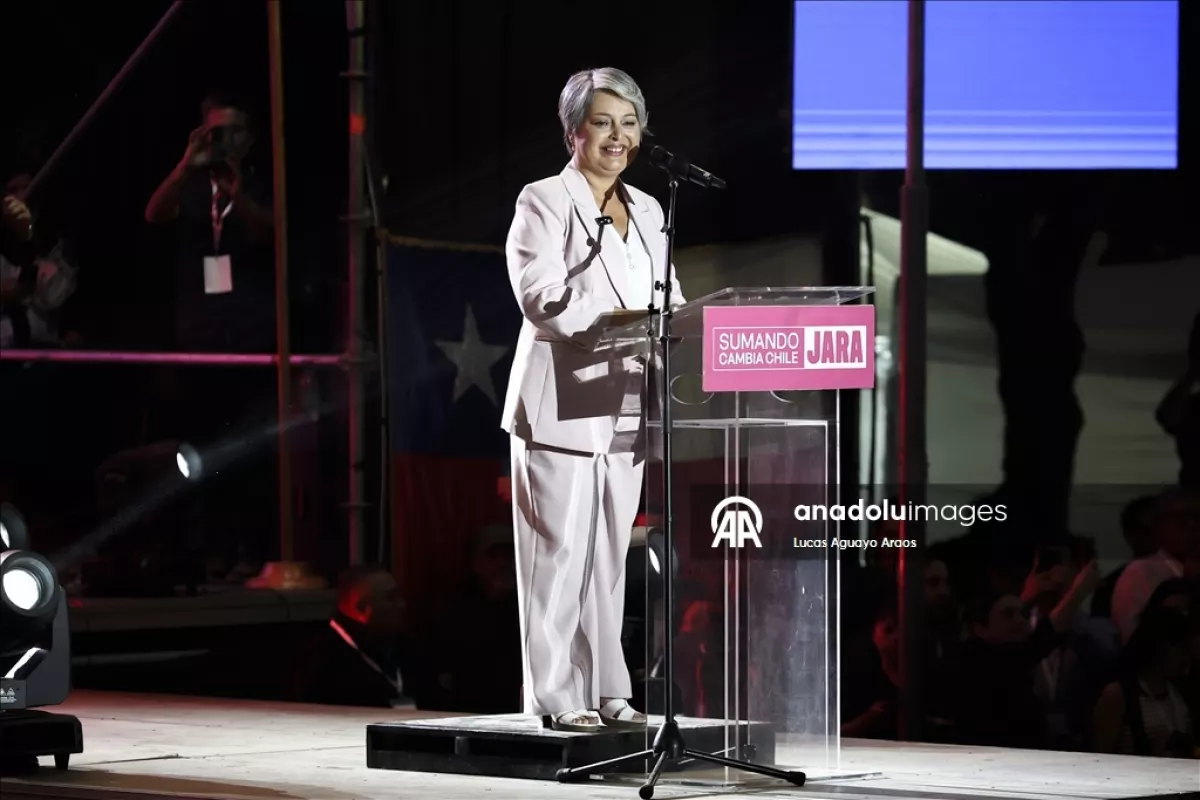
In the first round, Jeannette Jara narrowly took first place with 26.85 per cent of the vote. Close behind her was Kast, who received 23.93 per cent of the votes, securing his place in the runoff. In third, fourth, and fifth places were three right-wing candidates: Franco Parisi (19.71 per cent), Johannes Kaiser (13.94 per cent), and Evelyn Matthei (12.47 per cent). All of them urged their supporters to back Kast in the second round and joined his campaign.
Jara has already conceded, writing on social media: “Democracy has spoken loud and clear. I have communicated with Jose Antonio Kast and wished him success for the good of Chile. Those who supported us and voted for our candidacy can be assured that we will continue working to improve life in our homeland. Together, and with our heads held high, as we always have.”
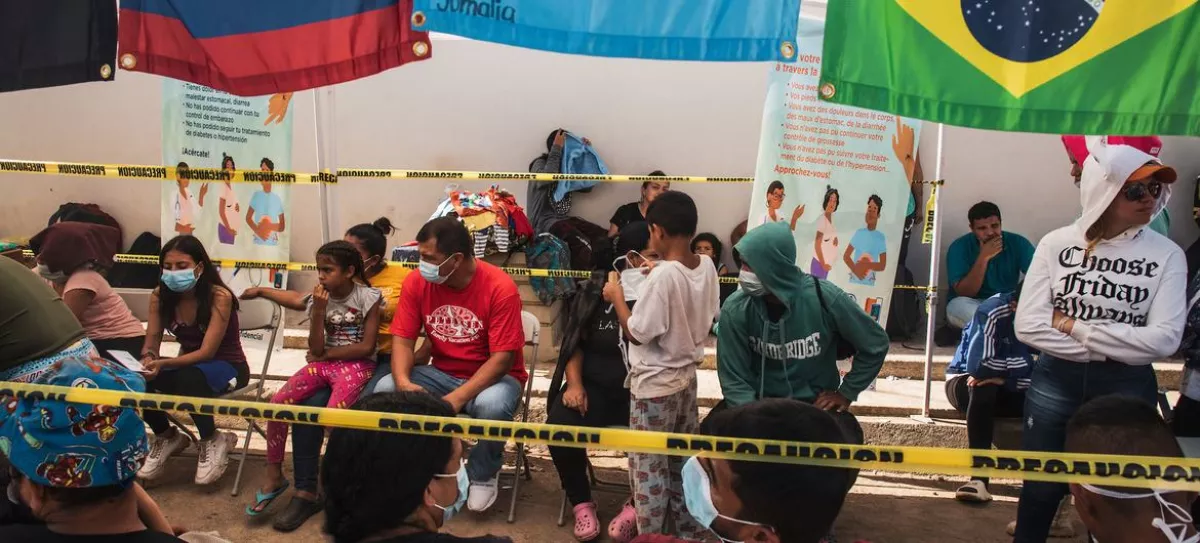
The core of José Antonio Kast’s campaign focused on combating illegal immigration in the style of U.S. President Donald Trump: building detention centres, strengthening borders with three-meter ditches and electric fences, and deporting around 330,000 migrants. In his view, the wave of migrants has fueled the rise in crime that has swept through Chile in recent years.
Regarding the economy, Kast, a supporter of Argentine President Javier Milei, promises radical neoliberal reforms: cutting government spending by more than 6 billion U.S. dollars in just 18 months without affecting social programs—something that several Chilean economists consider impossible unless social budget items are reduced. In international politics, Kast has expressed strong support for President Donald Trump, which some analysts interpret as a realignment of Chile’s foreign policy with Washington’s stance.
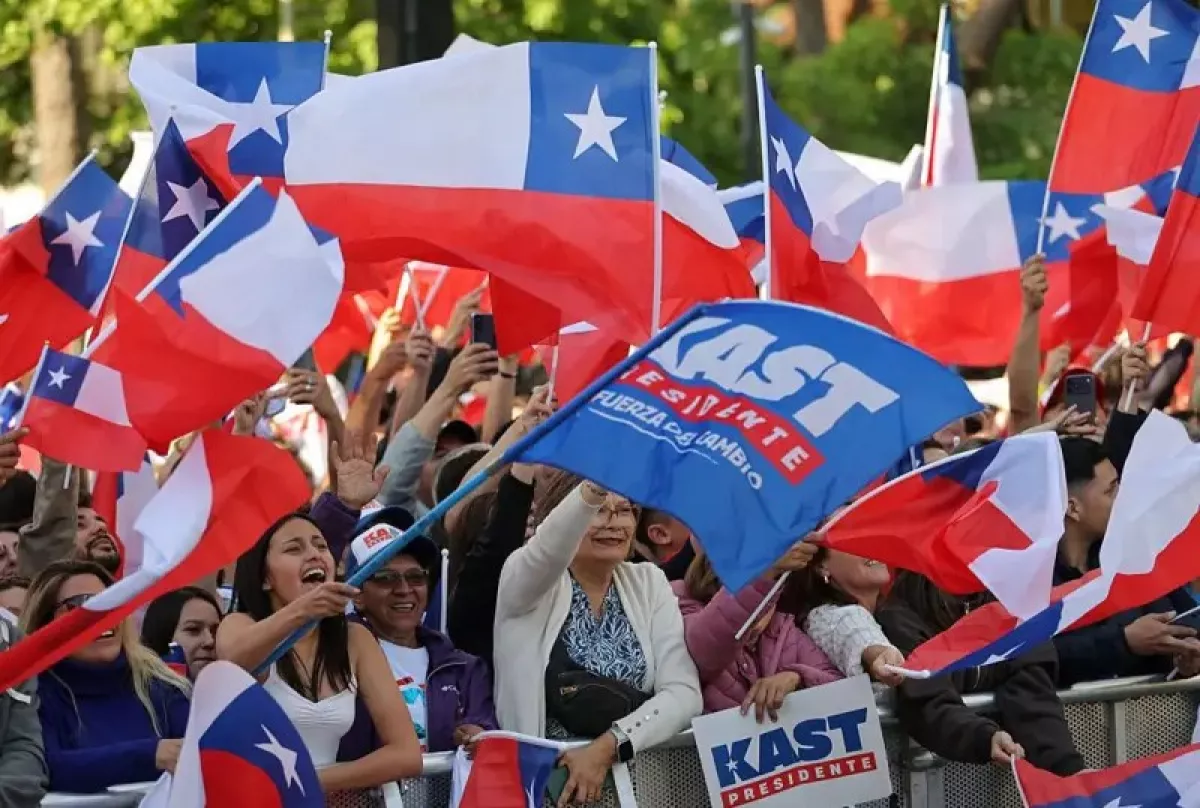
At a rally in Chile’s capital celebrating Kast’s victory, supporters wearing red caps emblazoned with “Make Chile Great Again!” waved American flags and held banners with the slogan of Milei’s 2023 election campaign, “The Power of Change.” Addressing the crowd, the new Chilean president said: “This is a day of joy… Millions of Chileans have chosen to rise up, to fight. This is not a personal victory, nor a victory for a single party. Alongside the country, hope for a life without fear has triumphed… We are going to restore lawfulness and respect for the law in all regions without exception, with no political, administrative, or judicial privileges… Today, we celebrate the dawn of freedom.”
Kast became the first president since the dictatorship to openly declare his admiration for Augusto Pinochet, under whose regime more than 3,000 people were killed or disappeared. Tens of thousands of opposition members were forced into exile. During the 2017 presidential campaign, Kast said of Pinochet: “If [Pinochet] were alive, he would vote for me.”
Like many right-wing leaders in the region, the newly elected president also calls himself a supporter of Nayib Bukele, who, as part of a controversial campaign against criminal gangs, imprisoned at least 2% of El Salvador’s adult population.
Most analysts view Kast’s victory as an example of the traditional Latin American political pendulum, where left- and right-wing politicians take turns holding power. This year, the right has won in Ecuador and Bolivia, and according to the latest vote counts—which have been ongoing for three weeks—their candidate is leading in Honduras.
Other observers, such as expert Oleg Yasinsky, believe that the success of the right-wing candidate was predetermined by the policies of his predecessor, Gabriel Boric, who, after coming to power on the wave of social protests, disappointed his voters and became a “springboard” for the return of the Pinochet supporters.
Meanwhile, Harvard political scientist Steven Levitsky argues that “The far right is not a majority anywhere, it’s usually 25-30% of electorates, but it’s punching above its weight because it has a real ideological project. They’ve got political momentum right now, and that clearly helped in Chile.”
At the same time, populism researcher and professor at the Institute of Political Science of the Pontifical Catholic University of Chile, Cristóbal Kaltwasser, stated that Kast’s election “is bad news for Chile’s democratic system”: “What we are seeing with Kast is a return to the origins of a right that clearly did not have democratic credentials.”
“My fear is not that Chilean democracy will collapse in four years, but that the conventional right will shift ever further to the right and democratic rightwing forces will therefore disappear,” the professor emphasised, adding that there is no evidence to support Kast’s claim that the rise in migration is responsible for the increase in crime.
At the same time, according to the French newspaper Le Monde, the new president’s initial room for manoeuvre will be limited, and he will have to demonstrate political skill, since he will not hold an absolute majority in the country’s congress. He will need to form a coalition with other right- and far-right parties if he hopes to govern the country not just through executive decrees.
According to Sandra Pellegrini, senior analyst for Latin America and the Caribbean at the Armed Conflict Location and Event Data Project (ACLED), alongside the rightward shift, there is a regional turn toward “hardline security measures.” She attributes this wave mainly to the widely held belief that the measures implemented by Nayib Bukele in El Salvador were successful. Under the state of emergency he declared and hundreds of raids in poor neighbourhoods, more than 81,000 people were arrested, drawing widespread condemnation from human rights organisations.
Colombia’s left-liberal president, Gustavo Petro, posted on X (formerly Twitter): “From the south and from the north come the winds of death … Fascism advances.”
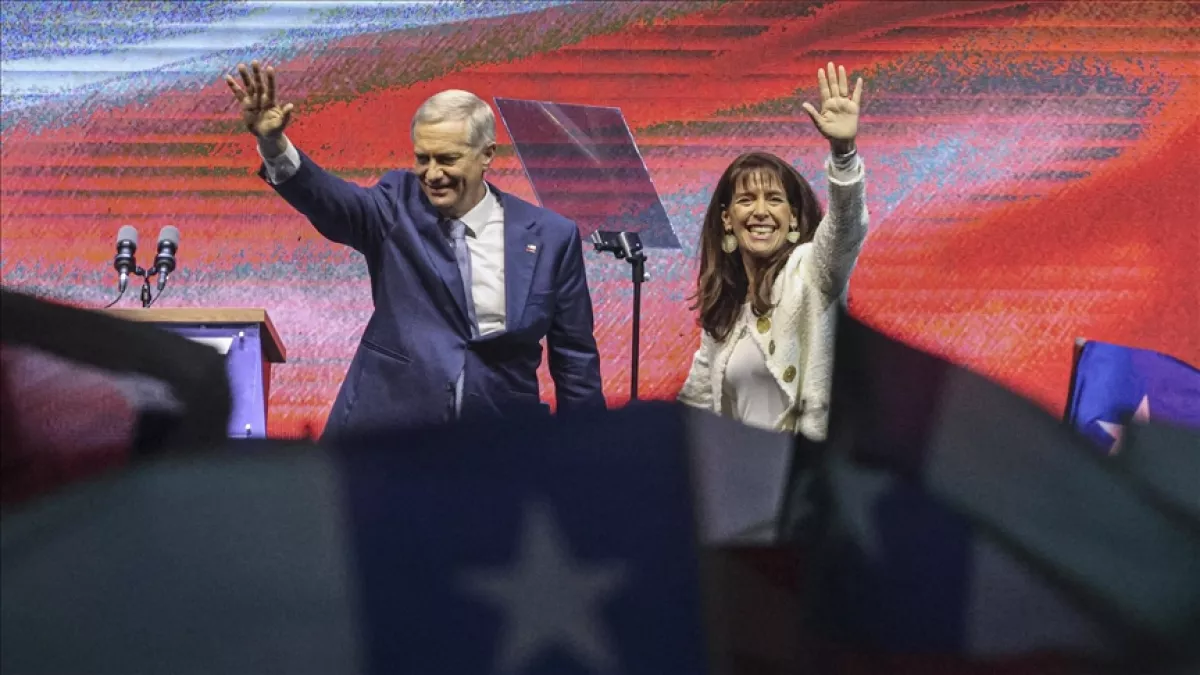
Meanwhile, José Antonio Kast’s victory in the Chilean presidential elections received high praise from leaders of the global right-wing movement. U.S. Secretary of State Marco Rubio quickly congratulated the far-right candidate, stating that the United States “looks forward to partnering with his administration to strengthen regional security and revitalize our trade relationship.”
The newly elected Chilean president, who won in all 16 regions of the country and received over 7 million votes—a record in the nation’s history—will take office on March 11, 2026. What Chile, currently considered one of Latin America’s more prosperous republics, will gain or lose under his leadership remains to be seen. The start was strong, as they say; now we will have to watch how the journey unfolds and what the future holds.







 editor@caliber.az
 +994 55 444-88-98
 Азербайджан, Баку, ул. Низами, 203, Af Business House, 5-й этаж