










Will Moldova follow Ukraine’s path? Analyst warns of unpredictable outcomes
In an exclusive interview with Caliber.Az, Moldovan political analyst Anatoliy Dirun assessed the country’s decision to withdraw from the Commonwealth of Independent States (CIS) and terminate all related agreements.
Dirun situates this move within the broader military and political dynamics surrounding Ukraine, arguing that Moldova’s pivot toward the European Union reflects both domestic consensus shaped by past conflicts and the unpredictable shifts in U.S. and EU policies in the post-Soviet space. He warns that the country’s strategic choices could redefine its political trajectory, highlighting the potential influence of Brussels and Paris in shaping Moldova’s future.

— Moldova has launched a process to withdraw from the Commonwealth of Independent States (CIS) and to terminate all agreements concluded within this framework. What do you associate this move with, how do you assess it, and what are the prospects for the country’s further advance toward the European Union?
— Over the past four years, the ruling party has consistently stated that the CIS does not represent a strategic interest for the Republic of Moldova. After the outbreak of the war in Ukraine, relations between Moscow and Chișinău effectively dropped to zero. This created a favorable ideological and informational background for the country’s leadership to review and roll back contacts with Russia, including within the framework of the Commonwealth of Independent States.
However, there are several important nuances. At present, there is no pressing institutional need for Moldova to leave the CIS, because formally — and this is crucial — the political phase of Moldova’s EU accession negotiations has not yet begun. These negotiations were expected before the New Year, but it is now clear that the process will be delayed. This raises the question: “What explains the sudden speed of radicalization and the rush in declarations and intentions by Moldova’s leadership?”
In my view, everything currently taking place in Moldova’s foreign policy should be interpreted through the lens of the military and political dynamics surrounding Ukraine, as Chişinău is closely tied to Kyiv and developments related to that country. Previously, the Moldovan authorities argued that the future of the Transnistrian conflict, the country’s reintegration, and the reunification of the left and right banks would depend on the outcome of the fighting in Ukraine. Today, however, we are witnessing the opposite picture. The government, represented by the president, first speaks about the possibility of holding a referendum, and then Foreign Minister Mihail Popșoi states that Moldova could consider the 1918 scenario—that is, unification with Romania—in the event of threats. And who could pose such a threat? Moscow—through a possible change in the territorial and political map following the outcome of the conflict in Ukraine.
— So, in essence, is Europe, through its appeals to Moldova, attempting to accelerate an inherently unpredictable trajectory in Russian–American relations?
— It can be argued that due to a shift in U.S. priorities and the transformation of its strategic paradigm, Washington’s policy in the post-Soviet space has become highly unpredictable. Today, no one can clearly define where the “red line” lies or how far the United States is prepared to go to bring the war in Ukraine to an end: whether it will continue to pressure Kyiv or instead opt to play for time, thereby fragmenting and weakening the European Union, which is deeply entangled in the Ukrainian conflict. Time is passing, and each actor in this race against the clock is trying to maximize its gains by raising the stakes. Brussels has also raised the stakes by declaring a European perspective for Moldova. This move has drawn considerable attention, as the post-Soviet space is increasingly becoming a zone of active geopolitical reconfiguration.
The new borders that may emerge as a result of this war are likely to take shape by the summer of 2026. At the same time, all parties recognize their provisional nature, which is precisely why efforts are already underway to create additional mechanisms and guarantees in advance — in order not to become the next link in a potential chain of Moscow’s further advance.
— Journalist Lucas Leiroz stated that Moldova and Ukraine are following very similar paths, with an unpredictable outcome. How do you assess this claim?
— Moldovan society has a "1992 inoculation"—the experience of the Transnistrian war. After a brief but intense period of fighting, a strong societal consensus emerged around neutrality and the inadmissibility of involving the country in conflicts. Moldova’s exit from the CIS effectively tightens the anti-Russian spring, and no one knows what trigger will set it off. One thing is certain: it will happen.
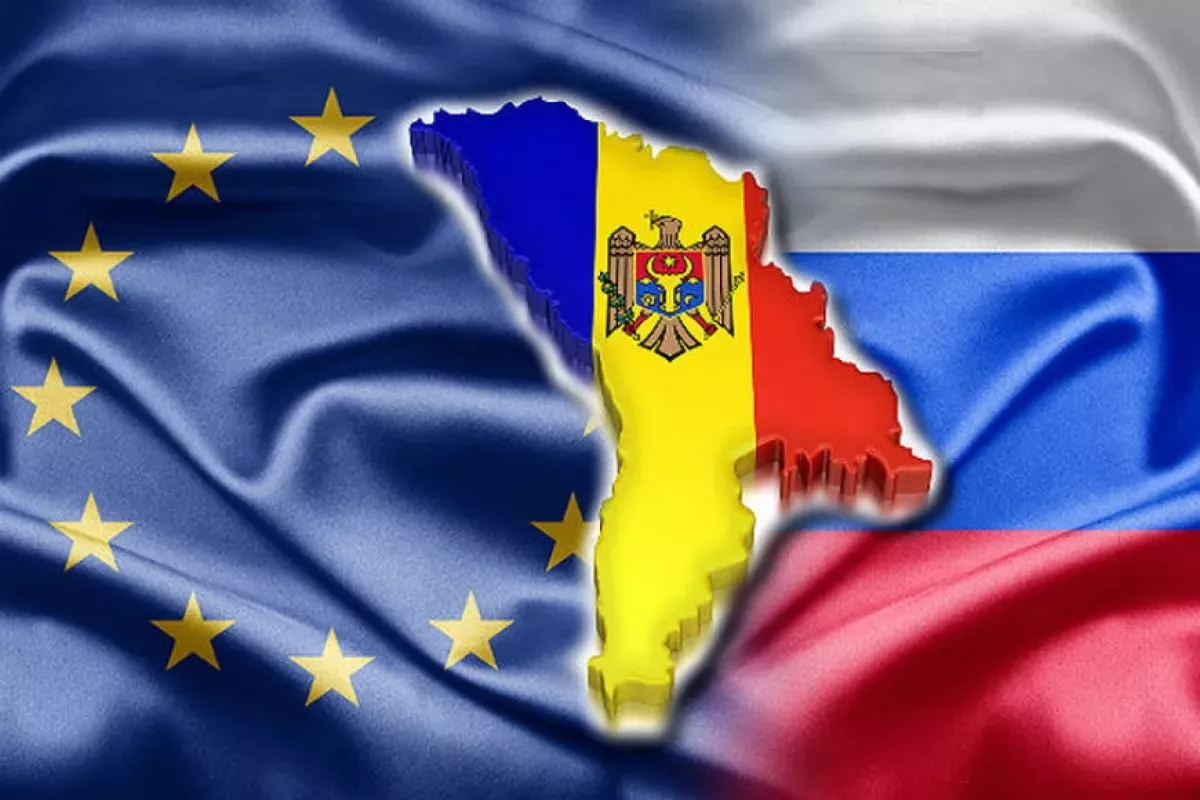
The political development of Moldovan society over the past 30 years resembles a pendulum, swinging between pro-European and pro-Russian forces. Today, the pendulum has clearly moved toward a pro-European course, yet the segment of society that regards Russia as a strategic partner has not disappeared. Transnistria, meanwhile, remains a distinct and separate factor.
At a deeper level, there is a shared understanding that Moldova must not be drawn into confrontation. This consensus is now being undermined, and such a policy cannot end well—first and foremost for Moldovan statehood. If the state becomes so weak that its citizens are unwilling to defend it, that is one historical scenario. If citizens choose to stand up for statehood—which is the more likely outcome—Moldova will follow a different political trajectory. The Ukrainian path is applicable only in part. Yes, there are external parallels, but a number of key elements are missing, such as a radical anti-Russian ideology, nationalist groupings, and fan-based structures from which combat units could be formed.
At the same time, the scenario of unification with Romania has a clear historical precedent and is being actively promoted. As long as the ruling party retains its parliamentary majority, it is technically capable of initiating this process. In fact, it has already been launched in the information sphere, serving as a signaling mechanism designed to gradually prepare public opinion. Whether the authorities will proceed further will depend on developments on the Ukrainian front and on the broader political debate surrounding Ukraine’s future status.
— In your view, how prepared is the EU itself to compete for Moldova and to secure its status outside Russia’s sphere of influence? How far is Brussels willing to go, at least at the level of political rhetoric?
— Today, the European Union is investing substantial resources in Moldova and, objectively, exercises control over this space—at least over the right bank of the Dniester. The left bank, Transnistria, remains outside this control. The EU has achieved notable success: it provided consolidated support to the ruling party and personally to Maia Sandu in both the presidential and parliamentary elections. In this sense, the EU feels confident and comfortable in the country.
However, the European Union is a collective entity, and at some point concrete responsibility will have to be assumed by a single actor. Whereas the United States previously played the leading role in this regard, its focus has now shifted, and France is increasingly emerging as the key player in Moldova. Moldovan and Romanian elites have long-standing ties with Paris and President Macron, and French specialists have worked in both Bucharest and Chișinău, including during last year’s election campaigns.
France currently holds a strong position, but whether it is willing to assume responsibility for carrying out such a large-scale foreign policy undertaking as a referendum on the unification of Moldova and Romania remains an open question. This will depend not only on France’s own stance, but also on the positions of Germany and other key European actors. Chișinău may be able to initiate the process, but without substantial foreign policy backing, an instrument such as a referendum would prove unviable.







 editor@caliber.az
 +994 55 444-88-98
 Азербайджан, Баку, ул. Низами, 203, Af Business House, 5-й этаж