










Azerbaijan–Israel: From partnership to a security factor Following Saar’s visit to Baku
The visit of Israeli Foreign Minister Gideon Saar to Baku, during which he met with President Ilham Aliyev and held talks with Azerbaijan’s Foreign Minister Jeyhun Bayramov, is not only an important event in the context of bilateral relations but also a reflection of Azerbaijan’s growing authority within regional and global security frameworks.
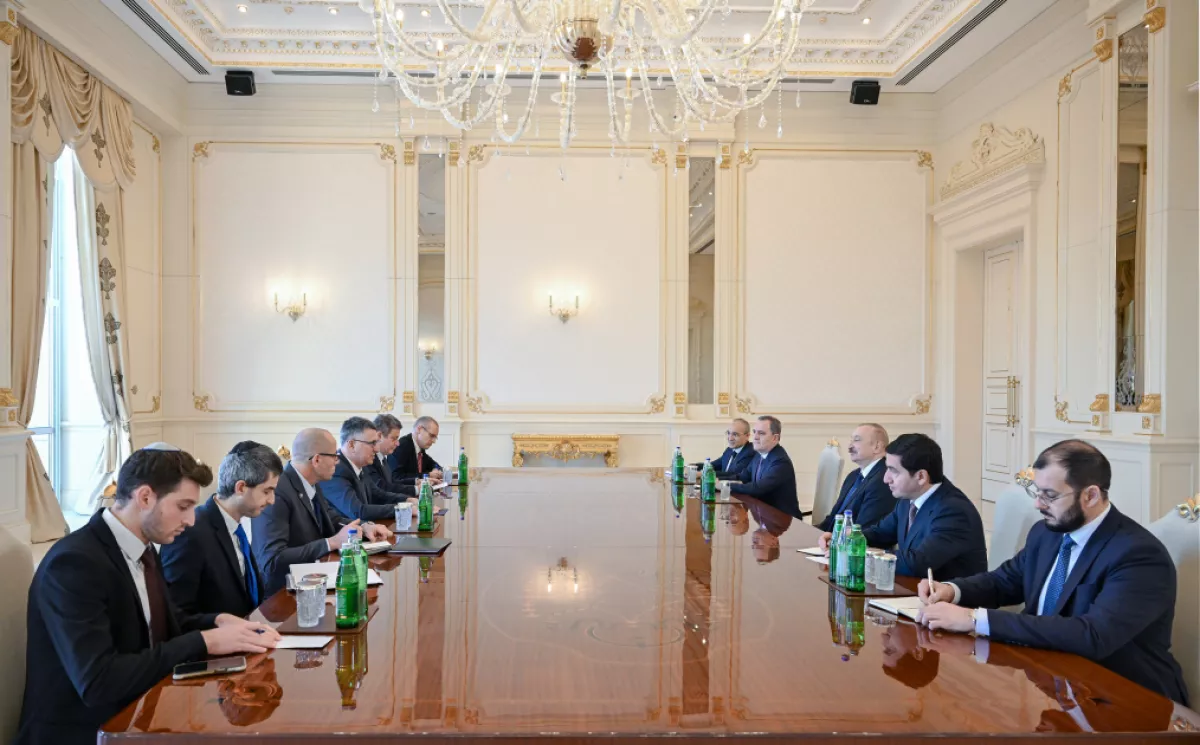
Saar’s statement that Israel and Azerbaijan, with their developed economies, are “pillars of stability in our regions” reflects new realities: today, Baku is a key centre of strength and stability in the South Caucasus, and Azerbaijani–Israeli cooperation is an example of how an independent foreign policy can yield tangible results.
Particular attention was drawn to the fact that the Israeli minister was accompanied by a high-level business delegation, demonstrating the two countries’ desire not to limit their engagement to traditional political dialogue, but to strengthen strategic and economic ties, elevating the partnership to a qualitatively new level.
Azerbaijan and Israel have long cooperated in the fields of energy, high technology, agriculture, and the defence industry. However, today the relationship between the two countries goes beyond pragmatic cooperation and is evolving into a component of regional stability architecture. This is why the Israeli foreign minister emphasised that the partnership between the Republic of Azerbaijan and the State of Israel is not merely a bilateral matter but also a factor of resilience in a broader geopolitical context.
Particular attention should be given to Gideon Saar’s statement regarding progress in the normalisation of relations between Azerbaijan and Armenia, achieved with the mediation of U.S. President Donald Trump. He noted that this outcome was made possible thanks to the balanced domestic and foreign policy of President Ilham Aliyev, stressing that without the president’s wise leadership, peace in the region would not have been possible.
These words are not only an accurate reflection of reality but also an important message to the world: they affirm that the Azerbaijani state is today perceived as an active actor in international politics, shaping new realities in the South Caucasus. Azerbaijan is capable not only of defending its national interests but also of advancing a broader agenda of peace and development.
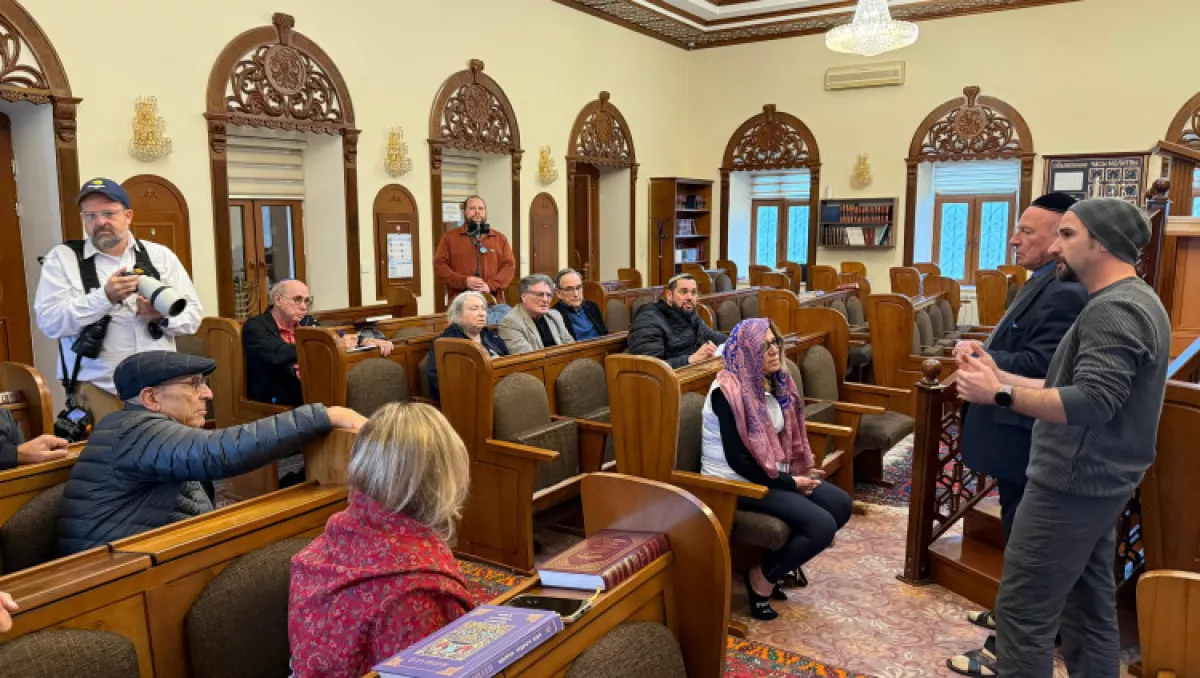
Gideon Saar also highlighted the fact that the Jewish community in Azerbaijan lives in conditions of stability and security. This is far from being a mere diplomatic compliment; it is recognition of Azerbaijan’s unique model of multiculturalism and tolerance. The Republic of Azerbaijan is one of the few Muslim-majority countries where people of different religions and cultures have lived for centuries in an atmosphere of peace, respect, and mutual understanding. This further enhances the country’s international image, making it a model for regions plagued by religious or ethnic conflicts.
During the joint press conference with the Israeli minister, Jeyhun Bayramov reaffirmed Azerbaijan’s consistent position on the Israeli–Palestinian conflict: “During our talks, we also traditionally discussed issues of regional and international security, including the situation in the Middle East and the Gaza Strip. Azerbaijan’s position on the situation in Gaza within the context of the Israeli–Palestinian conflict is well known. We advocate a peaceful solution through negotiations.”
This stance is a clear demonstration of the maturity of Azerbaijan’s foreign policy, which avoids populism and emotional slogans, choosing instead to act within the framework of international law.
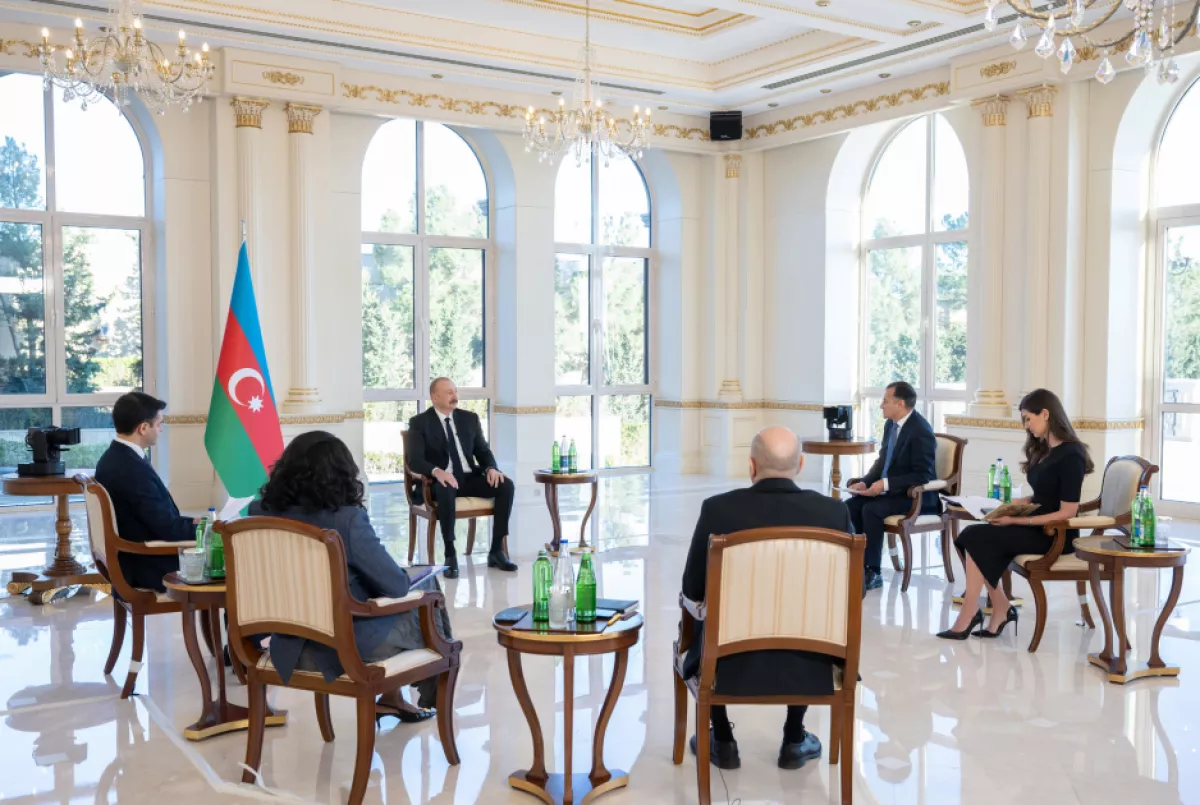
In this context, it is important to recall a statement by President Ilham Aliyev made during a recent interview with local television channels.
“When we were in trouble, we were left to our own fate. No one protected us. Furthermore, with all due respect and sympathy for Palestine, Palestine did not particularly protect us either. Yes, there were resolutions from the Organisation of Islamic Cooperation (OIC) supported by everyone. We are grateful to all countries for that, just as Azerbaijan has always supported Palestine and the creation of a Palestinian state in the UN, the Non-Aligned Movement, and the OIC. The Palestinian Embassy operates in Azerbaijan, supported in part by Azerbaijani financial assistance. Therefore, I have always maintained that the affairs of Arab countries should be resolved by the Arab countries themselves. I remain deeply convinced that non-Arab Muslim countries should not get ahead of themselves. This will lead to no good. There is the Arab League; the Arab League has a position that is quite clear, and we follow it. There are decisions of the OIC; we participated in making those decisions, and we follow them. Thus, displaying unnecessary activity and getting ahead of ourselves is not the best course of action,” said the Azerbaijani leader.
This position is both fair and pragmatic. Azerbaijan does not abandon its principles, but it also does not substitute its national interests for the political emotions of others, preferring to act responsibly and with careful consideration.
Viewed in the context of global affairs, Azerbaijan’s foreign policy line reveals its uniqueness: the country simultaneously develops strategic relations with Türkiye, Israel, the Islamic world, the United States, Europe, Asia, and Africa.
This is a rare example of independent diplomacy, where a country does not become entangled in others’ blocs or conflicts, but instead builds its own model of partnerships. Azerbaijan is one of the few states capable of pursuing an autonomous policy, including in establishing mutually beneficial and trust-based dialogue with various international actors—a fact clearly demonstrated by Azerbaijani–Israeli relations.







 editor@caliber.az
 +994 55 444-88-98
 Азербайджан, Баку, ул. Низами, 203, Af Business House, 5-й этаж