










Bastrykin rewrites Putin Weather, not missiles, now blamed in Russia’s AZAL crash investigation
On December 25, 2024, a tragedy occurred in Russian airspace that ultimately turned into a diplomatic knot, the unravelling of which exposed deep-seated contradictions within Russia’s state machinery. As a reminder, an Embraer 190 passenger aircraft operated by Azerbaijan Airlines (AZAL), en route from Baku to Grozny, crashed while attempting an emergency landing at Kazakhstan’s Aktau airport. Thirty-eight people were killed, and twenty-nine sustained injuries of varying severity. From the very first hours after the tragedy, it became clear that the version attributing the crash to a technical malfunction or pilot error could not withstand the weight of the facts.
Photographs of the wreckage, which appeared online almost immediately, showed distinctive holes in the fuselage that spoke volumes to the trained eye. These were neither cracks from metal fatigue nor marks from bird strikes. The holes had a characteristic shape, pointing to shrapnel damage. Testimonies from surviving passengers left no doubt. People described a sudden impact, after which panic broke out in the cabin, and recounted how the crew heroically struggled with the uncontrollable aircraft, trying to reach the nearest airfield. Falling oxygen masks, screams, pleas, the sense of inevitability — all of this painted a picture far removed from standard aviation accident scenarios.
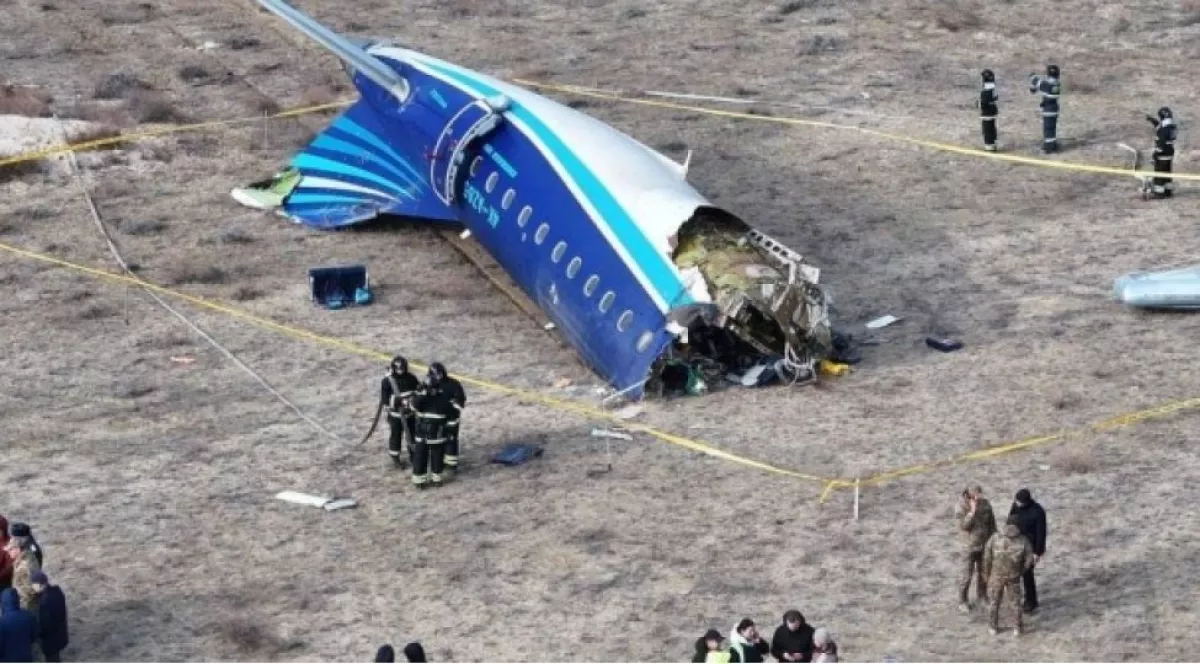
The Azerbaijani side almost immediately presented its version of the events. Baku insisted that the aircraft had been subjected to external influence while in Russian airspace. This position was expressed not through anonymous sources within security agencies, but publicly, by representatives of the country’s highest leadership. President Ilham Aliyev spoke openly and firmly, demanding a full and honest investigation from Russia. For Azerbaijan, this was a matter of national dignity. Most of the victims were Azerbaijanis, whose lives were cut short for reasons that the Russian side initially tried to obscure with vague formulations.
From the outset, Moscow adopted a provocative stance. Official figures expressed condolences, spoke of an investigation that had begun, and promised to clarify all circumstances. Yet no specifics were provided, and this silence, combined with the mounting evidence of external interference, created tension in bilateral relations. Azerbaijan waited patiently, but its patience had limits. Diplomatic channels operated at an intensified pace, information was exchanged, consultations were held, yet publicly, the Russian side continued to evade direct answers.
The turning point came on October 9, 2025, in Dushanbe, where the Commonwealth of Independent States summit was taking place. On the sidelines of the event, Vladimir Putin and Ilham Aliyev met, and it was there that the Russian president made a statement that many, including in Azerbaijan, interpreted as an admission of responsibility. Putin mentioned three Ukrainian drones that had crossed into Russian territory on the day of the disaster, directly cited technical failures in the air defence system, and confirmed that two missiles had been fired. According to the Russian president, the missiles exploded approximately ten meters from the aircraft, possibly in self-destruction mode, and fragments from these missiles struck the fuselage of the Azerbaijani plane.
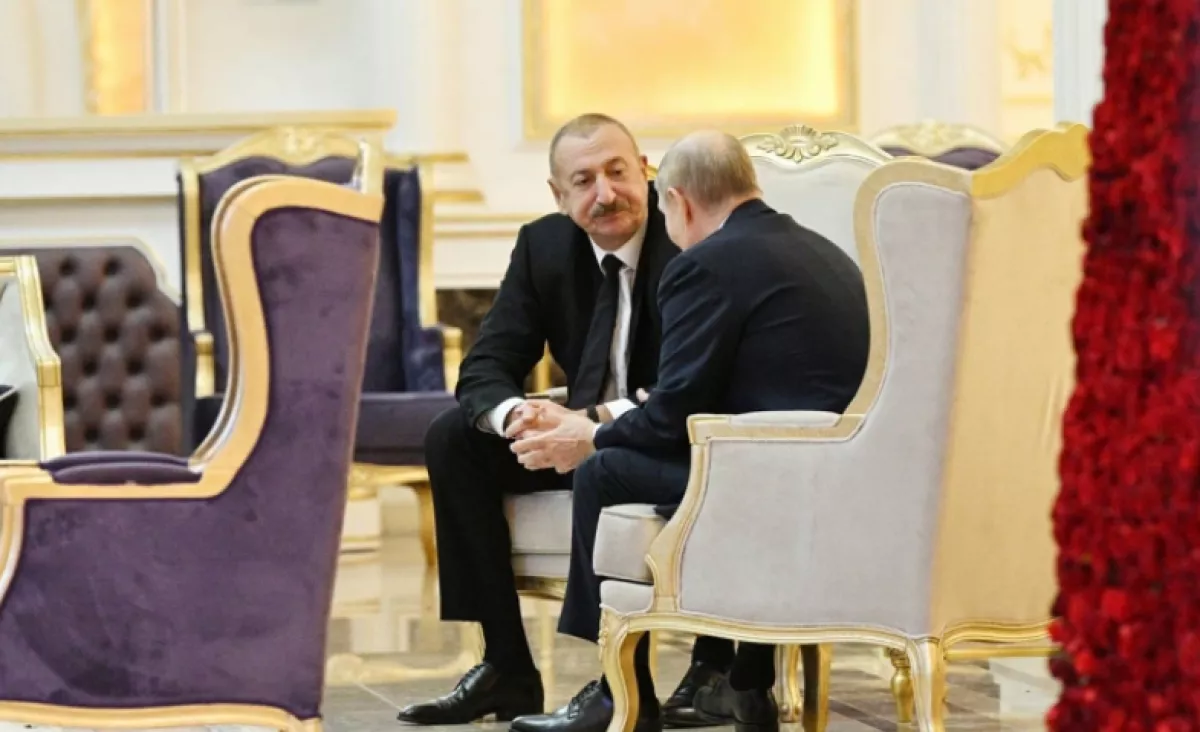
In Dushanbe, the Russian president effectively acknowledged that the civilian aircraft had been harmed (read: shot down — editor’s note) as a result of the actions of Russia’s air defence system. He did not delve into the technical details, but for many observers, it was a hint that Moscow was prepared to assume responsibility and build relations with Baku on the basis of honesty and respect. It seemed that the most difficult part of the path had been traversed, and the rest was a matter of procedure: the investigation would confirm what had already been stated at the highest level, organisational conclusions would be drawn, those responsible punished, and compensation paid.
However, at the end of December, Azerbaijani Foreign Minister Jeyhun Bayramov reported receiving a letter from the Russian side. He did not go into the details of its contents but emphasised that the Russian Investigative Committee had closed the criminal case concerning the plane crash. This news was met with bewilderment in Azerbaijan. How could a case be closed when the investigation was not yet complete, when questions about the perpetrators and the mechanisms of the incident remained unanswered? At the time, in December, the contents of the letter remained undisclosed, and it was possible to assume that the closure of the case was merely a formal step, related to procedural peculiarities.
Today, the situation became clear in the most unexpected way. The Telegram channel BT News published a letter signed by Alexander Bastrykin, chairman of the Russian Investigative Committee, addressed to Azerbaijan’s Attorney General, Kamran Aliyev. How the channel obtained this document remains an open question. Leaks of official correspondence are rarely accidental. Someone clearly had an interest in making the letter public, and that interest lies in the realm of politics rather than journalistic curiosity. It may be the decision of internal Russian actors who consider the Investigative Committee’s line to be mistaken. In any case, the document has become public, and its contents proved sensational in the degree to which they diverged from what Putin said in Dushanbe.
In his letter, Bastrykin presents a version of events that seems to exist in a parallel reality. He writes that the plane departed from Baku to Grozny, but due to weather conditions, after two unsuccessful attempts, the crew was unable to land in Grozny. Having decided to divert to another airport, the plane collided with the ground while attempting to land in Aktau. The phrasing is utterly sterile, hollow, and detached from reality. There is not a word about the air defence system, no mention of missiles, no hint of shrapnel striking the fuselage. Just weather conditions, failed landing attempts, the decision to divert to an alternate airfield, and a collision with the ground. Reading these lines, one might think it was a routine aviation incident, the kind that happens when pilots fail to manage an aircraft in difficult weather.
Behind this neutral wording lies a fuselage riddled with shrapnel, a damaged hydraulic system, and a plane that miraculously stayed aloft thanks to the professionalism and courage of the crew. The pilots battled an aircraft that had effectively stopped responding to commands, trying to reach the intended airfield, fully aware that every second counted. They performed a heroic feat, saving some lives under conditions in which a normal landing was nearly impossible. Yet in Bastrykin’s version, all this heroism, all the drama of the struggle for survival, disappears behind cynical and absurd words about weather and a collision with the ground. The implication is that the crew simply failed to land in Grozny due to bad weather, and the more than 400 kilometres from Grozny to Aktau over the Caspian Sea were covered under normal flight conditions.
What is particularly striking is the complete absence in Bastrykin’s letter of any mention of what Putin said in Dushanbe. The Russian president identified the specific causes of the tragedy: failures in the air defence system, two missiles fired, their detonation near the aircraft, and shrapnel damage. This was an acknowledgement of what had occurred at the highest level of the state. One would think that the Investigative Committee would align its conclusions with this publicly stated position of the head of state. Yet instead, Bastrykin’s agency presents a completely different picture, in which the cause of the disaster is weather conditions and the actions of the crew.
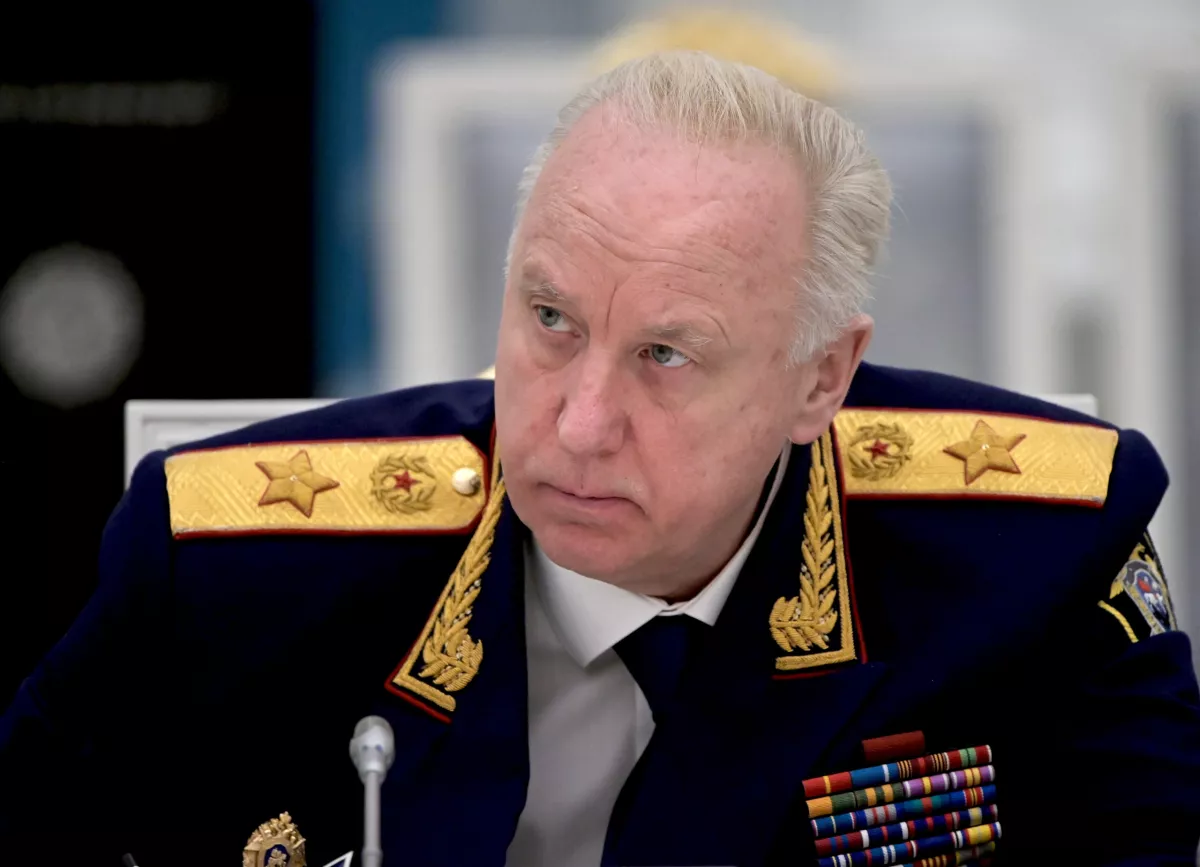
Such disregard for the president’s words cannot be explained by bureaucratic clumsiness or a lack of coordination between agencies. Putin spoke in Dushanbe on October 9, 2025. Several months have passed since then — more than enough time to bring the Investigative Committee’s documents in line with the Kremlin’s position. Moreover, an investigation of a disaster of this scale, with such international ramifications, could not have been conducted without constant consultations with the country’s leadership. The Investigative Committee does not operate in a vacuum; its conclusions in cases of such importance are coordinated at the highest level. It follows that Bastrykin either deliberately ignored directives from above or was given carte blanche to present his own version, contradicting the president’s account.
The first scenario seems unlikely in a system where the vertical power structure is rigidly structured. The chairman of the Investigative Committee, influential as he may be, would hardly openly oppose the words of the head of state without strong reasons. This suggests a lack of a unified position within the Russian leadership on an issue that directly affects relations with a strategic partner. There may be forces that consider admitting responsibility for the civilian plane’s destruction unacceptable from a reputational or legal standpoint. Perhaps it reflects a reluctance to set a precedent in which mistakes by the military or air defence operators become the subject of international scrutiny and compensation claims.
In any case, Bastrykin’s letter places Moscow in an extremely uncomfortable position. On one hand, the country’s president publicly acknowledged the causes of the tragedy and effectively assumed political responsibility. On the other hand, the investigative agency promotes a version that completely excludes that responsibility, reducing everything to weather conditions. To an outside observer, this appears as a lack of coordination between different parts of the state apparatus. For Azerbaijan, it signals that the Russian side is still not prepared to bring the matter to a logical conclusion and legally formalise what has been stated politically.
In the concluding part of his letter, Bastrykin leaves himself room to manoeuvre. He writes that, taking into account the findings of the Interstate Aviation Committee (IAC) expert review, an additional assessment of the circumstances of the crash is planned within the framework of a reopened criminal case. This phrasing reads like a safeguard in case the weather-based version does not withstand scrutiny by international experts.
If the IAC’s findings confirm that the aircraft was struck as a result of the Russian air defence system — which, given the totality of evidence, seems inevitable — the Investigative Committee will have to either revise its position and reopen the case, or enter into open contradiction with the international technical experts. The first option would constitute an admission that the original weather-based explanation was untenable, undermining the agency’s authority. The second option would turn the situation into an open conflict between the Russian investigation and international experts, which would be even worse in terms of reputational costs.
The phrase about the possibility of reopening the case reveals an internal uncertainty in Bastrykin’s own version. If he were truly convinced that weather conditions had caused the disaster, why leave the door open for revision? Typically, criminal cases are closed definitively when the investigation is fully confident in the established circumstances. Here, however, the closure is conditional, with a caveat about potential reopening.
For the Azerbaijani public, the publication of this letter was a moment of truth. Baku had shown restraint and patience, giving the Russian side an opportunity to clarify the situation and establish a coherent position. Putin’s statement in Dushanbe had been perceived as a step in the right direction, a readiness on Moscow’s part to acknowledge mistakes and assume responsibility. The payment of compensation to the families of the deceased and injured, mentioned in Bastrykin’s letter, was also seen as a positive signal. But now, with it becoming clear that the official investigative version completely contradicts what the Russian president said, it is conceivable that this could test Baku’s patience to the limit.
Azerbaijan cannot accept a situation in which the deaths of its citizens are attributed to weather conditions, contrary to the obvious evidence of external impact. This is not merely a matter of legal classification of the incident, but one of national dignity and justice for the memory of the deceased. The victims’ families have the right to know the truth about what happened to their loved ones, rather than receiving vague explanations about bad weather and a collision with the ground. Monetary compensation without acknowledgement of responsibility is perceived not as fair reparation, but as an attempt to buy off and cover up an inconvenient story.
Baku sees and understands all the contradictions in the Russian position and considers them unacceptable. At the same time, the confrontation has not escalated into an open conflict; diplomatic channels remain operational, and public rhetoric is measured. Azerbaijan is giving Russia one more chance to correct the situation and align its official documents with both reality and President Putin’s own statements.
What happens next? Much depends on how Moscow will respond, and even more crucially, how Baku will react. If the Russian side continues to insist on the weather-based version, it is highly likely that relations with Azerbaijan will inevitably enter a zone of turbulence. If, however, the position is adjusted, the investigation is reopened taking all established facts into account, and there is a public acknowledgement that the plane was indeed affected by Russian air defence, the situation could be corrected. Putin’s statement in Dushanbe showed that such an outcome is possible. The question now is whether the rest of the state apparatus will follow the president or continue in its own direction, creating the appearance of a split within Russian authority.
By his letter, Bastrykin has effectively positioned himself against Putin, offering an alternative version of events (well, apparently, this is possible in modern Russia?). Whether consciously or not, the chairman of the Investigative Committee has created a situation in which an external (Azerbaijani) observer is forced to choose whom to believe: the president of a self-proclaimed great country, speaking of missile fragments, or the head of the investigative agency, talking about weather. One can only hope that within the Russian system of power, the same choice will be made in favour of the truth, however inconvenient it may be.







 editor@caliber.az
 +994 55 444-88-98
 Азербайджан, Баку, ул. Низами, 203, Af Business House, 5-й этаж