










“Board of Peace” — Trump’s response to global stability deficit Expert opinions on Caliber.Az
On January 22 in Davos, the charter of the “Board of Peace,” created on the initiative of U.S. President Donald Trump, was signed. Azerbaijani President Ilham Aliyev attended the event. In total, the charter of the newly established body was signed by 21 countries, not including the United States, among them Azerbaijan, Bahrain, Morocco, Argentina, Armenia, Belgium, Bulgaria, Hungary, Kazakhstan, Pakistan, Qatar, Saudi Arabia, Türkiye, the UAE, Uzbekistan, and others.
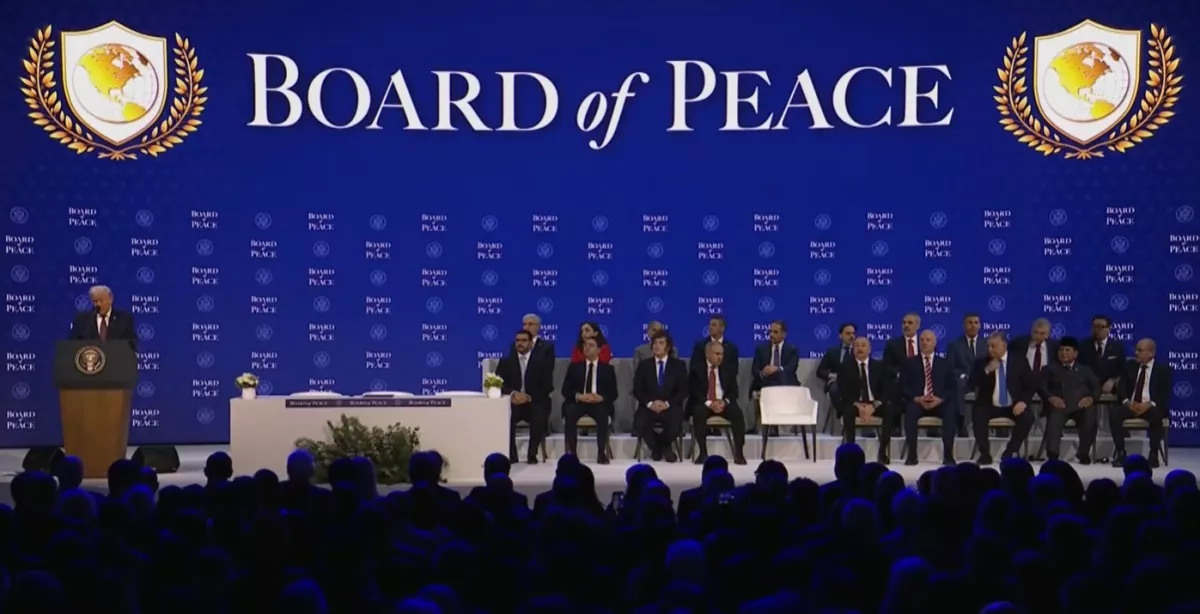
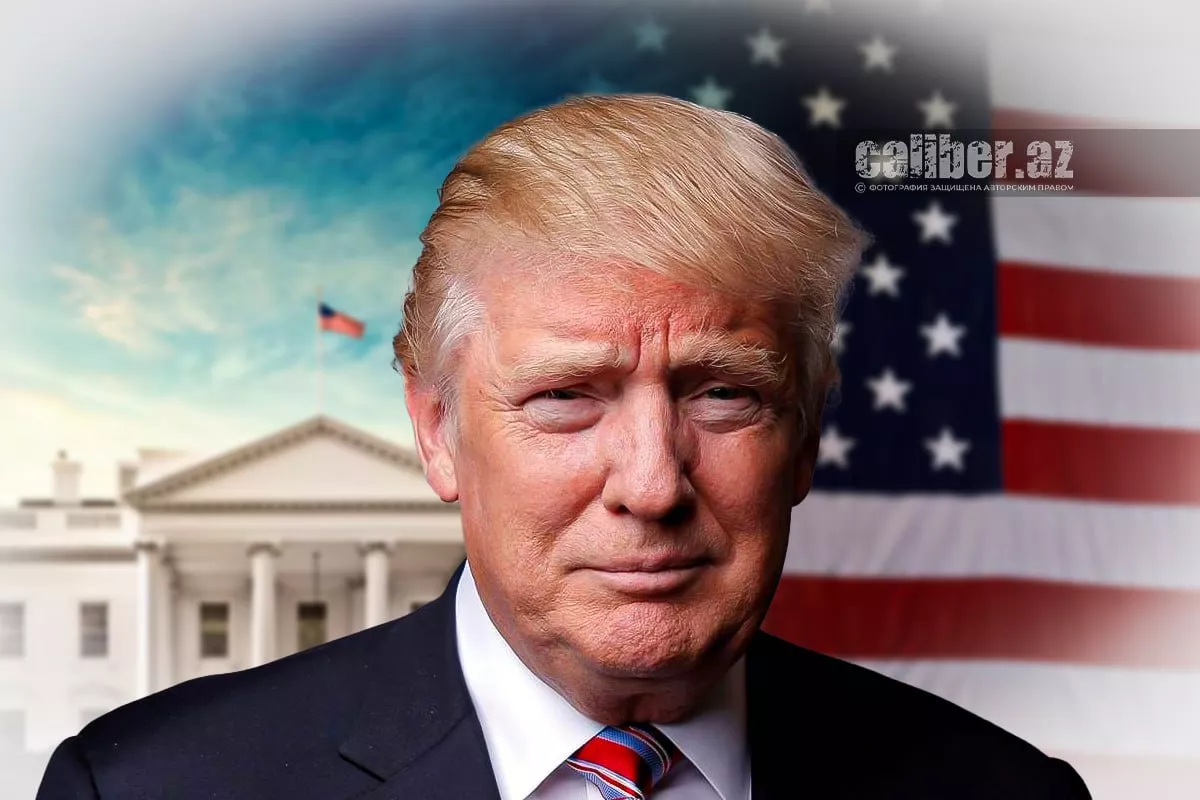
Opening the event, Donald Trump stated that “this is a very exciting day, long in the making,” emphasising the importance of peace in the Middle East. “We've settled eight wars, and I believe another one's coming pretty soon,” the White House chief added, referring to the war in Ukraine. After the event, the U.S. president confidently told journalists that more than 50 countries would join the “Board of Peace.”
However, some analysts and experts view the creation of the Board as a kind of challenge to the existing world order. Trump himself, in previous statements, did not rule out the possibility that this body could become an alternative to the United Nations. At the signing ceremony, however, he spoke of the “Board of Peace” cooperating with the UN and expressed a desire to work both with this organisation and with many countries around the world.
But what does the expert-analytical community think about the potential and prospects of this new international structure? Caliber.Az asked Israeli and Belarusian experts to weigh in.

Commenting on Donald Trump’s speech at the signing ceremony of the “Board of Peace” charter, journalist and publicist Rostislav Goltsman, head of the International Relations Commission of the Union of Journalists of Israel, noted that this is not about rhetoric or a collection of grand statements, but rather a political declaration.
“This is not about claims or discussions like the statements about Greenland, which, by the way, faded into the background in just one day—if it even still exists anywhere—and it’s not even about the Gaza Strip, although the organisation was originally called the ‘Board of Peace for the Reconstruction of the Gaza Strip.’ This is a clear and firm declaration about the creation of a new and fairly powerful force,” he said.
Elaborating further, Goltsman recalled how global alliances were formed in the past: “If we recall previous poles of confrontation, it was first East versus West, and later North versus South. The so-called collective West was always associated with NATO, and later transformed into the collective North—NATO plus the European Union. Throughout, the backbone of this structure has always been the United States. Essentially, the North Atlantic Alliance relied on the Americans, and when Trump says that the U.S. paid for Europeans’ happy and secure life, he is absolutely right. America drove itself into a trillion-dollar deficit, sparing no resources to protect Europe, maintain bases, and develop the alliance. Today, we see a completely different picture: in the new organisation, the U.S. is undoubtedly the key player, without which it simply would not exist, while Europe is represented only in rare exceptions, each with its own reasons.”
Explaining the European factor, Goltsman detailed the composition of participants: “Belgium is an obvious case, considering the NATO headquarters; Bulgaria is a country that needs to seek sources of energy support; Hungary is a state that traditionally demonstrates a unique position within the European Union. But we do not see such key players as the United Kingdom, Germany, or France.”
He also highlighted Ottawa’s role as a special case: “Despite all its defiance and the emotional statements about the ‘51st state,’ Canada remains with the U.S. at the decisive moment. Old ties—even extending to joint sports leagues, basketball and hockey, which are even called national—clearly demonstrate the depth of this connection.”
Goltsman particularly emphasised the geopolitical bloc of the Turkic world: “Then we see Türkiye, Azerbaijan, and other Turkic states—this is a very important step. On the other hand, there is Saudi Arabia and the Arab bloc, which is already a serious force. In addition, Israel and the countries of the Abraham Accords—effectively a space stretching from Kazakhstan to Morocco. And finally, Vietnam as a representative of Southeast Asia, a strategically important part of the world.”
Concluding his analysis, the expert emphasised that the new structure does not fit into conventional frameworks:
“When people ask what kind of organisation this is, what kind of power it represents, especially when there is no familiar collective West or collective North, the answer turns out to be unexpected. This is truly not the European Union, not NATO, and not the Global South as it has been presented, for example, within the Shanghai Cooperation Organisation. Note: among the countries that signed the charter, Russia is absent, but Belarus is present—and that is telling as well.
Thus, we see an alliance in which the traditional divisions of East and West or North and South no longer apply. Here we have the strongest players of the Global North—USA, Canada—alongside powerful states of the Global South—Türkiye, Azerbaijan, and, broadly, the Turkic world—as well as Israel and the Abraham Accords countries, a bloc led by Saudi Arabia, and Vietnam representing Southeast Asia. And this is no longer about dividing the world, but about an attempt at global control. In this sense, Trump’s statement, however controversial it may seem, is a declaration of an entirely new power, claiming the role of a real alternative to the UN, which today demonstrates weakness across almost all fronts.”
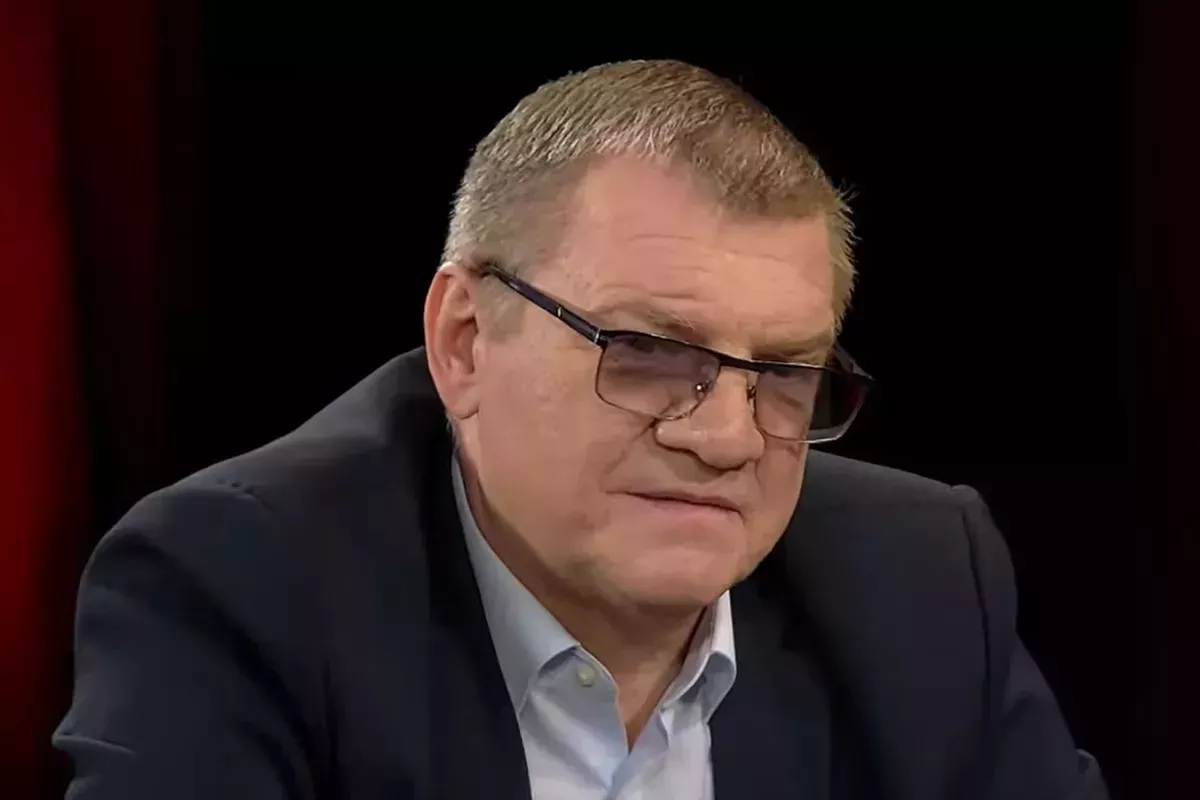
Meanwhile, Professor of the Russian Academy of Military Sciences and Belarusian military-political analyst Alexander Tikhansky is confident that U.S. President Donald Trump’s invitation to Alexander Lukashenko to join the founders of the “Board of Peace” is undoubtedly a significant event for Belarus.
“On one hand, this can be seen as recognition of the high status of the head of state and of the Republic of Belarus in matters of conflict resolution and in promoting peace on the international stage. It also indicates that Belarus, a relatively small country, carries a certain weight among key centres of power, including the United States.
However, behind the positive façade of this event lie deep risks and issues that require careful analysis. It is important to understand that the creation of any such structure claiming the role of a peacekeeper must take into account the sad experience of the League of Nations. Mistakes of the past must be avoided, and it must be ensured that the new organisation is genuinely focused on establishing peace and stability, particularly in ‘hot spots’ like the Middle East, as well as in resolving other, no less dangerous, armed conflicts.
The key point is the exclusion of using wars as a tool to achieve political or economic goals, or to satisfy the self-interest of large corporations and financial institutions. For this, effective international structures are needed that can promote the ideas of peace, cooperation, and mutual understanding. This is precisely the purpose for which the ‘Board of Peace’ was created.
Nevertheless, the context in which this initiative arose cannot be ignored. The U.S. withdrawal from a number of UN agreements and the effective reduction of its funding is a very troubling signal. Such actions objectively undermine the authority and effectiveness of the organisation established after World War II to maintain global peace and security. It gives the impression that the United States is seeking to form a new reality, a new format of international relations, which undoubtedly undermines existing international law, particularly in the area of security, and diminishes the role of the UN Security Council. This is the construction of an alternative model of influence, based on personal relationships, transactional diplomacy, and direct deals that bypass multilateral institutions, which Trump apparently considers outdated and ineffective,” the expert said.
In his view, in this context, the statement by the President of Belarus about signing the document to join the ‘Board of Peace’ deserves particular attention.
“By emphasising that no membership fee is required at the initial stages, the Belarusian leader clearly sees certain opportunities for his country. As Alexander Lukashenko said, ‘What appeals to me is that perhaps this Board of Peace, through its actions and capabilities, may extend to other parts of the world. First of all, maybe we can do something regarding Ukraine, discuss it, advance peace, influence the Ukrainian leadership. That is what appeals to me the most.’ These words indicate that, for Belarus, the potential role of this structure in resolving the conflict in Ukraine is of fundamental importance,” Tikhansky noted.
In his view, the risks for smaller countries joining the “Board of Peace” are relatively low, and it may also provide an opportunity to strengthen relations with the U.S. administration. However, for major powers, the risks are considerably higher, as Trump could potentially use the Board to legitimise his actions while bypassing the UN Security Council.
“For Belarus, the ‘Board of Peace’ is a platform to express its position on developments in the international arena, and joining it is unlikely to negatively affect the country’s relations with various international organisations, including the UN. The Republic of Belarus, despite all the speculation, consistently supports any initiatives of a peaceful nature, whether it be China’s concept of global governance or solutions to international conflicts. Joining the ‘Board of Peace’ is not driven by a desire for confrontation, but by the aim of creating a sustainable security architecture. In today’s world, there is a sharp deficit of stability, and this structure reflects how different countries perceive the idea of peaceful coexistence. It is a test of states’ willingness to seek common ground and build a peaceful future,” concluded Tikhansky.







 editor@caliber.az
 +994 55 444-88-98
 Азербайджан, Баку, ул. Низами, 203, Af Business House, 5-й этаж