










Iranian dissonance: why the senior adviser is singing “off-key” Expert opinions on Caliber.Az
A pragmatic foreign policy rooted in national interests is yielding results for Azerbaijan: the Zangezur Corridor, a unique transport artery with the potential to fundamentally reshape the geopolitical and geo-economic landscape of Eurasia, is already becoming a reality. Baku has been able to bring this project to fruition through a skilful political strategy, simultaneously establishing a balanced framework of power and interests across the region.
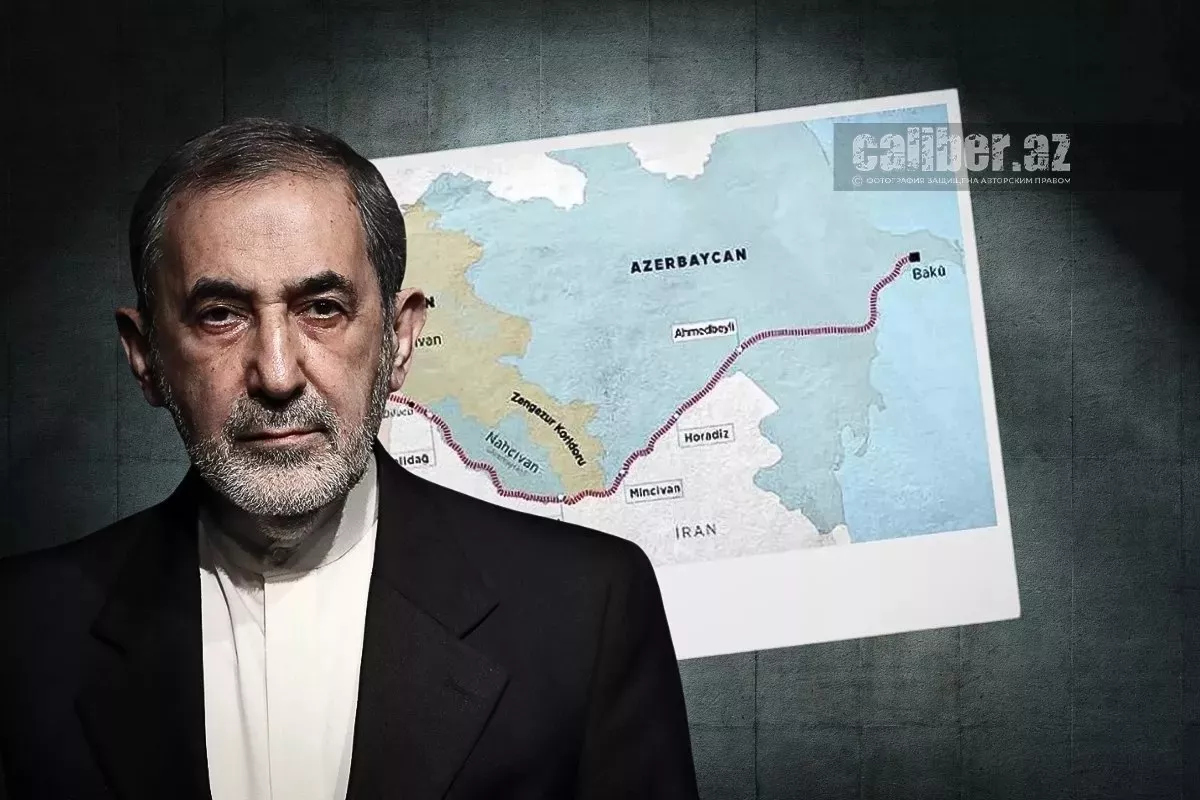
Meanwhile, those who opposed Azerbaijan’s initiative are now confronting the consequences of their stubbornness. For instance, Tehran, which actively sought to block the launch of the Zangezur Corridor, must now come to terms with the “Trump Route” – TRIPP. Iran is acutely aware of this major strategic setback, which has fueled its open irritation, manifesting in a series of sharp and hostile attacks.
Thus, Ali Akbar Velayati, senior adviser to Iran’s Supreme Leader Ali Khamenei on international affairs, stated in a meeting with the Armenian ambassador to Tehran, Grigor Hakobyan, that the Islamic Republic opposes U.S. President Donald Trump’s plan for the Caucasus, as it “presents the security of northern Iran and southern Russia with a serious threat.” He also noted that the corridor creates “conditions for NATO’s presence north of Iran,” emphasising that this plan is “practically the same project whose name has merely been changed and is now being pursued in the form of the entry of American companies into Armenia.”
Such statements sound particularly absurd and ridiculous in the context of the visit to Azerbaijan by Iranian Foreign Minister Abbas Araghchi, whose goal was to develop and expand cooperation with Baku across various fields. Not a word of concern about the corridor came from the minister; on the contrary, everything was conducted in a highly friendly atmosphere.
In light of this, a reasonable question arises: “Whose tune is Velayati playing in this political orchestra? Why is he singing ‘off-key,’ contradicting the position of the Iranian government, and how should his statements be interpreted by official Baku?” Caliber.az turned to an Azerbaijani political analyst specialising in Iran and an international relations expert from Kazakhstan to analyse the rhetoric of the senior adviser to Iran’s Supreme Leader.
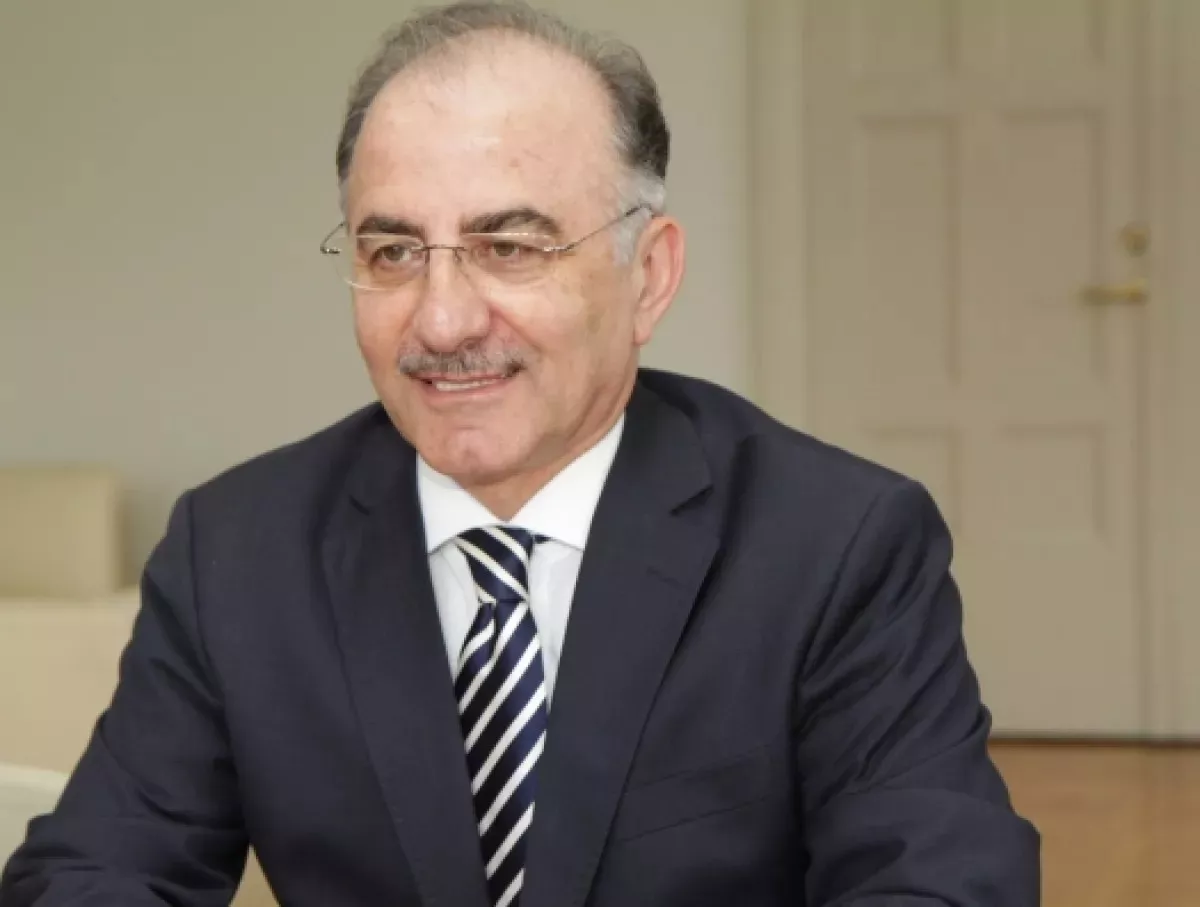
Thus, diplomat and political analyst, former Azerbaijani ambassador to Iran and Latvia, Javanshir Akhundov, noted that the leadership of the Islamic Republic of Iran (IRI) has repeatedly expressed its position on the “Trump Route” (the section of the Zangezur Corridor that will pass through Armenian territory), which has ranged from radically uncompromising to constructive.
“The latest statement made by the heavyweight of Iranian politics, Velayati, during his meeting with the Armenian ambassador to Iran, reflects the contradictory nature of positions, including the fact that the Pezeshkian government maintains a fairly calm and constructive stance on this issue. And here arises the question: ‘Which position should be considered official – that of the Supreme Leader’s adviser or of the President of the IRI?’” he said.
According to the diplomat, one of the reasons for such discrepancies is intra-factional struggle in Iran against the backdrop of military-political, economic, financial, and ecological crises. The question of succession of power, due to the advanced age of the Supreme Leader, is also a factor in this struggle.
“It is worth noting that since Azerbaijan’s victory in the 44-day war and the restoration of our country’s territorial integrity, the geopolitical situation in Eurasia has changed dramatically. The formation of a new reality—such as the Organisation of Turkic States (OTS), or what the pan-Iranian forces in the IRI refer to as the ‘Great Turan’—clearly frightens and irritates the ultra-conservative forces, to which Velayati belongs. They cannot accept the Persian-Turkic nature of Iranian statehood as a given. Certain political forces within Iran are playing this foreign policy card as a tool to pressure the countries of the Caucasus and Central Asia. The influence of the ultra-conservative part of the Iranian establishment has not diminished; we can observe it both in the Iranian parliament and in various media outlets, which reflect the position of the radical part of Iranian society. If one asks, ‘Why was this statement made during a meeting with the Armenian ambassador?’ I think the answer is obvious: because Yerevan’s direct tilt toward the West provokes persistent irritation and rejection among these Iranian elites,” the expert said.
According to him, Azerbaijan should not treat Velayati’s statement as something that defines the course of Iran, but it should not be dismissed outright either.
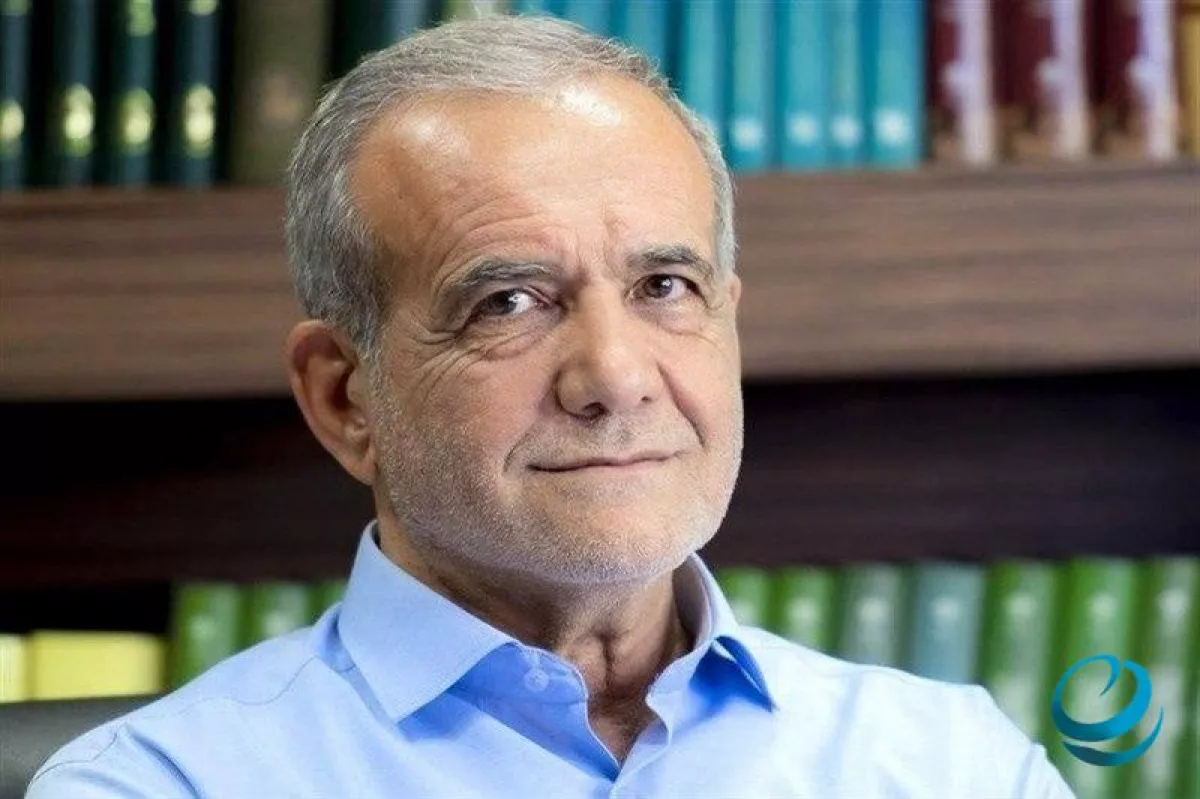
“In any case, we have official contacts with the Iranian authorities through President Pezeshkian and his government, and there is a foreign policy course for the country, which was stated during Abbas Araghchi’s visits to Baku and Pezeshkian’s visits to Central Asian countries—first to Turkmenistan, then to Kazakhstan. I believe this represents the main position of Iran, from which we should proceed and build our relations with the Islamic Republic,” emphasised the former ambassador.
He recalled that Tehran had made specific statements regarding transit and communications policy: “On the Iranian side, we were officially informed that a bridge over the Araz River will be built next year, that the road from the north will be completed at an accelerated pace, and that they want to develop friendly ties with Azerbaijan and the countries of Central Asia. I believe that such statements, to some extent, reflect part of their elite’s understanding of a new constructive policy of the country, because they realise that there is simply no alternative path.”
The political analyst also noted that the opinion of these elites stems from an assessment of reality, formed in part after the 12-day war and in the context of Iran’s current limited capabilities, including the impossibility of pursuing any confrontational policy in Central Asia and the South Caucasus, as Tehran would then find itself squeezed from all sides.
“Much of what the IRI could previously afford is no longer possible, because the southern part of Iran—the Persian Gulf region—is home to Arab countries such as Saudi Arabia, Oman, and the United Arab Emirates, which have highly developed joint military infrastructure with the United States. In this area, there are bases in Qatar, the UAE, Saudi Arabia, Bahrain, Oman, and other Gulf states. Moreover, these are not only U.S. bases, but also bases of Western countries—like the UK, France—or, for example, Türkiye’s base in Qatar,” the expert said.
In his view, this determines Iran’s foreign policy course to the north: a confrontational approach in this direction would trap the country irreversibly, which Tehran understands well.
“But this does not mean that certain forces within the IRI will not, from time to time, make themselves heard and declare their radical positions, trying to prove that they have not disappeared from Iran’s political arena and are ready to assert themselves in the future. I believe that Velayati’s position is precisely conditioned by this nature and these premises. It is also telling that on the eve of Araghchi’s visits—to Azerbaijan and Pezeshkian’s to Central Asia—former Iranian ambassador to Armenia and former MP Abolfazl Zohrevand spoke out critically against the Zangezur Corridor and, more broadly, against Azerbaijan. However, the Iranian government filed a lawsuit against him, which was upheld, and as a result, a court ruling deprived him of the right to engage in public activity for two years, and his actions are now under judicial supervision. This also indicates which vector of Iran’s foreign policy Baku should orient itself toward,” said Akhundov.

In turn, according to Kazakh political analyst and candidate of political sciences Sharip Ishmukhamedov, Velayati’s statement undermines the country’s official political course.
“Unfortunately, this once again confirms that despite U.S. and Western sanctions, the war with Israel, and pressure from Arab countries, the decision-making political system in the leadership of the Islamic Republic has not changed. Even the deterioration in living standards, environmental problems such as desertification and water shortages in the capital and other cities, have not altered the stance of certain representatives of Iran’s conservative elite. This demarche indicates that the IRI remains the same dangerous state, one that does not conduct gradual, consistent, and responsible foreign policy and does not take responsibility for the actions and decisions made by the country’s leaders, in this case, representatives of the government. All of this demonstrates that Iran has what can be called a ‘realpolitik’ and a separate declarative policy, which carries certain risks and a tendency toward conflicts with its neighbours.
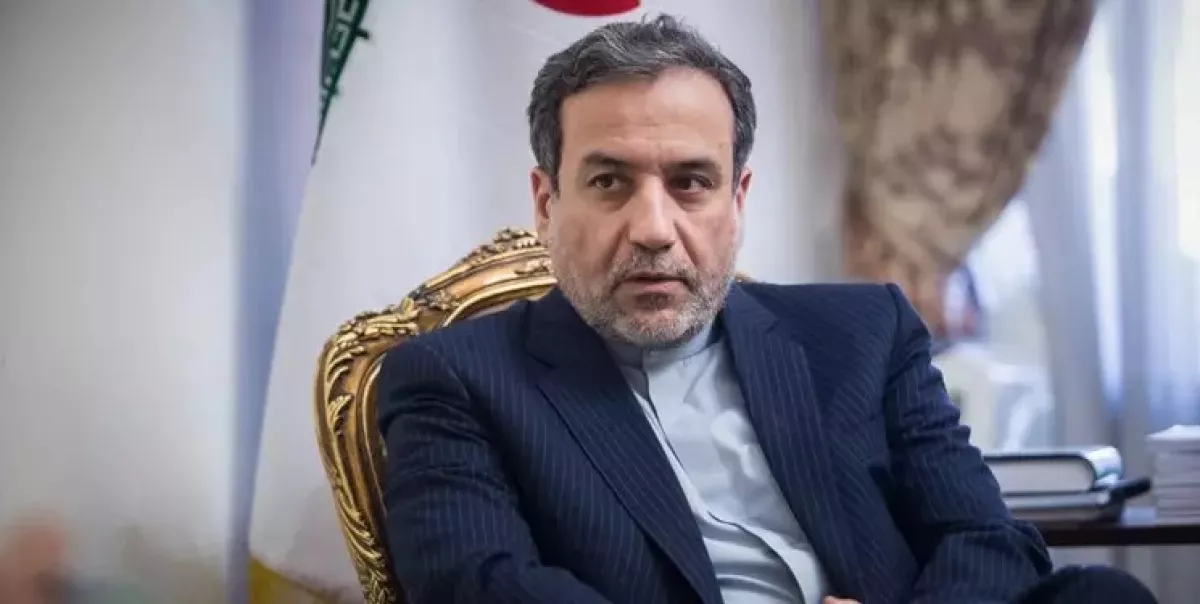
This is clearly evident in the current situation: the foreign minister, through his statements and visits, represents one position, while the Ayatollah’s advisers adopt a radically different, destructive, and extreme approach. As is well known, Abbas Araghchi is a professional politician who studied at a foreign university and defended a doctoral dissertation on the topic of democratisation in Islamic states. He has held various leadership positions in government bodies and has established himself as someone committed to the consistent and step-by-step development of Iran as a modern, open, democratic Muslim state.
As for Velayati, his education is entirely unrelated to political science, international relations, or public administration. His specialisation is in medicine, healthcare, and related fields. This raises the question: ‘How did he reach the level of adviser on foreign policy, international relations, geopolitics, and diplomacy?’ The answer to this is known only to the internal religious-political circles of Iran.
In my opinion, such leaders, who are not interested in the step-by-step development of the IRI as a modern and democratic society, are ready to reconsider all agreements concluded with neighbouring countries and international organisations. And this is despite the fact that Iran currently needs investments, agreements, trade contracts, and the restoration of both its economy and the moral-psychological state of the population after the recent war.
This once again confirms the necessity for Azerbaijan, Armenia, and other regional states to closely monitor the actions of the Islamic Republic, conduct their diplomacy and peaceful foreign policy, and maintain a consistent political course toward it, while not forgetting the need to back up their words with strengthening the army and consolidating society,” concluded Ishmukhamedov.







 editor@caliber.az
 +994 55 444-88-98
 Азербайджан, Баку, ул. Низами, 203, Af Business House, 5-й этаж