










Spy games are coming to an end EU mission as a redundant element at the border
The EU Mission in Armenia (EUMA), which officially presents itself as an observer mission but in reality conducts espionage activities against Azerbaijan and other countries in the region by collecting intelligence, recently issued another statement.

In particular, the head of the mission, Markus Ritter, told Armenia’s Public Television that “EUMA will cease its activities in the border zone after the signing of a peace agreement between Azerbaijan and Armenia due to its redundancy.”
“We know that after the signing and ratification of the peace agreement, we will no longer be needed. We will not be needed at the border, but we will continue to visit border settlements,” he added.
Brief background: At the first European Political Community summit in October 2022 in Prague, following negotiations involving Armenian Prime Minister Nikol Pashinyan, Azerbaijani President Ilham Aliyev, French President Emmanuel Macron, and then-European Council President Charles Michel, the parties agreed on the presence of European civilian observers in Armenia’s border areas for a two-month mandate. On October 17, 2022, the Council of Europe approved the decision to deploy 40 observers to monitor the situation along the conditional border between Armenia and Azerbaijan.
However, in December of the same year, the European Union announced plans to transform this short-term observation group into a long-term mission, which began operations in Armenia on February 20, 2023. In the initial phase, the European observer group comprised around 100 people with experience in European security structures. By the end of 2023, the EU decided to send additional observers to Armenia, bringing the total number of mission participants to over 200.
Notably, Markus Ritter’s use of the term “redundant” in reference to EUMA was very precise. From the outset, the Azerbaijani government emphasised this very redundancy, citing strong reasons why the mission would be used by the European Union as a political tool to interfere in the normalisation process between Baku and Yerevan—a point repeatedly raised by Azerbaijani President Ilham Aliyev.
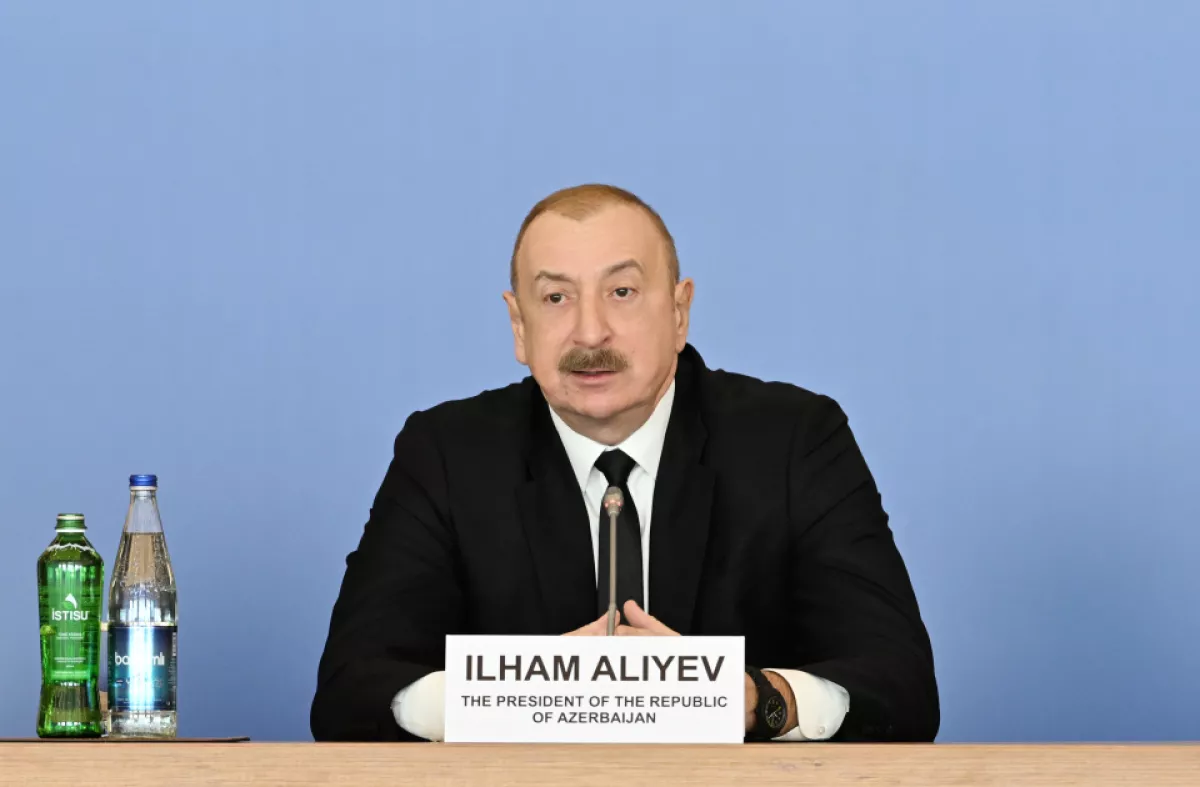
In his speech at the 12th Global Baku Forum on March 13, 2025, the head of state noted that, “the so-called European monitoring mission, which is actually a reconnaissance mission of the European Union, is spying day and night on our border, looking just for places where they can penetrate. And we have enough intelligence information on this so-called monitoring mission.”
In an interview with Azerbaijani television channels in January 2025, the Azerbaijani leader reminded viewers that in the autumn of 2022, in Prague, he personally agreed to a temporary mission with strictly limited numbers and duration—40 personnel for only two months. However, the European side unilaterally increased the mission’s size, extended its mandate, and even involved a non-EU country, thereby violating both the spirit and the letter of the agreements reached.
“When I agree to something, even verbally, I always honor those agreements. But in this case, Europe felt entitled to violate these agreements. Without any notification or our consent, they not only extended this mission but also expanded it and even involved a country that is not a member of the European Union, further undermining trust,” Aliyev stated.
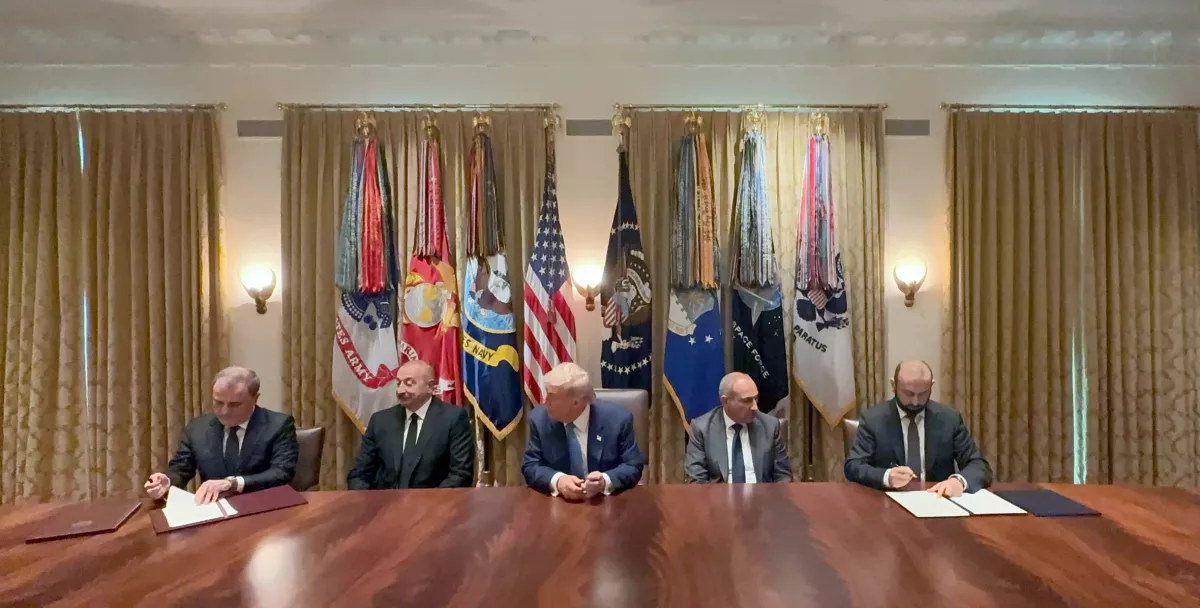
However, as the saying goes, everything flows, everything changes. Today, Baku and Yerevan have moved close to signing a peace agreement, as clearly indicated by the initialling of the “Agreement on Establishment of Peace and Inter-State Relations between the Republic of Azerbaijan and the Republic of Armenia”, which took place in Washington on August 8, 2025 in the presence of the leaders of both countries and U.S. President Donald Trump.
The text of the document clearly stipulates the following: “The Parties shall not deploy along their mutual border forces of any third party. The Parties, pending the delimitation and subsequent demarcation of their mutual border, shall implement mutually agreed security and confidence-building measures, including in the military field, with a view to ensuring security and stability in the border regions” (Article 7).
On the other hand, it should be noted that whereas in the past Yerevan justified EUMA’s presence in the border zone as an element of the republic’s security, after the initialling of the aforementioned agreement and the subsequent tangible economic measures—such as Azerbaijan lifting transit restrictions for goods to Armenia and supplying Azerbaijani fuel to its neighbour—this argument has lost all logical basis.
In light of the above, it can be asserted that Markus Ritter’s statement is driven by the realities on the ground, which have been shaped by Azerbaijan’s peace-driven agenda. The logical outcome of this agenda was the achievement of historic agreements in the “world's number one office.” Consequently, the cessation of EUMA’s activities in the border zone will become yet another diplomatic victory for Baku.







 editor@caliber.az
 +994 55 444-88-98
 Азербайджан, Баку, ул. Низами, 203, Af Business House, 5-й этаж