










“Trump considers Azerbaijan one of the key strategic partners” Expert opinions on Caliber.Az
The United States places strong emphasis on the importance of cooperation with Azerbaijan, aiming to develop joint strategies and initiatives as quickly as possible. Recently, the first meeting of the U.S.–Azerbaijan bilateral working group was held in Washington, the U.S. Embassy in Azerbaijan reported on X.

“Yesterday, senior U.S. and Azerbaijani officials met for the inaugural session of our countries’ bilateral working group to begin implementing the MOU signed at President Trump’s historic August 8 Peace Summit in Washington. At this meeting, we discussed joint activities under the MOU to strengthen regional connectivity and trade, economic investment, including AI and digital infrastructure, and security cooperation. The United States looks forward to working with our valued strategic partner Azerbaijan to advance President Trump’s vision for peace and prosperity and unlock the rich economic potential of the South Caucasus,” the embassy’s statement read.
Meanwhile, the American magazine The National Interest published an article on the strategic role of the Azerbaijani state in the foreign policy of the United States. The publication highlights a number of important areas of cooperation with Baku that could become indispensable for Washington.
What makes Azerbaijan and its policies so interesting to the United States? What are the most important points of convergence between Baku and Washington? And why is Europe so hopelessly behind the U.S. in developing common strategies with the leader of the South Caucasus, instead engaging in populism and openly anti-Azerbaijani rhetoric? These questions are addressed by American and European political analysts for Caliber.az.

American journalist and political analyst Andrey Becker, commenting on the intensification of U.S.-Azerbaijan contacts, explained why Washington currently has an objective need for closer and more systematic cooperation with Baku.
“Today, for the United States, the question of Azerbaijan is not a matter of diplomatic courtesy or a one-off tactical story, but an element of a broader strategy. Washington clearly understands that the window of opportunity in the South Caucasus is not infinite. I would highlight perhaps the main vector of U.S. interest at the moment: Trump fully understands that Azerbaijan occupies a unique geopolitical position—between Russia and Iran, in one of the most unstable regions of the world—while also demonstrating the ability to be a predictable, pragmatic, and negotiable partner. This is precisely why the U.S. publicly emphasises its readiness for close engagement with Baku and is launching concrete mechanisms of cooperation—from working groups to memoranda,” he said.
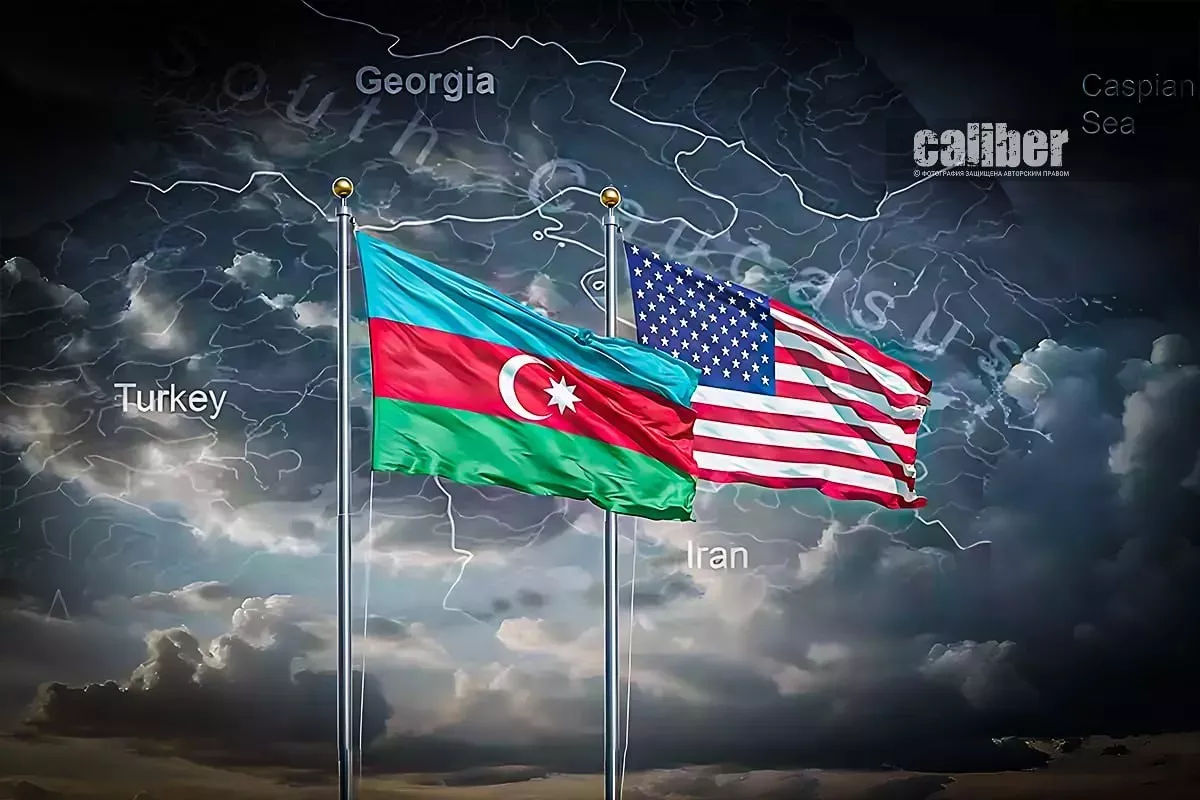
The political analyst emphasised that this is not only about politics, but also about tangible matters—regional connectivity, trade, investment, digital infrastructure, projects in artificial intelligence, and security. For the United States, this is a way to establish a presence in the region not through confrontation, but through economics and logistics. According to the expert, Azerbaijan’s control over a key section of the Middle Corridor is of particular significance.
“Any sustainable overland route between Europe and Asia that bypasses Russia and Iran passes through Azerbaijan. This makes Baku an indispensable link for American interests—from trade and energy security to access to Central Asian resources,” Becker stressed.
He also recalled the United States’ role as a mediator in the Armenia-Azerbaijan settlement: “The meeting in Washington on August 8 was a notable achievement for American diplomacy. For the Trump administration, it is an opportunity to demonstrate that the U.S. is capable not only of containing conflicts but also of shaping peace processes in the South Caucasus. If peace between Baku and Yerevan is reinforced through economic projects and infrastructure, it will become far more sustainable.”
Speaking about the TRIPP transport corridor, the political analyst noted that for Trump, this is the first serious test of implementing his influence in the region.
“Yes, there is internal instability in Armenia, and there is resistance from Iran, which sees the project as a threat to its security, but this is precisely where the U.S. can play a key role—supporting the region economically, investing in technology and employment, thereby consolidating a post-conflict course,” he said.
The expert also considers the Iran factor to be significant: "Iranian policy in the region responds to turbulent developments, often opposing the TRIPP project and, as it seems to the ayatollahs in Tehran, Azerbaijan’s overly independent policy. Baku responds appropriately, strengthening military cooperation with both Türkiye and Israel. For the United States, therefore, Azerbaijan’s logic of action in the region is illustrative and encouraging: containment is effective only when it is coordinated, well-thought-out, and relies on regional partners.”
According to the political analyst, in this context, Azerbaijan already functions as a bridge country—both within the framework of the Organisation of Turkic States (OTS) and in broader formats of regional coordination.
In conclusion, Becker drew attention to Section 907: “An increasing number of American analysts understand that this provision is outdated and hinders the development of a full-fledged partnership. If Washington truly wants a sustainable East–West corridor, peace between Armenia and Azerbaijan, and effective containment of Iran, it will have to view Baku not as a peripheral player, but as one of its key strategic partners. As we can see, Donald Trump fully understands this. In this regard, the U.S. and Azerbaijan have their own track of interests, unlike eternally slumbering Europe.”

According to Austrian international affairs expert Rudolf Valeev, Europe is now hopelessly behind the U.S. in terms of flexibility in foreign and domestic policy and in developing a common strategy.
“The Biden administration has noticeably relaxed the European elites. Throughout Biden’s term, the White House pursued a sluggish foreign policy, without even considering its modernisation within the framework of dialogue with the EU or as a separate U.S. foreign policy course. The same American and European narratives for several years in a row attempted to slow down the rapidly developing course of history in the South Caucasus and the Middle East. The charter on strategic cooperation with Armenia, signed by the Biden administration, demonstrated how mistaken Washington was in its strategy—betting on the wrong player instead of building joint plans and projects in the South Caucasus together with Azerbaijan, which, unlike weak Armenia, possesses the greatest advantage: everything Azerbaijan declares it confidently implements in practice, with all the necessary resources and capabilities at its disposal.
Europe, it seems, has yet to recover and so far has been unable to reset its foreign policy—a task that Trump’s active and creative team accomplished. At present, we can see that the head of the White House has pulled far ahead in implementing his plans and interests in the South Caucasus and Eurasia as a whole. Trump understood that waiting for Europe to develop some common strategies would cost him too much. There are objective reasons for this: currently, EU countries suffer from a leadership crisis, and enormous fragmentation and divergent positions prevent Brussels from even gathering itself to revise its narratives and launch new avenues of cooperation in the South Caucasus—everything still operates according to old, outdated templates. That Trump neither trusts nor waits for the European Union is evident from his latest statements—they are more than eloquent.
Europe still lives in a kind of political fog, detached from reality, which resembles the absurdity of Biden’s policy in the South Caucasus—its inability to recognise its points of interest and identify the right partner for regional cooperation. This is evident in how Brussels periodically announces a reset of relations with Baku, only to fall back into pro-Armenian, archaic narratives that have simply lost relevance and meaning. This can be seen in the recently signed partnership agreement with Yerevan, the so-called ‘cooperation agenda,’ which clearly shows that the EU has once again entered a zone of political disorientation,” concluded Valeev.







 editor@caliber.az
 +994 55 444-88-98
 Азербайджан, Баку, ул. Низами, 203, Af Business House, 5-й этаж