










Amendment 907 vs. Baku’s peace agenda Azerbaijani gasoline in Armenian cars
As previously reported, today, December 18, Azerbaijani petroleum products began being exported to Armenia as part of the peace agenda. This involves the shipment of 22 railway tank cars of AI-95 gasoline produced by SOCAR.
This step, without exaggeration, marks a qualitative change in the very nature of Azerbaijani-Armenian interaction. For the first time in a long period, economic factors are coming to the forefront, combined with political agreements, serving as an additional tool for stabilisation and trust-building. The agreement reached on November 28 in Gabala between the Deputy Prime Ministers of Azerbaijan and Armenia, Shahin Mustafayev and Mher Grigoryan, is practical in nature and reflects the concept of economic dividends from the peace process.
It also contributes to the development of economic and trade relations between the two countries and to the expansion of ties between regional states in the future. In other words, the shipment of Azerbaijani gasoline to Armenia becomes a symbolic starting point for a new stage of economic contacts.
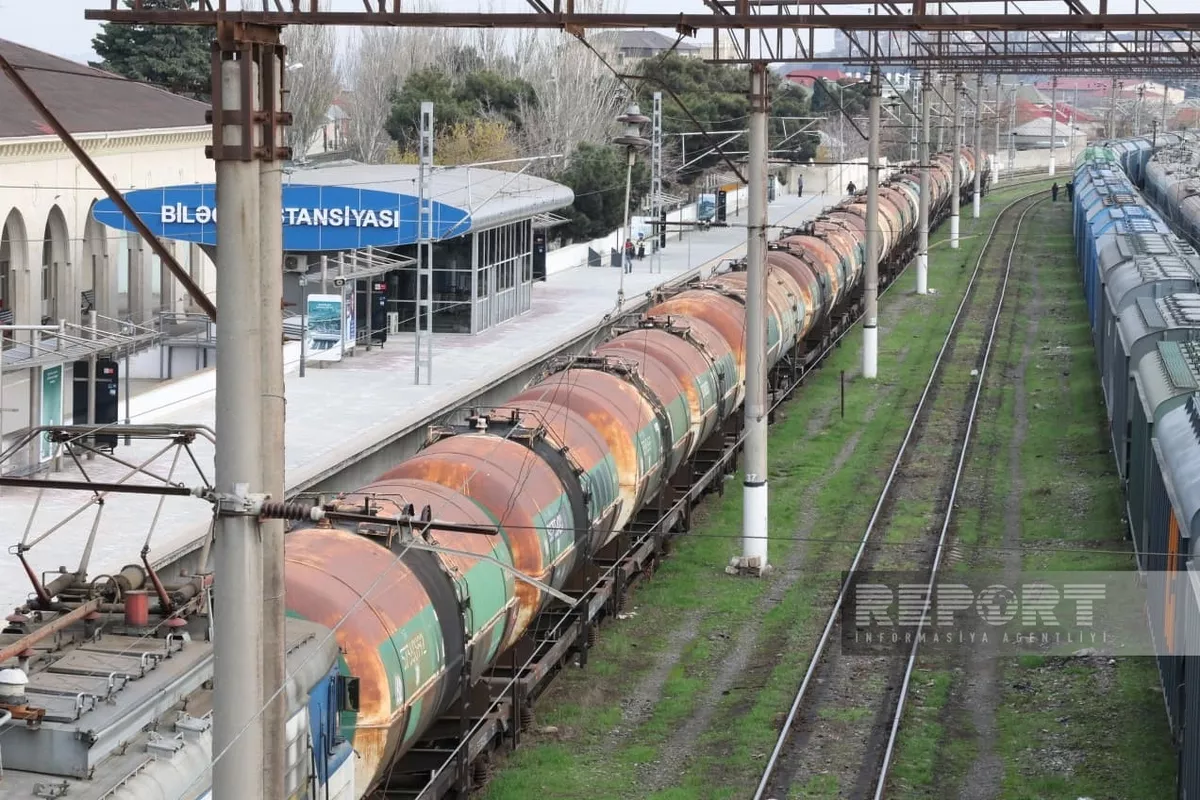
Such a scenario was hard to imagine just a few years ago, but today the world is witnessing Baku and Yerevan returning to the basic principles of economic interaction. Mechanisms like these hold the greatest potential for long-term stability, as they create an objective interest for both sides in maintaining stable relations and a predictable environment.
In fact, a model is emerging in which countries in the region, long marked by decades of bloody conflict, begin to view stability and open communication as a collective interest. Whereas earlier discussions focused solely on the transit of Kazakh and Russian grain through Azerbaijani territory to Armenia, today we are seeing the export of Azerbaijani petroleum products to a neighbouring country, fitting organically into the concept of the economic dividends of peace.
In this case, the peace process ceases to be an abstract political construct and acquires a tangible dimension, expressed through the flow of goods, capital, and investments. This lays the foundation for the gradual restoration of trade and economic ties disrupted by years of confrontation, and contributes to the formation of a new system of regional interdependence, in which breaking relations becomes economically disadvantageous.
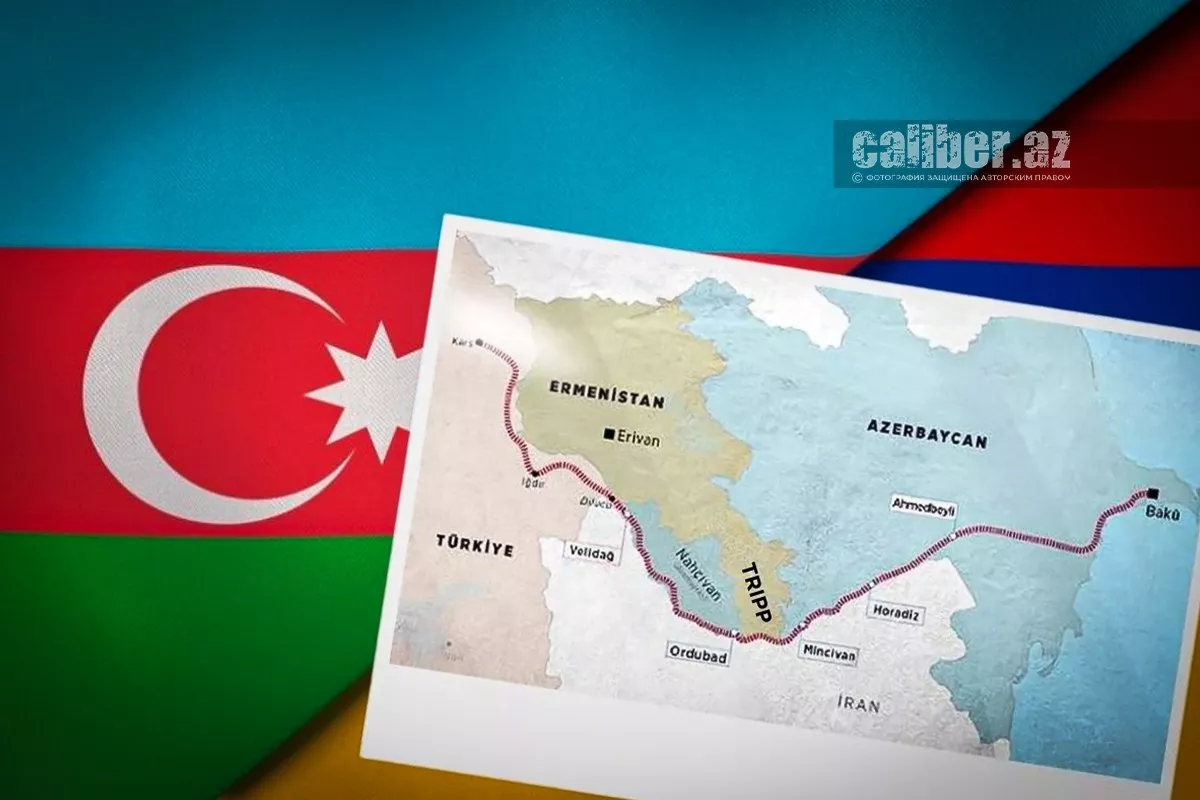
In this context, the implementation of the Zangezur Corridor plays a particularly important role, as it has the potential to radically transform the configuration of transport and trade routes in Eurasia. Its launch will create additional transit opportunities, expand market access, and enhance overall regional connectivity.
Thus, economic logic is gradually displacing politicised approaches based on mutual accusations and distrust. Against this backdrop, the question inevitably arises of revisiting foreign policy restrictions shaped in a different historical and political context. In particular, the 907th amendment, which prohibits the U.S. government from providing assistance to Azerbaijan, increasingly appears outdated.
Originally adopted in 1992 based on Armenian claims of an alleged blockade and under the influence of Armenian lobby groups, the amendment today is clearly undermined by current realities, including the resumption of trade and economic contacts. Moreover, with the implementation of the Zangezur Corridor and its Armenian section (TRIPP), previous objections have lost not only their political but also their practical relevance.
President Trump has frozen the application of the amendment, but only Congress can repeal it. The first step in this direction has already been taken: on December 9, U.S. Representative Anna Paulina Luna introduced a bill aimed at fully repealing the 907th amendment. American lawmakers should now take action and support this effort by removing the 1992 Freedom Support Act provision, which currently stands as an obstacle to expanding cooperation between Baku and Washington.
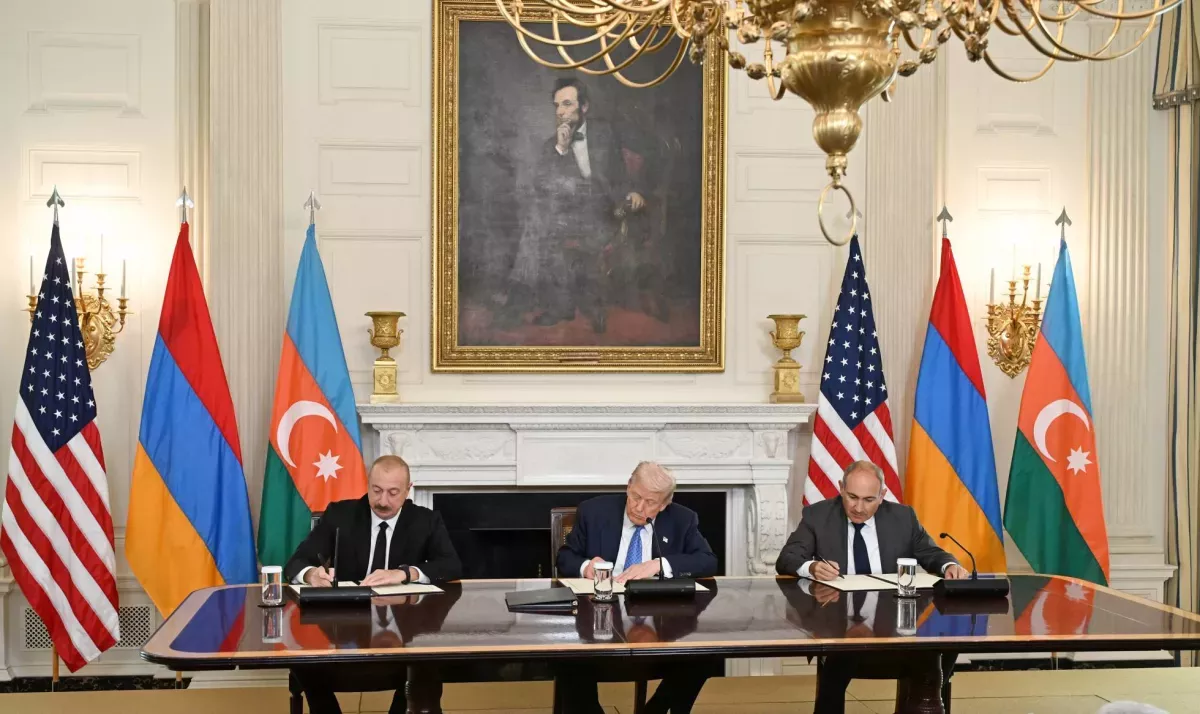
It is also important to consider the broader international context. Azerbaijan’s efforts to develop economic cooperation with Armenia objectively align with the peace initiative of U.S. President Donald Trump. In this sense, Baku is not a passive participant but an active actor, whose steps reinforce the peace process with tangible economic measures.
Ultimately, the export of the first batch of Azerbaijani petroleum products to Armenia takes on the significance of a systemic signal for both regional players and external actors. It demonstrates that the peace agenda in the South Caucasus is being transformed into practical action grounded in pragmatism, mutual benefit, and a focus on long-term stability. In this format, economic ties have the potential to become the very foundation that ensures the irreversibility of positive change and sets a new trajectory for the development of the entire region.







 editor@caliber.az
 +994 55 444-88-98
 Азербайджан, Баку, ул. Низами, 203, Af Business House, 5-й этаж