










Civil Contract’s fragile leadership: high ratings, low confidence Experts on Armenia’s political landscape
According to a recent survey in Armenia, the ruling party Civil Contract maintains the highest rating at 16.5%, although this is lower than in the previous study, Aram Navasardyan, Director of MPG LLC and a full member of the Gallup International Association in Armenia, stated at a press briefing.
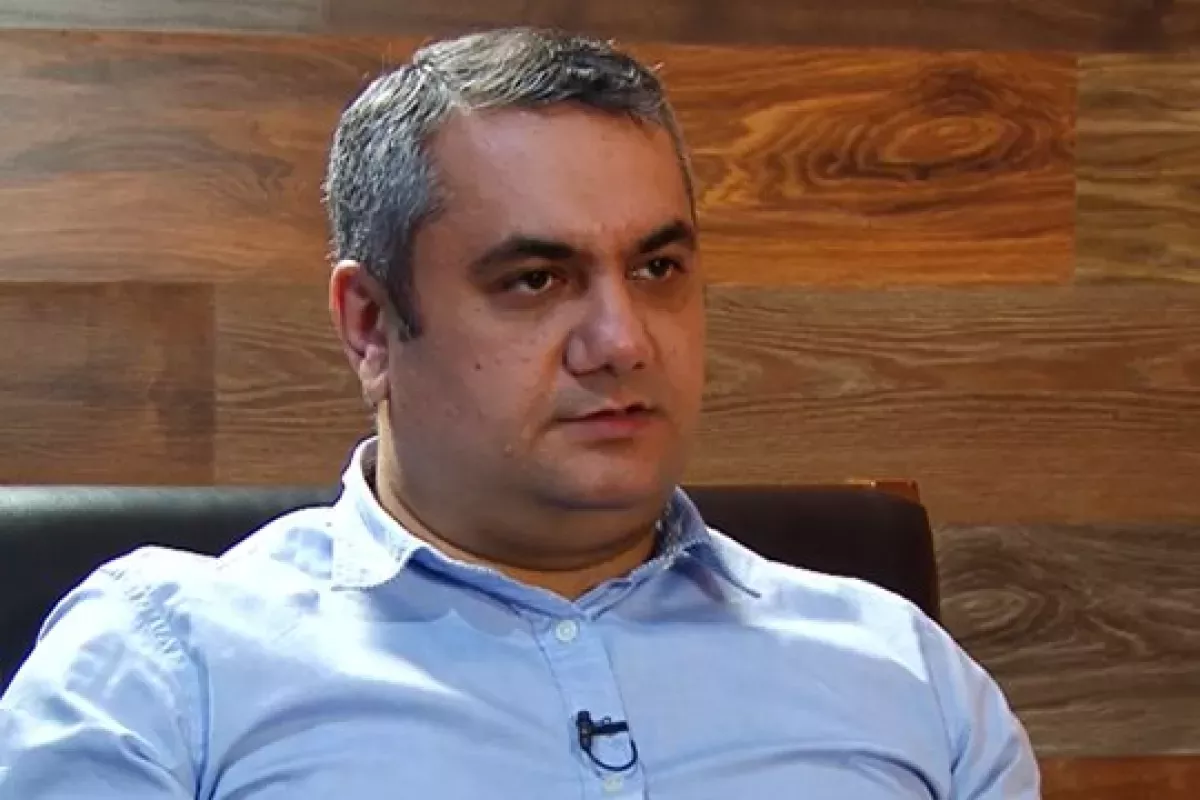
He noted that respondents were asked the question: “If parliamentary elections were held next Sunday, which party or alliance would you vote for?”
“16.5% of respondents indicated the Civil Contract Party. The Our Way movement received 7.2%.
Next is the Armenia bloc — 6.8%, showing a slight positive shift. The Prosperous Armenia Party has demonstrated steady growth over a fairly long period, with its figure at 4.5%. If you notice, these four forces are the ones surpassing the threshold required to enter parliament.”
“The Democracy, Law, Discipline (DLD) Party is very close to this threshold — 3.8%. The Republican Party of Armenia scores 2.7%, Wings of Unity — 1.5%, Republic — 1.5%, ARF Dashnaktsutyun — 1.4%, Bright Armenia — 1.2%, and the Armenian National Congress — 1.2%,” Navasardyan noted.
The telephone survey was conducted from November 27 to December 5. The study included 1,001 respondents.
How should the results of this sociological study be assessed? To what extent do they reflect current public sentiments in Armenia? Is it possible today to forecast the dynamics of political parties’ popularity as parliamentary elections approach?
Caliber.Az asked these questions to well-known foreign analysts.
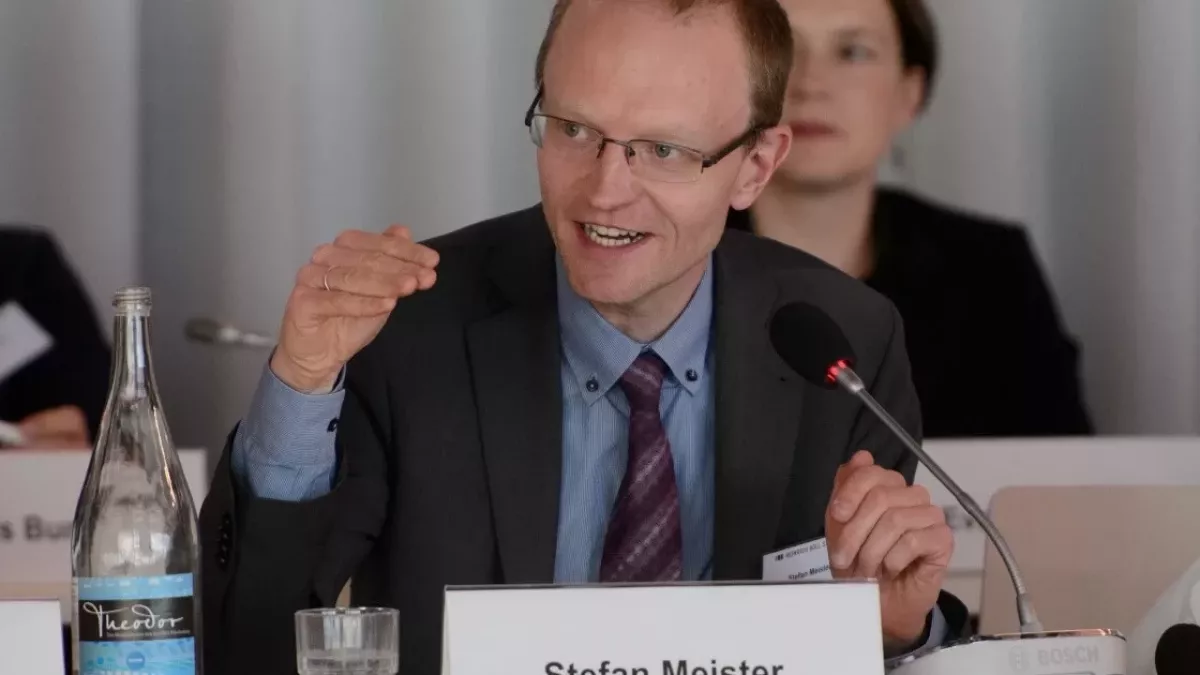
Dr. Stefan Meister is Head of the Center for Order and Governance in Eastern Europe, Russia, and Central Asia at the German Council on Foreign Relations and an expert on the post-Soviet space, noted that when analysing the situation in Armenia, one cannot ignore factors such as the popularity of political leaders and their negative ratings, as well as the general anti-rating of politics itself.
“In Armenia, trust in leaders and political parties is extremely low. The majority of citizens have still not decided whom they will vote for. The rating of Nikol Pashinyan and his party is declining; however, he remains the most popular political leader, and his party retains the highest rating. It is evident that a significant portion of voters will make their decision at the very last moment. That is why Pashinyan actively uses social media, constantly draws attention to himself, and mobilises society against the church, political opponents, and so on.
This means that we do not know the final outcome and cannot objectively assess stable trends. About 60% of voters will decide whom to vote for only a few weeks before the elections,” the researcher stated.
According to him, trust in political parties, leaders, and state institutions in Armenia is currently so low that the predictably low voter turnout is a result of the perception that no one truly represents society’s interests.
“I assume that Pashinyan still hopes to gain certain dividends from Azerbaijan within the peace process — the signing of an agreement, a partial opening of the border with Turkey, or any other step — and present it as a major political achievement. A similar logic applies to Armenia’s rapprochement with the EU: it is more about choosing the direction of societal development than actual integration into the European Union. At the same time, Russian disinformation will aim to demobilise society, manipulate the issue of security, and Russia will likely try to encourage the emergence of multiple parties that split votes among themselves, so that none can form a majority,” Meister believes.

Russian political analyst Mikhail Neizhmakov reminded that the results of sociological surveys in Armenia usually provoke lively debates.
“However, assuming that the data presented by Aram Navasardyan’s team are generally close to reality, they once again indicate a continued demand in the country for a ‘third force’ — alongside the relatively stable electoral base of the ruling Civil Contract and, to a large extent, the opposition bloc ‘Armenia’ of Robert Kocharyan. At the same time, as is often the case with new movements aspiring to the role of a ‘third force’ (including supporters of Samvel Karapetyan from the Our Way movement), their ratings are subject to sharp fluctuations.
In this context, the ideal winning combination for Civil Contract would be the maximum fragmentation of the opposition — so that as many votes as possible are drawn away by parties and blocs that fail to pass the electoral threshold — against the backdrop of an apathetic protest electorate.”
With additional mobilising factors for the ruling party and for the segment of undecided voters that does not rule out supporting it (for example, if the European Union takes a series of high-profile steps in support of Yerevan shortly before the elections), Civil Contract could have a chance not only to retain first place but also to gain more votes than the other parties and blocs entering parliament.
The ability of Civil Contract to mobilise voters was demonstrated in the municipal elections in Vagharshapat in November 2025. Yes, the opposition accused the authorities of using administrative resources. However, if by the summer of 2026 opposition actors are unable to organise a large-scale street protest campaign (recall Serzh Sargsyan’s June remark: ‘How can it be without the streets?’), such accusations would carry only limited risks for Nikol Pashinyan,” the expert notes.
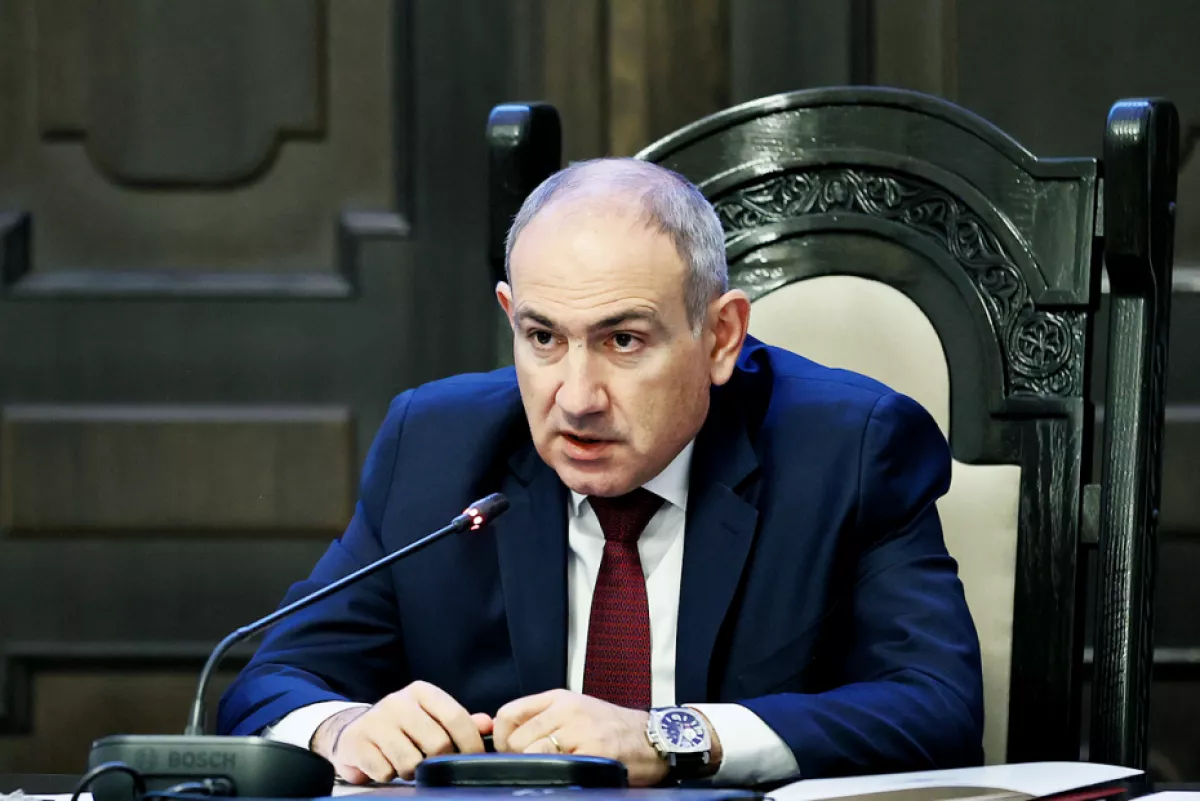
At the same time, in his view, any significant surge in protest sentiments ahead of the elections could seriously complicate the position of Civil Contract, leading to a situation in which the party retains first place but does not secure a parliamentary majority — as happened in the municipal elections in Gyumri in March 2025.
“Moreover, the factor driving protest mobilisation could be not only foreign-policy issues but also any domestic trigger significant to a broad, non-politicised electorate — for example, high-profile criminal incidents in which police officers are accused of inaction or serious misconduct.
In the context of a struggle for virtually every vote, both the authorities and the opposition are likely to increase their focus on local issues. A recent example is the public response of Narek Karapetyan, coordinator of the Our Way movement, to the closure of schools in several villages in the Syunik region.
Meanwhile, Nikol Pashinyan is likely to further develop contacts with the EU during the spring and early summer of 2026, since the European agenda remains one of the key factors for mobilising his potential supporters,” Neizhmakov believes.







 editor@caliber.az
 +994 55 444-88-98
 Азербайджан, Баку, ул. Низами, 203, Af Business House, 5-й этаж