










US–Russia–Ukraine peace talks: speaking different diplomatic languages Expert opinions on Caliber.Az
During this year’s Davos Forum, US President Donald Trump held a bilateral meeting with Ukrainian President Volodymyr Zelenskyy. Simultaneously, the American delegation was conducting negotiations in Moscow on achieving peace in Ukraine, alongside working group meetings in Abu Dhabi.
On January 24, direct three-way peace talks between the delegations of Ukraine, the US, and Russia concluded in the UAE capital. The negotiations took place in two stages over two days—January 23 and 24. According to a statement by Ukrainian President Volodymyr Zelenskyy, the talks between Ukraine, the US, and Russia in Abu Dhabi marked the first two-day three-way format in a long time. He noted that the parties managed to discuss a wide range of issues and described the talks as “constructive.”
From the Ukrainian side, participants included Secretary of the National Security and Defense Council Rustem Umerov, Head of the Office of the President Kyrylo Budanov, First Deputy Head of the Office of the President Serhii Kyslytsya, head of the parliamentary faction of the “Servant of the People” party David Arakhamia, and Chief of the General Staff of the Armed Forces of Ukraine Andrii Hnatov.
The American side was represented by Steve Whitkoff, Jared Kushner, Dan Driscoll, Alex Grinkevich, and Josh Gruenbaum. Representatives from Russian military intelligence and the army participated on behalf of Russia.
According to Zelenskyy, the key topic of discussion was the possible parameters for ending the war. Special attention was also given to the issue of American monitoring and control over the process of concluding the war and ensuring real security.
The American side also raised the issue of formats for formalising agreements on ending the war and the security conditions necessary to achieve this.
Following the meetings, the parties agreed to report the results of the negotiations to their capitals and coordinate the next steps with their national leaders. The military defined a list of issues to be addressed at the next meeting.
“Provided there is readiness to move forward—and Ukraine is ready—further meetings will take place. I expect a personal report from the delegation upon its return,” Zelenskyy stated.
At the same time, the Russian side identified the withdrawal of Ukrainian forces from Donbas as one of the key topics.
So, what can be expected from these three-way negotiations aimed at ending the war in Ukraine? Are they likely to succeed, and what potential solutions might emerge—if any? Caliber.Az reached out to leading international analysts to get their insights and perspectives.

American analyst Professor Richard Tempest of the University of Illinois believes that, from Russia’s perspective, a military resolution of the conflict with Ukraine remains possible.
“In other words, for the Russian side, this is about achieving a victory with territorial expression (Donbas) and, most likely as a consequence, the collapse—or at least a serious weakening—of the Ukrainian national project. Therefore, Russia’s demands remain unacceptable for Ukraine. The same can be said about its European allies. The Americans are driven by Trump’s urgent desire to ‘close’ the war, even on terms unacceptable to Ukraine, which, however, constantly encounters resistance from European partners.
The weakening of NATO resulting from the US Greenland project has become a new factor that the Russian side undoubtedly takes into account. In summary, at this stage Ukraine prefers to discuss procedural aspects of a possible peace settlement, whereas Russia seeks concrete, material, territorial, and political gains,” the professor argues.
For now, he sees no basis for an agreement.
“The three sides are speaking in different diplomatic languages, and the US cannot—or does not want to—play the role of a geopolitical interpreter.
Comparing the situation to President T. Roosevelt’s mediation that brought an end to the Russo-Japanese War, it is worth recalling that at the time the US insisted on its own solution to the conflict, which the victor (Japan) received very painfully,” Tempest explained.
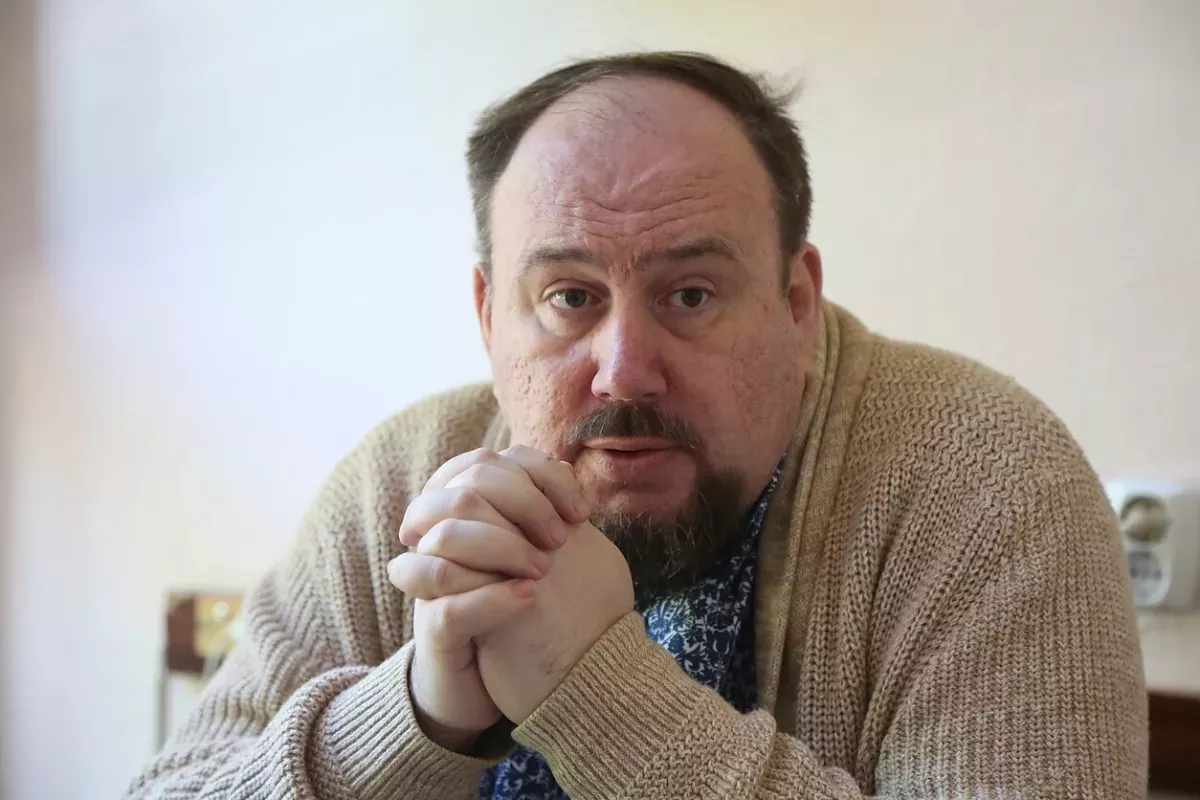
Ukrainian military expert and historian Mykhailo Zhirokhov notes that all negotiations in the working groups can be divided into two very important components: political and purely military.
“This is evident from the composition of the delegations: for the first time, the Russians included officials responsible for the country’s security from the Main Directorate and the General Staff.
On the one hand, such meetings have taken place before, but previously they were not as serious, because the Russian side sent representatives who were not authorised to make decisions. On the other hand, it is now clear that the discussions focused primarily on theoretical issues, such as troop disengagement and monitoring of that process,” the expert concludes.
According to him, the main political question concerns the fate of Donetsk Oblast, but there is no consensus on it.
“At the same time, the format of the negotiations remains unclear: whether they were conducted directly between the Ukrainian and Russian delegations, through US mediation, or as separate Russian–American and American–Ukrainian consultations.
Quick results should not be expected, since delaying the process benefits Putin by improving his positions on the front. His goal is to demonstrate to Trump that if Ukraine does not cede Donbas, Russia will eventually take it by force. Currently, this period is being used by Russian forces for massive strikes against Ukraine’s power infrastructure and advances on the front, despite huge personnel losses,” Zhirokhov points out.







 editor@caliber.az
 +994 55 444-88-98
 Азербайджан, Баку, ул. Низами, 203, Af Business House, 5-й этаж