










South Caucasus between Washington peace and EU provocation European Parliament targets Azerbaijan again
The European Parliament’s decision to hold urgent (!) debates on the situation of human rights, democracy, and the rule of law in Azerbaijan—formally linked to the arrest and sentencing of Bahruz Samadov and Igbal Abilov, who were, by the way, convicted of treason—actually goes far beyond the stated topic. This is, in fact, an attempt at political interference in processes that directly affect the architecture of peace and security in the South Caucasus. The timing and context of these hearings indicate a systemic bias of the European Parliament in particular, and of the European Union in general, against the Azerbaijani state. But let us take it step by step.
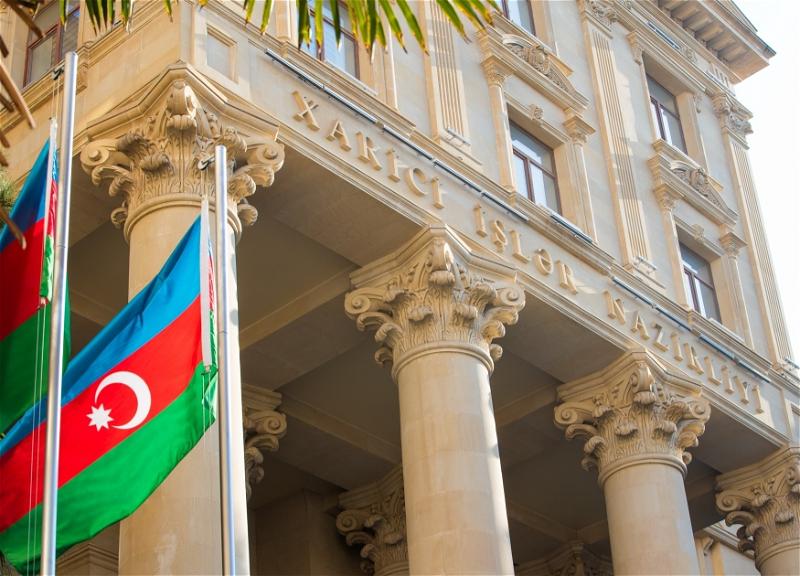
So, let us begin with the fact that, against the backdrop of a developing peace-oriented situation in the region, particular attention is drawn to the document signed on December 2, titled “Strategic Agenda for EU–Armenia Partnership.” By its very nature, this document contradicts the peace agenda with Azerbaijan. The Azerbaijani Ministry of Foreign Affairs specifically noted this in its comment: "The inclusion of issues targeting Azerbaijan in this bilateral document, which sets the strategic priorities between the EU and Armenia for the next seven years, is unacceptable and, among others, negatively affect the prospects of Azerbaijan–EU relations."'
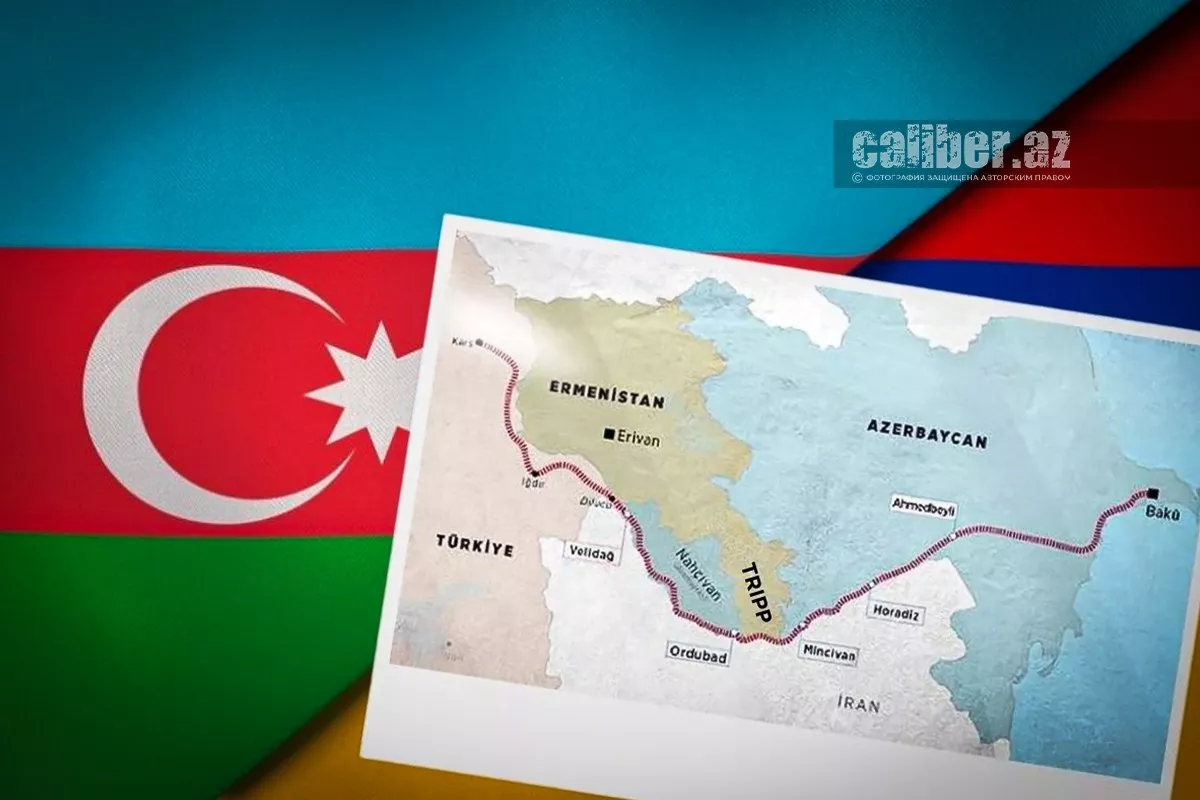
Surprisingly, the document makes no mention of the TRIPP project—an initiative developed with the mediation of U.S. President Donald Trump, aimed at institutionalising the agreements between Baku and Yerevan. This omission is particularly striking given that the Washington format has demonstrated the greatest pragmatism and focus on concrete results, rather than process for the sake of process. The EU’s refusal to recognise, or even acknowledge, this track indicates a deliberate rejection of the peace agenda formed outside the Brussels–Paris political sphere. Notably, Armenia itself actively plays into the EU’s hands here, and it would not be surprising if it is pursuing a double game.
Within the EU itself, this line is primarily promoted by forces from the liberal–globalist spectrum, closely linked to non-governmental organisations and the ideology of Soros-affiliated networks. For these circles, peace based on recognition of sovereignty and the end of the conflict phase is less advantageous than managed chaos, which allows them to retain tools of pressure and moral authority. This is why the peace process in the South Caucasus is perceived by them as a threat, and any initiatives outside their control are treated as targets to be discredited.
From this perspective, the European Parliament hearings on Azerbaijan can logically be seen as part of a provocation aimed at undermining trust in the peace agenda and creating new tensions. However, for Baku, this is nothing new. The European Parliament’s biased attitude toward the Azerbaijani state has a long history. Before the Patriotic War of autumn 2020, this EU institution consistently avoided direct and unequivocal support for Azerbaijan’s territorial integrity, which sharply contrasted with Brussels’ and Strasbourg’s stance on Georgia, Ukraine, and Moldova.
Instead of applying a universal approach, a selective logic was used, under which accusations were directed at Baku that ignored international law and the actual facts of occupation. This practice served as a clear example of a double standards policy, undermining trust in the EU.

This logic also encompasses the increased activity of the EUMA intelligence mission on Armenian territory, whose work is politically biased and aimed not at promoting stability. On the contrary, this mission functions as a tool of pressure and forms part of the EU’s broader strategy, which is directed against establishing peace in the region. Together with Brussels’ diplomatic and parliamentary manoeuvres, this creates the impression of a deliberate attempt to undermine the agreements reached in Washington and replace them with a Paris–Brussels agenda, less focused on the real interests of the regional states.
A special role in this picture is played by the EU’s sanctions policy. The decision to impose sanctions on several Azerbaijani oil tankers under the fabricated accusation of transporting sanctioned Russian oil appears openly selective, especially given that several European countries—particularly Greece and Greek Cyprus—actively transport Russian oil worldwide, which is well known within the EU. At the same time, Germany, while asserting a principled stance toward Russia, continues to purchase significant volumes of Russian oil. According to DW, Rosneft Deutschland accounts for about 12% of Germany’s oil refining capacity. The company holds shares in three major German refineries: PCK Schwedt in the city of Schwedt, MiRo in Karlsruhe, and Bayernoil in Vohburg an der Donau.
Moreover, European electronics and technologies produced in EU countries are entering Russia via Armenia and being used in the war against Ukraine. The scale of this “shadow” trade is striking: between 2021 and 2024, Armenian–Russian trade turnover increased roughly 4.5–5 times, from about $2.6 billion to $12 billion. It is quite clear that, due to the weakness of Armenia’s industrial and agricultural sectors, they were not capable of generating even ten per cent of this growth; almost the entire subsequent increase reflected the re-export of products from third countries.
Since the beginning of the Russian–Ukrainian war in February 2022 and the imposition of anti-Russian sanctions by the collective West, Armenian intermediaries have been systematically ordering microchips, electronics, electrical equipment, machine tools, industrial machinery, and various components from industrially developed countries in Europe, the U.S., China, and Southeast Asia. After re-registering customs documents under Armenian credentials and issuing new invoices, these dual-use products were shipped to Russia, generating significant profits for Armenian companies.
According to data published nearly two years ago in a report by the international ratings agency Fitch Ratings, shipments of goods from Armenia to Russia increased by 300% starting in 2022. This channel has long been known and documented, yet it has not been the subject of sanctions or parliamentary investigations. Moreover, over the past four years, Armenia has become one of the key hubs for parallel import and export of sanctioned goods in trade between Russia and Ukraine. Nevertheless, the European Union prefers to ignore this reality, refrains from issuing strong statements, and does not impose restrictive measures—once again highlighting the politically motivated selectivity of its approach.
Against this background, the initiation of hearings on Azerbaijan appears particularly striking when considering the situation within Armenia itself. In 2025 alone, dozens of opposition politicians, religious figures, civil society activists, and other individuals were arrested on charges that some observers consider fabricated. Despite the scale of these cases, the European Parliament has so far held no hearings and issued no documents on the matter. Such silence is difficult to explain other than as a deliberate political choice.
Further questions arise regarding the European Parliament’s position on individuals involved in war crimes cases. At various times, the EP has called on Azerbaijan to release Armenian citizens accused of serious crimes, including Ruben Vardanyan—one of the oligarchs linked to financing the war against Ukraine. Such demands directly contradict the EU’s stated support for Kyiv and its efforts to counter Russian influence, thereby undermining trust in European rhetoric.
Overall, the European Union’s actions in the South Caucasus increasingly resemble an attempt to draw new dividing lines, driven by concerns over Azerbaijan’s growing political and economic influence. However, these moves appear increasingly unconvincing against the backdrop of the EU’s overall weakening and loss of agency in global politics. This crisis is explicitly noted in the recently adopted U.S. National Security Strategy, which points to a systemic erosion of values and strategic disorientation in Europe. Today, the fate of the European project itself is largely being decided in Ukraine, where the focus of the key global actors is concentrated.
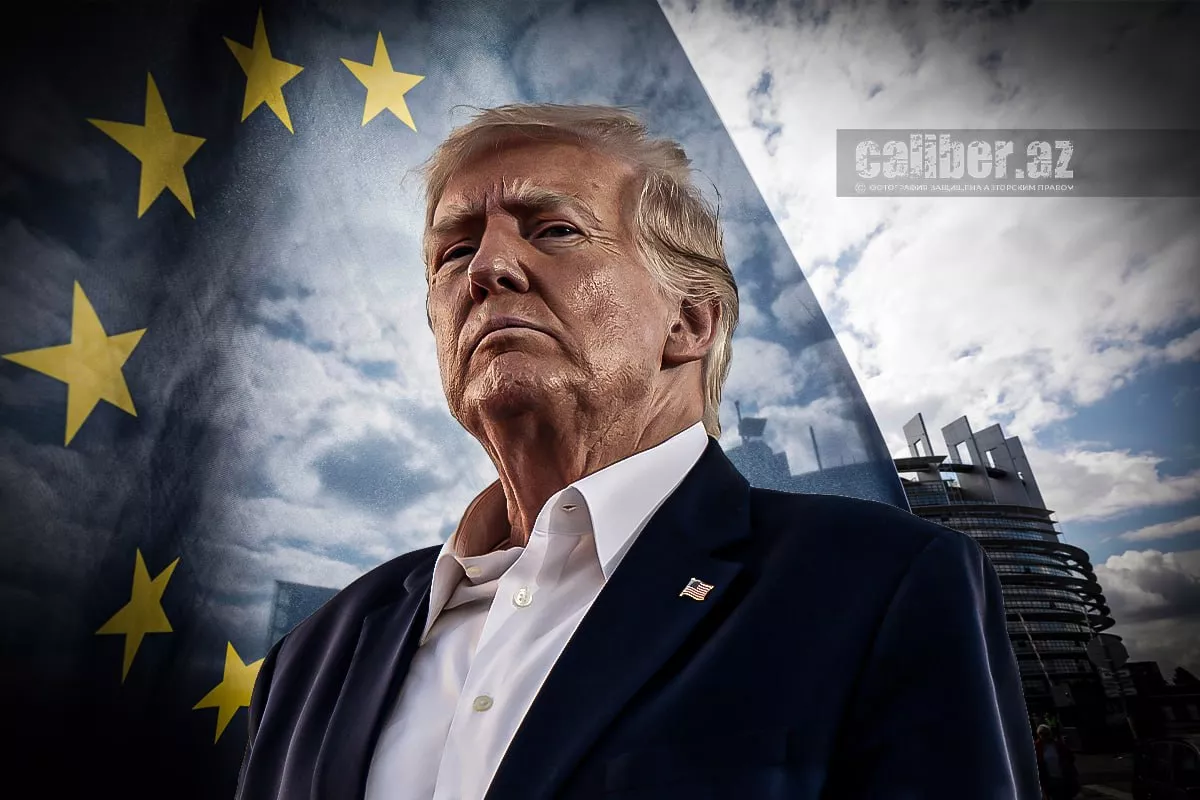
In this context, the European Parliament’s decision to raise politically motivated issues to the level of “urgent debates” only underscores its bias. The European Parliament, long perceived as a body with pronounced Islamophobic and Turkophobic tendencies, may pass any resolutions and hold any discussions it wishes, but none of this has practical significance. Such actions cannot influence Azerbaijan’s strategic course, which is grounded in national interests and a pragmatic approach to regional security. For the EU—mired in corruption scandals, with recent cases involving Ursula von der Leyen, Federica Mogherini, Eva Kaili, and other high-ranking officials—it would be more logical to focus on its own institutional problems.







 editor@caliber.az
 +994 55 444-88-98
 Азербайджан, Баку, ул. Низами, 203, Af Business House, 5-й этаж